Cow Face Yoga Pose Gomukhasana
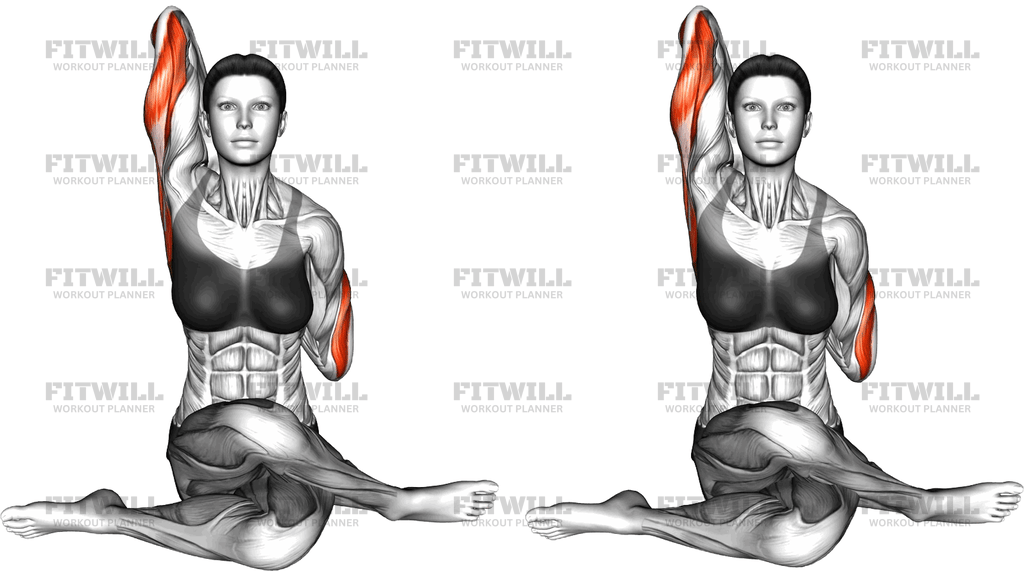
Cow Face Yoga Pose Gomukhasana is a seated yoga posture used to open the shoulders, chest, upper back, triceps, and outer hips through a controlled hold rather than a fast repetition. The pose combines a deep arm position with a stacked-leg seat, so the quality of the setup matters as much as the depth of the stretch. When the knees, pelvis, and rib cage are organized well, the posture becomes a clear mobility drill instead of a strained balance challenge.
This exercise is most useful when you want to improve shoulder rotation, overhead reach, and the ability to stay tall while the hips are folded. The top arm works in overhead flexion and external rotation, while the bottom arm reaches behind the torso and asks the shoulder and triceps to lengthen. At the same time, the lower body keeps the pelvis grounded and helps expose tightness in the glutes, adductors, and outer hip.
The key to Gomukhasana is not forcing the hands to meet. A clean version keeps the ribs stacked over the pelvis, the neck long, and the breath slow enough that the shoulders can soften without collapsing the chest. If the knees do not stack comfortably or the sitting bones tip backward, sit on a folded blanket or widen the leg position slightly so you can stay upright and breathe evenly.
Use the pose as a mobility piece in a warmup, recovery flow, or dedicated flexibility session. It works well after pressing, pulling, or long periods of sitting because it targets the tissues that usually feel short or stiff: the triceps, lats, rear shoulder line, chest, and outer hips. The goal is a steady, repeatable position with no pinching in the shoulders and no sharp pressure in the knees. If the shape is clean, the stretch should feel intense but organized, with both sides of the body contributing to the hold.
Fitwill
Log Workouts, Track Progress & Build Strength.
Achieve more with Fitwill: explore over 9600 exercises with images and videos, access built-in and custom workouts, perfect for both gym and home sessions, and see real results.
Start your journey. Download today!




Instructions
- Sit on the floor with your shins folded so the knees can stack one over the other, and keep both sitting bones rooted to the ground.
- If your hips tilt backward, place a folded blanket or yoga block under your hips before you start the arm position.
- Lift one arm straight overhead, bend the elbow, and let the hand reach down the spine with the elbow pointing up.
- Reach the other arm behind your back with the palm facing out, then slide that hand up between the ribs and the low back.
- Keep your chest lifted and your lower ribs from flaring as you work the hands toward each other or toward a comfortable bind.
- Draw the head and neck tall, then relax the shoulders away from the ears without losing the stacked torso position.
- Breathe slowly into the upper chest and side ribs while holding the pose, letting the shoulders and triceps soften on each exhale.
- Hold the end position for the planned time, then release the arms slowly and switch sides with the same control.
Tips & Tricks
- Do not chase the hand clasp if it makes your chest collapse or twists your torso away from the front.
- Use a blanket or block under the hips before you try to force the knees to stack; a lifted seat often makes the shoulder position cleaner too.
- Keep the top elbow pointing more upward than outward so the stretch stays in the triceps and shoulder instead of yanking the neck.
- Let the bottom hand walk gradually up the back rather than shrugging the shoulder forward to fake extra range.
- If your knees ache, widen the folded-leg position slightly and keep the pressure off the joint line.
- Think about lengthening both sides of the waist as you breathe, especially on the side of the arm that reaches overhead.
- Use a slow exhale to help the ribs settle down and make the shoulder bind feel less forced.
- Work both sides evenly, since one arm-overhead side is often much tighter than the other.
Frequently Asked Questions
What does Cow Face Yoga Pose Gomukhasana work most?
It mainly targets shoulder mobility, triceps length, chest opening, upper back position, and the outer hips.
Can beginners perform this exercise?
Yes. Beginners usually need a blanket under the hips and a smaller arm bind so they can stay upright and breathe.
Should my hands have to touch behind my back?
No. The bind is optional, and a comfortable reach is more useful than forcing the hands together.
Why do I feel this so strongly in one shoulder or triceps?
The top arm is under overhead rotation and elbow flexion, so side-to-side differences are normal and often reveal a tighter shoulder.
What should I do if my knees do not stack comfortably?
Sit on a folded blanket, widen the lower-leg position a little, or shorten the hold until the hips can stay level.
Why does my chest want to flare forward in this pose?
The overhead arm and behind-the-back reach can pull the ribs apart, so keep the sternum lifted without arching the low back.
Is this more of a stretch or a strength exercise?
It is primarily a mobility and flexibility posture, with light isometric effort from the posture muscles.
When is the best time to use Gomukhasana?
It fits well after upper-body training, during a warmup flow, or in a recovery session when you want shoulder and hip opening.