Resistance Band Squat
Resistance Band Squat is a squat pattern done with a loop band wrapped around the thighs just above the knees. The band adds outward pressure at the hips, so each rep challenges the legs and glutes while also teaching the knees to track cleanly over the toes. It is a simple bodyweight-based lower-body exercise, but the band makes the setup matter: if the stance is too narrow, the knees cave, or the torso folds forward, the band loses its value and the squat turns into a rushed descent.
The movement is mainly used to train the thighs, especially the quads, while the glutes and hip stabilizers work hard to keep the legs aligned. That makes it useful as a warm-up, activation drill, accessory exercise, or light strength movement when you want more hip control without adding external load. The band is not there to force a huge range of motion; it is there to keep tension on the outer thighs and remind you to stay active through the entire rep.
A clean rep starts before you bend the knees. Stand with your feet about shoulder-width apart, toes slightly turned out, and place the band high enough on the thighs that it will not slide into the knees. Create gentle tension in the band, brace the trunk, and sit the hips back and down as if reaching for a chair. Keep the chest lifted, the heels grounded, and the knees pressing out in line with the toes as you descend.
At the bottom, stop as soon as you can no longer hold the band tension, foot pressure, and torso position. Then drive up through the whole foot, especially the midfoot and heel, until you return to standing without snapping the knees inward. The rep should feel smooth and controlled from start to finish, with the band staying quiet instead of rolling or bunching. If the band position or squat depth causes discomfort, reduce the resistance, shorten the range, or widen the stance slightly.
This is a practical exercise for home training and lower-body preparation because it teaches squat mechanics without requiring a bar, bench, or machine. It also pairs well with other lower-body work when you want the legs to feel warm and organized before heavier lifting. Keep the motion pain-free and deliberate, and use the band as a form cue: outward pressure at the thighs, stable feet, and a controlled return to standing.
Fitwill
Log Workouts, Track Progress & Build Strength.
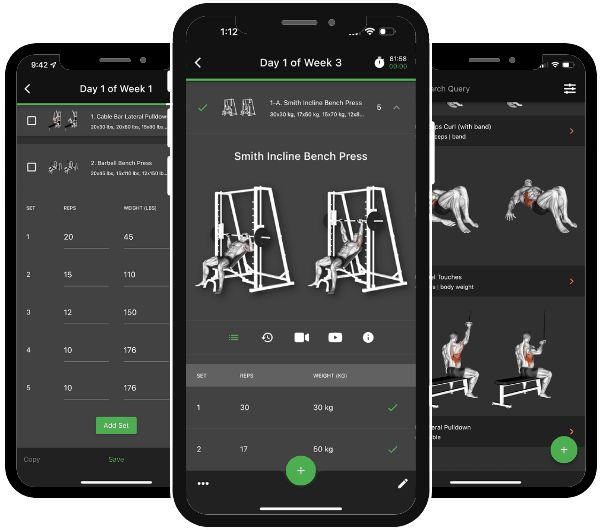
Achieve more with Fitwill: explore over 5000 exercises with images and videos, access built-in and custom workouts, perfect for both gym and home sessions, and see real results.
Start your journey. Download today!


Instructions
- Place a loop resistance band around your thighs, just above the knees, and stand tall.
- Set your feet about shoulder-width apart with your toes slightly turned out and your weight balanced over the whole foot.
- Create light tension in the band by gently pressing your knees outward before you start the squat.
- Bring your hands to chest level, brace your trunk, and keep your ribs stacked over your pelvis.
- Sit your hips back and down as if you are reaching for a chair, keeping your chest lifted.
- Lower until your thighs are at least parallel if you can keep the band tension, foot pressure, and torso position.
- Drive up through your midfoot and heels to stand, keeping your knees tracking out against the band.
- Reset at the top, breathe, and repeat for the planned number of reps without letting the band slide or the knees cave inward.
Tips & Tricks
- Keep the band above the knees, not on the kneecaps, so it stays in contact with the thighs throughout the rep.
- Press the knees out only as far as your hips and toes can stay aligned; forcing them too wide usually tilts the pelvis or rolls the feet inward.
- Choose a band that lets you reach your squat depth without the knees collapsing inward on the last few inches.
- Keep the heels planted and the arches active; if your heels lift, the stance is probably too narrow or the squat is too deep for the current setup.
- Let the hips travel back first, then down, so the movement stays like a squat instead of a straight knee bend.
- Use a slower lowering phase to feel the glutes and thighs working instead of dropping into the bottom position.
- If the band starts to roll, stop and reset it higher on the thighs before the next set.
- Finish each rep by standing tall with the knees still gently out, rather than snapping the legs together at the top.
Frequently Asked Questions
What muscles does Resistance Band Squat work?
It mainly works the thighs, especially the quads, while the glutes, hip stabilizers, and core help keep the knees aligned and the torso steady.
Can beginners perform this exercise?
Yes. Start with a light band, a shoulder-width stance, and a partial squat depth until you can keep the knees tracking out cleanly.
Where should the band sit during the squat?
Place it around the thighs just above the knees so it gives a clear outward cue without digging into the joint.
Why do my knees need to press out against the band?
That outward pressure helps keep the knees from caving inward and keeps tension on the outer hips and thighs through the whole rep.
Is this just a bodyweight squat with a band?
Yes, but the band changes the feel by adding hip-abduction tension, which makes the squat more useful for warm-ups and glute activation.
What is the most common mistake with this exercise?
Letting the knees collapse inward or the band roll down onto the knees are the most common problems.
Can I use Resistance Band Squat as a warm-up?
Yes. It works well before heavier lower-body training because it warms the legs and reinforces knee tracking.
How do I make this exercise harder?
Use a stronger band, slow the lowering phase, pause briefly at the bottom, or add more controlled reps while keeping the same stance and depth.