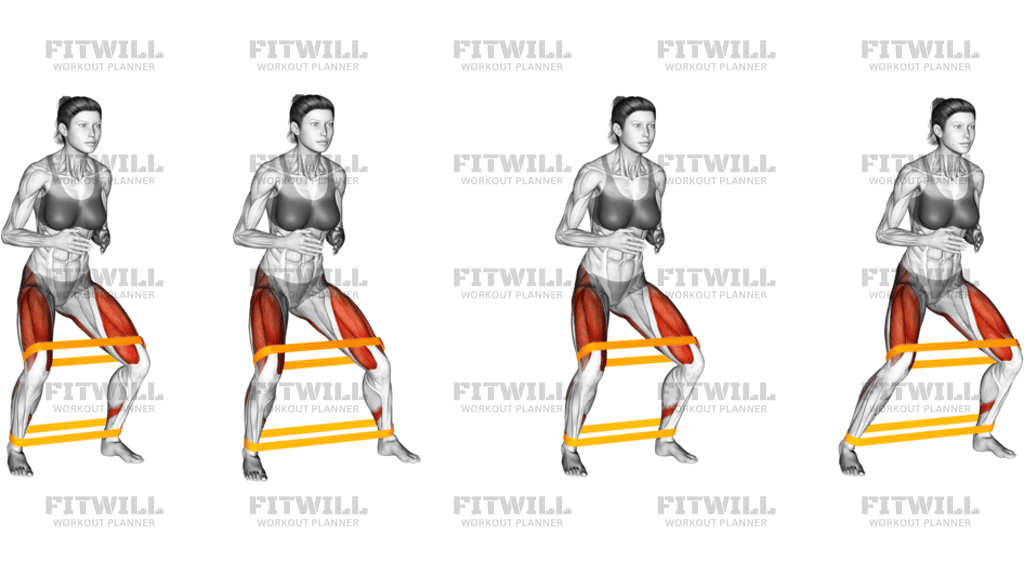
Resistance Band Lying Bent Knee Hip Abduction
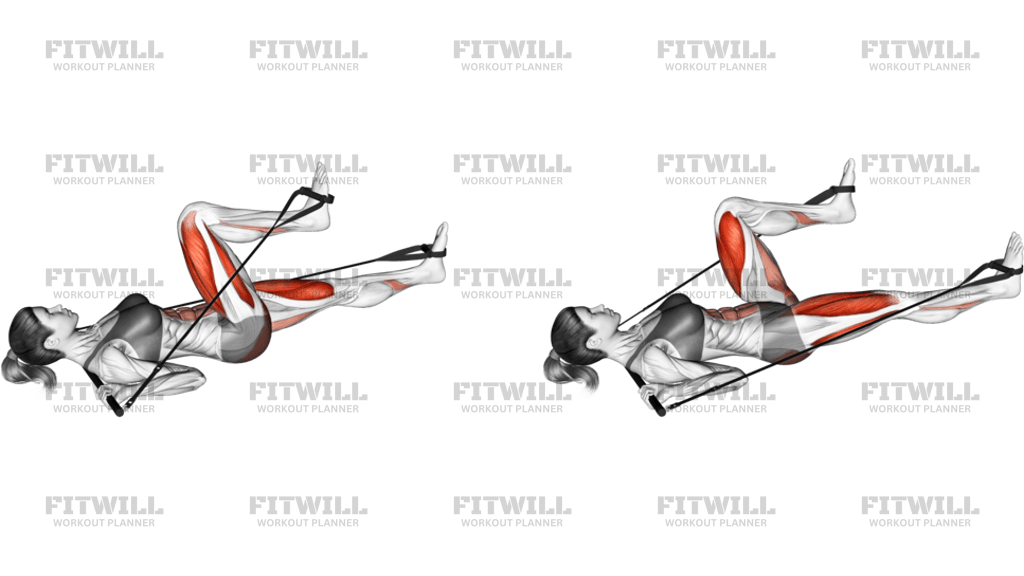
Resistance Band Lying Bent Knee Hip Abduction is a supine hip stability exercise done with a loop band above the knees. You lie on your back, keep the hips and knees bent, and open the knees outward against band tension to train the outer hip muscles and the control needed to keep the pelvis steady.
The exercise is especially useful for the glute medius and the smaller hip rotators that help keep the femur centered during squats, lunges, running, and single-leg work. It also asks the abdominal wall to hold the ribcage down so the movement comes from the hips instead of from arching the lower back or rocking the pelvis.
Setup matters more than range. Place the band above the knees, lie flat with the shoulders relaxed, and bring the hips and knees into a comfortable bent position with the legs lifted as shown. From there, keep the shins quiet and let the knees open only as far as you can maintain a level pelvis and a neutral lower back.
On each rep, open the knees smoothly, pause briefly at the widest controlled position, then return with the band still under tension. The return should be slow enough that the hips keep working instead of dropping back together. A small, clean range is better than a wide range that twists the torso or turns the exercise into a leg swing.
This movement works well as a warm-up, activation drill, rehab-style accessory, or light glute-focused finisher before lower-body training. Use it when you want direct hip-abductor work without loading the spine. Beginners can usually learn it quickly with a light band, while heavier bands are best reserved for lifters who can keep the knees tracking smoothly and the trunk quiet throughout the set.
[ Workout Log & Planner ]
Put your next workout in Fitwill
Keep your plan and training log ready when you are.


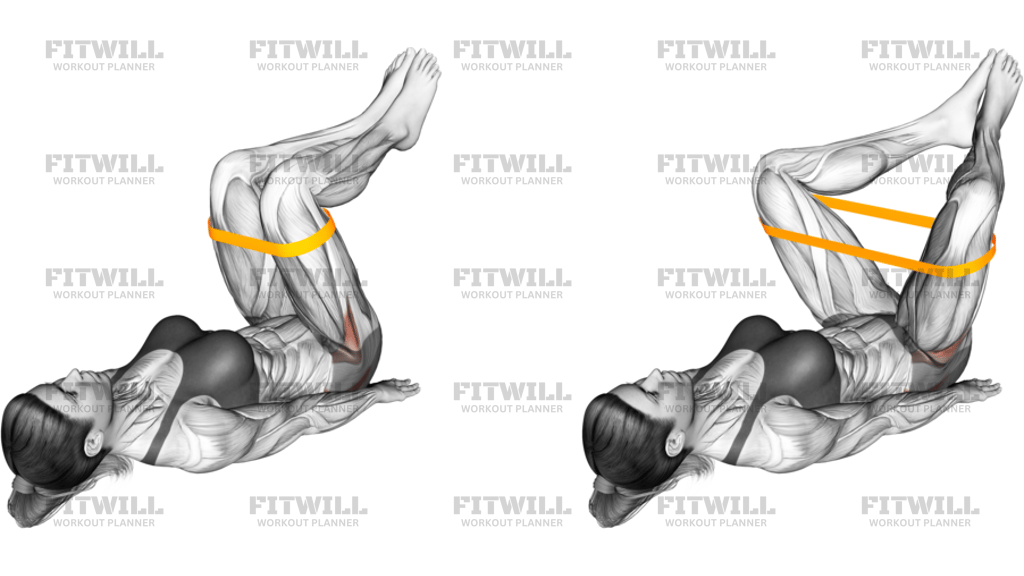
Instructions
- Lie on your back and loop a resistance band above your knees.
- Bend your hips and knees, then lift your legs so the thighs are supported in the air.
- Rest your arms on the floor with your shoulders relaxed and your lower back neutral.
- Stack your knees over your hips and keep your shins quiet.
- Brace your abs so your ribs stay down and your pelvis does not tip.
- Open your knees outward against the band without letting your feet or pelvis drift.
- Pause for a moment at the widest pain-free position.
- Bring your knees back together slowly while keeping tension on the band.
- Breathe out as you open the knees and breathe in as you return.
- Repeat for the planned number of controlled reps.
Tips & Tricks
- Keep the band above the knees so the leverage stays focused on hip abduction instead of the lower legs.
- Think about spreading the knees from the hips, not pushing the feet apart.
- If your lower back arches, shorten the range and bring the knees slightly closer to your torso.
- A light band done with a pause at the top is usually better than a heavy band that jerks the pelvis.
- Keep the feet relaxed and quiet so the movement does not turn into a knee or ankle action.
- The return should be slower than the opening so the outer hips keep working the whole time.
- Stop the rep before the knees collapse inward and the pelvis starts to roll.
- You should feel this in the side of the hips more than in the groin or low back.
Frequently Asked Questions
What muscles does Resistance Band Lying Bent Knee Hip Abduction work most?
It mainly trains the hip abductors, especially the glute medius and smaller stabilizers on the outside of the hip.
Where should the band sit for this exercise?
Place the loop band above the knees so the hips do the work without the band slipping toward the shins or ankles.
Should my feet move during the rep?
The feet should stay quiet while the knees open and close, so the motion stays centered at the hips.
What is the biggest mistake to avoid?
Letting the pelvis rock or the lower back arch is the main error, because it takes tension away from the outer hips.
Can beginners use this movement?
Yes. A light band and a small, controlled range make it very beginner-friendly.
What should I feel working most?
You should feel the side of the hips and upper glutes, not the low back or inner thighs.
How can I make the exercise harder?
Use a stronger band, slow the return, or add a brief pause at the widest knee position.
When is this exercise useful in a workout?
It works well in a warm-up, glute activation block, or light accessory finisher before lower-body training.