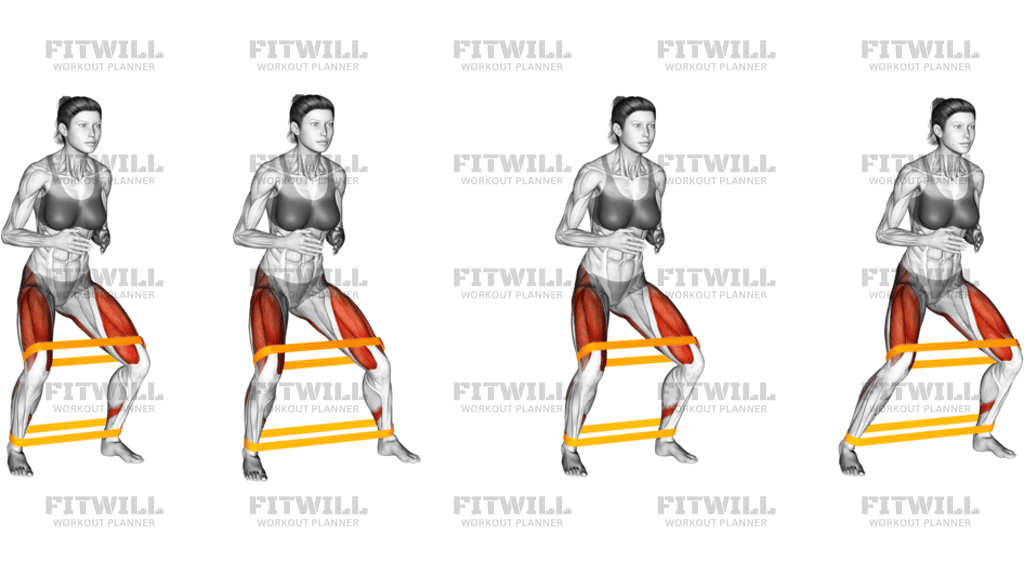
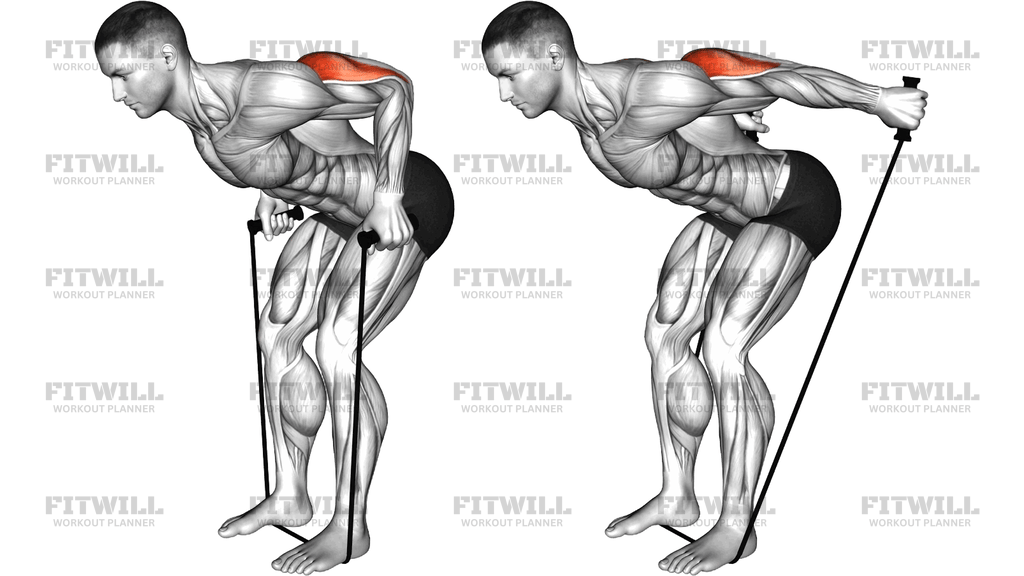
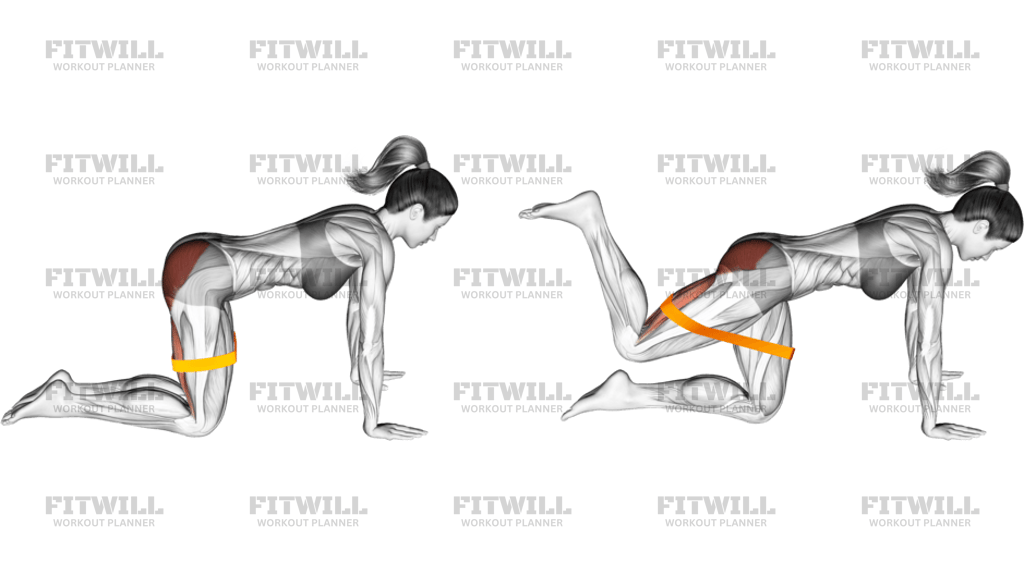
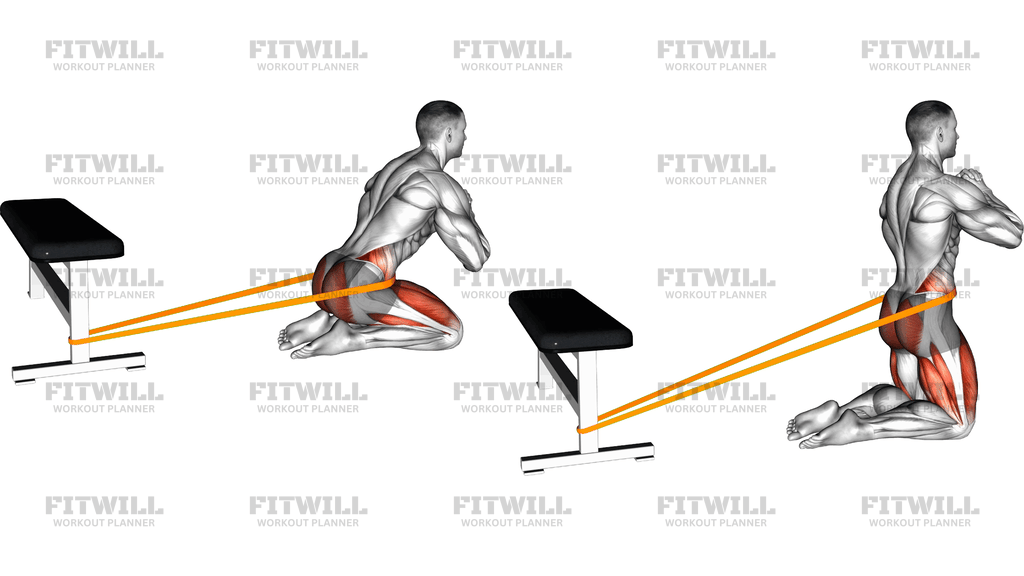
Resistance Band Standing Balance Glute Kickback Version 2
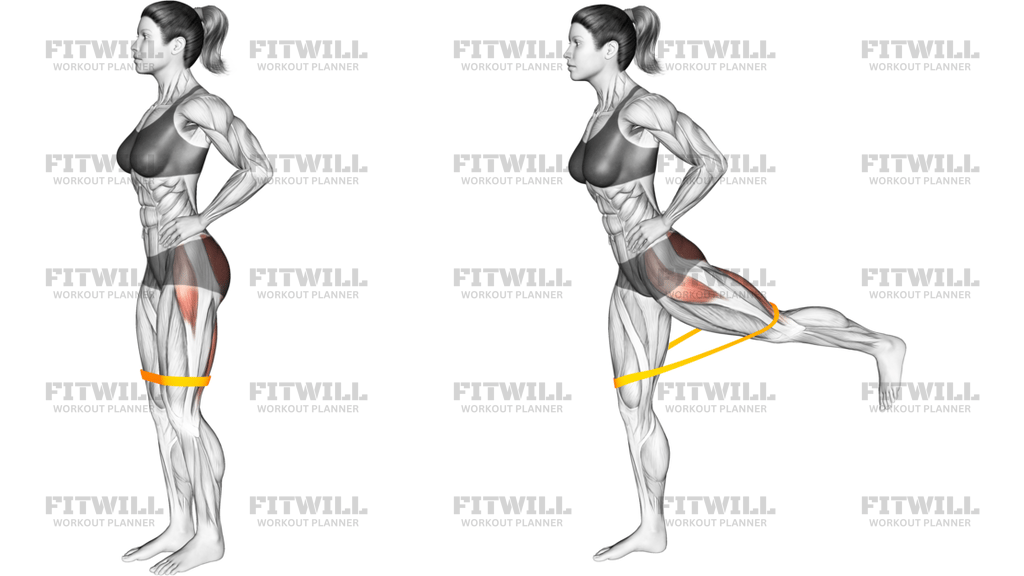
Resistance Band Standing Balance Glute Kickback Version 2 is a standing single-leg glute exercise that uses a loop band around the lower legs to train hip extension, pelvic control, and balance at the same time. In the image, the working leg drives straight back behind the body while the support leg stays tall and steady, which makes this more than a simple kickback: you also have to resist trunk sway, hip rotation, and the urge to arch the lower back.
The setup matters because the band tension changes quickly when your feet are too close together or your pelvis drifts. Start with the band around the ankles or lower shins, stand on one leg, and place your hands on your hips so you can feel whether the hips stay square. A small forward hinge is useful, but the torso should remain long and quiet rather than folding over the working leg. That position lets the glute do the work instead of turning the rep into a back swing.
Each repetition should feel like a controlled push from the hip, not a leg throw. Keep the support knee soft, brace your midsection, and drive the free leg straight back until the glute contracts hard without twisting the pelvis. The return is just as important: bring the leg back under control against the band, avoid snapping the foot down, and reset the stance before the next rep. Exhale on the kickback and keep the rib cage stacked over the pelvis so the lower back does not take over.
This exercise is useful as a glute activation drill, a warm-up before lower-body lifting, or accessory work when you want unilateral hip work without heavy loading. It is also a practical balance challenge for athletes or anyone who wants cleaner single-leg control. Light resistance usually works best, because the goal is to keep the support foot stable, the pelvis level, and the movement path precise from the first rep to the last.
[ Workout Log & Planner ]
Put your next workout in Fitwill
Keep your plan and training log ready when you are.


Instructions
- Loop the band around your ankles or low shins and stand tall with your feet hip-width apart.
- Shift your weight onto one leg, keep that support knee soft, and place your hands on your hips for feedback.
- Set your ribs over your pelvis, square your hips forward, and take a small forward hinge without rounding your back.
- Brace lightly through your midsection before the leg moves so your torso stays quiet.
- Drive the free leg straight back from the hip until you feel a strong glute contraction.
- Keep the kicking leg mostly straight or slightly soft at the knee and avoid turning the toes outward.
- Pause for a beat at the end range without arching your lower back or opening the hips.
- Return the leg forward slowly against the band and reset your balance before the next rep.
Tips & Tricks
- Keep the support foot rooted through the big toe, little toe, and heel so the standing leg does not collapse inward.
- Use a small range if the pelvis starts to rotate; the glute is working harder when the hips stay square.
- Think about pushing the heel back rather than swinging the foot behind you.
- A slight forward hinge usually helps the glute, but if you hinge too far the low back and hamstrings will start to dominate.
- Choose a light band first; too much resistance turns this into a balance drill with sloppy body sway.
- Keep the kicking foot quiet and mostly pointed down so the leg moves from the hip instead of the hip opening outward.
- If you need it, lightly hold a rack or wall with one hand and keep the other hand on your hip.
- Exhale as the leg moves back and inhale on the controlled return to keep the torso from bracing too hard.
- Stop the set when the standing hip drops or the trunk starts leaning away from the working leg.
Frequently Asked Questions
What does Resistance Band Standing Balance Glute Kickback Version 2 train most?
It primarily targets the glute on the working side, with the support leg, core, and hip stabilizers helping keep your pelvis level.
Can beginners perform this exercise?
Yes. Beginners usually do best with a very light band and a hand on a wall or rack until the standing leg feels stable.
Where should the resistance band sit?
The band usually sits around the ankles or low shins, which keeps tension on the kickback and makes it easier to feel the hip working.
Should my torso stay upright or hinge forward?
Use a small forward hinge, but keep the torso long and quiet. The goal is to load the glute without folding at the waist.
Why do I feel this in my lower back instead of my glute?
That usually means you are arching the lumbar spine or kicking too high. Shorten the range and keep the ribs stacked over the pelvis.
Do I need to keep the working knee straight?
A mostly straight leg is common, but a slight knee bend is fine if it helps you keep the pelvis level and the kick smooth.
What is the biggest mistake with this standing kickback?
The biggest error is letting the hips open or the torso sway to create momentum instead of moving the leg from the glute.
When should I use this exercise in a workout?
It works well in a warm-up, glute activation block, or accessory section when you want lighter unilateral hip work and balance practice.