Cable Front Seated Row
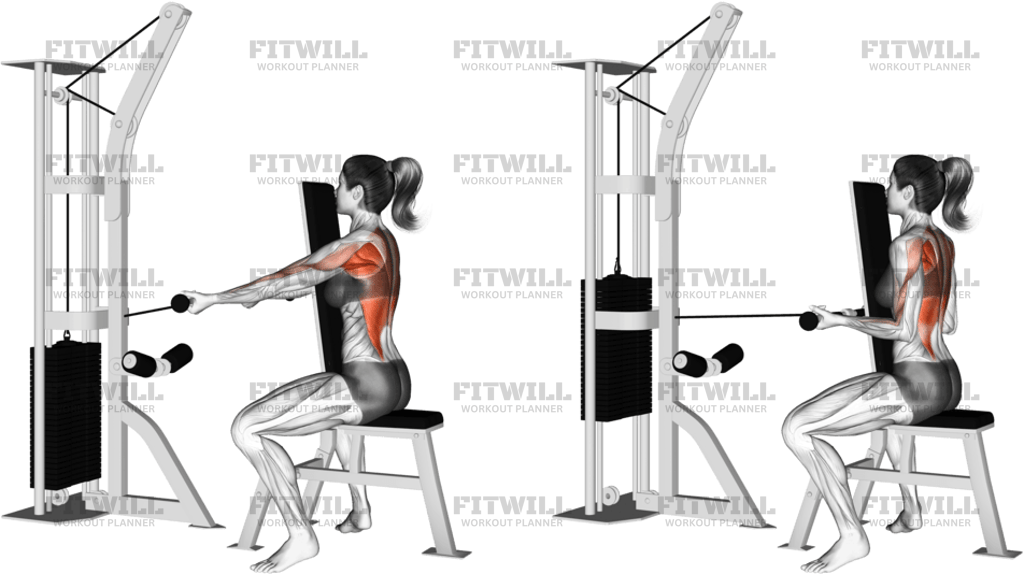
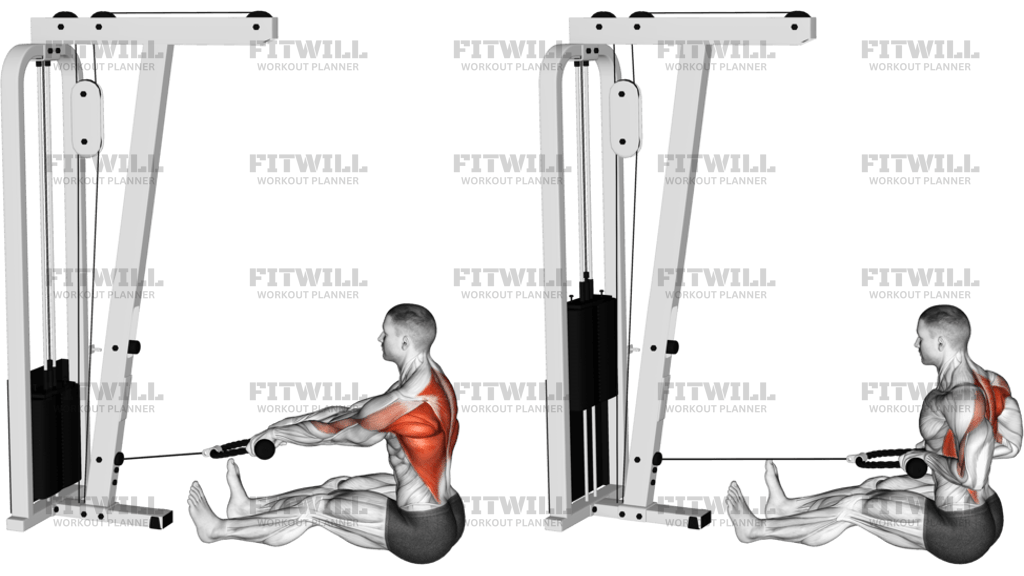
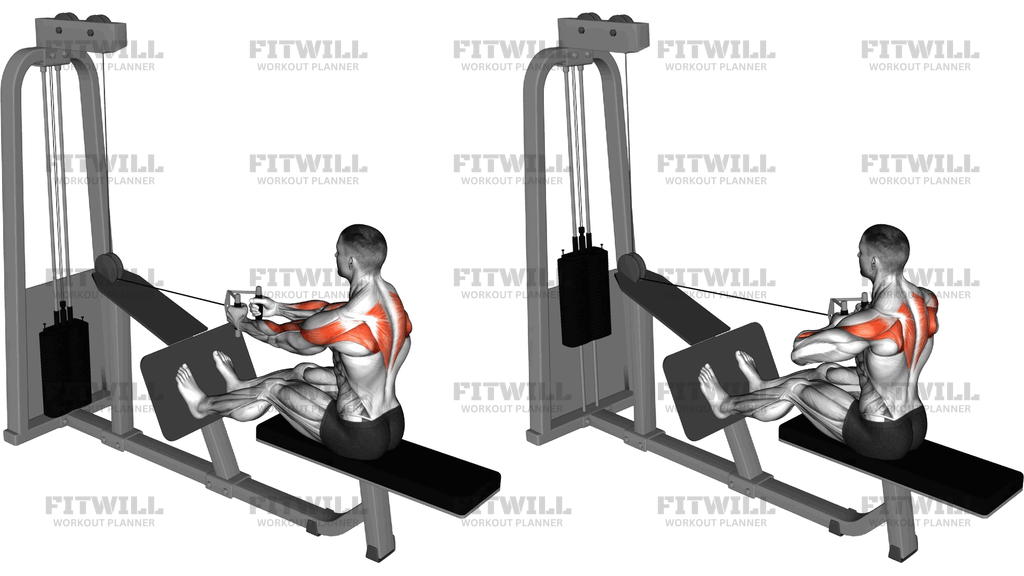
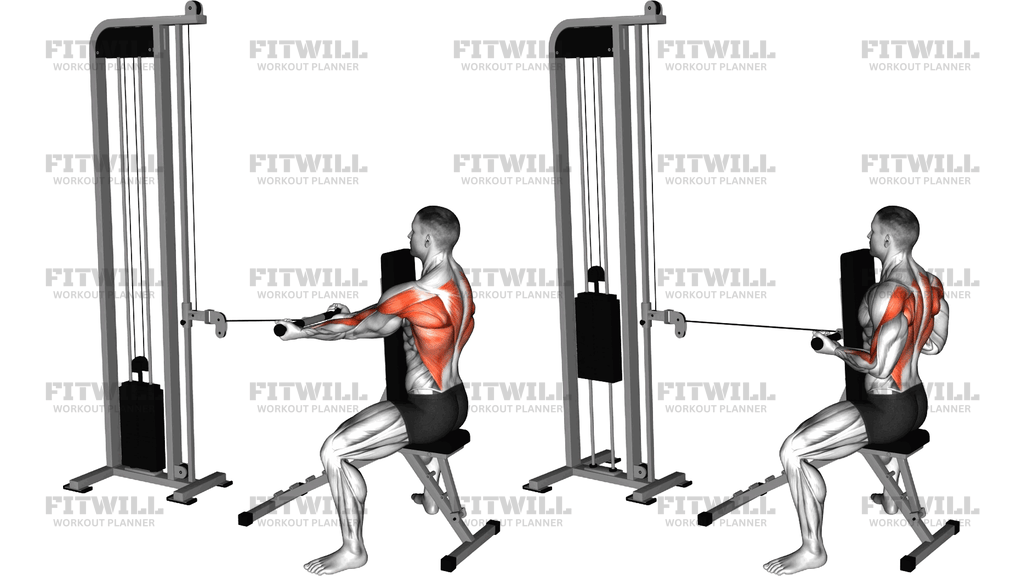
The Cable Front Seated Row is a horizontal pulling exercise performed on a cable machine with a low pulley. You sit facing the stack with your chest braced against the upright support pad, grasp the handle with both hands, and pull it in toward your torso before letting it travel back out under control. The chest pad is what separates this from a standard seated row: because your torso is supported against the pad, it is much harder to lean back and use body English to move the weight, so the work stays on the muscles of the mid and upper back.
This movement primarily trains the lats, along with the rhomboids and mid traps that pull your shoulder blades together behind you. Your biceps and rear shoulders assist through the pull, your forearms work to hold the handle, and the muscles along your spine stay engaged to keep you tall against the pad. Because the cable provides smooth, even tension through the entire range, the back muscles stay loaded both while pulling in and while the handle returns.
The setup matters more here than on many back exercises. The pad height should line up with your mid-chest so your torso stays upright and supported, and your seat height should let your arms travel roughly parallel to the floor toward the pulley. If the handle path sits too high or too low relative to your torso, you drift away from a clean horizontal row and start loading the shoulders or lower back in ways you did not intend.
Execution is straightforward but easy to rush. Pull the handle toward your lower chest or upper stomach, driving your elbows back and letting your shoulder blades squeeze together at the finish. Pause briefly, then extend your arms fully forward so your shoulder blades can reach slightly around your ribcage before the next rep. Keep your chest in contact with the pad throughout — if your torso peels off the pad, the weight is likely too heavy.
This exercise suits a wide range of trainees. Beginners appreciate that the chest pad limits cheating and makes the target muscles easy to feel, while more experienced lifters use it as a strict mid-back builder after heavier free-weight rows. It is also a common choice for people managing lower back fatigue, since the supported torso removes much of the spinal loading that bent-over rowing demands. Adjust the weight so the last two reps of each set stay clean, and treat the chest pad as your built-in form check.
[ Workout Log & Planner ]
Put your next workout in Fitwill
Keep your plan and training log ready when you are.


Instructions
- Sit on the bench facing the cable machine and adjust the chest pad so it rests firmly against your mid-chest when you lean into it.
- Set your seat height so your arms can reach the handle straight forward at roughly chest height, with the cable running level toward the low pulley.
- Grip the handle with both hands using a neutral or slightly narrower-than-shoulder grip, and plant your feet flat on the floor with knees bent.
- Lean your chest into the pad, lift your torso tall, and brace your core before the first pull.
- Start each rep with your arms extended and a slight bend in the elbows, letting your shoulder blades reach forward around your ribs.
- Pull the handle in toward your lower chest or upper abdomen, keeping your elbows close to your sides and driving them back past your torso.
- At the end of the pull, squeeze your shoulder blades together and hold the contraction for a brief moment.
- Return the handle forward under control until your arms are fully extended and your upper back has lengthened, without letting the weight stack slam down.
- Exhale as you pull in, inhale as you extend your arms back out.
- Complete your set, then release the handle and let the stack settle before standing up from the bench.
Tips & Tricks
- If your chest keeps lifting off the pad as you pull, the load is too heavy for a clean rep — reduce the weight until your torso stays pinned for the whole set.
- Avoid shrugging your shoulders up toward your ears as you row; keep the pull low and think about driving your elbows back rather than lifting the handle.
- Do not let your shoulders roll forward and collapse at the top of the stretch. Extend the arms fully, but keep light tension in the upper back rather than letting the stack yank your shoulder blades loose.
- Keep a small bend in your elbows even at full extension. Locking the elbows out hard at the front of the rep shifts stress to the joint instead of the back muscles.
- Pull to your lower chest or upper stomach rather than your collarbone. A high pull turns the movement into something closer to an upright row and takes emphasis off the lats and mid-back.
- Because the cable keeps tension on the stretch, resist the temptation to let the return phase free-fall. A slow two-count back out is where much of the mid-back work happens.
- Check your foot position between sets. Feet that slide forward leave you pulling from an unstable base and encourage torso rotation.
- Wrist position matters on the handle. Keep your wrists straight and neutral; cocked wrists on heavy rows turn the grip into the weak link before your back is challenged.
- If your forearms fatigue before your back, try a wider or more neutral grip attachment so the biceps and grip contribute efficiently instead of fighting the angle.
Frequently Asked Questions
Which muscles does the Cable Front Seated Row work?
The primary muscles are the lats, with strong contributions from the rhomboids and mid traps as they pull your shoulder blades together. Your biceps and rear shoulders assist, and your forearms work to hold the handle.
Why does the Cable Front Seated Row use a chest pad instead of a regular seated row bench?
The pad supports your torso so you cannot lean back and use momentum to move the weight. This keeps the effort on your upper and mid back and makes cheating much harder than on an open-bench seated row.
Where exactly should I pull the handle on the Cable Front Seated Row?
Pull toward your lower chest or upper abdomen with your elbows staying close to your sides. Pulling higher toward the collarbone changes the path and shifts emphasis away from the lats and mid-back.
Is the Cable Front Seated Row good for beginners?
Yes, it is one of the more forgiving back exercises because the chest pad enforces good torso position. Start light, learn to feel your shoulder blades pulling together, and progress the weight only when your chest stays in contact with the pad.
What is the most common mistake on the Cable Front Seated Row?
Using too much weight and driving the chest into the pad to help complete each rep. If your torso rocks or your shoulders shrug, drop the load and re-establish the squeeze at the end of each pull.
How does the Cable Front Seated Row compare to a bent-over barbell row?
The cable version supports your torso and keeps constant tension through the whole range, while the barbell row loads the spine and lower back more heavily. Many lifters use both: the row for heavy loading, the cable version for strict mid-back volume.
Can I substitute a different attachment on the Cable Front Seated Row?
Yes. A straight bar, V-bar handle, or rope attachment all work, and each shifts the grip slightly. A neutral grip tends to be most comfortable for the shoulders and easiest on the wrists.
How far back should my shoulder blades travel when I return the handle?
Let your arms extend fully and allow your shoulder blades to reach slightly forward at the end of the stretch, but keep the weight stack from slamming. You want a full stretch without losing all tension in the shoulders.
Is the Cable Front Seated Row safe for people with lower back sensitivity?
The chest pad removes most of the torso support demands of free-weight rowing, which is why it is often used when the lower back is fatigued. Still, keep the load reasonable, avoid rounding forward at full stretch, and stop if the movement causes discomfort.