Weighted Dumbbell Lying Flat Hip Raise
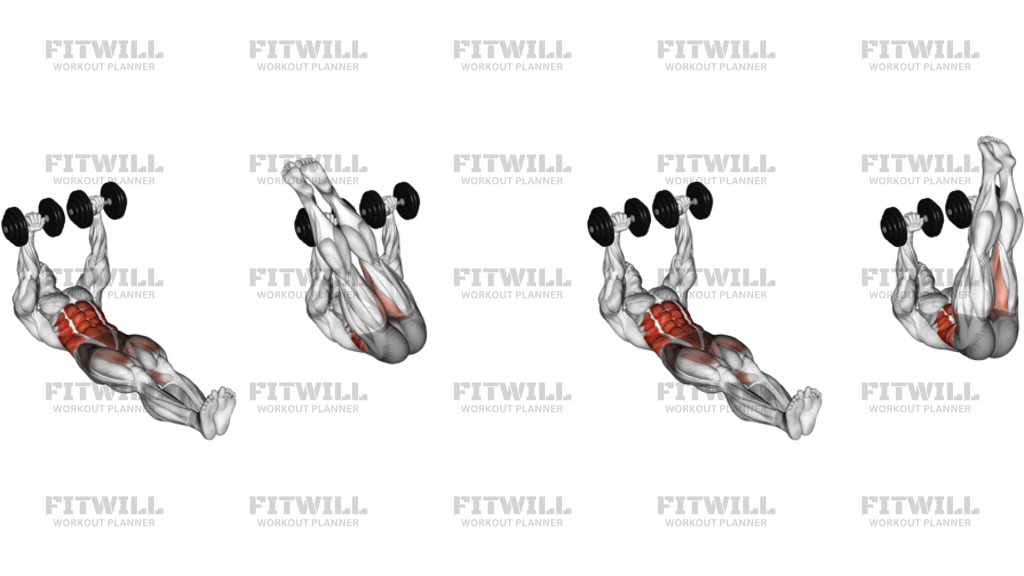
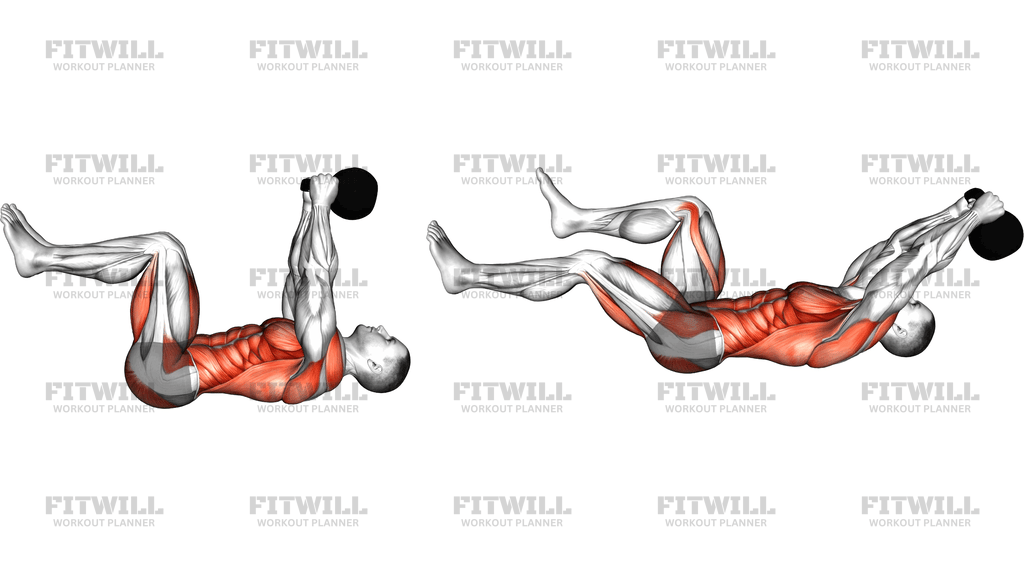
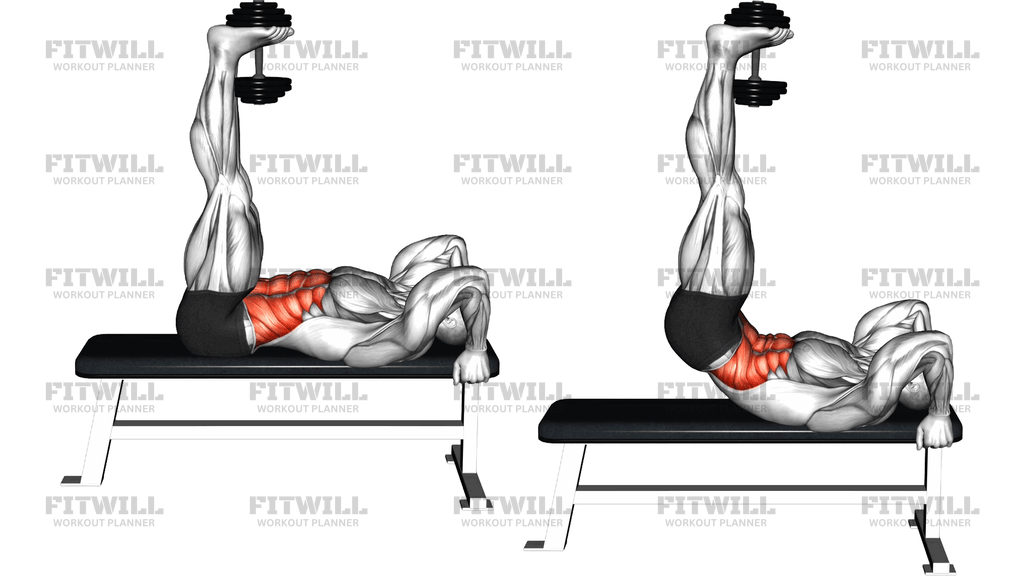
The Weighted Dumbbell Lying Flat Hip Raise is a lower-abdominal movement performed while lying flat on your back on a bench, with a dumbbell secured between your feet and your legs pointed straight up toward the ceiling. From that position, you lift your hips and glutes off the bench by curling the pelvis upward, then lower back down under control. The added load from the dumbbell makes the movement substantially harder than a standard bench leg raise or hip raise, which is exactly why it belongs in intermediate and advanced core training rather than a beginner's first week.
This exercise primarily targets the lower portion of the rectus abdominis, the section of the six-pack muscle responsible for pulling the pelvis toward the ribcage. Because you start with the legs already vertical, the hip flexors are somewhat less dominant than they are in a straight leg raise, and the emphasis shifts toward that pelvic curl. The deep core stabilizers work hard to control the descent, and the adductors and inner thighs stay engaged the entire time just to keep the dumbbell from slipping.
Setup matters more here than in most ab exercises, for one simple reason: you are holding a plate-loaded object above your face and torso with nothing but your feet. Grip the bench behind or under your head with both hands to anchor your upper body, and position the dumbbell so the top head rests against the tops of your feet or between your soles with the legs fully extended. If the dumbbell is loose or your feet are too far apart, the first heavy repetition will teach you a lesson you won't enjoy.
Execution should look like a controlled roll, not a heave. Think about stacking your hips over your lower back and pushing your feet toward the ceiling, lifting only as high as your spine can flex without your lower back arching off the bench. The lowering phase is where most of the training effect lives; bring the hips back down slowly, resist the pull of the weight, and keep tension in the abs the whole way. People typically use this movement in dedicated ab sessions, at the end of lower-body days, or as a weighted progression once body-weight hip raises on a bench have stopped feeling like work.
A few practical points will keep this safe and productive. Start light — even a 5 to 10 kg dumbbell feels very different from body weight when it is balanced on your feet overhead. Choose a flat, stable bench, keep your head and shoulders in contact with it, and never let the hips drop so far that your lower back slams into the bench. If you cannot keep the dumbbell secure or your form breaks down after a few reps, that is a signal to reduce the load, not to grind through it.
[ Workout Log & Planner ]
Put your next workout in Fitwill
Keep your plan and training log ready when you are.


Instructions
- Lie flat on your back on a flat bench with your head and shoulders fully supported and your whole upper back in contact with the pad.
- Reach back and grip the edges or legs of the bench firmly with both hands so your torso stays anchored throughout the set.
- Raise your legs until they are straight and vertical, and clamp a dumbbell securely between your feet — the top head of the dumbbell should rest against the tops of your feet or between your soles.
- Brace your core and press your lower back lightly into the bench before you begin the first rep.
- Curl your pelvis upward by pulling your hips and glutes off the bench, driving your feet straight up toward the ceiling rather than toward your head.
- Pause briefly at the top with the hips fully elevated and the abs squeezed.
- Lower the hips back down slowly and under control, letting your glutes return to the bench without dropping or bouncing.
- Keep the legs vertical and the knees straight the entire time so the dumbbell stays balanced and the tension stays on the abs.
- Exhale as you lift the hips, inhale as you lower them, and avoid holding your breath through the whole set.
- After your final rep, hold the legs vertical, take the dumbbell off with your hands or lower the legs slowly with it still secured, and set it down before you sit up.
Tips & Tricks
- The most common failure in this movement is turning it into a leg swing — the legs move but the hips never actually leave the bench. Make hip elevation the goal of every rep, not leg motion.
- If the dumbbell starts sliding toward your toes, reposition it so it presses against the tops of your feet near the arch, and squeeze your feet together harder rather than bending the knees to trap it.
- Avoid pushing the feet back over your head at the top; the dumbbell should travel vertically, which keeps the load on the abdominals instead of turning it into a balance problem.
- Do not let your hips crash back down between reps. A two to three second lowering phase does far more for the lower abs than a fast, bouncy tempo.
- Keep your hands clamped to the bench for the entire set. Letting go mid-rep to chase a slipping dumbbell with your legs overhead is the single riskiest moment of this exercise.
- If your lower back arches and lifts off the bench during the descent, reduce the range slightly and focus on keeping the pelvis curled — the load is outrunning your control.
- Start with a dumbbell lighter than you think you need. Because the weight sits on your feet overhead, even a small jump in load changes the difficulty dramatically.
- Small, deliberate reps beat large, jerky ones. If you have to rock your upper body to get the hips up, the weight is too heavy.
- Use a bench with a non-slip pad or place a towel under your hips if the surface is slick — a sliding pelvis ruins the pelvic curl and makes the dumbbell harder to control.
- This pairs well after body-weight leg raises in the same session; treat the weighted version as the harder progression rather than a replacement for building baseline control.
Frequently Asked Questions
Which muscles does the Weighted Dumbbell Lying Flat Hip Raise work the most?
The lower portion of the rectus abdominis does most of the work during the pelvic curl, with the deeper core muscles stabilizing throughout. The hip flexors assist, and the inner thighs and glutes contribute to keeping the legs locked out and the hips moving.
Why hold the dumbbell between the feet instead of on the hips or chest?
Placing the dumbbell between the feet adds load at the end of the longest lever in the movement, which challenges the abs much more than adding weight near the torso. It also forces the legs to stay extended and together, which reinforces good technique.
Is the Weighted Dumbbell Lying Flat Hip Raise suitable for beginners?
It is generally better suited to intermediate trainees who can already perform controlled body-weight hip raises and leg raises on a bench. Beginners should build that foundation first, since the weighted version requires both lower-ab strength and the coordination to balance a dumbbell overhead.
How heavy should the dumbbell be for this exercise?
Start with a light dumbbell, often 5 to 10 kg, and only add weight once you can complete your sets with the hips lifting fully and a slow lowering phase. Because the load sits on your feet above your body, even modest increases feel significant.
How do I stop the dumbbell from slipping out of my feet?
Rest the top head of the dumbbell against the tops of your feet near the arch, keep your knees locked out, and actively press your feet together. If it still slips, the weight is likely too heavy or your feet are positioned too far apart.
Should my hips actually leave the bench, or just my legs move?
Yes — the defining feature of the hip raise is that the pelvis and glutes lift off the bench as you curl upward. If only the legs move and the hips stay planted, you are doing a leg raise and missing most of the lower-ab work.
What can I substitute if I do not have a dumbbell or a bench?
A body-weight lying hip raise on a bench or on the floor is the closest substitute, and a medicine ball or light plate held between the feet works similarly. For a different loading angle, hanging leg raises with a controlled pelvic curl train the same lower-ab pattern.
Is it safe to have weight over my face and chest during this movement?
It is manageable when you keep both hands clamped to the bench, use a weight you can control, and never release your grip mid-set. If you feel the dumbbell slipping, bring your legs down slowly with it secured and reset rather than reaching for it while your legs are overhead.
Why does my lower back arch or feel strained during the lowering phase?
That usually means the hips are dropping too fast or the weight is beyond what your abs can decelerate. Slow the descent, curl the pelvis a little harder before lowering, and reduce the load until your lower back stays supported against the bench throughout.