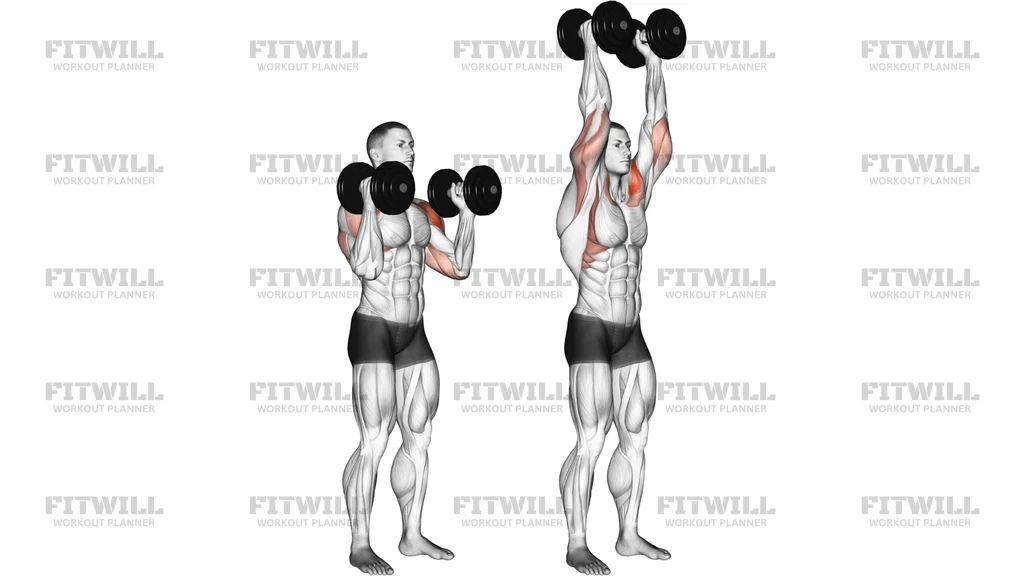
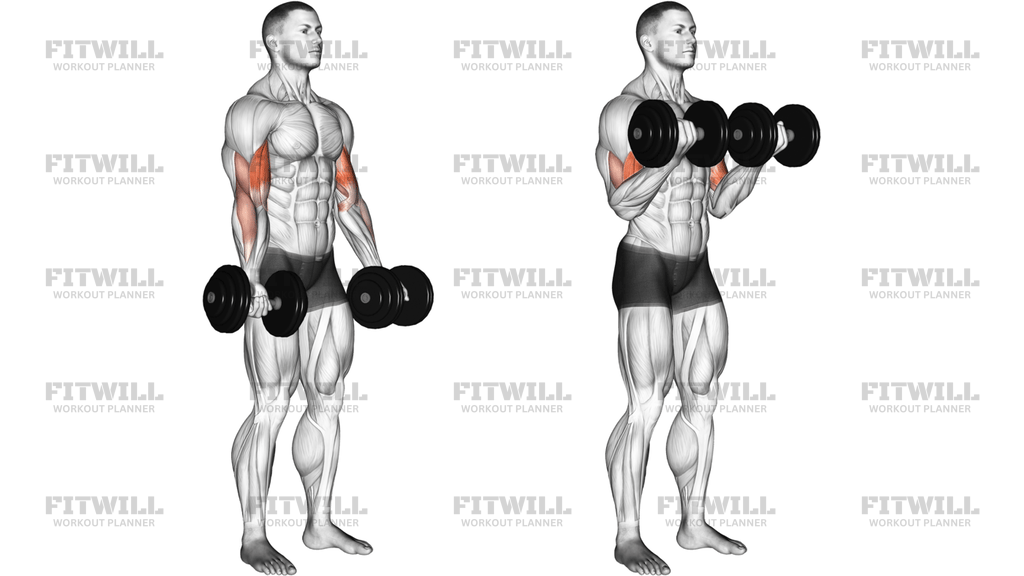
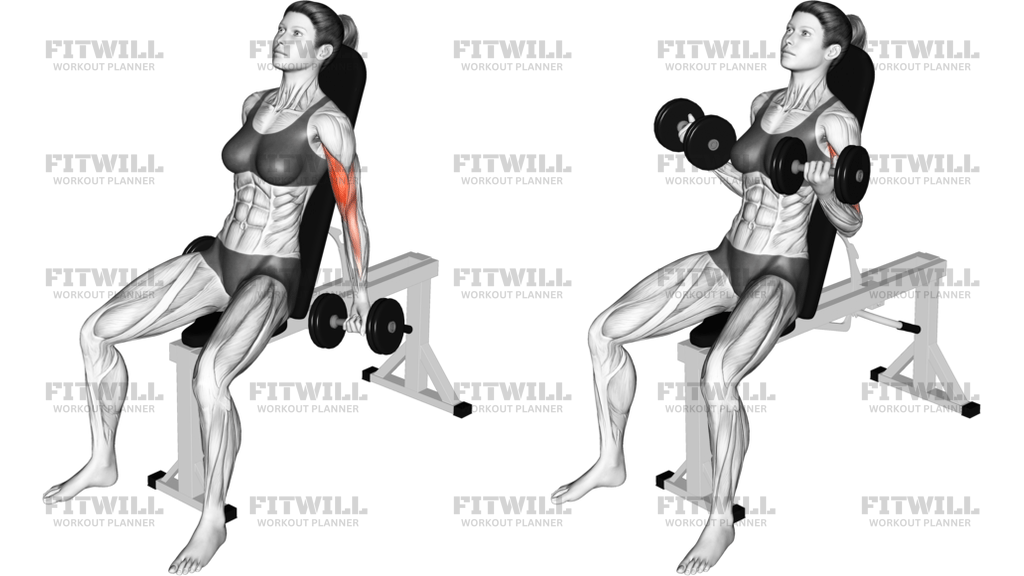
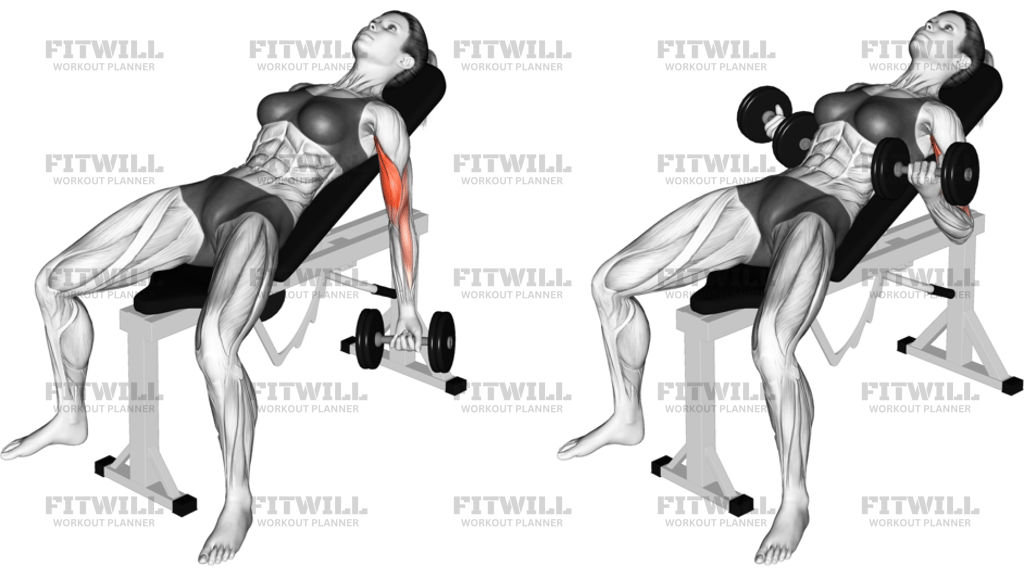
Dumbbell High Curl
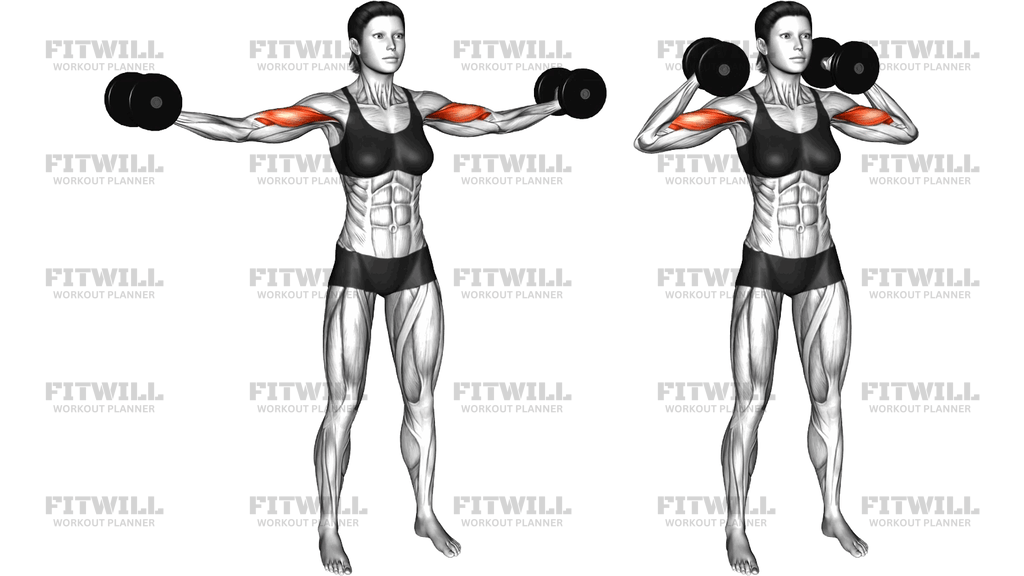
The Dumbbell High Curl is a biceps variation performed with your arms held out to the sides at shoulder height. Instead of curling from a hanging position, you keep your upper arms elevated and horizontal to the floor, then flex your elbows to draw the dumbbells in toward your shoulders before extending back out wide. This fixed upper-arm angle changes the tension profile compared to a standard curl and places a steady demand on the biceps through a shortened range.
This exercise is useful for lifters who already handle regular curls comfortably and want to challenge the biceps in a peak-contraction position. Because the shoulders must hold the arms up for the entire set, the front delts and upper back also work isometrically, making this a demanding but efficient option for arm-focused sessions or finishers.
Setup matters more here than in a standard curl. Stand tall with feet about hip-width apart, raise both dumbbells straight out to the sides until your arms are level with your shoulders, and keep a slight bend in the elbows with palms facing forward. Your torso should stay upright with ribs stacked over hips; if you lean back or shrug, the shoulders take over and the biceps lose the point of the exercise.
To execute well, brace your core, then bend your elbows and curl the dumbbells in toward your ears or the top of your shoulders without letting your upper arms drop. Squeeze at the innermost point, then slowly extend back out to the wide starting position, stopping before your elbows lock or the weights pull your shoulders forward. The tempo should be slow on the way out, since that eccentric portion is where most of the control is earned.
Common use cases include arm specialization blocks, supersetting with lateral raises or standard curls, and adding variety for lifters whose progress has stalled on conventional curling. It pairs well with low-to-moderate loads, because the leverage is much weaker than in a regular curl and even light dumbbells feel heavy once the arms reach shoulder height.
From a safety standpoint, go lighter than you think you need and keep the movement smooth. Avoid swinging the weights into your shoulders, dropping them back out wide, or forcing the range if your shoulders feel pinched. If shoulder-height arm position is uncomfortable, reduce the elevation slightly or shorten the range while you build tolerance.
[ Workout Log & Planner ]
Put your next workout in Fitwill
Keep your plan and training log ready when you are.


Instructions
- Stand with feet hip-width apart, holding a dumbbell in each hand with a firm overhand-neutral grip, palms facing forward.
- Raise both arms straight out to your sides until your upper arms are parallel to the floor and level with your shoulders, palms forward and a soft bend in each elbow.
- Pull your shoulders down away from your ears, lift your chest, and brace your abdominal muscles to keep your torso upright.
- Without letting your upper arms drop, bend both elbows and curl the dumbbells in toward the top of your shoulders.
- Pause briefly at the innermost point and squeeze your biceps hard.
- Slowly extend your elbows and spread the dumbbells back out wide until your arms are fully straightened at shoulder height, keeping tension on the biceps.
- Exhale as you curl the weights in, and inhale as you extend back out wide.
- Keep your wrists straight and in line with your forearms throughout each rep.
- Complete the set before lowering the dumbbells, and rest adequately between sets since the shoulders fatigue quickly in this position.
Tips & Tricks
- Choose a much lighter weight than you would for a standard dumbbell curl — curling from a shoulder-height position removes all momentum assistance and weakens your leverage.
- If you find yourself shrugging as the set progresses, set the dumbbells down and reset your shoulder position rather than letting your upper traps take over.
- Do not let your elbows drift downward toward your ribs during the curl; the entire point of the high position is that the upper arms stay horizontal.
- Avoid throwing the weights into your shoulders by swinging at the elbows — if you need to bounce, the load is too heavy.
- Control the extension phase for two to three seconds; the biceps work hardest here in the lengthened-to-mid range at this arm angle.
- If your shoulders complain at full elevation, lower your arms slightly below shoulder level and work within a range that feels clean rather than forcing the top position.
- Keep your wrists neutral — bending them back as you curl shifts stress away from the biceps and irritates the forearms.
- Squeeze your glutes and brace your core to stop your lower back from arching as the shoulders fatigue under the load.
- This exercise burns out fast, so place it near the end of an arm workout rather than as your first heavy biceps movement.
Frequently Asked Questions
What muscles does the Dumbbell High Curl work?
The biceps brachii is the prime mover, with the brachialis assisting elbow flexion. The front delts and upper back work isometrically to hold your arms out at shoulder height for the whole set.
How is the Dumbbell High Curl different from a regular dumbbell curl?
In a regular curl your arms hang at your sides, while the High Curl keeps your upper arms raised horizontally the entire time. This puts the biceps under tension in a shortened position and adds a shoulder-endurance element that a standard curl does not have.
Is the Dumbbell High Curl suitable for beginners?
Beginners can attempt it with very light dumbbells, but it is better to build a base with standard curls and lateral raises first. The shoulder-height hold requires strength and control that newer lifters often have not developed yet.
Why do the dumbbells feel so much heavier in this exercise?
Holding weights at arm's length from your body creates a long lever, and the biceps are already partially shortened before you even begin the curl. Even light dumbbells produce high tension quickly, so start with roughly a third to half of your normal curl weight.
Should my elbows stay at shoulder height during the curl?
Yes — the upper arms should remain horizontal throughout. If your elbows drop toward your ribs, the movement turns into a partial regular curl and the unique benefit of the high position is lost.
What is the most common mistake with the Dumbbell High Curl?
Using too much weight and swinging the dumbbells into the shoulders, usually combined with leaning back or shrugging. Fix it by reducing the load, bracing your core, and slowing the extension phase back out wide.
How many reps and sets should I do?
Because the tension is high and the range is short, moderate rep ranges of 8 to 15 reps for 2 to 4 sets work well. Rest 60 to 90 seconds between sets, as your shoulders will need the recovery to hold the position cleanly.
What can I substitute if I don't have dumbbells?
A cable set at shoulder height with a handle in each hand works well, since it provides constant tension through the same arc. Resistance bands anchored or looped under your feet are another option, though the resistance profile differs.
Is it safe if I feel shoulder discomfort during the exercise?
Mild fatigue is normal, but sharp or pinching pain in the shoulder is a signal to stop. Lower your arms slightly below shoulder height, lighten the load, and if the discomfort persists, stick to standard curls and consult a qualified professional before continuing.