Dumbbell Lying On Floor Chest Press
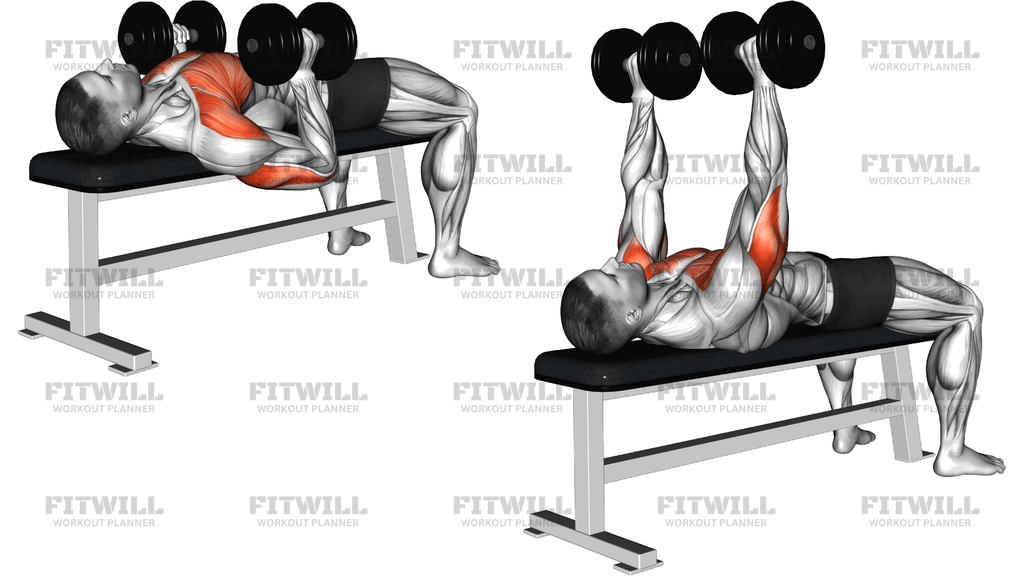
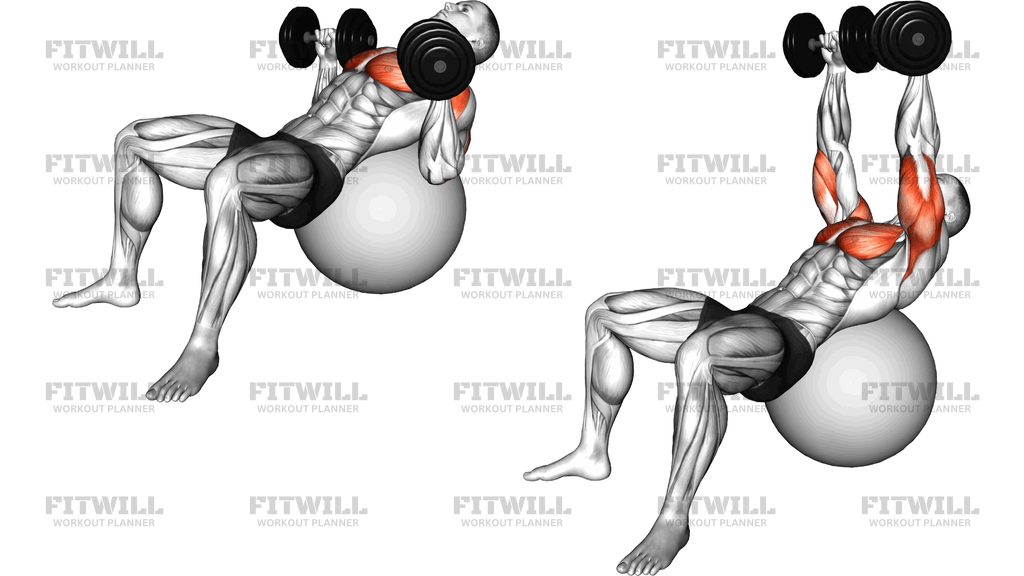
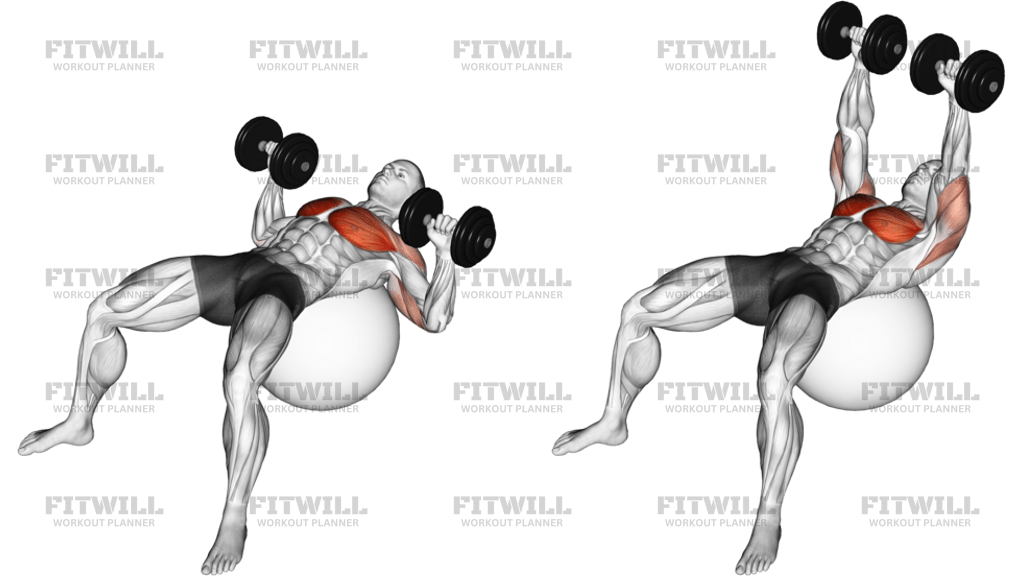
The Dumbbell Lying On Floor Chest Press is a flat pressing movement performed directly on the floor instead of on a bench. You lie on your back with knees bent and feet planted, hold a dumbbell in each hand, and press the weights from just above your chest until your arms are stacked over your shoulders, then lower back down under control. It is essentially a floor press with dumbbells, and it is one of the simplest ways to load a horizontal press without needing any bench or rack.
The floor is what makes this version special. When your upper arms reach the floor, the contact physically stops the descent, so your shoulders cannot drop below neutral and the elbow is never forced into a deep, vulnerable stretch. That makes it a smart choice for people with cranky shoulders or anyone training at home without a bench. At the same time, the shortened range means the chest works through its strongest and safest zone, and the triceps take on extra work in the top half of every rep.
The primary muscles worked are the pectorals of the chest, with the triceps and front delts assisting strongly. Because you are bracing with your back flat on the floor and your feet planted, your core also stays quietly engaged to keep your ribcage from flaring as you press. Grip strength and scapular control round out the picture, since you have to stabilize two independent weights rather than one bar.
Setup matters more than it looks. Your knees should be bent with feet flat on the floor, your head and upper back resting comfortably down, and your elbows positioned at roughly 45 degrees to your torso, not flared straight out to the sides. Getting the dumbbells into position by kicking them up from your knees or having a partner hand them over keeps the start of the set safe and controlled.
This exercise suits home trainees, beginners learning to press, and experienced lifters who want a bench-free pressing day or a shoulder-friendly accessory after heavier barbell work. It also pairs well with rows for a minimal-equipment full upper-body session.
To get the most from it, press the dumbbells up and slightly toward each other until they nearly touch over your chest, squeeze the pecs at the top, and let the backs of your upper arms kiss the floor on every descent before driving back up. Keep the weights moving in a straight vertical line over your shoulders, breathe out on the press, and reset your brace between reps rather than bouncing off the floor.
[ Workout Log & Planner ]
Put your next workout in Fitwill
Keep your plan and training log ready when you are.


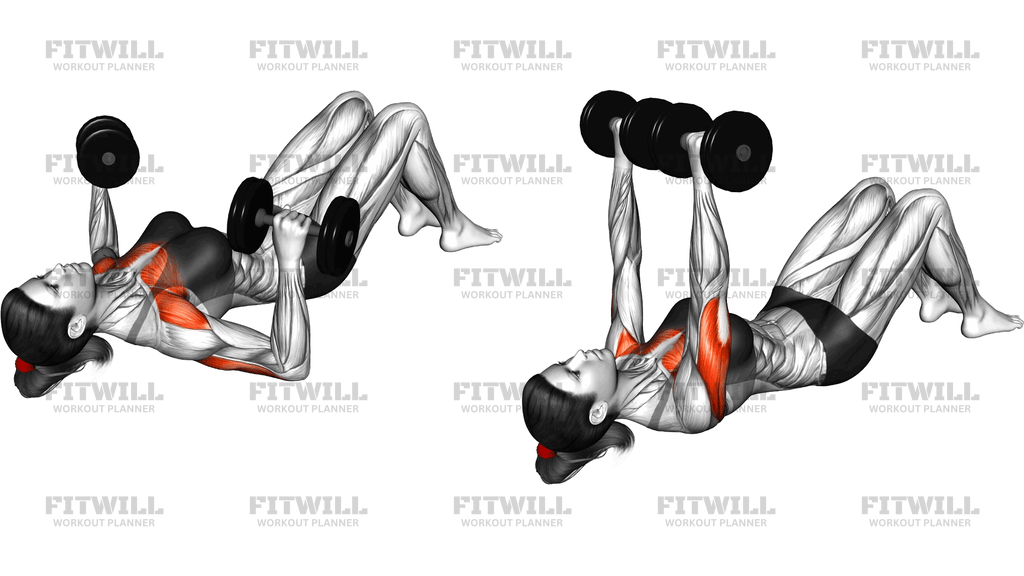
Instructions
- Sit on the floor with your knees bent and feet flat, then place a dumbbell vertically on each thigh near your hips.
- Roll back onto the floor one shoulder at a time, using your legs to kick the dumbbells up over your chest, and settle with your head, upper back, and hips resting on the floor.
- Set your grip with palms facing forward and position the dumbbells just above chest level, elbows bent at roughly 45 degrees to your torso.
- Plant both feet firmly, brace your abdominal muscles lightly, and press your lower back toward the floor so your ribcage stays down.
- Press both dumbbells straight up until your arms are extended over your shoulders and the weights are nearly touching, without locking your elbows hard.
- Pause briefly at the top and squeeze your chest.
- Lower the dumbbells under control until the backs of your upper arms lightly touch the floor and your elbows rest at about 45 degrees.
- Without bouncing, drive through the floor of contact and press back up along the same vertical path.
- Exhale as you press up and inhale as you lower the weights.
- After your final rep, lower the dumbbells to the floor beside you or bring them back to your thighs before sitting up.
Tips & Tricks
- Do not let your elbows flare out level with your shoulders; keeping them at about 45 degrees protects the shoulder joint and keeps the chest in a strong line.
- Avoid bouncing your elbows off the floor for momentum. A light touch, then a deliberate press, keeps tension on the pecs instead of your joints.
- If getting the dumbbells into place feels awkward, kick them up one at a time from your knees rather than trying to swing both up at once.
- Keep your wrists stacked directly over your elbows throughout the press; letting the wrists drift back shifts stress away from the chest and toward the forearms and shoulders.
- Lower back flat on the floor means you cannot arch like on a bench, so any weight you can press here is pressed honestly; do not expect your full bench press numbers.
- Let the dumbbells travel slightly toward each other at the top rather than pressing straight above your face, which keeps the finish position over your chest.
- If your hips rise or your feet slide during hard reps, shorten the range or reduce the weight so your legs can stay planted and stable.
- Choose dumbbells you can control for slow negatives; the floor stops the descent, but an uncontrolled drop can still slam your elbows or wrists.
- Rest briefly between reps to reset your brace if the set gets heavy rather than rushing through reps with a flared ribcage.
Frequently Asked Questions
What muscles does the Dumbbell Lying On Floor Chest Press work?
The chest is the primary mover, with the triceps and front delts assisting throughout the press. Your core and legs contribute stability since your body is braced directly against the floor.
Why press on the floor instead of a bench?
The floor limits how far your upper arms can travel, so your shoulders never sink into a deep stretch at the bottom. This gives you a chest and triceps stimulus with far less shoulder stress, and you need no bench or rack.
Is the Dumbbell Lying On Floor Chest Press good for beginners?
Yes. The fixed floor position and limited range make it easy to learn a press safely, and the kick-up from the knees lets you self-spot lighter dumbbells without a partner.
How far should my elbows touch down on each rep?
Let the backs of your upper arms make light contact with the floor and no more. Slamming the elbows down bounces the weight up and turns the rep into joint loading instead of chest work.
Why can I press less weight here than on a flat bench press?
You lose the leg drive and arch that a bench allows, and the range, while shorter, is pressed with less overall body support. Expect to work with a meaningfully lighter load and treat that as normal.
What is the most common mistake in this exercise?
Flaring the elbows straight out to the sides and bouncing off the floor. Set your elbows around 45 degrees to your torso and pause for a beat at the bottom before pressing.
Can I do the Dumbbell Lying On Floor Chest Press if I have no bench at home?
That is exactly what it is for. All you need is floor space and a pair of dumbbells, with the bent-knee, feet-flat position giving you a stable base.
What can I use instead of this movement?
A dumbbell floor press with a single arm, a bench-based flat dumbbell press if you have a bench, or push-ups are all reasonable substitutes depending on your equipment and shoulder comfort.
How do I get the dumbbells into the starting position safely?
Sit with the dumbbells on your thighs, roll back, and use a controlled kick from one knee at a time to bring each weight up over your chest. Avoid trying to hoist both simultaneously with your arms alone.
Should my palms face forward or toward each other?
Start with palms facing forward for a standard press, but turning them slightly to face each other near the top can feel more comfortable on the shoulders and lets the dumbbells come closer together at lockout.