Kettlebell Snatch And Swing
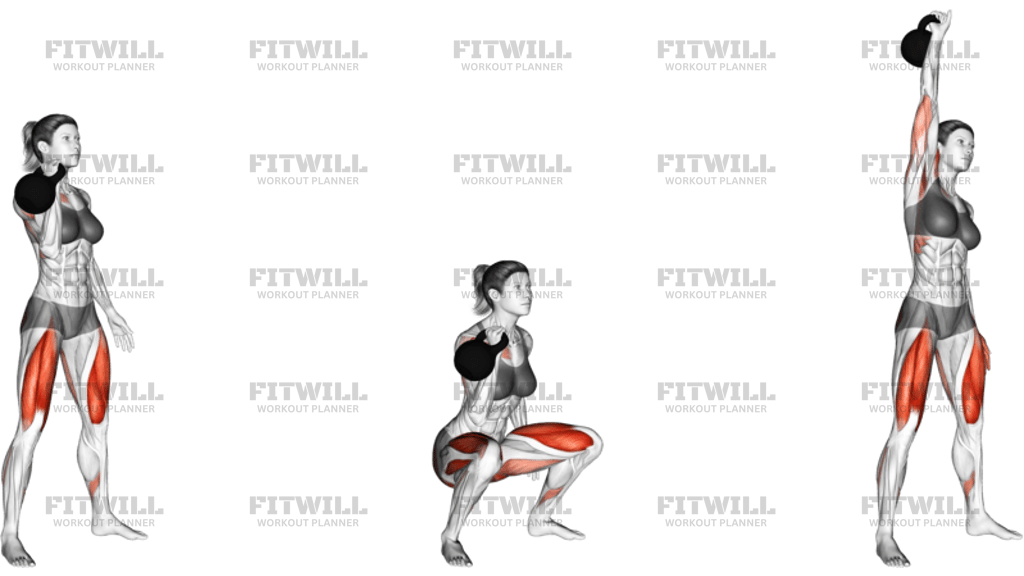
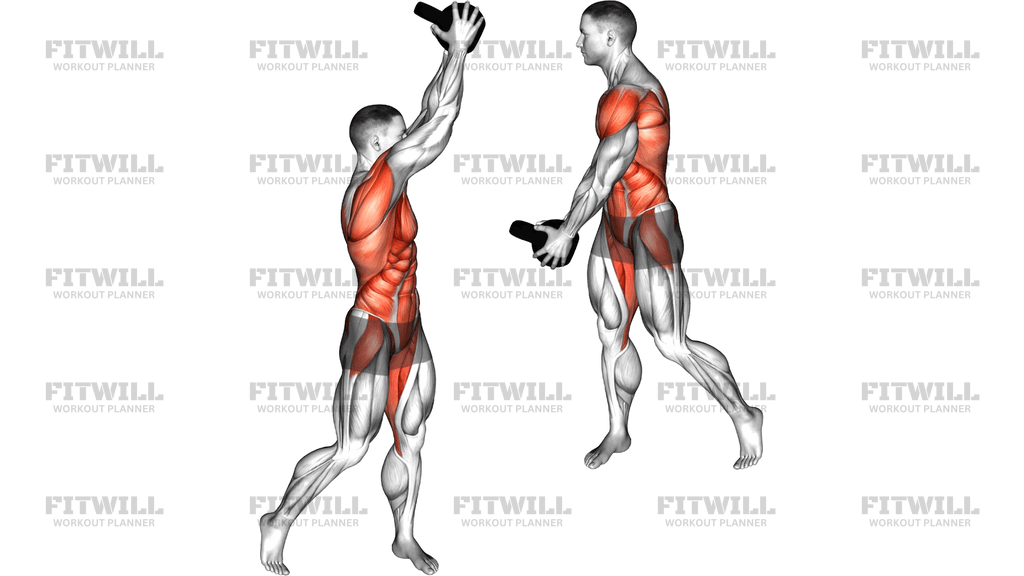
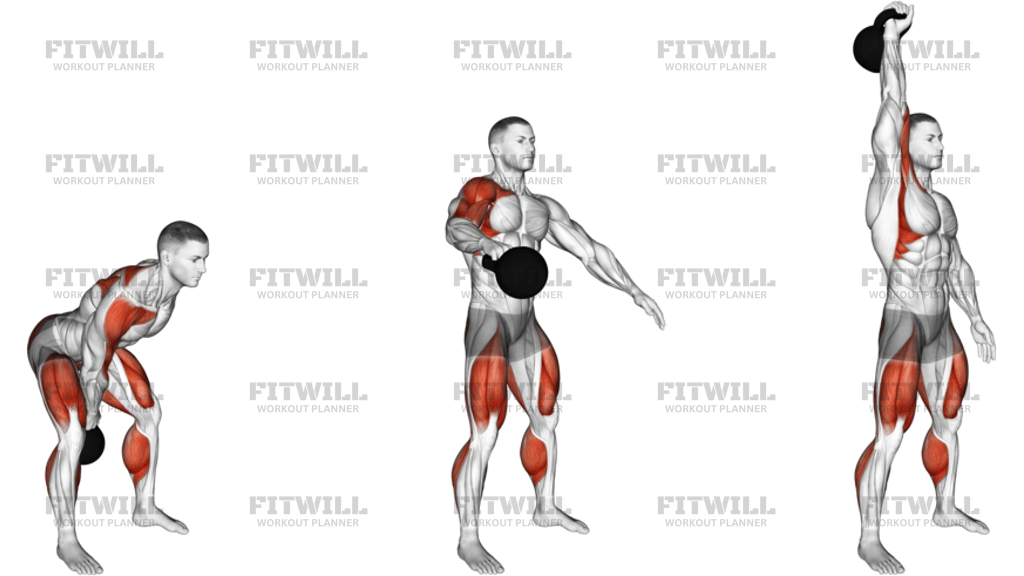
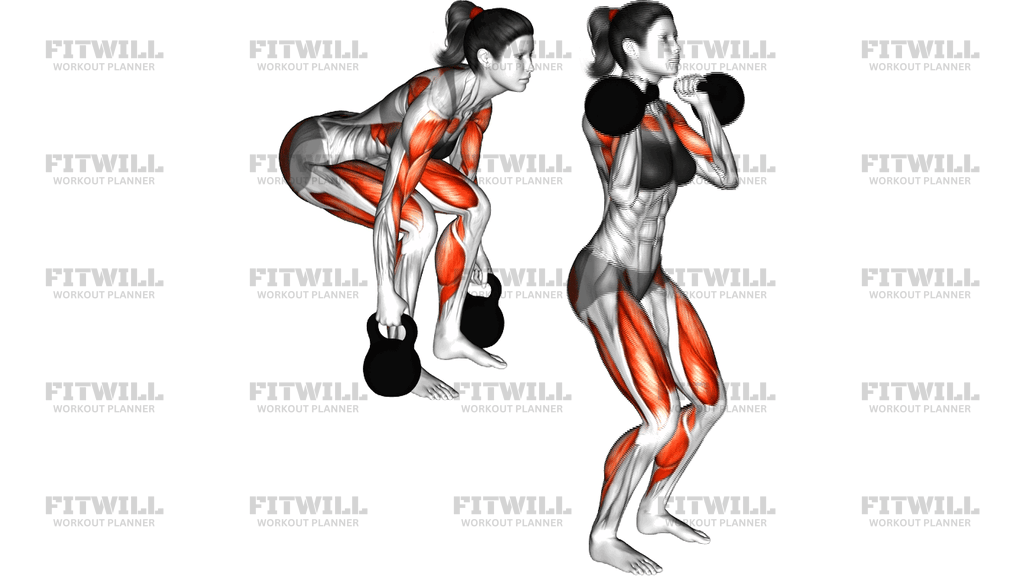
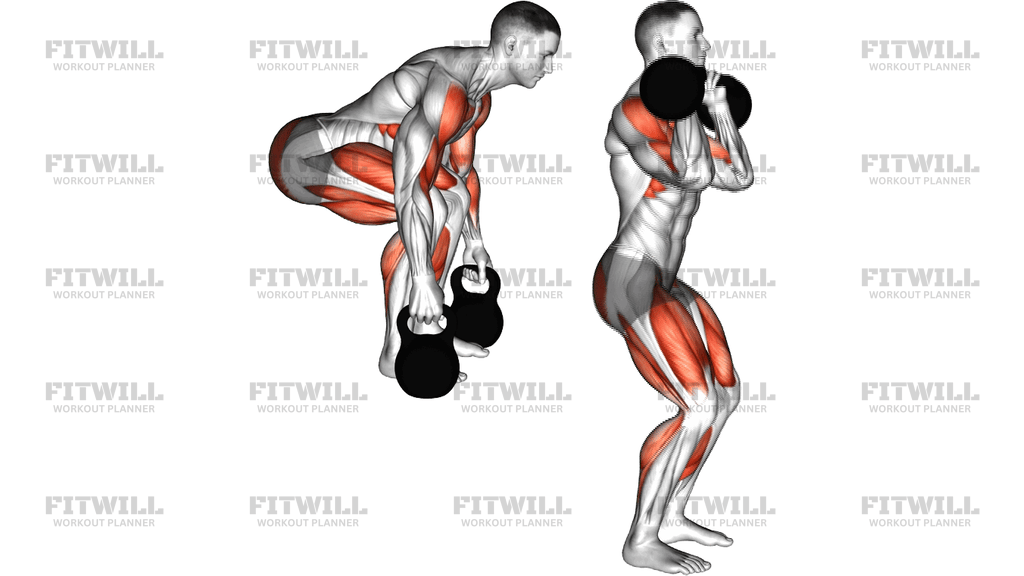
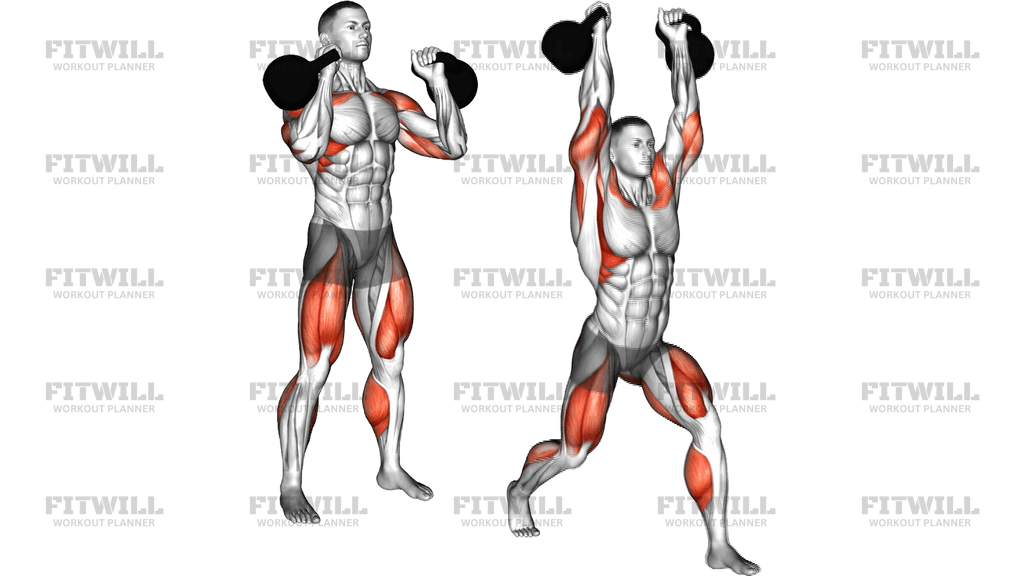
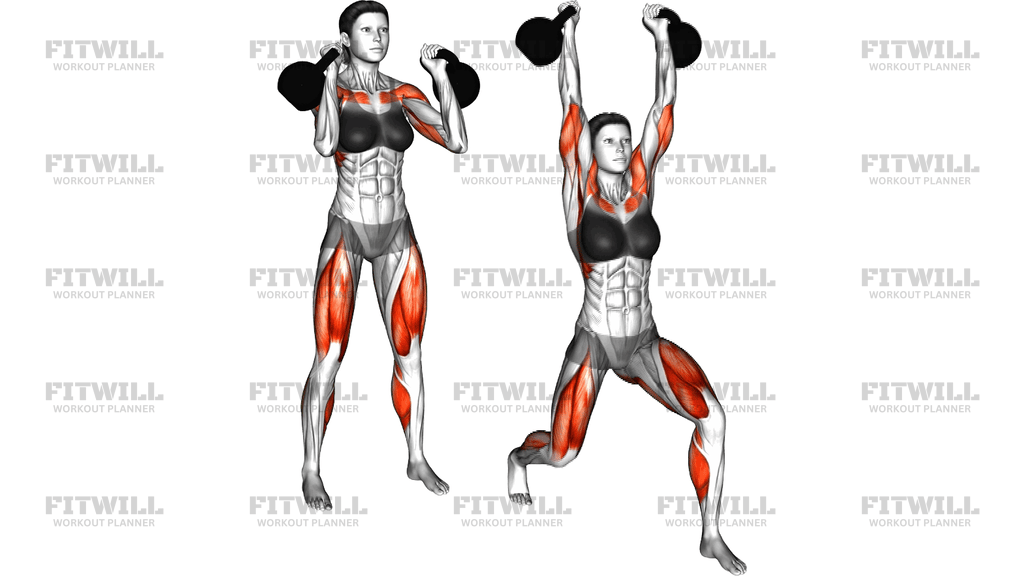
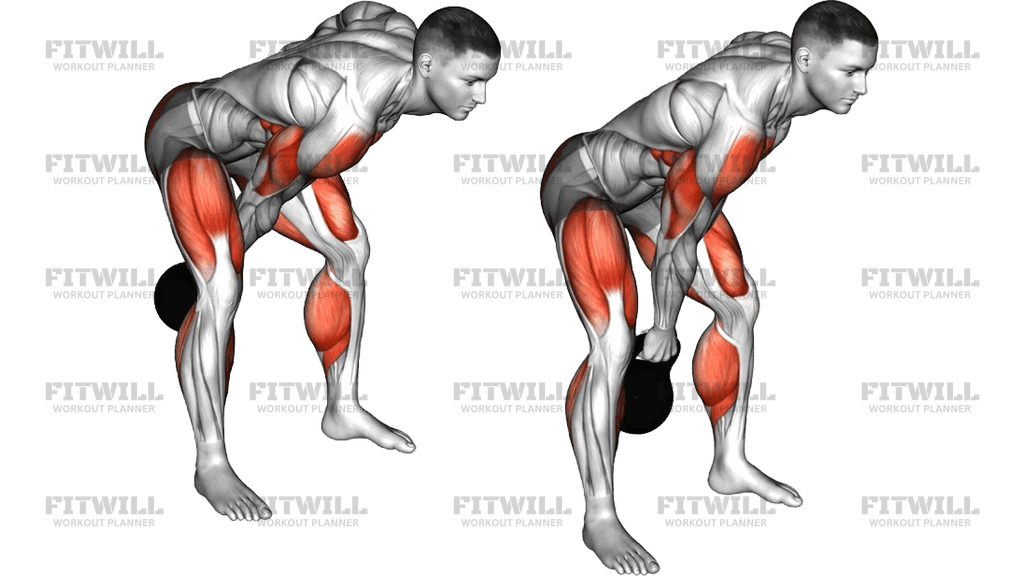
The Kettlebell Snatch And Swing is a single continuous kettlebell lift where the hip-hinge swing serves as the engine and the snatch is the destination. You start with the kettlebell in a hike pass between your legs, drive the hips to float the bell up, and either guide it back down as a swing or let it roll over the wrist into a locked-out overhead position. The image shows the two key hinge checkpoints: the loaded back-swing behind the body and the bell passing between the legs, both with the torso hinged forward, weight in the heels, and the lat braced against the moving bell.
This movement is useful for almost anyone who wants a lot of return from one exercise. Because the swing phase is powered by the glutes and hamstrings and the snatch phase finishes with the shoulders and upper back, you train the entire posterior chain plus the overhead pressing structures in one rep. The grip and forearms also work hard, since the handle has to stay controlled through both the fast down-swing and the turnover into the rack-over position. For lifters short on time, this is one of the most efficient ways to combine strength work with a real conditioning effect.
Setup matters more here than in most lifts because the kettlebell is always moving. If the hinge is shallow, the bell will drift away from the body and pull the shoulders forward; if the stance is too narrow, the bell will collide with the knees on the back-swing. Set the feet roughly hip-width apart with the toes turned out slightly, and think of the swing as a hinge, not a squat. The bell should float because the hips snapped, not because the arm lifted it.
Execution comes down to timing the three phases: the hike back, the hip drive, and the snatch turnover. Let the bell fall behind you with the thumb pointing back, snap the hips so the bell rises in a tight arc close to the body, and near chest height, let the handle roll from the palm around the wrist so the bell settles over the forearm with a straight arm and a quiet elbow. To bring it down, unlock the elbow, re-grip, and cast the bell back into the hinge rather than letting it free-fall.
Common use cases include strength circuits, conditioning intervals, and power work for field athletes who need explosive hip extension. Because each snatch ends overhead, the movement also rewards mobile shoulders and a stable trunk. Start with a kettlebell you can swing cleanly for twenty reps, keep the sets crisp, and stop when the hinge begins to soften or the turnover starts to bang the wrist.
Safety-wise, the biggest risks are self-inflicted: rounding the lower back on the hike, muscling the bell up with the shoulder, and catching the snatch with a loose elbow. Keep the back flat, the neck long, and let the hips do the throwing. If the bell feels like it is pulling you forward, reset your stance and take an extra breath before the next rep.
[ Workout Log & Planner ]
Put your next workout in Fitwill
Keep your plan and training log ready when you are.


Instructions
- Stand with your feet about hip-width apart and place a kettlebell one foot in front of you, gripping the handle with the knuckles forward.
- Hinge at the hips with a flat back and hike the kettlebell back between your legs, letting it swing behind you with your thumb turning back and your weight settled into your heels.
- Snap your hips forward to stand tall, letting the kettlebell float up in an arc close to your chest rather than lifting it with your arm.
- As the bell reaches chest or shoulder height, let the handle roll from your palm around the wrist and punch upward so the arm locks out overhead with the bell resting on the back of the forearm.
- Hold the lockout briefly with the elbow straight, shoulder packed, and the kettlebell balanced behind or slightly beside the wrist.
- Unlock the elbow and let the bell fall forward, re-gripping the handle firmly as it drops back to shoulder height.
- Guide the kettlebell down into the hike position behind you, hinging at the hips again so the back stays flat and the bell stays close to the inner thigh.
- Breathe in on the back-swing, exhale sharply as you drive the hips and snatch overhead, and inhale again as the bell descends.
- Complete the set with the bell floating down, then place it on the floor in front of you with a hinge rather than rounding over it.
Tips & Tricks
- If the bell bangs your wrist during the snatch, the turnover is too late or too far from the body; let the handle roll around the wrist at chest height instead of flipping it at the top.
- If the kettlebell drifts far behind you on the back-swing, your lat is loose. Keep the shoulder pulled down so the arm stays connected to the torso and the bell swings in a tight arc.
- If the bell clips your knees, you are squatting instead of hinging. Push the hips back and let the shins stay near vertical so the bell passes behind the thighs, not below them.
- Do not let the lower back round when the bell drops into the hike. The flat-back hinge is what protects the spine when the load is accelerating.
- Avoid muscling the bell up with the shoulder. If the arm works before the hips fire, the weight is too heavy or the swing pattern needs more practice.
- Keep the elbow soft on the descent and re-grip before the bell falls past your hip. Catching a swinging handle with a stiff arm is the most common grip failure here.
- Chalk or a towel helps when the handle gets slick, because a slipping grip changes the turnover timing mid-set.
- Stop the set when your hinge softens or the lockout starts wobbling. Snatch quality degrades fast under fatigue and sloppy reps teach bad timing.
- If you are new to the snatch, practice the swing alone for a few sessions until the hip snap consistently floats the bell to chest height.
Frequently Asked Questions
Which muscles does the Kettlebell Snatch And Swing work the most?
The glutes and hamstrings power the swing phase, while the shoulders, upper back, and traps finish the snatch overhead. The core, lower back, forearms, and grip work continuously to control the bell.
Can beginners do the Kettlebell Snatch And Swing?
Beginners should learn the hip-hinge swing first and only add the snatch once the swing reliably floats the bell to chest height. Starting with a lighter bell and practicing the wrist turnover slowly prevents most early problems.
Why does the kettlebell hit my wrist during the snatch?
The turnover is happening too late or too far from the body, so the bell flops over the wrist instead of rolling around it. Let the handle rotate at chest height and punch the hand through so the bell lands softly on the forearm.
How is the Kettlebell Snatch And Swing different from a regular swing?
The swing stops at chest height and returns to the hinge, while this movement carries the same hip power into a full overhead lockout on every rep. That adds shoulder stability, overhead timing, and a higher grip demand.
Should I squat down when the kettlebell swings between my legs?
No. The movement is a hip hinge with the hips pushed back and the shins roughly vertical, which lets the bell pass behind the thighs instead of clipping the knees.
What size kettlebell should I use for this exercise?
Choose a weight you can swing cleanly for around twenty reps before adding the snatch, since the overhead turnover and grip demand scale up quickly. Most lifters benefit from starting lighter than they expect.
What can I substitute if I do not have a kettlebell?
A single dumbbell can mimic the pattern, but its handle and weight distribution make the wrist turnover awkward, so a dumbbell swing is the safer substitute. For a true snatch, a kettlebell is the better tool.
How do I breathe during the Kettlebell Snatch And Swing?
Inhale as the bell swings back, exhale sharply as the hips snap and you punch overhead, then inhale again on the descent. Matching the exhale to the power phase keeps the trunk braced when the load is moving fastest.
Is it safe for my lower back?
It is generally well tolerated when the spine stays neutral during the hinge and the hips, not the lower back, generate the power. Avoid rounding on the hike pass and stop if the back starts taking over from the glutes.
Why is my grip failing before my hips do?
The snatch requires holding a fast-moving handle twice per rep, so the forearms and grip fatigue first. Chalk the hands, avoid over-squeezing during the float phase, and shorten the sets until the grip adapts.