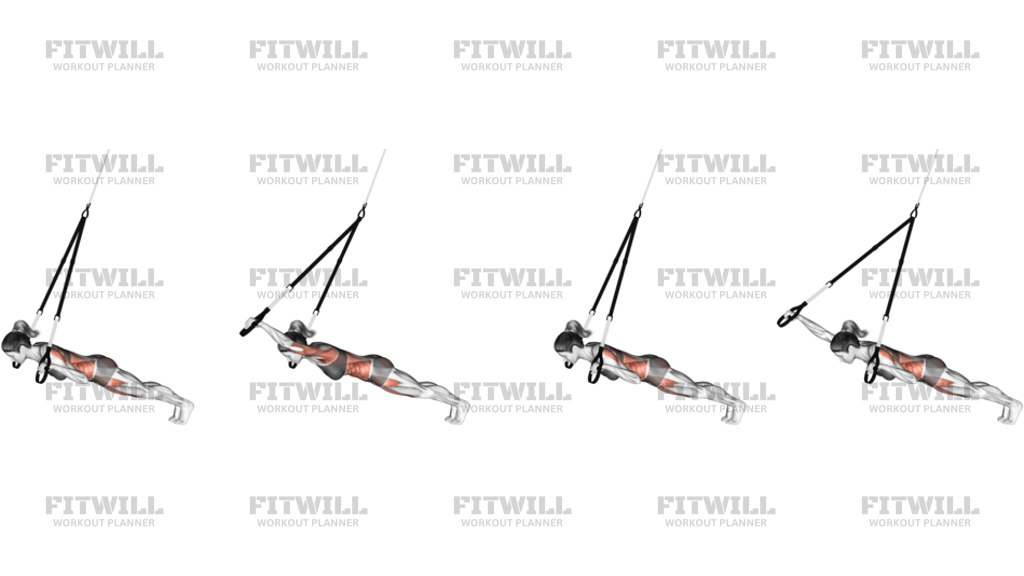
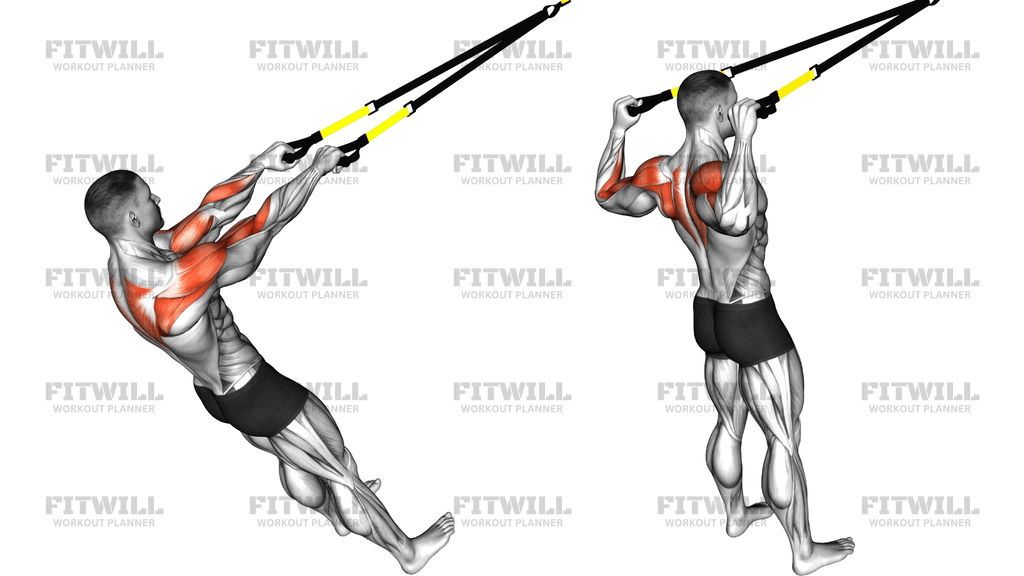
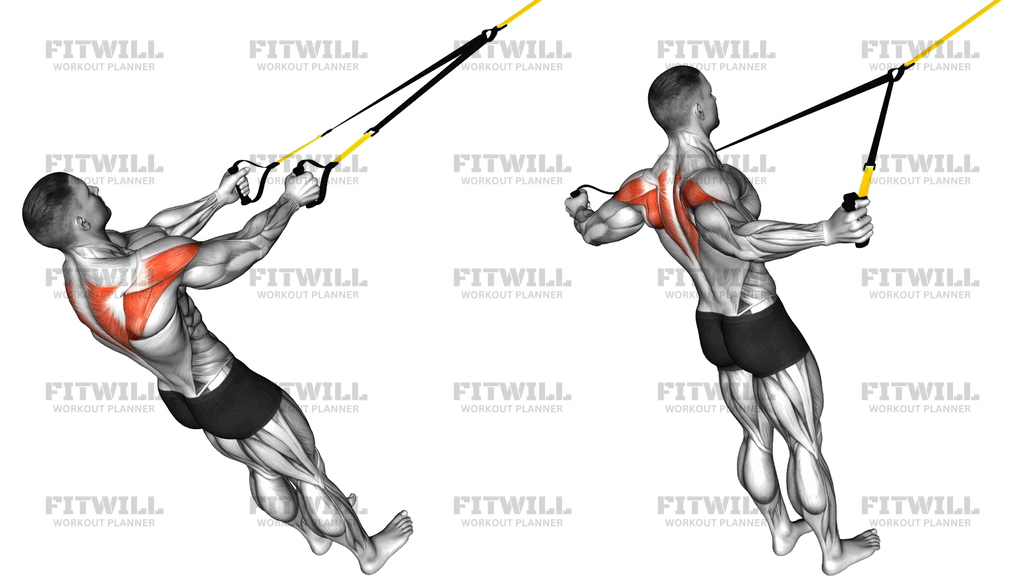
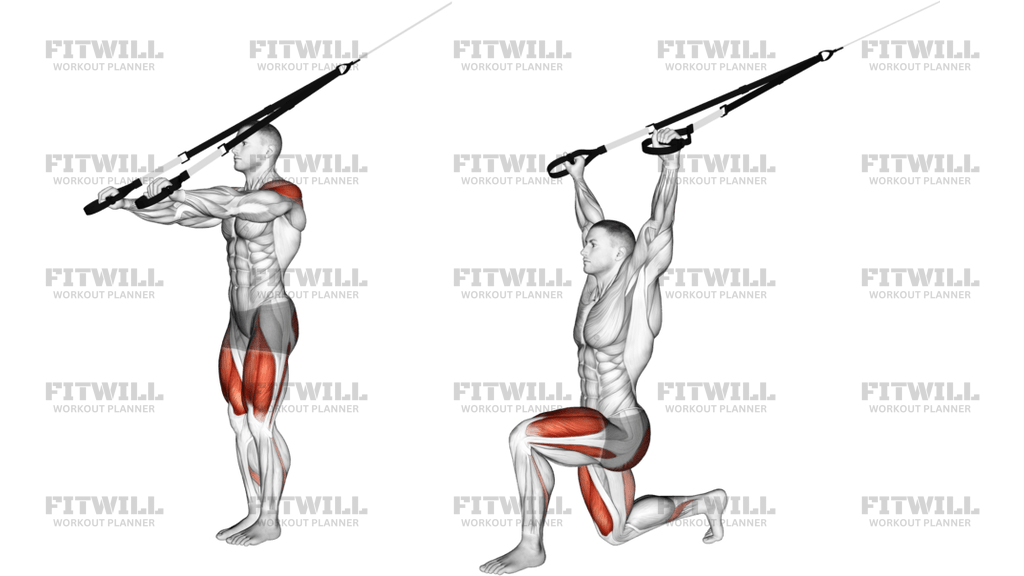
Suspender Yw Raise
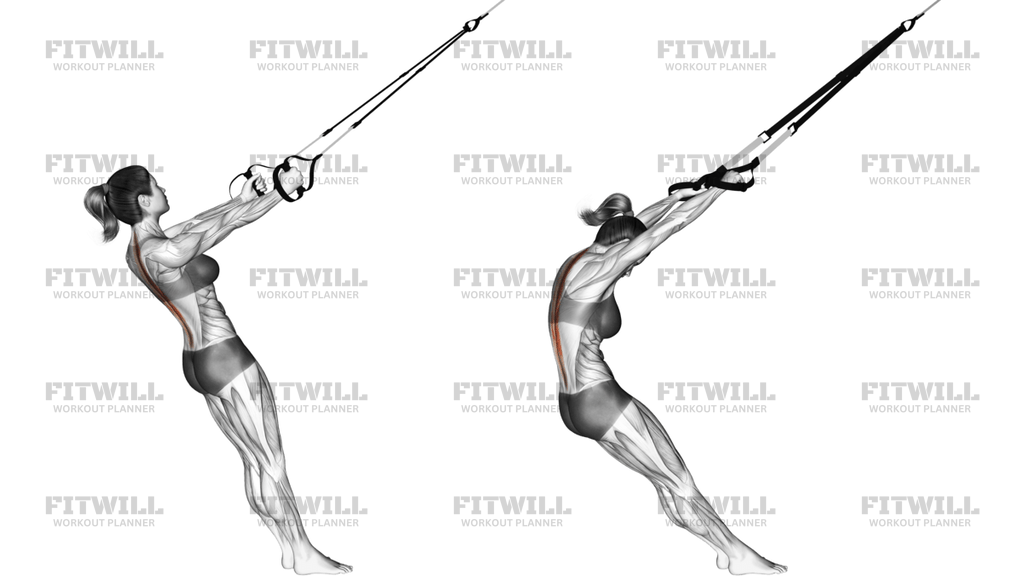
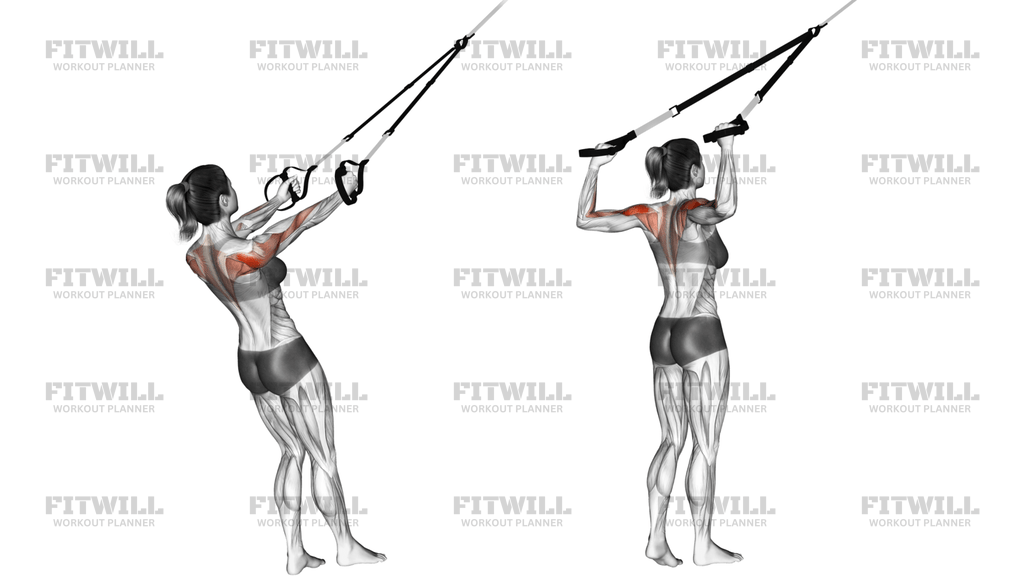
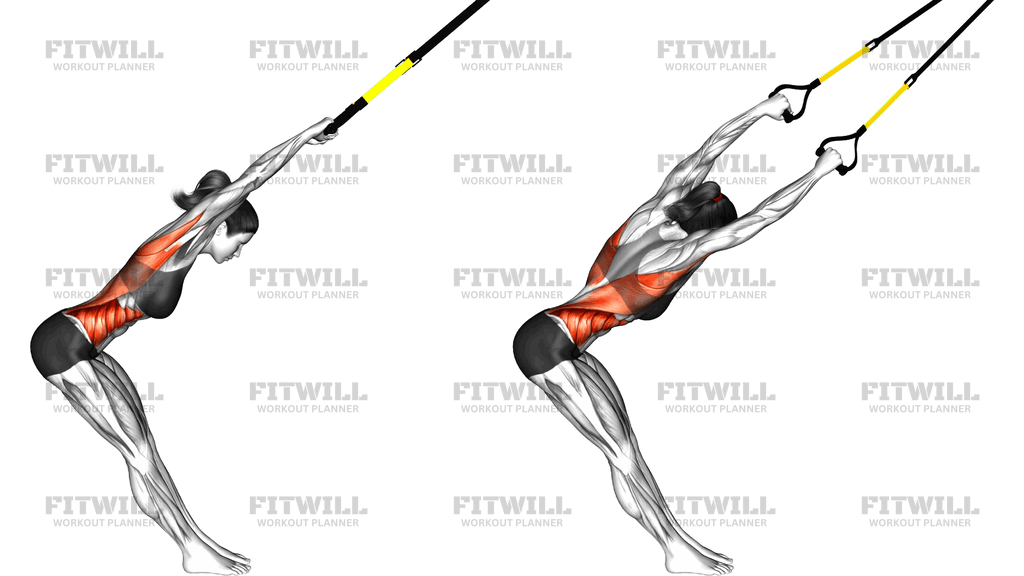
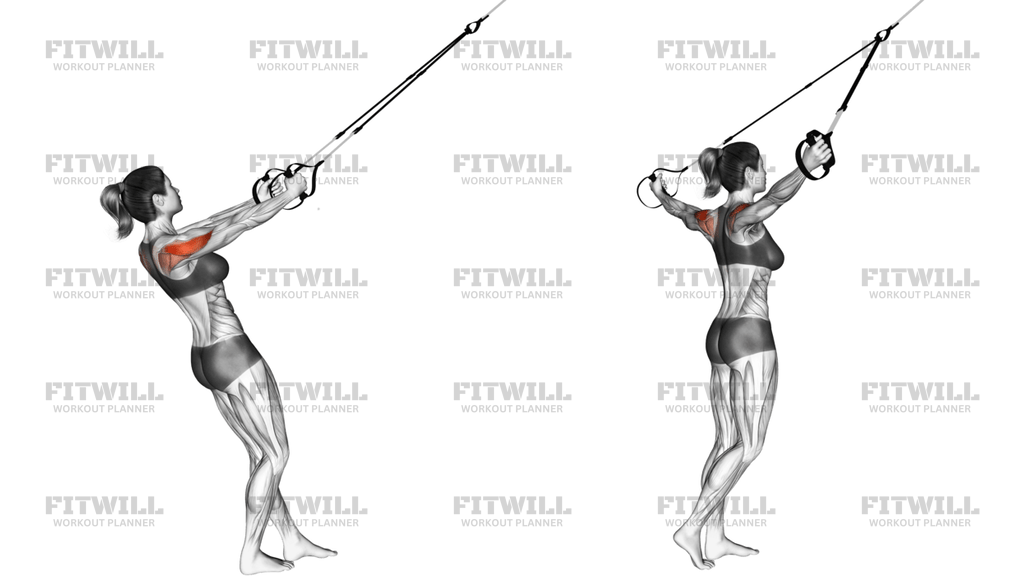
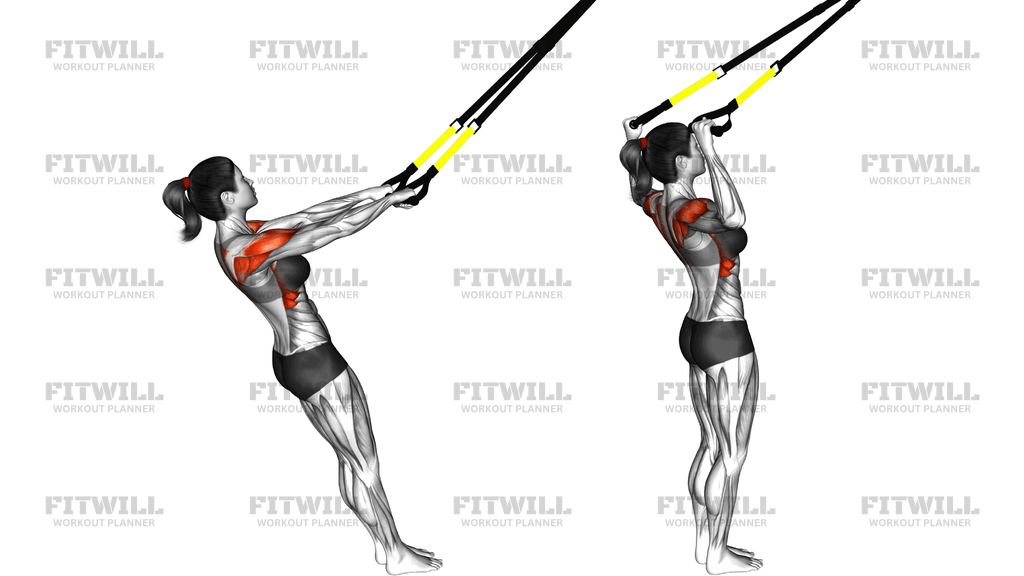
The Suspender Yw Raise is a body-weight pulling exercise performed on a suspension trainer, combining two distinct arm positions into one flowing rep. You start leaning back with your arms extended overhead in a wide Y shape, then pull yourself up by driving your elbows down and back until your hands sit beside your head in a W shape. Because your body angle controls the load, the movement scales smoothly from very easy to quite demanding without changing any equipment.
This exercise is especially useful for people who spend long hours sitting, since the Y-to-W path specifically targets the mid and lower trapezius, rhomboids, and rear shoulders — the muscles that tend to become weak and lengthened with desk posture. Unlike a standard suspension row, where the elbows travel close to the ribs, the W position forces the elbows out wide and high, which trains the scapular retractors and external rotators in a way most pulling drills miss. The lower traps get extra work during the overhead Y portion, helping build the depressor strength that supports healthy shoulder mechanics.
Beyond the upper back, your core and glutes work the entire time to keep your body in one straight, rigid line as you lean away from the anchor point. That plank-like tension is what makes the exercise feel surprisingly demanding even at shallow angles. It is a common inclusion in warm-ups, shoulder prehab routines, and corrective programs, but it also works well as a finisher on pull days or as a standalone strength set when the body angle is steep enough.
Setup matters more than most people expect. The straps should hang from a secure anchor above head height, and your walk-back distance — not the straps — determines the difficulty. The further your feet travel away from the anchor, the more of your body weight you must lift. Keep the straps clear of your arms throughout so they never drag or guide the movement.
To execute it well, think of pulling your elbows toward the floor and behind you rather than pulling your hands to your face, and let the shoulder blades slide down and together before the arms bend. Avoid shrugging toward your ears, arching your lower back, or letting your hips sag as fatigue builds. Move slowly in both directions; the lowering phase back into the Y is where a lot of the mid-back work actually happens.
If you are new to suspension training, start nearly upright and only lean back once you can hold your body line for the whole set. If you feel the front of your shoulders pinching or your neck taking over, shorten the range, reduce the angle, and reset before continuing.
[ Workout Log & Planner ]
Put your next workout in Fitwill
Keep your plan and training log ready when you are.


Instructions
- Anchor the suspension trainer to a secure overhead point and adjust the straps to a medium length so the handles hang around waist to chest height.
- Grip the handles with a neutral grip, palms facing each other, and walk your feet back until your body forms a straight, inclined line with your arms extended overhead in a wide Y position.
- Brace your core, squeeze your glutes, and press your heels into the floor so your head, hips, and ankles stay in one line.
- Begin the pull by drawing your shoulder blades down and together, then bend your elbows out wide and drive them down and back toward your sides.
- Finish with your hands beside your head in a W position, elbows roughly level with or slightly below your shoulders, and pause for a beat to feel the squeeze between your shoulder blades.
- Lower yourself under control by extending your elbows and letting your arms travel back up overhead into the Y position without letting your hips drop or your back arch.
- Exhale as you pull into the W, inhale as you lower back into the Y.
- Complete your reps, then walk your feet forward toward the anchor to reduce tension before releasing the handles.
- Adjust your foot position between sets to make the next set easier or harder depending on how the previous one felt.
Tips & Tricks
- If your shoulders shrug toward your ears during the pull, reset into the Y and start each rep by actively pulling your shoulder blades down before bending your elbows.
- Letting your hips sag as you fatigue is the most common breakdown point — step closer to the anchor and reduce the angle instead of grinding out reps with a bent body line.
- Keep the straps off the backs of your arms; if they brush or press against you, widen your arm path slightly or shorten the straps.
- A slow three-second return into the Y builds more mid-back strength than rushing extra reps, especially at a shallow lean.
- If you feel the front of your shoulders pinching at the top of the Y, reduce how far overhead your arms reach and keep the Y slightly narrower.
- Your feet should stay planted and still — walking or shifting your stance mid-set changes the resistance and usually means the angle is too aggressive.
- Think of pulling your elbows to the floor, not your hands to your head; this cue keeps the rear shoulders and mid back doing the work instead of the biceps.
- For an extra challenge without stepping back, add a brief pause in the W position or perform the exercise on one leg to demand more core control.
Frequently Asked Questions
Which muscles does the Suspender Yw Raise work?
The main muscles are the mid and lower trapezius and rhomboids in the upper back, with strong support from the rear shoulders. Your core, glutes, and legs work isometrically to hold the inclined body position.
How is the Suspender Yw Raise different from a suspension row?
In a row your elbows travel down close to your ribs, while the Yw Raise pulls the elbows out wide so your hands finish beside your head in a W shape. This shifts more of the work to the lower traps and rear shoulders and away from the lats and biceps.
Is the Suspender Yw Raise suitable for beginners?
Yes, because standing nearly upright under the anchor makes the exercise very light. Beginners should master holding a straight body line and the Y-to-W path before increasing the lean.
How do I make the Suspender Yw Raise harder?
Walk your feet further back so your body is closer to horizontal, which increases the percentage of body weight you lift. Slowing the lowering phase or pausing in the W position adds difficulty without changing your setup.
Why do my shoulders shrug during the W position?
This usually means the upper traps are taking over because the lower traps have not been engaged first. Start each rep by drawing your shoulder blades down toward your hips, and use a shallower angle until the pattern feels natural.
Can I do the Suspender Yw Raise if I don't have a suspension trainer?
You can mimic the movement with a light resistance band anchored overhead, performing the same Y-to-W arm path, or with an inverted row setup that allows wide elbows. The suspension trainer's instability is an added benefit, not a requirement.
How far overhead should my arms reach in the Y position?
Your arms should form a wide Y roughly 30 to 45 degrees off vertical without any pinching at the front of the shoulders. If overhead reach feels uncomfortable, keep the Y slightly narrower and shallower.
Should I feel this in my lower back?
No — you may feel mild core and hip tension from holding the incline, but your lower back should not strain or arch. If it does, your hips are sagging or your lean angle is too steep, so shorten the range and tighten your glutes.
How many reps and sets should I do?
Two to four sets of 8 to 15 controlled reps works well for strength and posture work. Choose an angle where the last two reps are challenging but your body line stays intact.