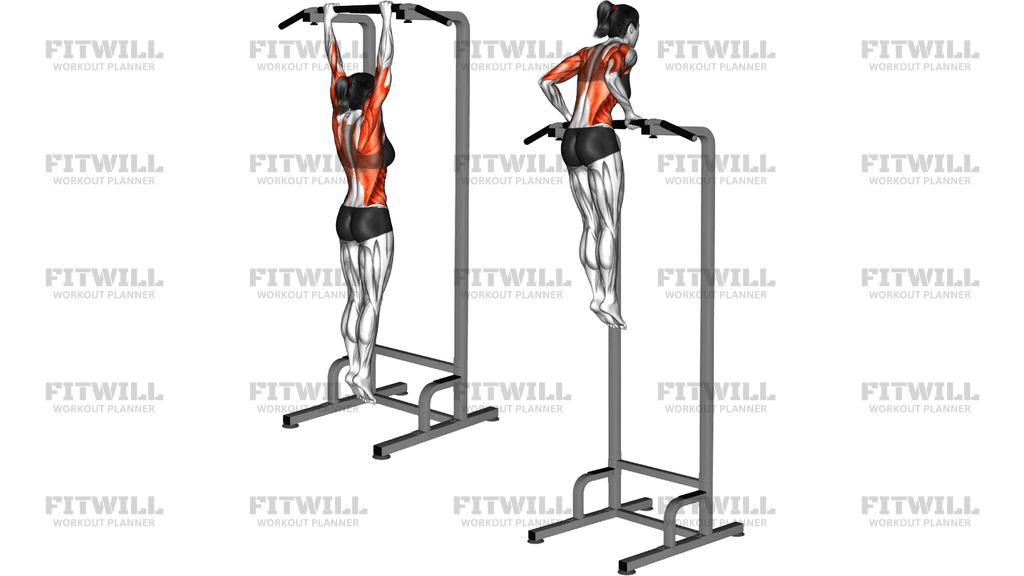
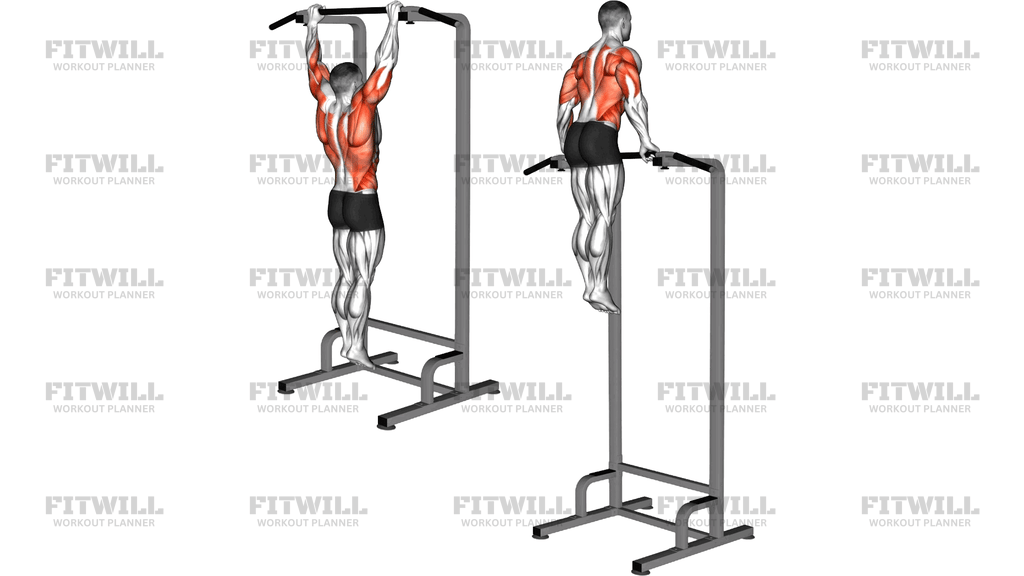
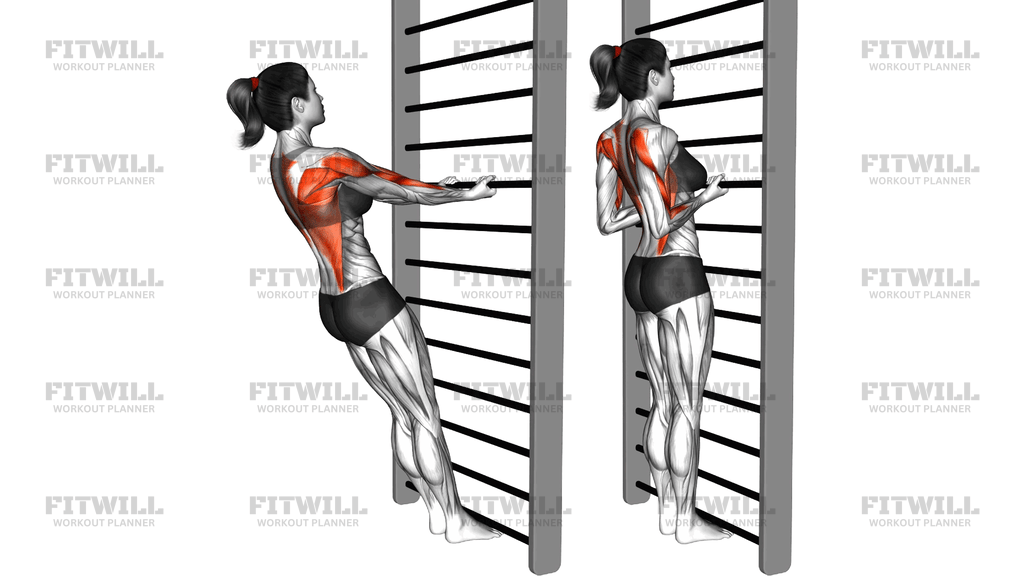
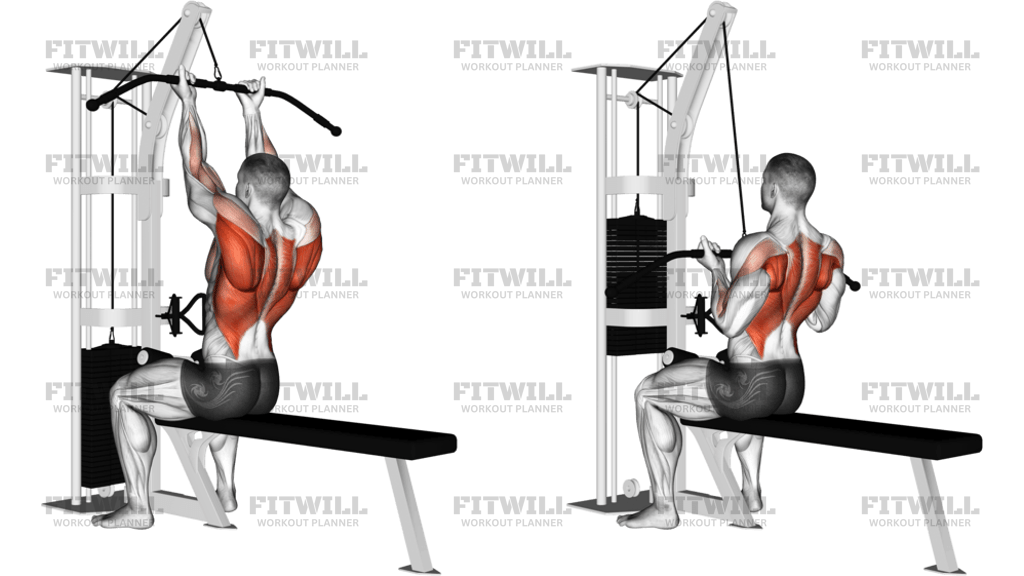
Parallel Bars Bent Knee Inverted Row
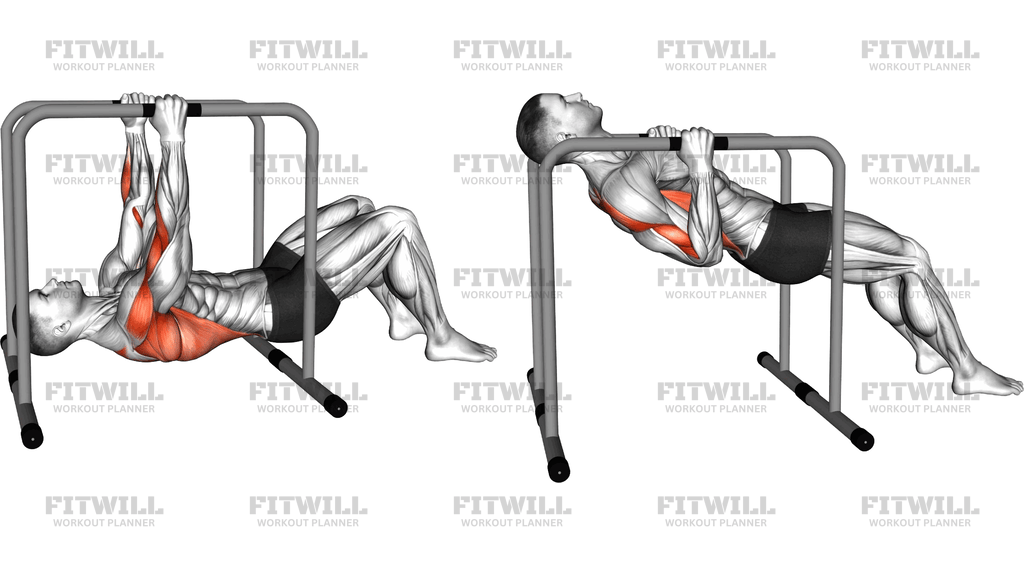
The Parallel Bars Bent Knee Inverted Row is a horizontal pulling exercise performed on a set of parallel bars or a dip-style station. You lie underneath the bars, grip them with an overhand grip, bend your knees so your feet are planted close to your hips, and pull your chest up toward the bars until your upper body forms a straight line from shoulders to knees. Because your feet stay on the floor and your knees stay bent, a large portion of your body weight is supported by your legs, making this one of the most manageable ways to load a full rowing pattern with your own body weight.
This movement is especially useful for people who cannot yet perform pull-ups or full inverted rows with a straight body. The bent-knee position shortens the lever and reduces the effective load on the lats and upper back, so beginners can build pulling strength without being overwhelmed. It also suits anyone training at home or in a minimal gym, since a simple parallel bar or dip station is all that is required. More advanced lifters often use it as a warm-up activation or as a high-rep finisher for the back.
The primary muscles worked are the lats, which drive the upper arms down and back toward the torso. The rhomboids and mid-traps retract the shoulder blades, the rear shoulders assist with the horizontal pull, and the biceps and forearm flexors handle the elbow bending and grip. Your core and hip muscles work isometrically the entire time to keep your trunk from sagging, which is why the movement carries over well to posture and body control, not just pulling strength.
Setup matters more than most people expect. Because the bars are fixed in height, your body position underneath them determines how hard the exercise is. Lying closer to vertical under the bars makes the row easier; walking your feet forward so your body angles lower increases the difficulty. Keeping the knees bent with feet flat also gives you a stable base you can push through slightly, which helps you hold a rigid line from shoulders to knees through every rep.
To execute well, think of leading with your chest rather than your chin, and pull until the bars are at or near your lower chest. Squeeze the shoulder blades together at the top for a beat, then lower yourself under control until your arms are fully extended. Avoid jerking, shrugging toward your ears, or letting the hips drop, all of which shift work away from the intended muscles. Exhale on the pull, inhale on the way down.
The most common safety concerns are minor but real: make sure the station is stable and cannot tip, keep your neck in line with your spine rather than craning forward, and stop the set if you lose the straight body line. Progress by walking the feet further out over time, elevating the feet on a bench, or eventually moving toward straighter-leg inverted rows.
[ Workout Log & Planner ]
Put your next workout in Fitwill
Keep your plan and training log ready when you are.


Instructions
- Set a stable parallel bar or dip station on a level floor and slide underneath it head-first, lying on your back between or under the bars.
- Grip both bars with an overhand grip, hands roughly shoulder-width apart, arms fully extended so you hang with your shoulders directly under or slightly past your hands.
- Bend your knees to about 90 degrees and plant your feet flat on the floor close to your hips, keeping your hips extended so your body forms one straight line from shoulders to knees.
- Brace your abs and squeeze your glutes before the first rep so your lower back does not sag between the hang and the pull.
- Pull by driving your elbows down and back toward your sides, leading with your chest rather than your chin, until your chest touches or comes close to the bars.
- Pause at the top with your shoulder blades squeezed together and your chest at bar height.
- Lower yourself slowly by extending your arms until they are completely straight and you are hanging under the bars again.
- Exhale as you pull up and inhale as you lower down, keeping the same breathing rhythm on every rep.
- Complete your reps, then release the bars one hand at a time and sit up carefully rather than dropping out of the hang.
- Adjust difficulty between sets by moving your feet further forward for more load or closer under the bars for less.
Tips & Tricks
- If your chest stalls a few inches below the bars, the usual cause is walking your feet too far forward; slide them back toward your hips until you can complete full reps.
- Do not let your hips sag toward the floor as you fatigue — the moment your shoulders-to-knees line breaks, the load shifts to your lower back, so end the set or push lightly through your feet to reset.
- Pulling with your chin instead of your chest shortens the range on your lats; keep your neck packed and imagine your sternum reaching the bar.
- Avoid shrugging at the top of each rep. If your shoulders creep toward your ears, think about pulling your elbows to your back pockets to keep the shoulder blades retracted.
- Grip fatigue often ends sets before the back does on parallel bars; wrapping your thumbs fully around the bars and squeezing hard helps you hold on longer.
- Because your feet are flat and knees bent, it is tempting to push hard through the legs and turn this into a hip thrust; keep most of your weight in the pull and use the legs only for stability.
- Control the lowering phase for two to three seconds — dropping quickly from the top wastes half the muscle-building work of the exercise.
- If the bars are low enough that your head bumps them, angle your body slightly so your head passes to one side or outside the bar path rather than craning your neck.
- Progress deliberately: master a full range with knees bent, then move your feet forward a few inches per week before attempting straighter-leg variations.
Frequently Asked Questions
Which muscles does the Parallel Bars Bent Knee Inverted Row work the most?
The lats are the primary movers, with strong assistance from the rhomboids, mid-traps, rear shoulders, and biceps. Your core and glutes work continuously to hold the straight body line.
Why are the knees bent in this version of the inverted row?
Bending the knees and planting the feet flat shortens your body lever and shifts part of your weight onto your legs. This lowers the resistance, making the row accessible if you cannot yet handle a full straight-body version.
Is the Parallel Bars Bent Knee Inverted Row suitable for beginners?
Yes, it is one of the best entry points into bodyweight pulling. If it is still too hard, move your feet closer under the bars so your body is more upright and the load is lighter.
How do I make the Parallel Bars Bent Knee Inverted Row harder?
Walk your feet forward so your body is more horizontal, elevate your feet on a bench, slow down the lowering phase, or add a pause at the chest-to-bar position. Eventually you can progress to straighter-leg inverted rows.
What kind of equipment do I need for this exercise?
A stable set of parallel bars, such as a dip station or dedicated parallel bar stand, is enough. Check that the station cannot tip or slide before you hang your weight from it.
Should my chest touch the bars at the top?
Aim to bring your chest to or very close to the bars, since that ensures a full range of motion for the lats and upper back. If you consistently stop short, reduce the difficulty by moving your feet back under the bars.
Why do my biceps fatigue before my back during this row?
This usually means you are pulling with your arms instead of driving your elbows down and back. Focus on leading with your elbows and squeezing your shoulder blades so the lats and upper back do more of the work.
Can I substitute another exercise if I do not have parallel bars?
Any inverted row under a low barbell in a rack, a bar on sturdy supports, or even a table edge works the same pattern. Under a straight bar you can also bend your knees and keep your feet flat to replicate the same reduced load.
How should I breathe during the Parallel Bars Bent Knee Inverted Row?
Exhale as you pull your chest toward the bars and inhale as you lower back to the hang. Keep the rhythm consistent and avoid holding your breath through the set.
How many reps and sets should I do?
Start with three sets of six to twelve reps, stopping when you can no longer keep your body straight or bring your chest fully to the bars. As the bent-knee version becomes easy, progress the difficulty rather than adding endless volume.