Standing Inverted Row
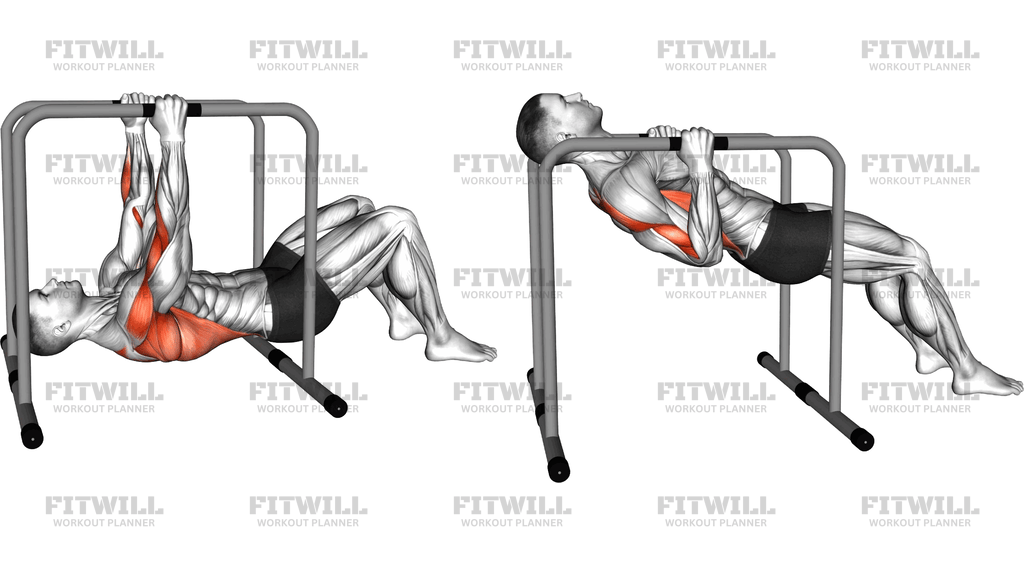
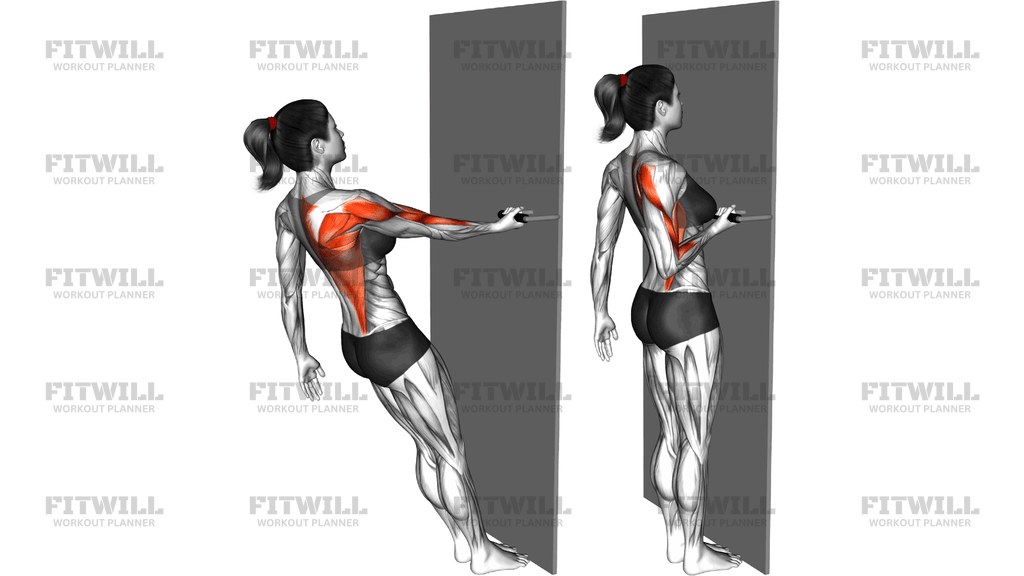
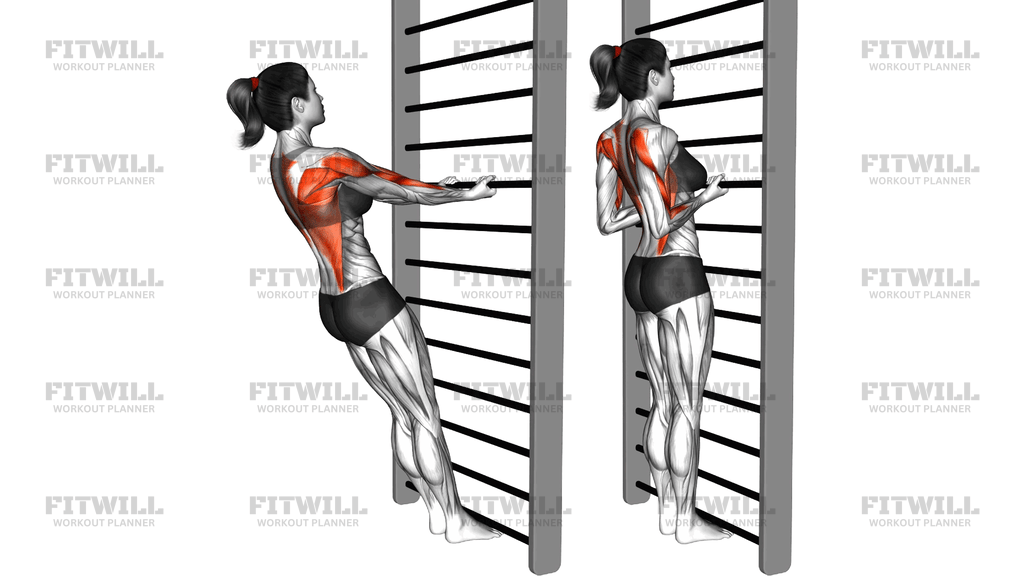
The Standing Inverted Row is a bodyweight pulling exercise performed on wall bars or a fixed ladder rack. Instead of hanging underneath a bar as in a traditional inverted row, you stand facing the rack, grip a rung at roughly chest height, lean back with your arms extended while keeping your body in one straight line, and pull your chest back toward the rung. Your feet stay planted close to the base, so the amount of load is governed almost entirely by how far you lean away from the rack.
This version is one of the most approachable horizontal pulling patterns you can learn. Because your torso stays close to vertical and your feet never leave the floor, the load is light and easy to scale, which makes it a smart first row for beginners, a rehab-friendly reintroduction to pulling, and a useful warm-up activation for lifters before heavier rowing or pull-up work. It also suits home trainees who only have a doorway rack, wall bars, or a sturdy ladder to pull on.
The primary work comes from the lats pulling the upper arms down and back, supported strongly by the rhomboids and mid-traps as the shoulder blades squeeze together. The rear shoulders assist through the top of the pull, the biceps bend the elbows, and the forearms and grip hold you stable on the rung. Your core and spinal muscles work isometrically the whole time to keep your hips from sagging or your body folding at the waist.
Setup determines how hard the exercise is and how clean the movement feels. Grip height sets the lean angle, and foot placement decides how much of your bodyweight sits in your arms. A higher rung with feet close to the rack gives you a nearly upright, gentle pull; stepping back or dropping the grip height shifts more weight into the hands and lengthens the range. Choose a rung and stance where you can pull your chest fully to your hands without shrugging or straining your lower back.
Execution should feel like a bodyweight row, not an arm curl. Initiate the pull by drawing the shoulder blades down and together, then drive the elbows back toward your ribs until your chest is close to the rung. Pause briefly in the gathered position, feel the muscles across your upper back working, then resist the way down over two to three seconds until the arms are straight again. The return is where many people lose the benefit, so treat the lowering phase as part of the rep.
Two practical safety points matter most. First, keep your body rigid from shoulders to ankles through the entire lean; a soft, bending torso turns the row into an awkward hip hinge and loads the lower back in a pinch. Second, make sure the rung or bar is rated for your weight and completely secure before you ever load into it, and keep your feet flat and stable so a slip of grip never becomes a fall.
[ Workout Log & Planner ]
Put your next workout in Fitwill
Keep your plan and training log ready when you are.


Instructions
- Set your grip on a rung of the wall bars at about chest height, using a slightly wider than shoulder-width overhand grip with thumbs wrapped around the bar.
- Walk your feet in until they are roughly 30-50 cm from the base of the rack, then straighten your arms and lean back so your body forms one straight line from shoulders through hips to heels.
- Brace your core and squeeze your glutes so your torso stays rigid and does not fold at the waist as you hang in the lean.
- Start the pull by drawing your shoulder blades down and together, rather than yanking with your hands.
- Pull your chest toward the rung by bending the elbows and driving them back toward your sides, keeping them angled down rather than flared wide.
- Finish with your chest close to the bar, elbows behind your torso, and hold the gathered position for a beat to feel the squeeze across your upper back.
- Lower yourself under control over two to three seconds, letting the arms extend fully while keeping tension in the lats and mid-back.
- Breathe in as you lower back into the lean, then exhale as you pull up.
- Complete your reps, then step carefully toward the rack and release the grip once your weight is fully back on your feet before resting or adjusting grip height.
Tips & Tricks
- If you cannot pull your chest all the way to the rung, grip a higher rung or step your feet closer to the rack before reducing reps; a half range usually means the lean angle is too aggressive.
- Avoid shrugging your shoulders toward your ears as you pull. If your upper traps dominate, think about pulling the elbows to your back pockets instead of lifting the bar toward your chin.
- Watch your hips in the lean position. When they drift backward or the torso bends, the row stops loading the back and starts stressing the lower back, so reset the brace before each rep.
- Keep the elbows tracking down and back near your ribs. Elbows flaring out to shoulder height shifts work away from the lats and irritates the shoulders in some people.
- Your grip will often fatigue before your back does on this movement. Chalk or a full thumb wrap on the rung helps you finish sets with honest back effort.
- Use a deliberate three-second lowering phase to make the exercise harder without changing equipment. Slow eccentrics work well here because the lean angle is already light.
- To progress without adding weight, move your feet further from the rack or grip a lower rung so more bodyweight loads into your hands each rep.
- Do not let the knees bend and drive the hips forward during the pull; a straight-leg, rigid-body position keeps the work on the upper back and lats where it belongs.
Frequently Asked Questions
What muscles does the Standing Inverted Row work?
The lats are the main movers, with strong support from the rhomboids, mid-traps, and rear shoulders as the shoulder blades retract. The biceps and forearms assist the pull, and the core works isometrically to hold the leaning body straight.
How is the Standing Inverted Row different from a regular inverted row?
In a regular inverted row you hang horizontally underneath a bar, which loads far more of your bodyweight. Here you stay nearly upright with your feet close to the rack, so the resistance is much lighter and easier to adjust by grip height and foot placement.
Is the Standing Inverted Row suitable for beginners?
Yes, it is one of the best first pulling exercises because the upright lean keeps the load modest and the feet never leave the ground. Beginners should start on a high rung with a short lean and progress gradually.
How do I make the Standing Inverted Row harder?
Move your feet further back from the rack, grip a lower rung, or slow the lowering phase to three seconds or more. Each change places more of your bodyweight into your arms and lengthens the range.
Why can I not pull my chest all the way to the bar?
The lean angle is usually too steep for your current strength, so step your feet closer or choose a higher rung. Also check that you are initiating with the shoulder blades, since pulling only with the arms shortens the range.
Can I use the Standing Inverted Row as a warm-up?
It works well as a pre-workout activation for the lats and mid-back before heavier rows, pull-ups, or pressing sessions. One or two light sets of 10-15 reps with an easy lean is enough.
My grip gives out before my back does. What should I do?
Wrap your thumb fully around the rung, try chalk, or shorten the set slightly. If grip remains the limiter, finish with a higher rung so you can still train the back without dropping off the bar.
What can I use if I do not have wall bars?
Any sturdy fixed bar at about chest height works, such as a smith machine bar set high, a racked barbell in a power rack, or a stable railing. Always test that the bar cannot move before leaning your weight into it.
Is the Standing Inverted Row safe for the lower back?
It is generally low risk because the body stays vertical and the load is light, provided the torso stays braced and rigid in the lean. Problems arise when the hips sag or the body folds at the waist, so reset your brace whenever your position slips.