Jumping Jack High Knee
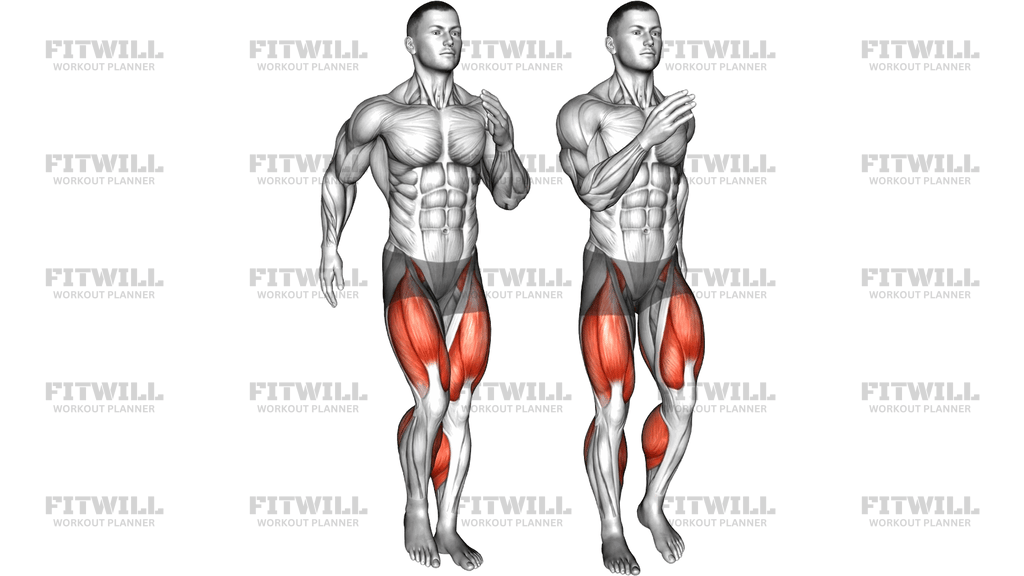
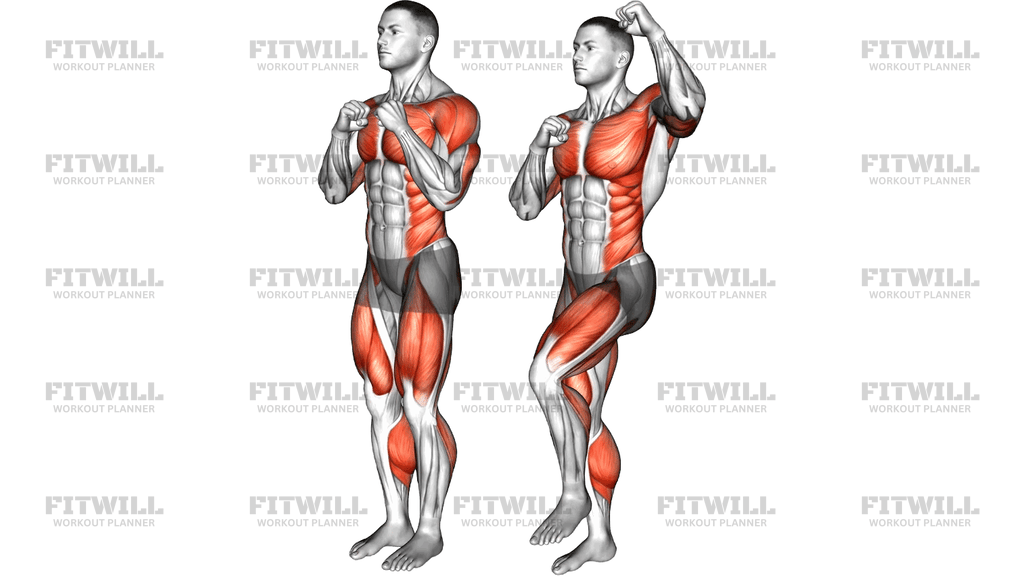
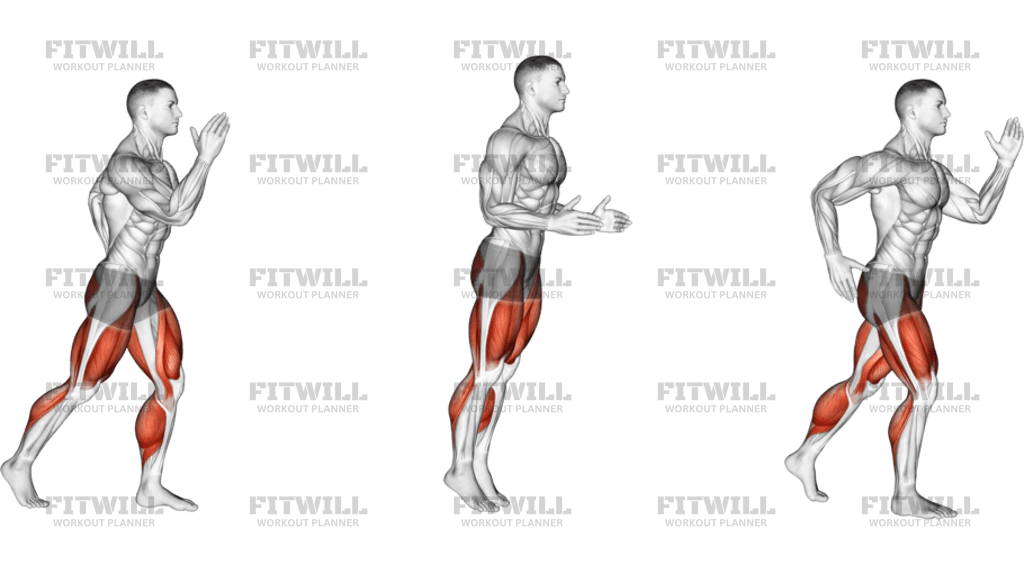
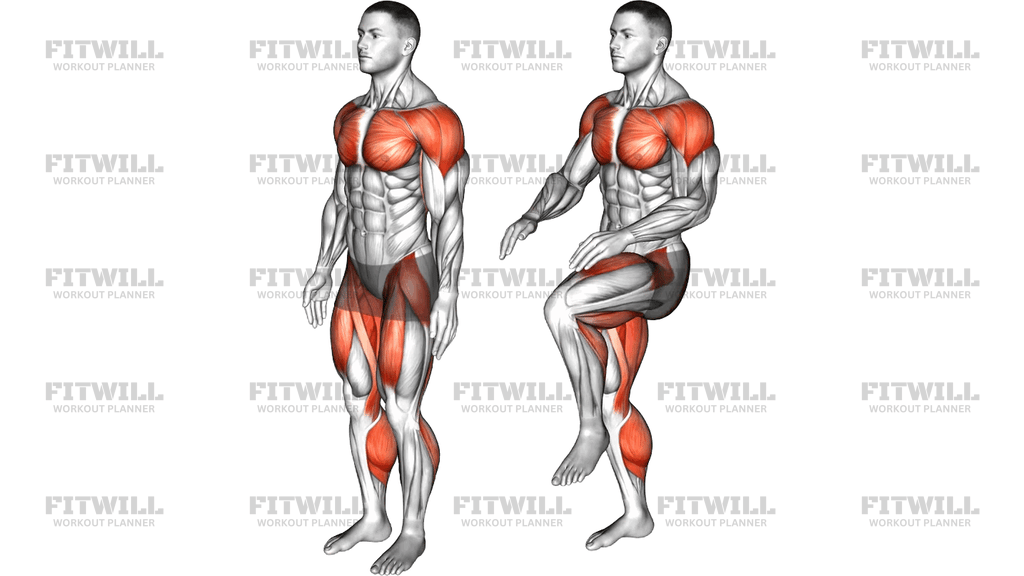
Jumping Jack High Knee takes the rhythm of a classic jumping jack and swaps the lateral leg spread for a powerful vertical knee drive. Instead of hopping your feet wide, you hop from foot to foot while punching one knee up toward hip height with each rep, letting the arms swing in coordination — down and across as the knee rises, back up as the foot returns to the floor. The result is a movement that looks like a jumping jack and a high-knee run had a faster, punchier child.
Because it demands nothing but floor space, this exercise slots into almost any training context: warm-ups, circuit finishers, HIEM intervals, or home cardio sessions when you cannot get outside. It raises your heart rate quickly, which makes it a reliable go-to when you want a cardiovascular stimulus in two minutes or less without equipment.
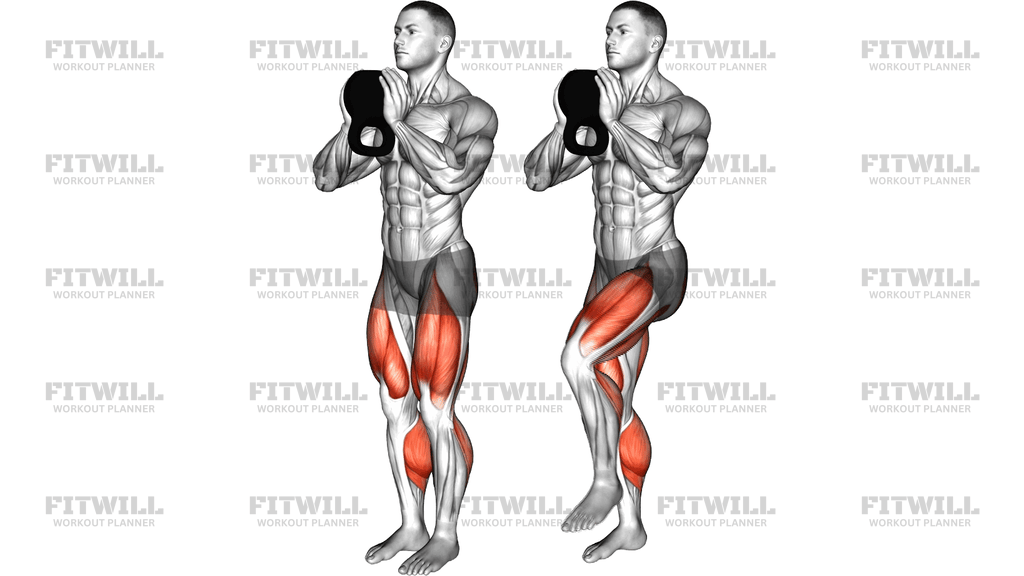
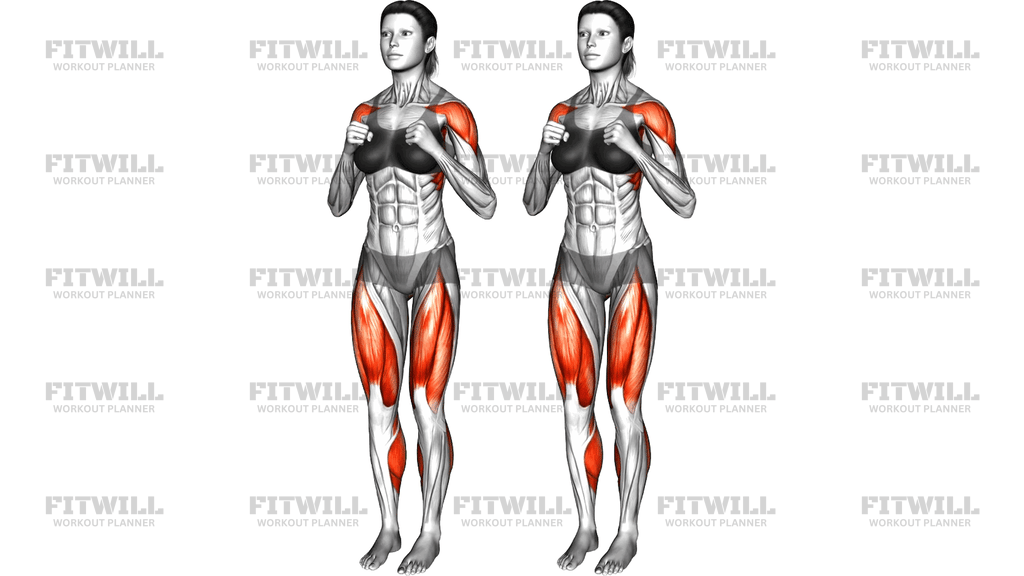
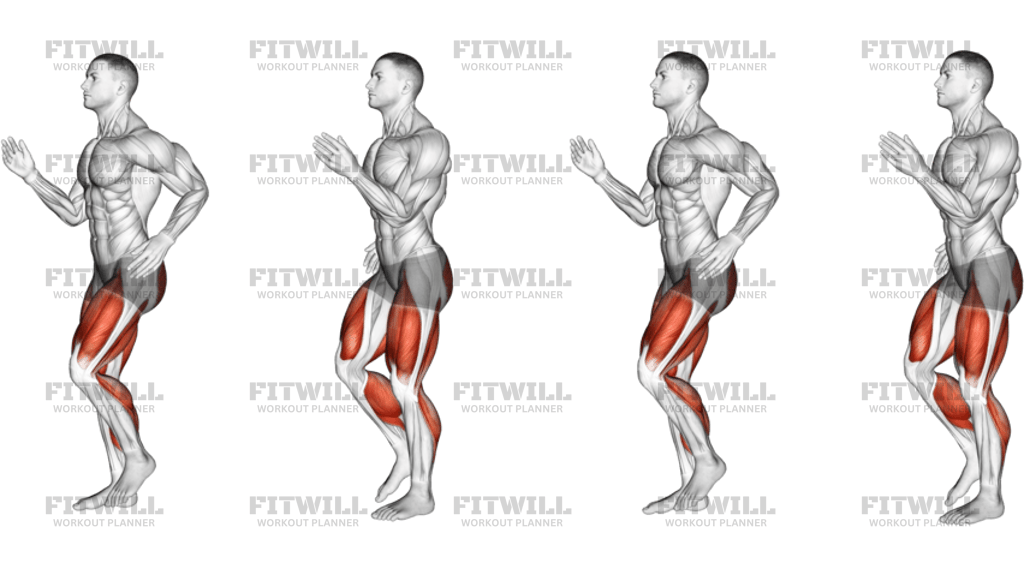
From a muscular standpoint, the knee drive is the star. Lifting the thigh to hip height against your body weight loads the hip flexors and front of the thighs, while the calf muscles and ankles produce and absorb the repeated hops. The coordinated arm swing brings the shoulders into play, and keeping your torso tall with each drive forces the core to stabilize through constant single-leg landings.
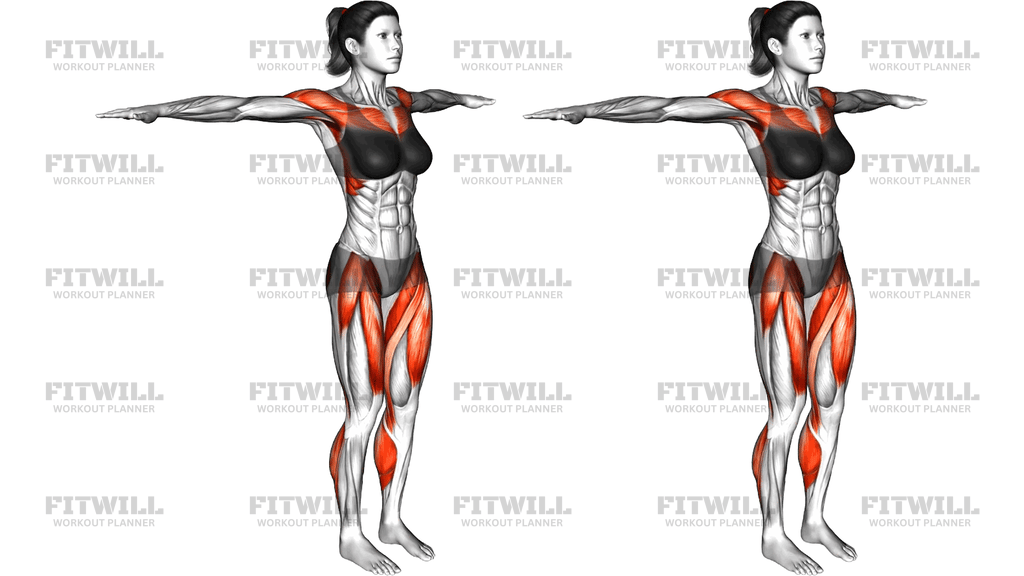
Setup is simple but matters more than people assume. Stand tall with feet together and a soft bend in the knees, weight balanced over the mid-foot. If you start slouched or heavy on your heels, every rep that follows inherits that posture, and landings get noisier and harder on the joints.
To execute well, think of driving the knee up rather than letting it drift forward. Aim the thigh roughly parallel to the floor, swing the opposite arm down in sync, and land on the ball of the foot with the knee slightly bent before immediately switching sides. The rhythm should feel bouncy and continuous, like running in place with exaggerated knee lift, not like two separate poses stitched together.
Two practical cautions keep this exercise working for you long term. First, keep landings quiet — loud, slapping feet usually mean you are landing flat-footed or letting the knee collapse inward. Second, control the torso: a small natural lean is fine, but excessive rounding or backward arching suggests the knee is being pulled up by the low back instead of the hips. Start with shorter sets, build volume gradually, and stop when your knee lift or footwork gets sloppy rather than when you are fully gassed.
[ Workout Log & Planner ]
Put your next workout in Fitwill
Keep your plan and training log ready when you are.


Instructions
- Stand with your feet together, arms relaxed at your sides, and your weight balanced over the middle of your feet.
- Bend your knees slightly, brace your abdominal muscles, and lift your chest so you are standing tall before any movement begins.
- Shift your weight onto the balls of your feet so you are ready to hop lightly with every rep.
- Drive your right knee up toward hip height while swinging your left arm down and forward in front of your body.
- Land your right foot back down on the ball of the foot with a soft, bent knee, and immediately drive your left knee up as your right arm swings down.
- Keep the hops small and quick — the goal is rhythm and knee height, not jumping for distance or air time.
- Exhale sharply as each knee drives up, and inhale on the switch as the foot returns to the floor.
- Keep your torso upright and your gaze forward; avoid bending over toward the rising knee.
- Continue alternating knees at a steady pace for your target time or rep count.
- When finished, slow the tempo over a few reps, bring both feet together, and let your breathing settle before moving on.
Tips & Tricks
- Aim the knee for a point slightly above hip height; if your thigh never approaches parallel to the floor, slow the tempo down before speeding it back up.
- Landing flat-footed is the most common fault in this movement — cue yourself to strike and land on the balls of your feet, which also protects the knees.
- If your feet slap the floor loudly, you are likely landing with straight legs; add a small bend and think of absorbing each hop like a spring.
- Coordinate the arm and leg exactly: opposite arm drives down as the knee rises. Mismatched arms usually mean you are rushing the rep count at the expense of rhythm.
- Avoid pulling the knee up with your low back — if your torso starts rounding or arching with each rep, focus on lifting from the front of the hip instead.
- Keep the hops narrow. Feet drifting wide turns this back into a lateral jumping jack and kills the clean up-and-down knee path.
- On softer surfaces like rubber flooring or grass, you can extend your sets; on hard concrete, keep intervals shorter to spare the ankles and shins.
- If your calves burn before your breathing does, shorten the range of the knee drive slightly and rebuild height as your calves adapt.
- Count in rhythm rather than reps — a steady one-two beat per knee keeps the pace consistent across an entire interval.
Frequently Asked Questions
Which muscles does Jumping Jack High Knee work the most?
The hip flexors and quads do the bulk of the work lifting each thigh, while the calves and ankles handle the repeated hops. The shoulders contribute through the coordinated arm swings and the core stabilizes every single-leg landing.
How high should I drive my knee during Jumping Jack High Knee?
Aim for your thigh to reach roughly parallel to the floor on each rep. If you cannot hold that height with good rhythm, reduce the height slightly rather than leaning your torso toward the knee.
Is Jumping Jack High Knee suitable for beginners?
Yes, though beginners should start with a slower tempo and shorter sets of 15–20 seconds. The basic pattern is simple, and the intensity comes entirely from how fast and how high you move.
What is the difference between Jumping Jack High Knee and a regular jumping jack?
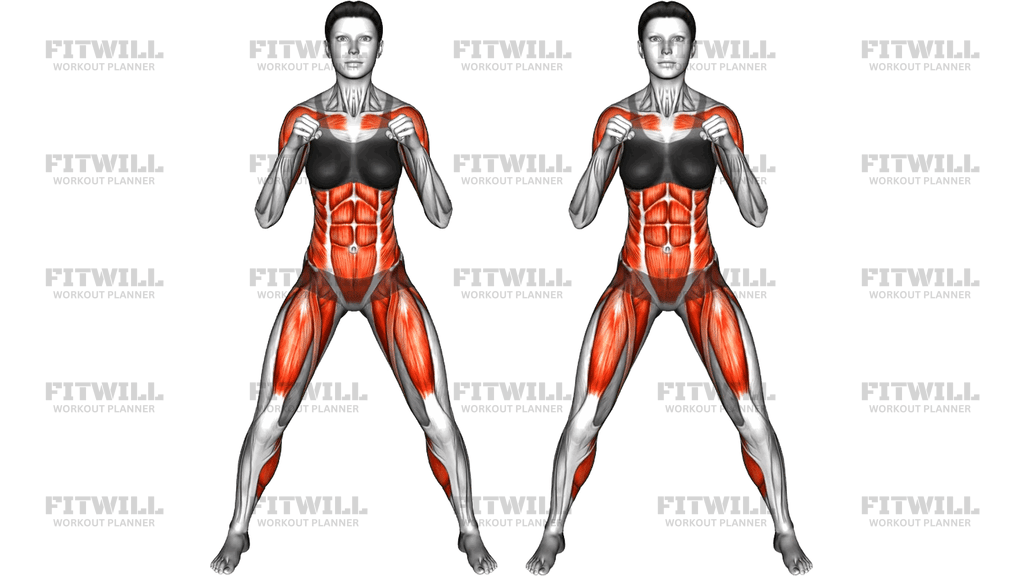
A regular jumping jack sends both feet laterally apart and together, while Jumping Jack High Knee replaces that side-to-side spread with alternating vertical knee drives. This shifts the emphasis toward the hip flexors and single-leg landings instead of the inner and outer hips.
Why do my calves fatigue faster than my legs during this exercise?
The repeated hopping on the balls of your feet places constant demand on the calf muscles and Achilles tendons. Shorten your sets or reduce knee height for the first few sessions while your calves adapt to the impact.
How is this different from running in place with high knees?
The jumping jack version adds a light hop with every switch, so both feet leave the ground and landings become slightly more demanding. Running high knees keeps one foot in contact with the floor, which is a lower-impact option.
What should I do if jumping is hard on my knees?
Remove the hop and perform the movement as a marching high knee with strong arm swings, keeping one foot down at all times. This preserves most of the hip flexor and core work while cutting the landing impact.
How long should a set of Jumping Jack High Knee last?
For conditioning, 20–40 second intervals work well, while longer 60-second sets suit steady cardio circuits. End the set when your knee height or footwork rhythm starts to break down.
Should my arms swing forward or stay overhead like a jumping jack?
In this variation the arms swing down and forward in coordination with each knee drive, similar to a sprint arm action. This contrasts with the overhead clap of a traditional jumping jack and better matches the vertical knee path.