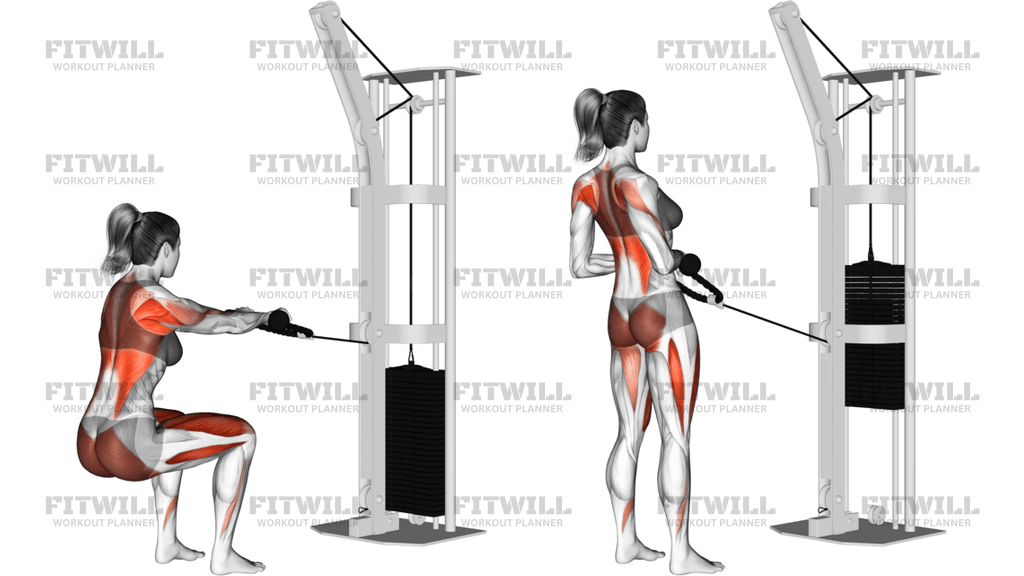
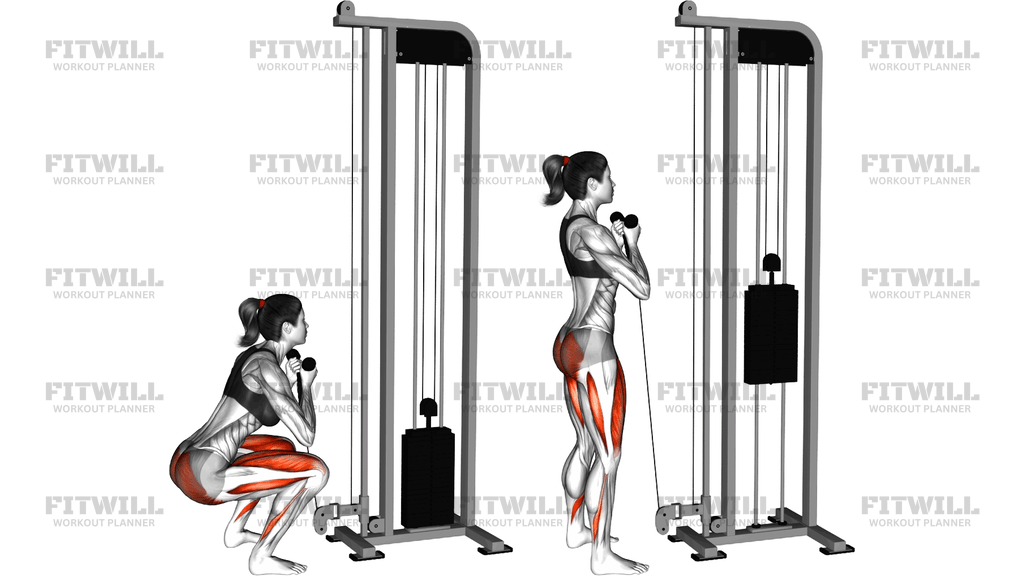
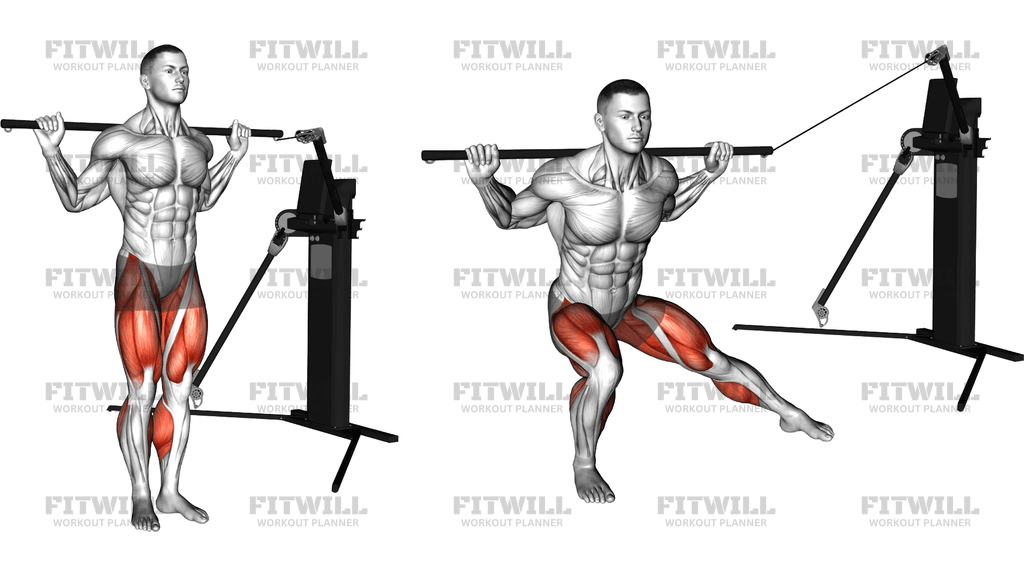
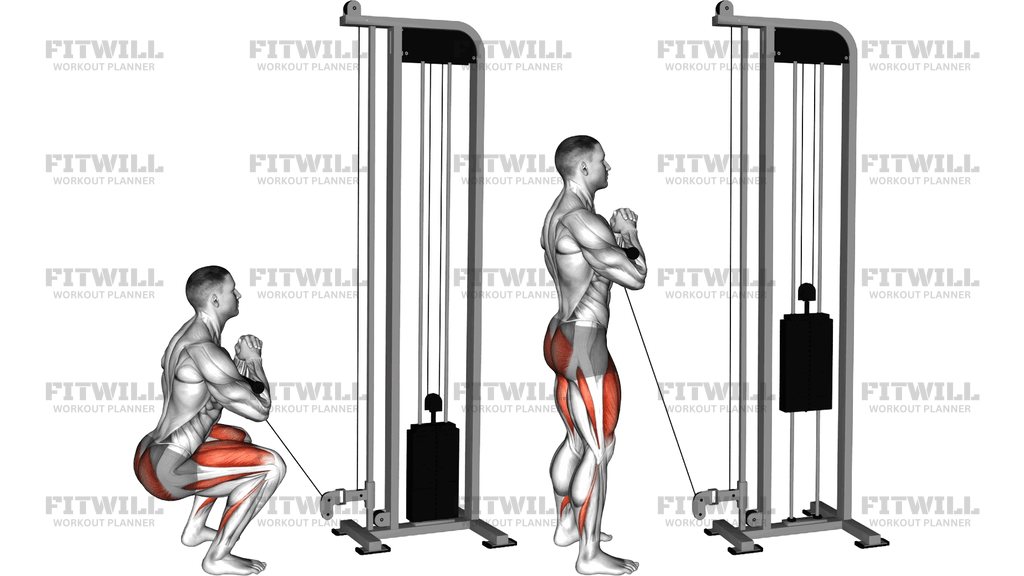
Cable Front Squat With V Bar
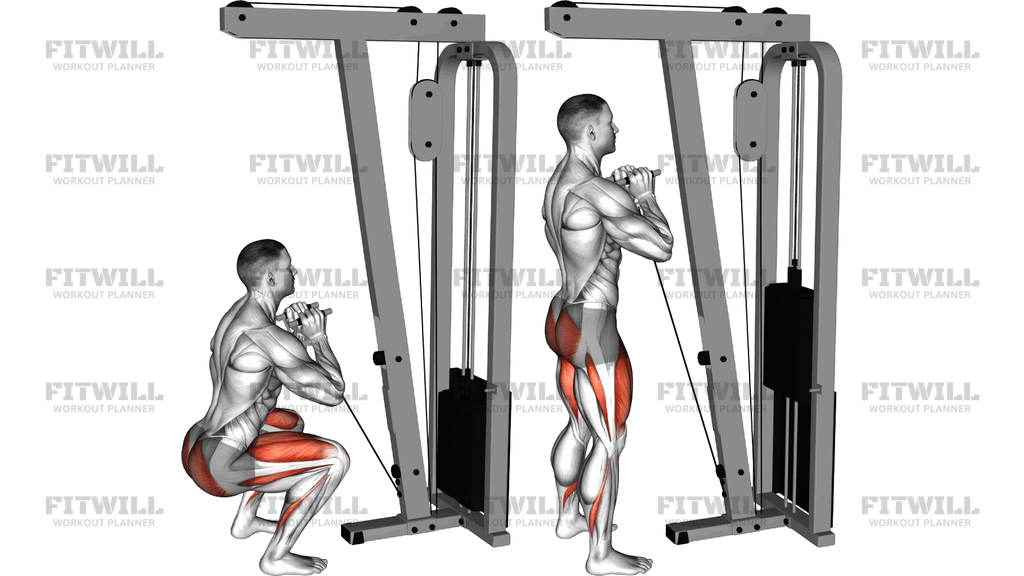
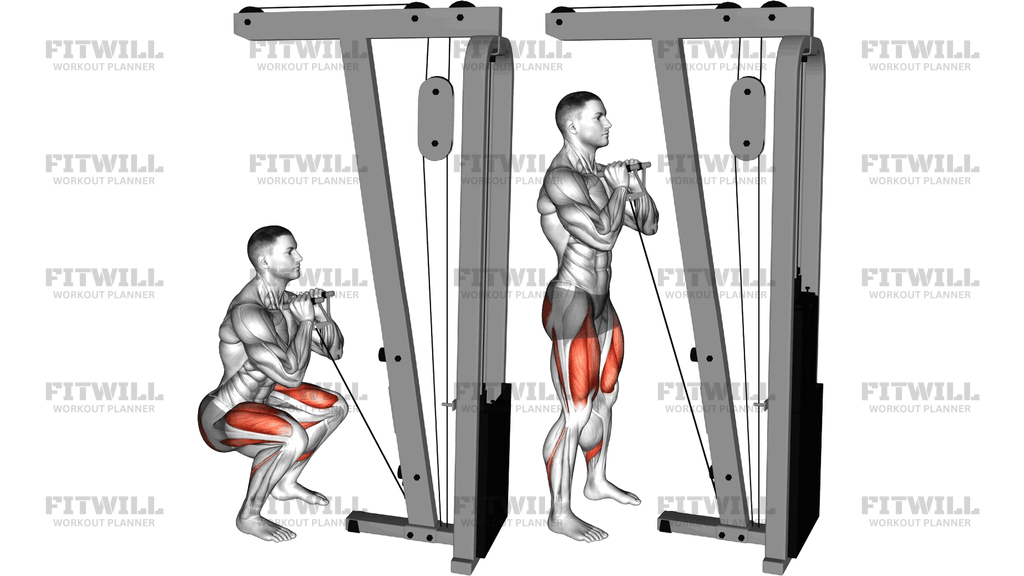
The Cable Front Squat With V Bar is a front-loaded squat performed while facing a cable machine with a V-bar attachment connected to the low pulley. You hold the V-bar at chest height with your elbows tucked down and slightly forward, so the cable pulls upward and forward from between your legs as you descend. This front-loaded position keeps your torso noticeably more upright than a back squat, which shifts the emphasis toward the quadriceps while still challenging the glutes and the muscles that keep your spine tall.
The cable itself changes the character of the squat. Because the resistance pulls you forward and down into the machine, your hip extensors and trunk have to work continuously to stop your chest from being dragged toward the pulley. That makes this a genuinely useful teaching tool for people who collapse forward when they squat, and it also gives the front squat pattern a smooth, even resistance curve that free weights do not provide.
This variation suits lifters who want quad-focused leg work without a barbell on their shoulders, beginners learning what an upright squat torso feels like, and more experienced trainees looking for a higher-rep squat pattern that spares the lower back and shoulders from heavy bar loading. Since the setup is quick, it also works well in circuits and time-efficient sessions where you would not want to unrack and re-rack a bar between sets.
Execution is straightforward once the setup is right. Stand close enough to the machine that the cable stays clear of your body, grip the V-bar with both hands and pull it up to your upper chest, elbows pointed down rather than flared out. Set your feet roughly shoulder-width with toes turned slightly out, brace your trunk, and sit straight down between your hips while keeping the V-bar anchored at your chest. Drive through the floor to stand back up, finishing with your hips and knees extended without leaning back.
The main technical points are keeping the V-bar glued to your upper chest throughout the rep and resisting the forward pull of the cable at the bottom, where the resistance feels heaviest toward the torso. Depth should match what your hips and ankles allow while your heels stay planted; a controlled squat to thigh-parallel or slightly below is a good target for most lifters. Because the weight stack resets between reps, stay disciplined about lowering under control rather than letting the stack dump tension at the top.
[ Workout Log & Planner ]
Put your next workout in Fitwill
Keep your plan and training log ready when you are.


Instructions
- Attach a V-bar to the low pulley of a cable machine and select your weight before you step in.
- Stand facing the machine, feet about shoulder-width apart with toes turned slightly outward, positioned close enough that the cable runs between your legs without rubbing.
- Grip the V-bar with both hands and pull it up to your upper chest, elbows pointing down and slightly forward, shoulders relaxed.
- Take a breath and brace your trunk as if bracing for a light punch, keeping your ribcage stacked over your pelvis.
- Push your hips back slightly and bend your knees to squat straight down between your hips, keeping the V-bar pressed against your upper chest the whole way.
- Descend until your thighs reach parallel or as deep as you can while your heels stay flat and your chest stays tall against the cable's pull.
- Drive through your whole foot to stand back up, extending your hips and knees together without letting your chest drift toward the machine.
- Exhale as you rise, then take your next breath at the top before starting the next rep.
- Complete all reps, then step back, return the V-bar to rest, and adjust the stack before letting go.
Tips & Tricks
- The most common fault is letting the V-bar drift away from your chest as you tire; the cable then yanks you forward. If the handle floats forward, drop the weight rather than muscling it back.
- If your heels lift at the bottom, widen your stance a few centimeters or turn your toes out slightly before adding load.
- Keep your elbows down, not flared to the sides. Flared elbows pull the V-bar off your chest and shift stress into your shoulders.
- Stand far enough back that the cable does not drag across your thighs or shins, but not so far that you are pulled off balance toward the machine.
- Think of squatting down between your hips rather than folding over them. If your hips shoot up first on the way back up, the cable pull has beaten your torso position.
- Lower the weight under control for two to three seconds. Because the stack reloads instantly at the top, rushing the descent removes most of the squat's benefit.
- Push your knees out in line with your toes as you descend, especially if they tend to cave inward when the load gets heavy.
- Treat the first few reps of your first set as a rehearsal with a lighter load; the forward pull of the low pulley feels different from any free-weight squat.
Frequently Asked Questions
What muscles does the Cable Front Squat With V Bar work?
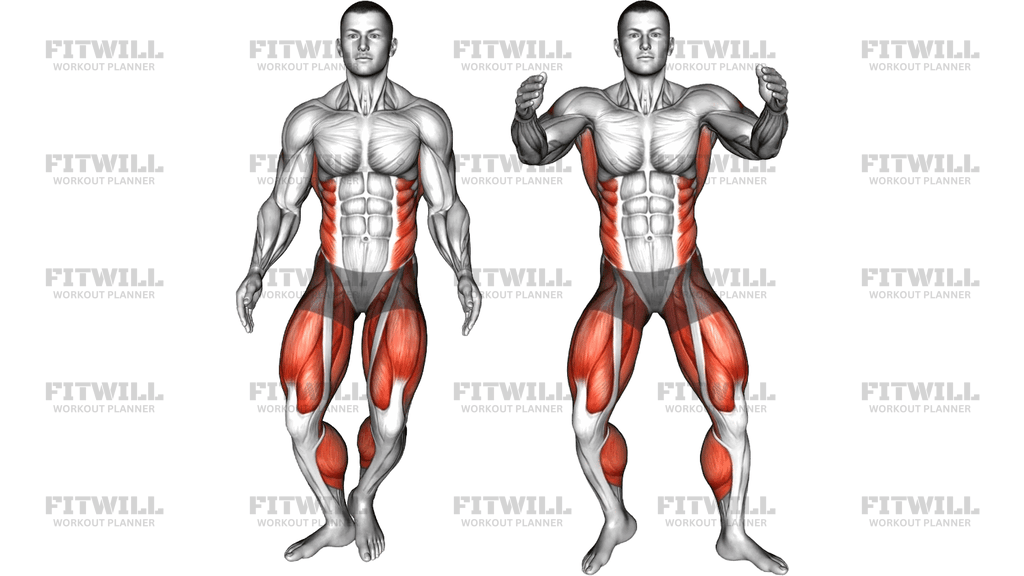
The quadriceps are the primary movers, with strong contributions from the glutes as you come out of the bottom. Your core, upper back, and spinal erectors work isometrically to hold your chest up against the cable's forward pull.
Why hold the V-bar at the chest instead of letting the arms hang?
Chest-height placement is what makes this a front squat. It keeps your torso upright, loads the quads more directly, and gives you a physical reference point, since the handle drifting off your chest is the first sign your form is slipping.
Is the Cable Front Squat With V Bar good for beginners?
Yes, it is one of the friendliest ways to learn the upright front squat pattern. The cable's forward pull gives instant feedback about torso position, and the stack allows very small, safe load increases.
How deep should I squat in this exercise?
Go as deep as you can while keeping your heels flat, knees tracking over your toes, and the V-bar on your chest. For most people that means thighs at parallel or slightly below; depth that costs your torso position is not worth it.
Can I replace barbell front squats with the Cable Front Squat With V Bar?
It is a solid substitute when you have no barbell, want less spinal and shoulder loading, or are training in a higher-rep range. Barbell front squats still allow heavier absolute loading, so powerlifters and Olympic lifters should keep the barbell version in their plan.
Why do I feel pulled forward at the bottom of the squat?
The low pulley pulls up and forward, and the horizontal pull on your torso is strongest relative to your leverage when you are deep. Brace harder, keep the V-bar pressed to your chest, and reduce the weight if you cannot hold your position.
How should my feet be positioned for this exercise?
Set your feet about shoulder-width apart with toes turned out 10 to 20 degrees, standing close enough to the machine that the cable travels cleanly between your legs. Adjust slightly wider or narrower until your hips and knees move freely without your heels lifting.
What should I do if the cable scrapes against my legs?
Step back a little and check that your stance is centered over the pulley. A slightly wider stance also creates more clearance for the cable between your legs.
Is the Cable Front Squat With V Bar safe for people with knee or lower back concerns?
It is generally easier on the lower back than barbell squats because the load is light-to-moderate and front-loaded, but individual situations vary. Control the range, avoid depth that causes discomfort, and get clearance from a qualified professional if you have an existing issue.
How many sets and reps work well for this movement?
Because the cable loads smoothly and the setup is quick, sets of 8 to 15 reps for 3 to 4 sets fit this exercise well. Heavier low-rep work is possible, but the forward cable pull makes torso control the limiting factor before your legs are.