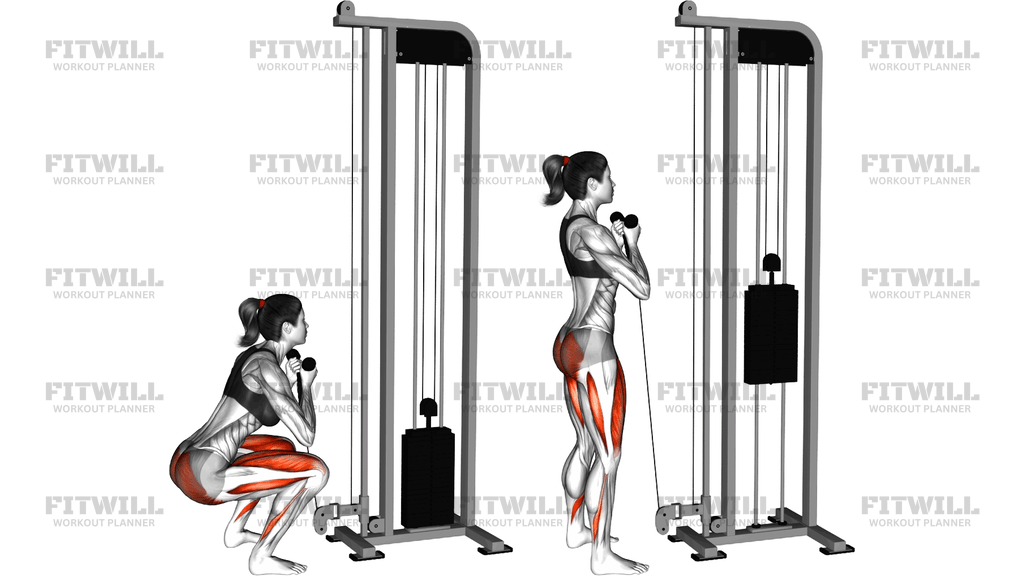
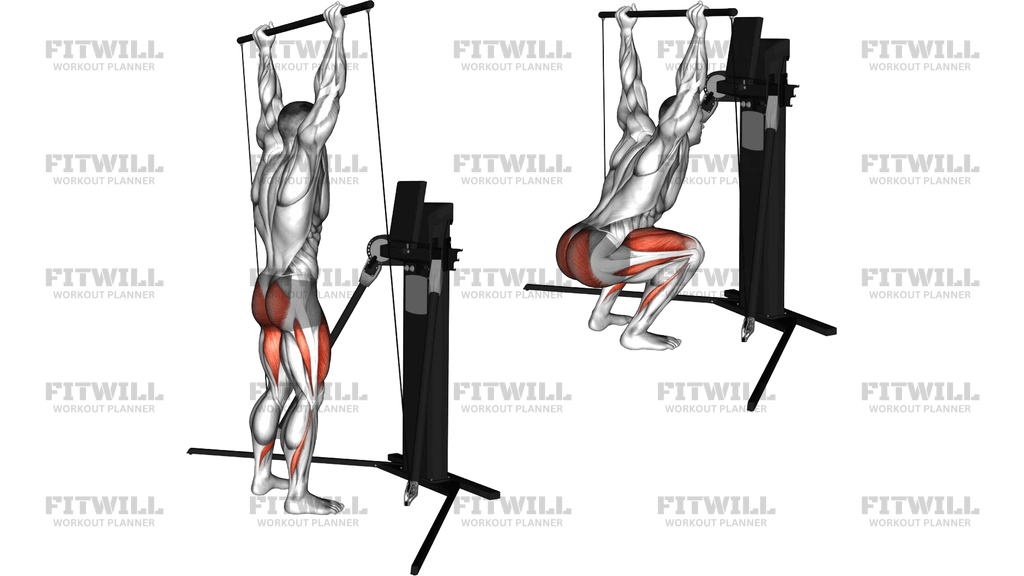
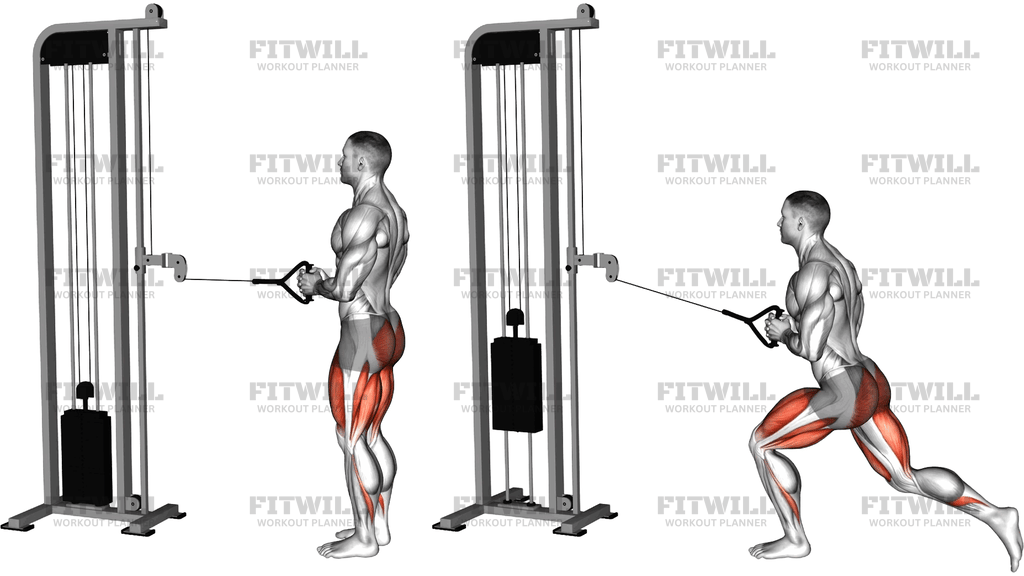
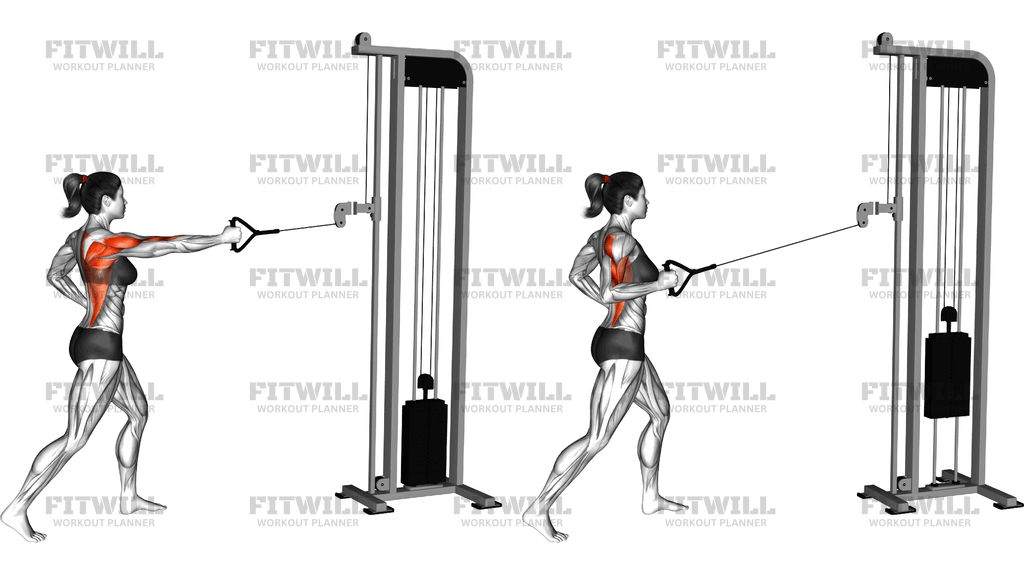
Cable Lateral Lunge (Version 3)
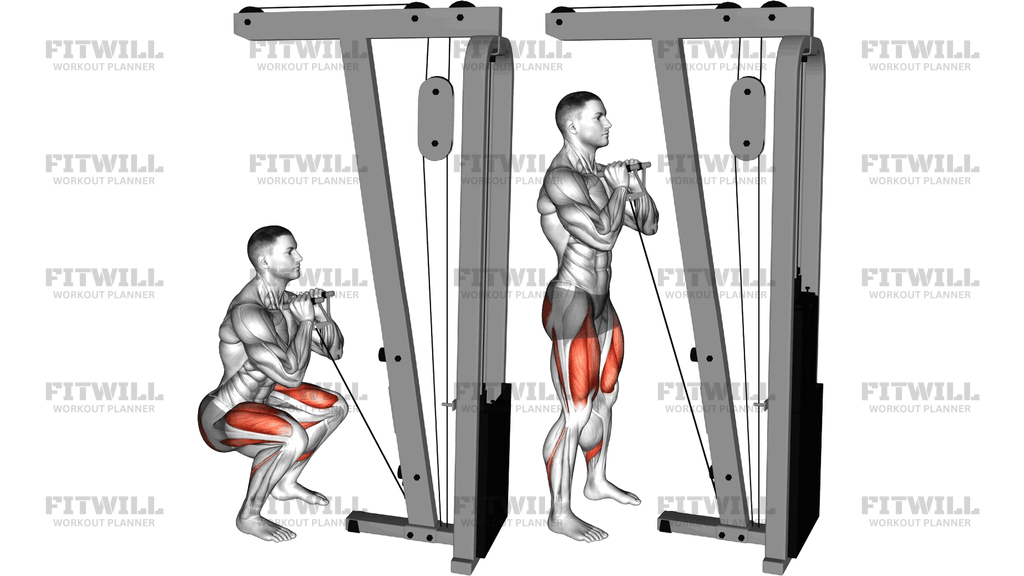
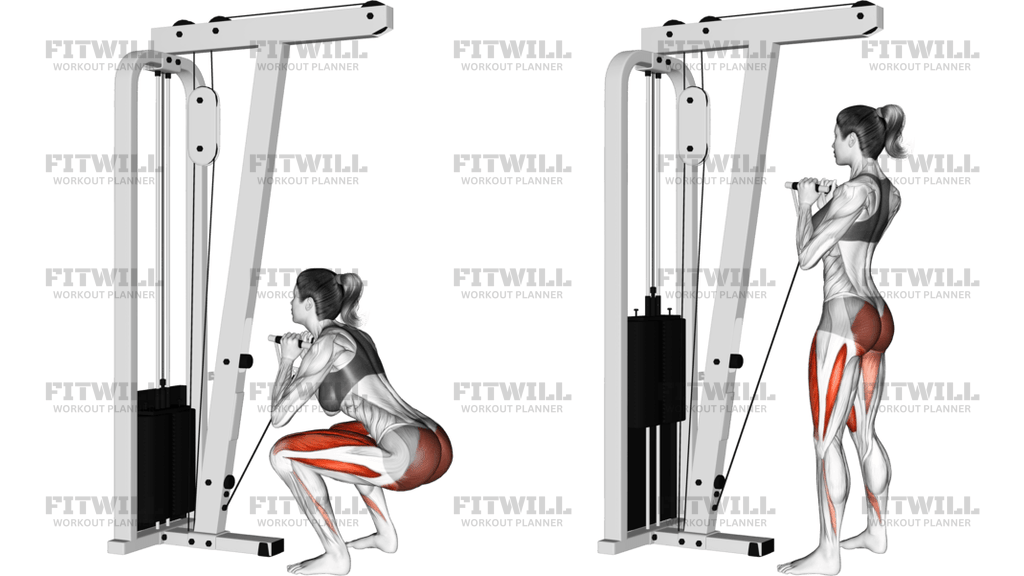
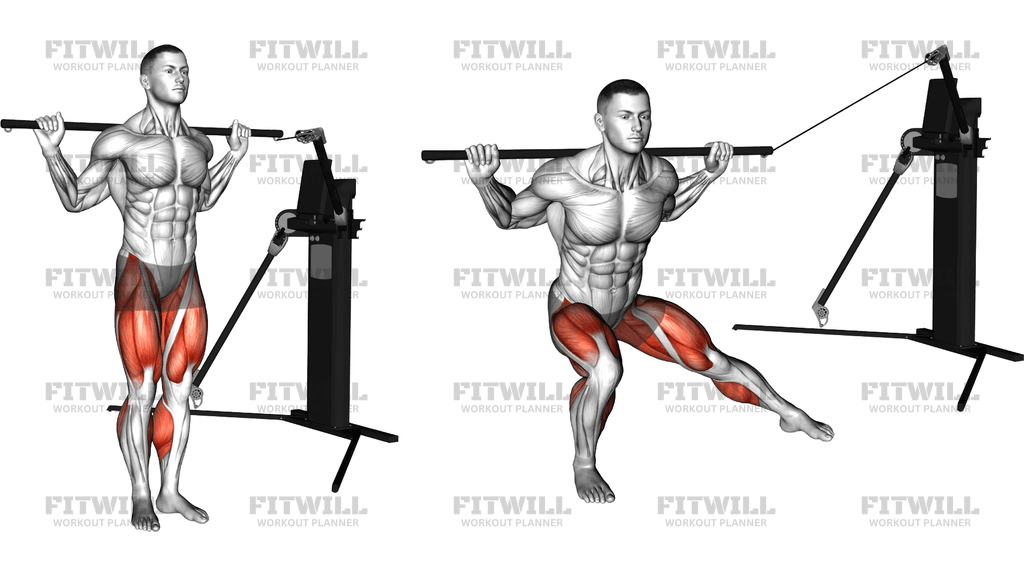
The Cable Lateral Lunge (Version 3) is a side-to-side lunge variation performed with a straight bar held across the upper back in a squat-bar position, with one end of the bar connected to a cable machine through a pulley. The cable adds a directional pull that challenges your balance and torso control on top of the normal lunge demand, so every rep trains the legs while your trunk works to stay square and upright.
This movement is especially useful for anyone whose training is dominated by forward-and-back patterns like squats, deadlifts, and regular lunges. Moving in the frontal plane loads the quads and glutes of the working leg while the straight, extended leg places a strong stretch demand on the inner thighs and hip of the other side. That combination makes it a good fit for field-sport athletes, runners, and lifters who want stronger, more resilient hips without loading the spine heavily the way a barbell side lunge would.
The setup matters more here than in a bodyweight lateral lunge because the cable pulls the bar sideways and slightly off-center. Position the cable attachment so the pull comes from the appropriate side, keep the bar settled firmly across your traps rather than your neck, and stand tall before you step out. If the bar drifts or your torso twists toward or away from the machine, the resistance shifts and the working leg stops doing the job.
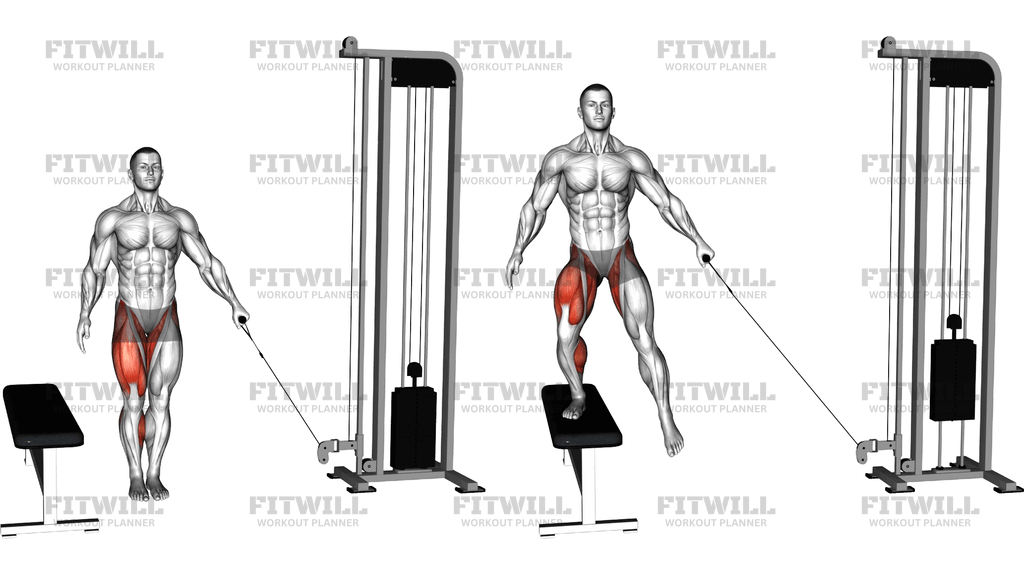
To execute it well, step one leg out to the side, sit your hips back and down into the bent leg while the other leg straightens fully out to the side with the foot flat or heel planted and toes up. Push through the whole foot of the bent leg to return to standing, keeping the bar level across your shoulders the entire time. The knee of the working leg should track over or slightly outside the toes without collapsing inward.
Common use cases include unilateral leg strength work, hip mobility and adductor conditioning, and balance training under light-to-moderate load. Because the cable provides adjustable, smooth resistance, this version suits lifters who find a loaded barbell lateral lunge awkward or who want steadier tension through the full range.
For safety, start with light weight until the lateral stepping pattern feels natural, keep the moving leg's knee aligned with the foot, and avoid letting your lower back round as you sink into the lunge. Stop the set if you feel twisting stress in the knee of the working leg or pinching in the groin of the extended leg, and shorten your stance instead of pushing through discomfort.
[ Workout Log & Planner ]
Put your next workout in Fitwill
Keep your plan and training log ready when you are.


Instructions
- Set a cable machine to a low or mid pulley and attach the end of a straight bar to the cable so you can hold the bar across your upper back, with the cable coming from one side.
- Stand facing away from the machine, place the bar comfortably across your traps just below your neck, and grip it slightly wider than shoulder width with elbows pointing down.
- Stand tall with feet hip-width apart, engage your core, and let the cable pull settle so the resistance feels even before you move.
- Inhale and step your right leg out to the side, keeping the bar level and your chest facing forward.
- Shift your hips back and bend the right knee, lowering into the lunge until the thigh is roughly parallel to the floor while the left leg stays straight out to the side with the heel planted and toes pulled up.
- Check that the bent knee tracks over your foot and does not cave inward, and keep your torso upright rather than leaning toward or away from the cable.
- Exhale and drive through the heel and midfoot of the bent leg to push back up to a full standing position.
- Bring the stepped-out leg back to hip-width stance and pause briefly to reset your balance before the next rep.
- Complete all reps on one side, then reposition so the cable pulls from the opposite side and repeat on the other leg.
Tips & Tricks
- The most common mistake is letting the bent knee dive inward as you sink, which shifts stress onto the knee joint; cue yourself to spread the floor with that foot as you descend.
- If the bar tips toward the cable side, your grip is too loose on that end; squeeze both hands evenly and press the bar into your traps to keep it level.
- A too-narrow side step is a frequent error that turns the movement into a shallow squat; step out far enough that the extended leg is genuinely straight and the inner thigh feels a stretch.
- Keep the foot of the straight leg flat or heel-down with toes up; letting that foot float or twist reduces the adductor stretch and destabilizes your base.
- Control the return instead of snapping back up — the cable pull makes the eccentric and the transition under tension the most valuable part of the rep.
- If your torso rotates toward the machine, lighten the weight; the obliques and trunk should resist the pull, not get dragged by it.
- Keep your gaze forward and chin level; looking down at your legs tends to round the upper back and roll the bar toward your neck.
- Perform all reps on one side before switching rather than alternating, so you can focus on the working hip's path and depth.
- If you feel groin pinching in the extended leg, reduce the depth and widen the angle of that foot slightly before progressing again.
Frequently Asked Questions
Which muscles does the Cable Lateral Lunge (Version 3) work?
The quads and glutes of the bent leg do most of the work, while the inner thighs of the extended leg work under a stretch and the glute medius on the standing side stabilizes your pelvis. Your core and obliques also work to keep your torso square against the cable's sideways pull.
Why is the bar connected to a cable machine instead of just held across the back?
The cable adds a constant sideways pull that makes the trunk resist rotation and makes balance harder, so you train frontal-plane strength and stability together. It also lets you load the pattern smoothly without placing a heavy barbell on your spine.
Is the Cable Lateral Lunge (Version 3) suitable for beginners?
Yes, with light weight and a shallow step. Beginners should first practice a bodyweight lateral lunge to learn the side-stepping pattern, then add the cable pull once they can keep the knee tracking and torso upright.
Should I alternate legs each rep or complete one side first?
Complete all reps on one side, then reposition the cable or yourself so the pull comes from the other side and work the opposite leg. Alternating mid-set forces you to reset the cable setup repeatedly and makes it harder to judge depth on each side.
How deep should I sink into the lateral lunge?
Descend until the thigh of the working leg is roughly parallel to the floor or as deep as you can go with the knee tracking over the foot and a flat back. Depth is only useful if the knee and pelvis stay controlled.
What is the most common mistake with this exercise?
Letting the working knee collapse inward and letting the bar tilt toward the cable. Both usually come from using too much weight; fix them by stepping out wider, gripping the bar firmly into your traps, and reducing the load.
Can I substitute another exercise if I don't have a cable machine?
A bodyweight lateral lunge or a dumbbell-held lateral lunge covers the same side-stepping pattern. You lose the anti-rotation challenge from the cable, so add a slower tempo to make up for it.
Where should the bar sit during the Cable Lateral Lunge (Version 3)?
Rest it across your traps just below the base of your neck, the same shelf you would use for a back squat, with elbows down and hands gripping firmly. Never let it rest on the cervical spine.
Is this exercise hard on the knees?
When done with the knee tracking over the toes and the hips sitting back, it is a controlled, joint-friendly unilateral exercise. Keep the load moderate, avoid twisting at the bottom, and reduce depth if you feel sharp knee discomfort.
How does this differ from a regular forward lunge?
A forward lunge works the legs in the sagittal plane, while this version steps sideways and loads the adductors, outer hips, and glute medius far more. It complements forward-plane squatting rather than replacing it.