Cable Zercher Squat
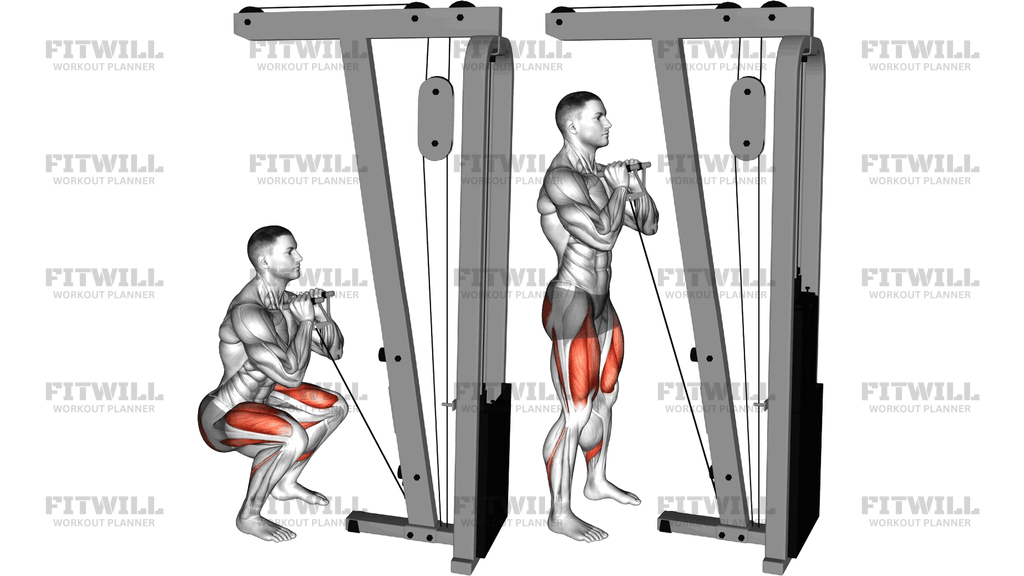
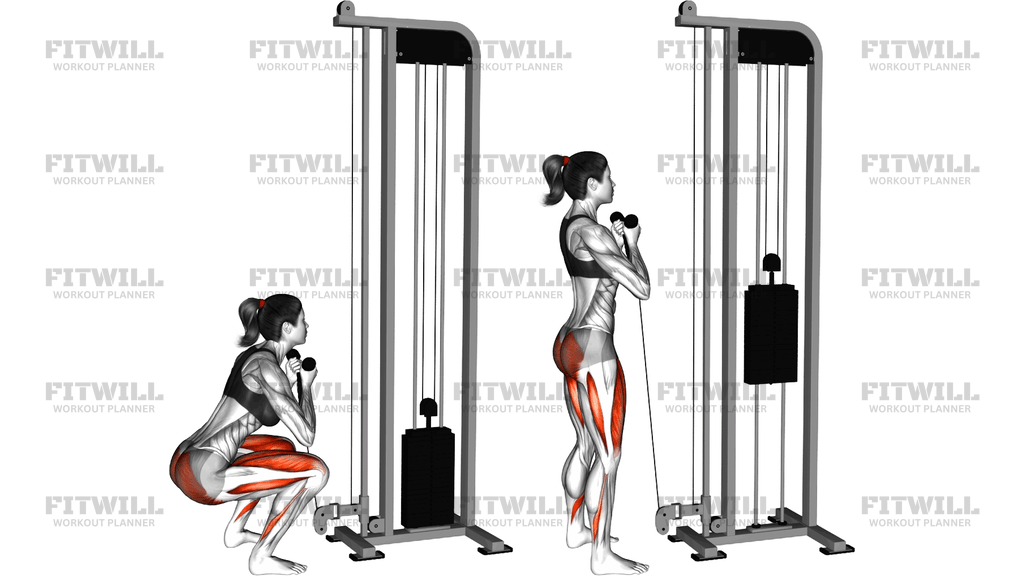
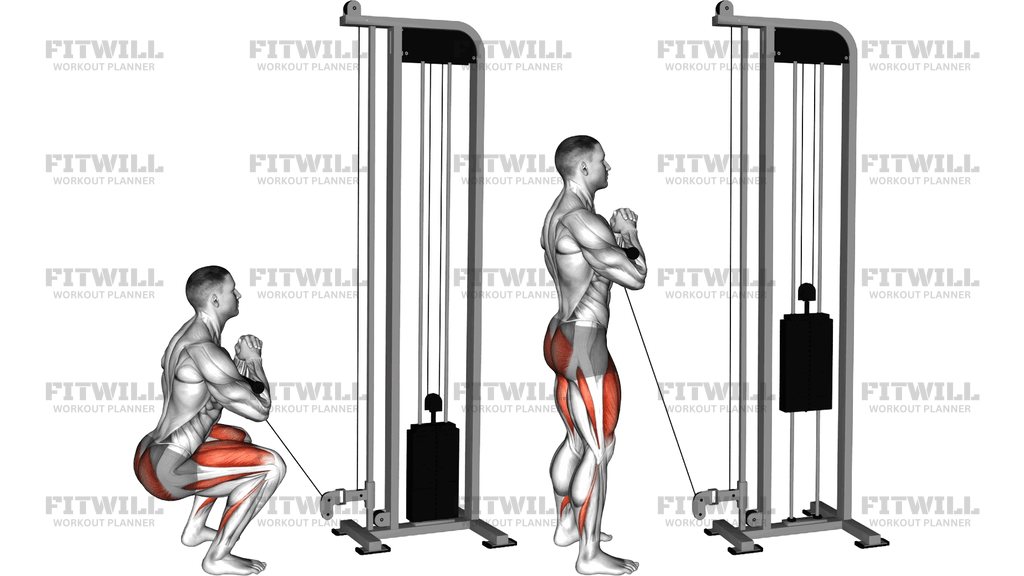
The Cable Zercher Squat is a squat variation performed on a cable machine with the resistance cradled in the crease of your elbows rather than held in your hands or on your back. A single handle or strap is attached to the low pulley, and you stand facing away from the machine so the cable pulls down and back through your locked elbows as you squat. This setup mimics the barbell Zercher squat while providing smoother, more consistent tension and eliminating the need for a heavy bar resting on your arms.
This movement is especially useful for lifters who struggle to keep a barbell settled in the elbow crease, or for anyone who wants the Zercher stimulus without the bruising and discomfort a loaded bar can cause. It also suits home or commercial gym setups where only a cable station is available. Because the load sits at the front of your torso, your trunk has to work hard to stay upright, which makes this a strong choice for building squatting strength, core stability, and midline control at the same time.
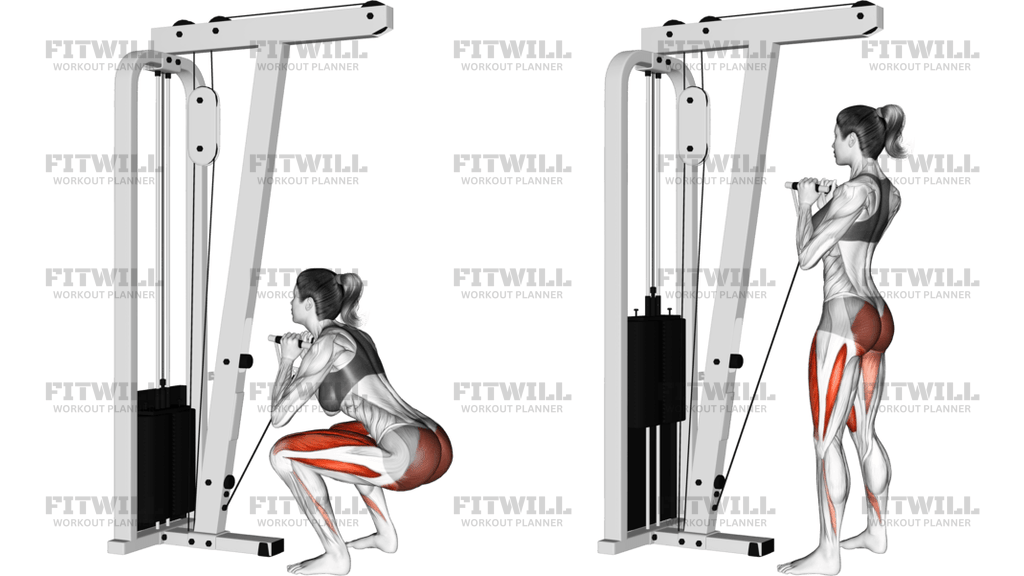
The primary muscles working are the quadriceps, which extend the knees as you drive out of the bottom. The glutes and hamstrings contribute heavily on the way up, particularly as your hips come forward through the middle of the rep. The front-loaded elbow position also challenges the core, the lower back, the upper back, and the biceps and forearms isometrically, since your arms must hold their position against the pull of the cable for the entire set.
Setup matters more here than in most squat variations. The cable should run from the low pulley directly through the crooks of both elbows, and you need enough distance from the machine that tension is present at the top without yanking you backward. Your feet stay roughly shoulder-width apart with toes turned slightly out, and your hands come up in front of your chest with elbows stacked tight against your ribs. If your stance or distance from the pulley is off, the cable angle changes and the movement turns into a backward pull rather than a squat.
To execute it well, brace your trunk before you descend, then sit your hips down and back while letting your knees track over your toes. Descend until your thighs are at least parallel, keeping your chest tall and your elbows locked in place so the cable stays seated in the crease of your arms. Drive the floor away and stand fully upright, exhaling near the top. The cable should move smoothly in a straight line toward the pulley throughout the rep.
Common use cases include accessory work after barbell squats, hypertrophy blocks targeting the quads and glutes, and teaching lifters to stay upright under a front-loaded resistance. Because the cable length and anchor point are fixed, the exercise is also relatively easy to progress in small weight increments, which makes it practical for steady strength gains over time.
[ Workout Log & Planner ]
Put your next workout in Fitwill
Keep your plan and training log ready when you are.


Instructions
- Attach a single handle to the low pulley of a cable machine and set the stack to a light starting weight.
- Stand facing away from the machine with your feet about shoulder-width apart and toes turned slightly outward, then bend down and hook the handle in the crease of both elbows so your forearms cross in front of you.
- Clasp your hands together at chest height, pull your elbows down against your sides, and step forward until you feel steady backward tension from the cable at the top of the movement.
- Take a deep breath into your belly, brace your core, and pull your shoulder blades down to set your upper back.
- Push your hips back and bend your knees to squat down, keeping the cable seated in your elbow creases and your chest as tall as possible.
- Lower until your thighs are at least parallel to the floor, with your knees tracking in line with your toes and your weight spread across your whole foot.
- Drive through the floor and extend your hips and knees together to stand back up, keeping the tension on the cable the entire time.
- Exhale as you finish the stand, pause briefly at the top with your body upright, then reset your brace before starting the next rep.
- Lower with control on every rep rather than dropping quickly, since the cable keeps pulling on your arms at the bottom.
- When the set is finished, step toward the machine first to release the tension, then unhook the handle from your elbows and set the weight down.
Tips & Tricks
- If the handle slips out of your elbow crease, cross your forearms slightly and squeeze your elbows inward against your ribs so the cable has nowhere to go.
- Most people stand too close to the machine. If you feel yanked backward at the top, take one more half-step forward so tension is firm but not dragging you.
- Leaning forward as you fatigue is the most common fault here. Cue yourself to keep your hands clasped high near your sternum; if your hands drift down, the set is done.
- Because the cable pulls low and behind you, your lower back works to keep you upright. Stop the set if your trunk starts rounding instead of just slowing the tempo.
- A towel wrapped around the handle or sleeve can reduce pressure on the elbow crease if the attachment digs in during heavier sets.
- Your heels should stay flat throughout. If they lift, widen your stance slightly or elevate your heels on a small wedge before adding weight.
- Do not let the cable pull you into a toe-heavy position at the bottom. Shift your weight back toward your midfoot as you descend.
- Keep your knees from caving inward as you stand; actively push them out over your pinky toes, especially in the last few reps.
- Start lighter than you think you need. The elbow position is uncomfortable before it is heavy, and the cable gives you no shelf to rest on.
Frequently Asked Questions
What muscles does the Cable Zercher Squat work?
The quadriceps are the main movers, with strong contributions from the glutes and hamstrings as you stand up. Because the load is cradled in your elbows at the front of your body, your core and lower back also work isometrically to keep your torso upright.
Is the Cable Zercher Squat suitable for beginners?
Yes, as long as you start with a light stack weight and focus on the setup. The cable version is often easier to learn than the barbell Zercher squat because the handle is more comfortable in the elbows and the resistance moves smoothly.
Why does the cable attach at the low pulley for this exercise?
The low anchor point makes the cable pull down and back through your elbows, which loads your squat the same way a front weight would. It also forces your trunk to resist backward pull, which is a large part of what makes the Zercher position challenging.
How far should I stand from the cable machine?
Stand far enough that the cable has clear tension when you are standing tall, but not so far that it drags you backward at the top. A good check is that you can hold the top position without leaning forward or being pulled off balance.
My elbows hurt when I do the Cable Zercher Squat. What should I change?
Check that the cable is sitting in the crease of both elbows with your forearms crossed and your hands clasped, not against your forearms or wrists. Wrapping a towel around the handle also spreads the pressure and makes heavier sets much more comfortable.
Can I replace barbell Zercher squats with the Cable Zercher Squat?
It works as a substitute when you do not have a barbell, a rack, or want to spare your elbows. The main difference is that a barbell lets you load much heavier and restricts you less at the bottom, so treat the cable version as a complementary or temporary option rather than a full replacement for max-strength work.
How deep should I squat on this exercise?
Aim to lower until your thighs are at least parallel to the floor, provided you can keep your heels down and your chest up. If your torso starts folding forward or the cable pulls you off balance at the bottom, reduce the depth before reducing the weight.
How should I breathe during the Cable Zercher Squat?
Take a breath and brace your core before each descent, hold that brace through the bottom, and exhale as you finish standing up. Reset your breath at the top of every rep rather than rushing through continuous reps.
Why do my arms and forearms get tired before my legs?
The elbow position requires your biceps, forearms, and shoulders to hold statically against the cable for the whole set, which is normal for Zercher-style loading. If it limits you early, hold each rep's bottom position for less time and keep the weight moderate until your arms adapt.
Is it safe to let go of the handle mid-set?
No. Keep your hands clasped and elbows locked until the set ends, then step toward the machine to release the tension before unhooking the handle. Dropping the handle under load lets the stack slam down and can pull you off balance.