Cable Kneeling High Low Anti Rotation Chop
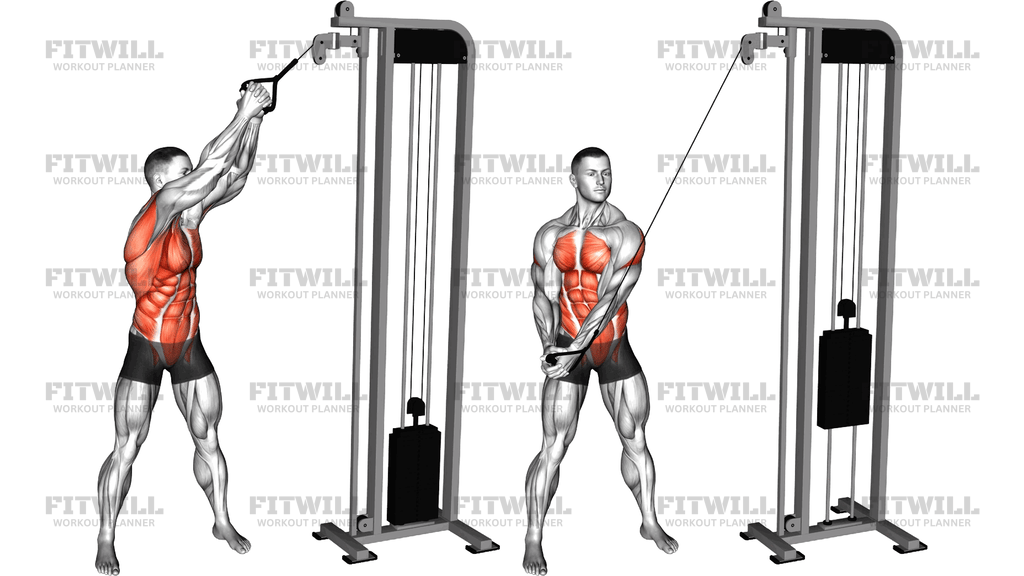
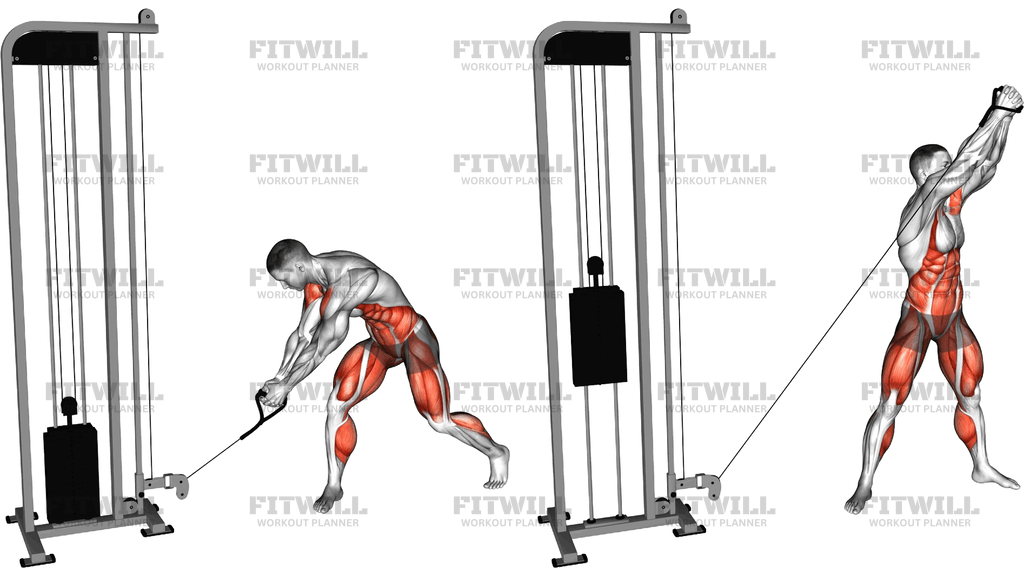
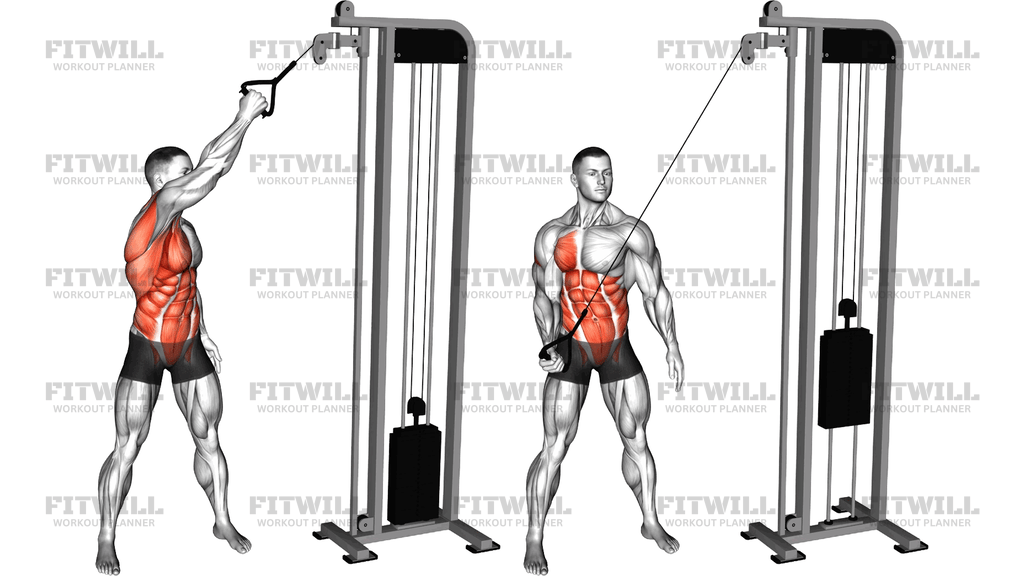
The Cable Kneeling High Low Anti Rotation Chop is a half-kneeling core exercise performed on a cable machine with a single handle set at the top pulley. You start tall in a half-kneeling stance beside the machine, hold the handle with both hands at shoulder height, and pull it diagonally down and across your body until it finishes low, near your outside hip. The key detail is in the name: this is an anti-rotation chop, meaning your torso resists the cable's pull rather than simply spinning with it. Your core braces and steers the movement while the cable constantly tries to twist you back toward the stack.
The half-kneeling position is what makes this version so effective. With one knee down and the other foot forward, your hips have far less room to cheat than they would standing, so the obliques, deep core, and hip stabilizers on both sides have to do the work. The forward leg side and the trailing knee side each face slightly different demands, which is why it pays to train both kneeling positions rather than only the one that feels natural.
This movement suits anyone who wants rotational strength with control: lifters building a resilient trunk, racquet and throwing athletes transferring force across the body, and desk workers who need to relearn how to move from the hips instead of hinging at the lower back. Because the cable provides smooth, even tension through the whole arc, it is also friendlier to the spine than many ballistic twisting drills.
Setup matters more than load here. Position yourself far enough from the machine that the cable stays taut at the top of the movement, keep the front shin roughly vertical, and stack your torso tall over both hips. If you set up too close or slouch into the pull, the exercise turns into an arm press-down instead of a trunk drill.
To execute it well, pull the handle to your sternum first, then rotate the arms across the body as one unit, letting the shoulders travel while your ribcage and pelvis stay largely square to the front. Pause briefly at the bottom, then control the handle back up along the same diagonal path. The return is where most people lose tension; treat it as half the repetition.
Use moderate weight and deliberate tempo. If the stack pulls you out of position or your front knee collapses inward, drop the load. This is a movement you should feel wrapping around your ribs and obliques, not straining your lower back or shoulders.
[ Workout Log & Planner ]
Put your next workout in Fitwill
Keep your plan and training log ready when you are.


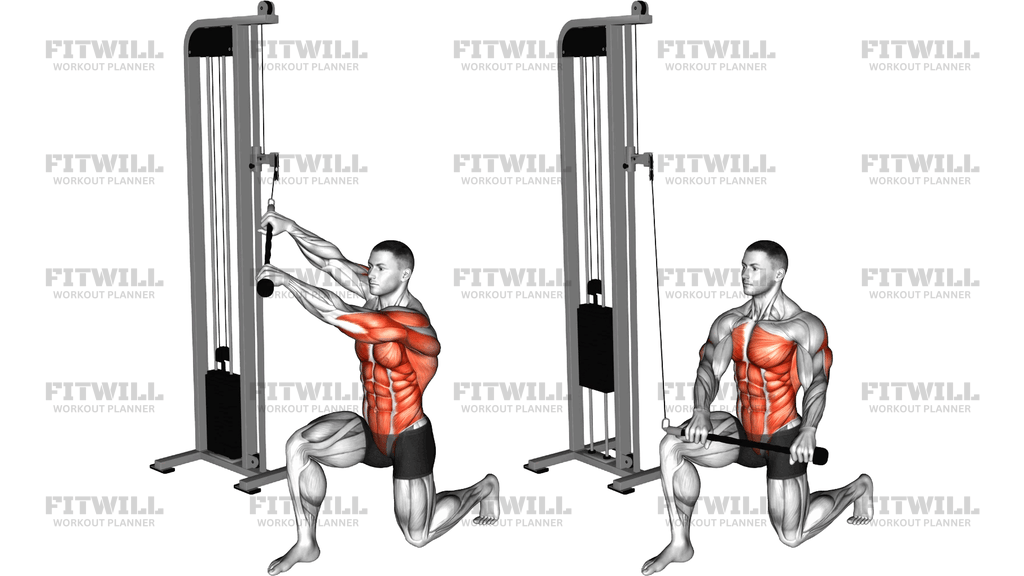
Instructions
- Set the single handle attachment on the highest pulley of a cable machine and select a light to moderate weight.
- Kneel down sideways to the machine with the machine on your right: left foot forward, left shin vertical, right knee on the floor with your back leg relaxed behind you.
- Grip the handle with both hands, outside hand first, and step or reach out so the cable is taut with your arms extended up and toward the pulley at roughly shoulder height.
- Sit tall between your hips, brace your core as if bracing for a light push, and square your chest forward before initiating the pull.
- Pull the handle in toward your sternum, keeping your elbows soft and your shoulders down away from your ears.
- Press the handle diagonally down and across your body, rotating your arms and upper back as one piece until the handle finishes low beside your front hip with straight arms.
- Hold the low position for a one-count, feeling the obliques on the far side resist the cable's pull back toward the machine.
- Reverse the path slowly, letting the cable draw your arms back up and across until you return to the starting position without losing your brace.
- Exhale as you pull down and across, inhale as you control the handle back to the top.
- Complete all reps on one side, then switch so the machine is on your left and your right foot is forward.
Tips & Tricks
- If your torso keeps rotating toward the machine on the way back up, the weight is too heavy—the cable should challenge your brace, not move you.
- Keep your front knee pointing straight ahead over your shoelaces; a knee that dives inward means your glutes and hips are disengaging under the load.
- Do not let your lower back arch and flare your ribs at the finish; tuck the ribs slightly so the chop comes from the trunk, not from lumbar extension.
- The common mistake is turning this into a straight arm press-down with locked elbows; think ribs driving the handle, arms just connecting it.
- Keep the cable path diagonal and consistent—if the handle drifts toward the machine mid-rep, you are too close to the stack.
- Tuck the toes of your down knee under or rest the top of the foot flat, whichever lets you keep your hips level; uneven hips show up immediately as a twisted finish position.
- Squeeze the handle firmly; grip failure often causes the shoulder to shrug and pulls tension away from the obliques.
- Pause a full second at the low position each rep—skipping the pause is the fastest way to turn an anti-rotation drill into a momentum swing.
- Start with the weaker or less coordinated kneeling side first so both sides get equal quality work at the same weight.
Frequently Asked Questions
Which muscles does the Cable Kneeling High Low Anti Rotation Chop work?
The primary drivers are the obliques and deep core, which rotate the arms across the body and then resist the cable pulling back. The shoulders assist the press, while the glutes and hip stabilizers on the kneeling and front leg keep your pelvis from twisting.
Why is this exercise done from a half-kneeling position instead of standing?
Half-kneeling takes the legs largely out of the equation, so the hips cannot swivel to fake rotation. That forces the obliques and trunk stabilizers to control the cable, and it also trains hip and ankle stability on the kneeling side.
Is the Cable Kneeling High Low Anti Rotation Chop suitable for beginners?
Yes, provided the weight starts light and the focus stays on keeping the ribcage and pelvis square. Many beginners actually find the kneeling setup easier to feel than standing chops because there is less to coordinate.
How do I know if I am actually resisting rotation instead of just swinging?
Watch your chest and front knee: they should face mostly forward from start to finish, with only the arms and upper back traveling on the diagonal. If your chest turns to follow the handle or your knee drifts inward, reduce the weight and slow the tempo.
How heavy should I go on the Cable Kneeling High Low Anti Rotation Chop?
Choose a load you can control for a two- to three-second lowering phase with a clean pause at the bottom. This is a control exercise, so a weight that forces you out of position is too heavy no matter how many reps you can muscle through.
What is the most common mistake with this movement?
Treating it like an arm exercise—bending the elbows and pressing down with the shoulders while the trunk stays passive. The fix is to pull the handle to your sternum first and let the ribcage drive the diagonal path.
What can I use if I do not have a cable machine?
A resistance band anchored high on a rack or door frame is the closest substitute, since it preserves the diagonal pulling path and the return tension. The half-kneeling setup and arm path stay exactly the same.
Should I do both kneeling sides and both cable heights?
At minimum, train both kneeling positions so each side of the trunk and hips works the down-chop pattern. If you have time, pairing it with the low-to-high reverse chop gives you balanced rotation work in both directions.
Is it safe for my lower back?
When performed with a braced core, tucked ribs, and moderate load, the slow cable resistance is generally well tolerated. If you feel twisting discomfort in your lower back, reduce the weight, shorten the range slightly, and make sure your hips—not your spine—are doing the stabilizing.
Where should the handle finish at the end of each rep?
Low and across the body, beside the hip on the side away from the machine, with arms nearly straight. Finishing there each rep ensures you travel the full high-to-low diagonal the exercise is designed to train.