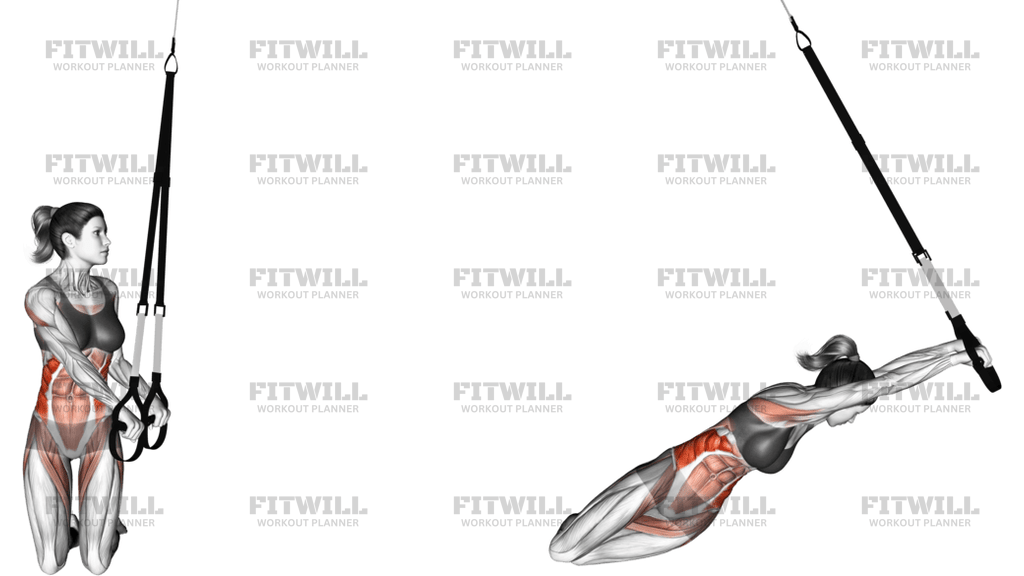
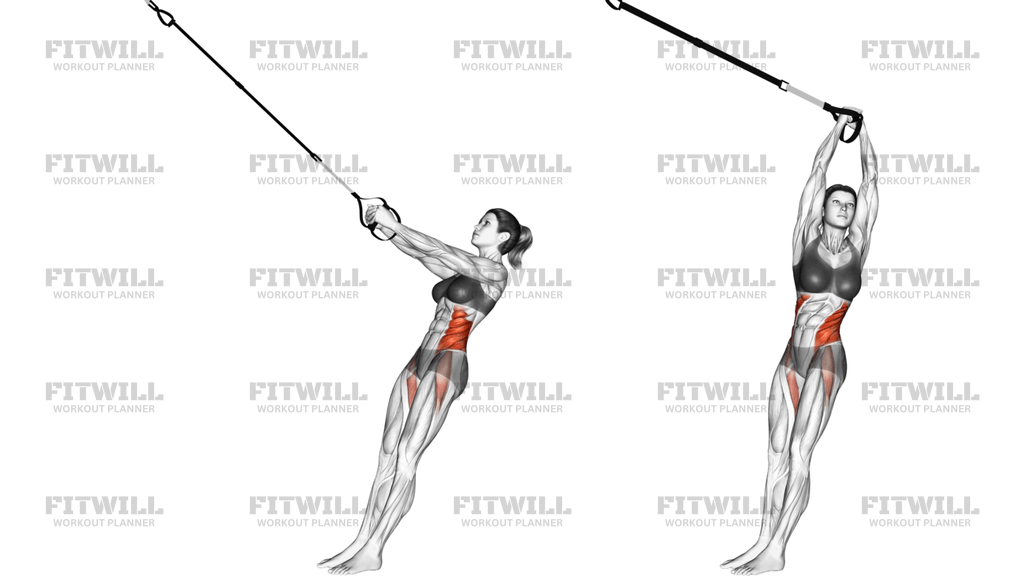
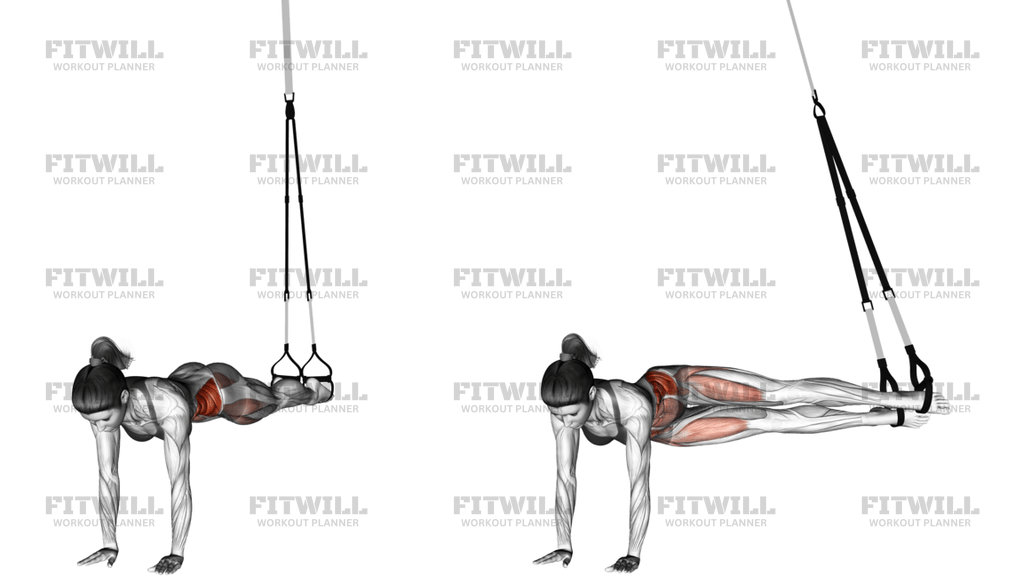
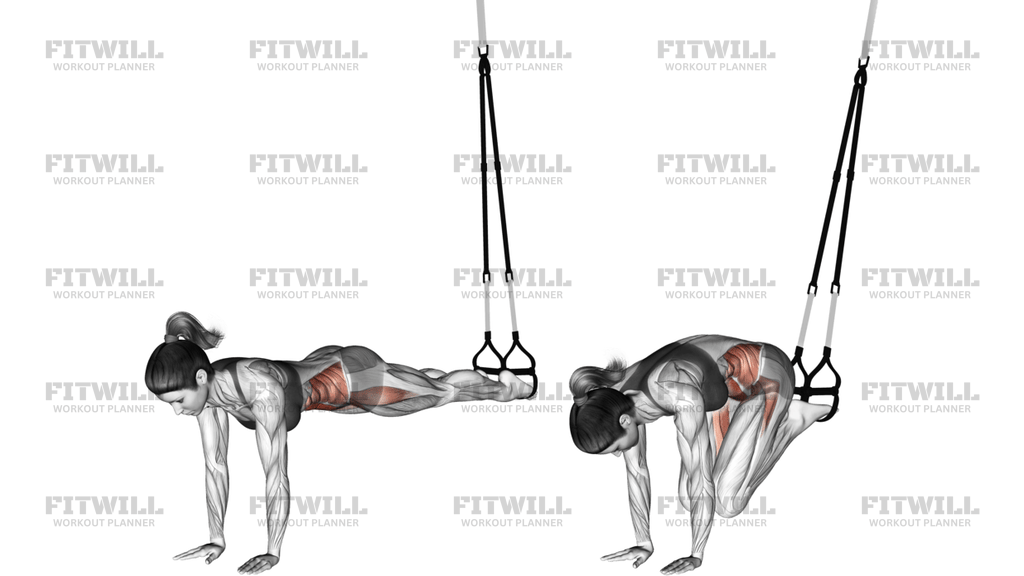
Suspender Woodchopper
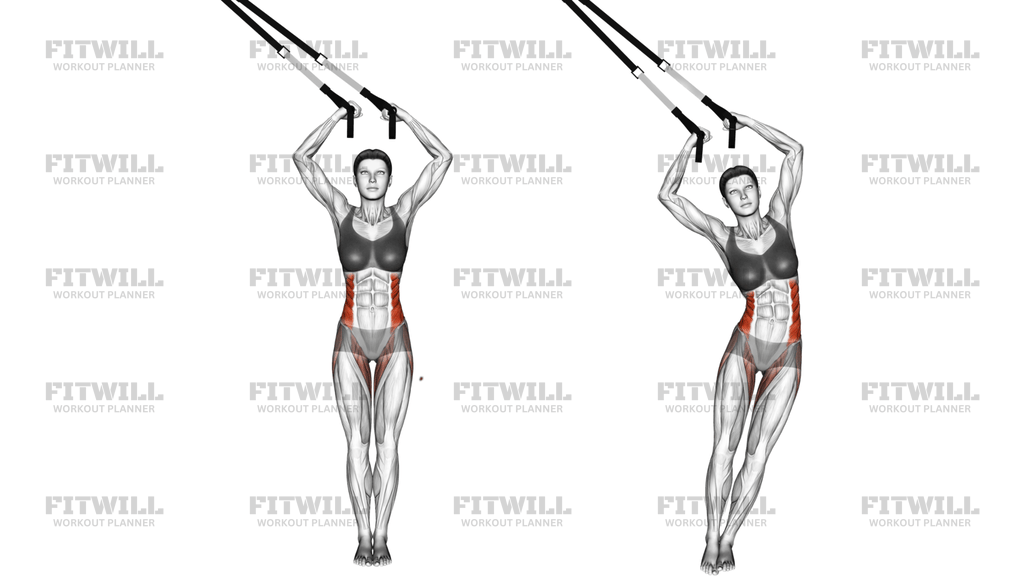
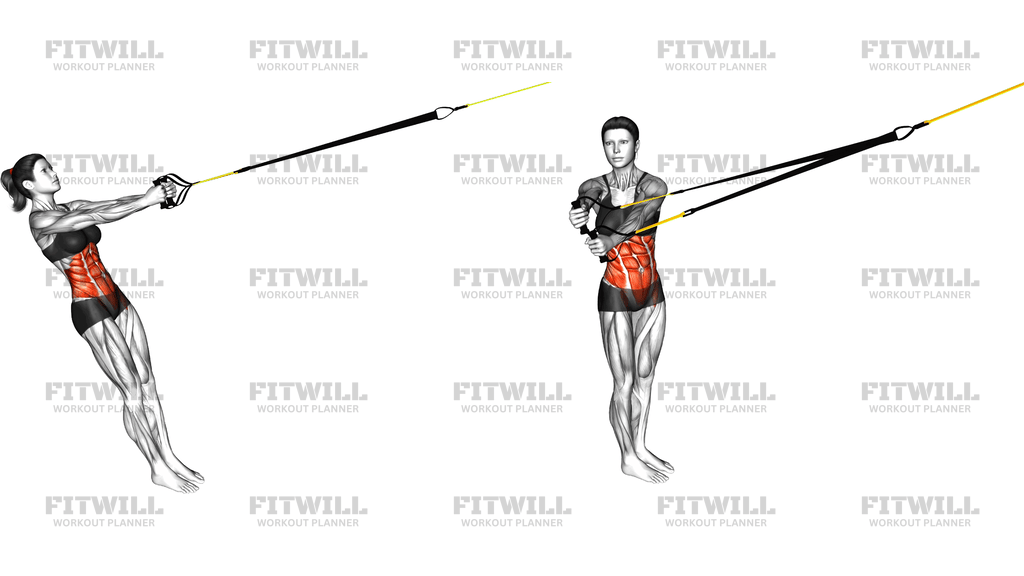
The Suspender Woodchopper is a rotational core exercise performed with a suspension trainer anchored above head height. You stand facing the anchor point, grip the handle with both hands, and lean back with your arms extended overhead and your torso rotated toward the anchor. From there, you pull the handle down and across your body in a diagonal chopping path, rotating your trunk as the hands travel toward the opposite hip.
Because the suspension trainer only provides resistance when you lean away from the anchor, your body weight does the loading. The further you walk your feet back and the more you lean under the straps, the harder the pull becomes. That makes the exercise easy to scale: beginners can stand more upright, while stronger trainees can increase the lean for a real challenge. It is a useful option for home workouts, travel training, or anyone who wants rotational strength without a cable machine.
The movement targets the obliques and deep core muscles through trunk rotation and anti-extension, with the abdominals working hard to control the lean under the strap tension. The shoulders, lats, and upper back drive the pulling action, while the legs and glutes stabilize your stance so the rotation comes from the trunk rather than the feet. The diagonal, high-to-low path mimics chopping or throwing patterns, which carries over well to racket sports, golf, and general everyday twisting tasks.
Setup matters more than most people expect. The anchor should sit well above your head, and your body should be angled away from the anchor before the first rep begins. If you start too upright, the straps stay slack and the exercise turns into an arm swing. Keep both hands stacked on the handle, arms nearly straight but not locked, and let the rotation happen from your ribcage and hips rather than just swinging the arms across.
Move with control in both directions. The chopping pull should be brisk and driven by the core, but the return path back up toward the anchor deserves equal attention, since the slow eccentric under strap tension is where much of the core work happens. Avoid letting your lower back arch or your shoulders roll forward as fatigue builds, and stop the set when you can no longer keep the rotation coming from your trunk instead of your arms.
This exercise fits well as a core finisher after upper-body pulling days, as part of a functional circuit, or as the main rotational movement in a minimal-equipment program. Two to four sets of eight to twelve controlled reps per side gives most people a solid training dose.
[ Workout Log & Planner ]
Put your next workout in Fitwill
Keep your plan and training log ready when you are.


Instructions
- Anchor the suspension trainer at a point above your head and adjust the strap so the handle hangs at roughly chest to shoulder height when slack.
- Face the anchor and grip the handle with both hands, one hand stacked over the other, arms extended straight toward the anchor point.
- Walk your feet back and lean your body away from the anchor, rotating your torso so your extended arms reach up and out toward the anchor on one side of your head.
- Brace your core, squeeze your glutes, and set your feet about hip-width apart with a soft bend in the knees.
- Inhale, then pull the handle down and across your body in a diagonal chopping path toward the opposite hip, rotating your ribcage and hips together as your hands travel.
- Finish with your hands beside your lower hip on the far side, arms still extended, torso rotated, and core tight.
- Exhale as you reach the bottom of the chop, then slowly control the handle back along the same diagonal path to the starting position overhead.
- Keep breathing steadily throughout, exhaling on the chopping pull and inhaling on the return.
- Complete all reps on one side, then turn around, re-grip the handle, and repeat on the opposite side.
- Step toward the anchor to release tension before letting go of the handle.
Tips & Tricks
- The most common mistake is keeping the straps slack, which removes all resistance. Walk your feet back until your body weight is genuinely loaded into the handles before the first rep.
- If your lower back arches during the pull, shorten the lean or reduce your stance width. The rotation should come from the ribcage, not from hinging at the lumbar spine.
- Keep the arms long and the wrists neutral. Bending the elbows turns the chop into an arm curl and shifts work away from the obliques.
- Pivot the back foot and let the hips turn with the shoulders. Forcing rotation only from the upper body strains the lower back and limits range.
- Control the return for two to three seconds. Letting the straps yank you back toward the anchor wastes the eccentric portion and is where most form breakdowns start.
- If your shoulders shrug up toward your ears as you pull, think about drawing your shoulder blades down your back as the hands travel toward the hip.
- Make the exercise harder by walking the feet further back for a deeper lean, not by rushing the reps. Speed hides the core work.
- Alternate sides within a session by simply turning around between sets, and expect the weaker or less coordinated side to need an extra rep or two of practice before loading up.
Frequently Asked Questions
What muscles does the Suspender Woodchopper work?
The obliques and deep abdominals are the primary movers, since they rotate and brace the trunk under strap tension. The shoulders, lats, and upper back assist the pull, while the glutes and legs stabilize your stance.
How high should the suspension trainer anchor be for this exercise?
Set the anchor well above head height so the handle starts above shoulder level after you lean back. This lets your arms extend along the full high-to-low diagonal path.
Can beginners do the Suspender Woodchopper?
Yes. Stand more upright so less body weight loads into the straps, and use a slightly smaller range of motion. Once the diagonal pattern feels controlled, walk the feet back to increase the challenge.
How do I make the Suspender Woodchopper harder?
Walk your feet further back from the anchor to increase the lean, slow down the return phase, or pause for a second at the bottom of each chop. All three increase the demand without extra equipment.
Why does my lower back ache when I do this exercise?
This usually means the rotation is coming from your lumbar spine instead of your ribcage and hips, or your back is arching under the lean. Brace the core harder, pivot the back foot, and shorten the range until the movement feels clean.
What can I use instead of a suspension trainer?
A cable machine with a single handle set high, or a resistance band anchored overhead, can replicate the same chopping pattern. The suspension version is unique in that your own body weight sets the resistance through the lean angle.
Should my arms stay straight during the Suspender Woodchopper?
Yes, keep the arms long with only a soft bend at the elbows. The hands should travel with the torso as one unit, since bending the arms turns it into a pulling exercise for the upper body rather than a rotational core movement.
How many reps and sets should I do?
Two to four sets of eight to twelve controlled reps per side works well for most goals. Rest about 45 to 60 seconds between sides.
Is the Suspender Woodchopper safe for people with back issues?
Anyone with a current or recent back problem should check with a qualified professional before adding loaded rotation. Healthy trainees can protect the spine by bracing before each rep, keeping the hips involved in the turn, and staying within a comfortable range.