Cable Reverse Woodchop
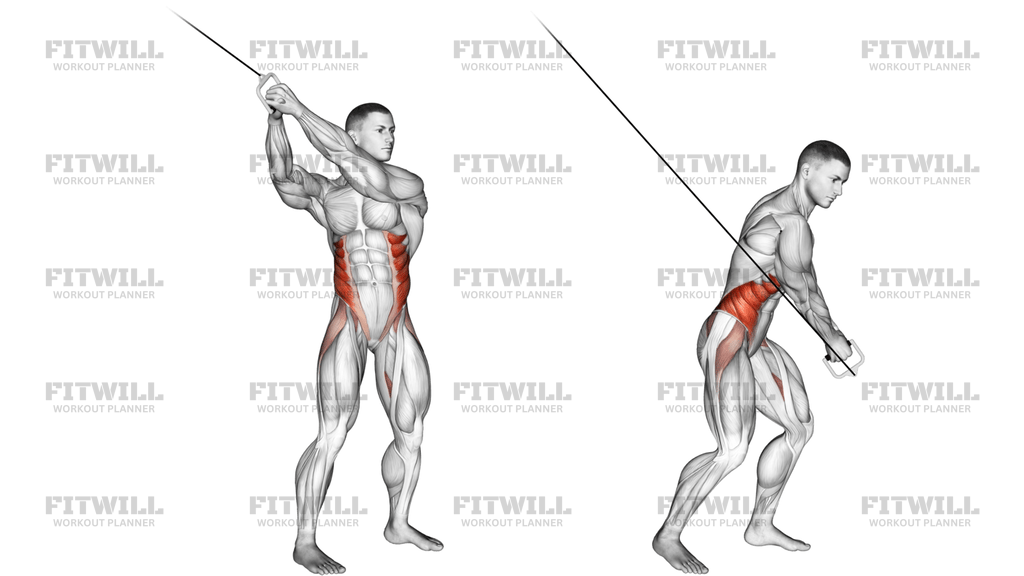
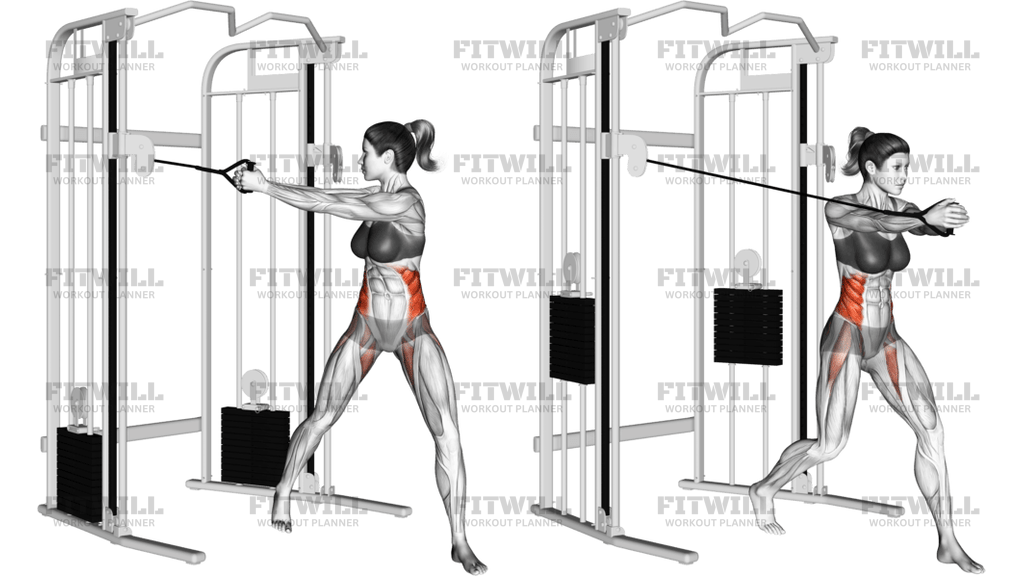
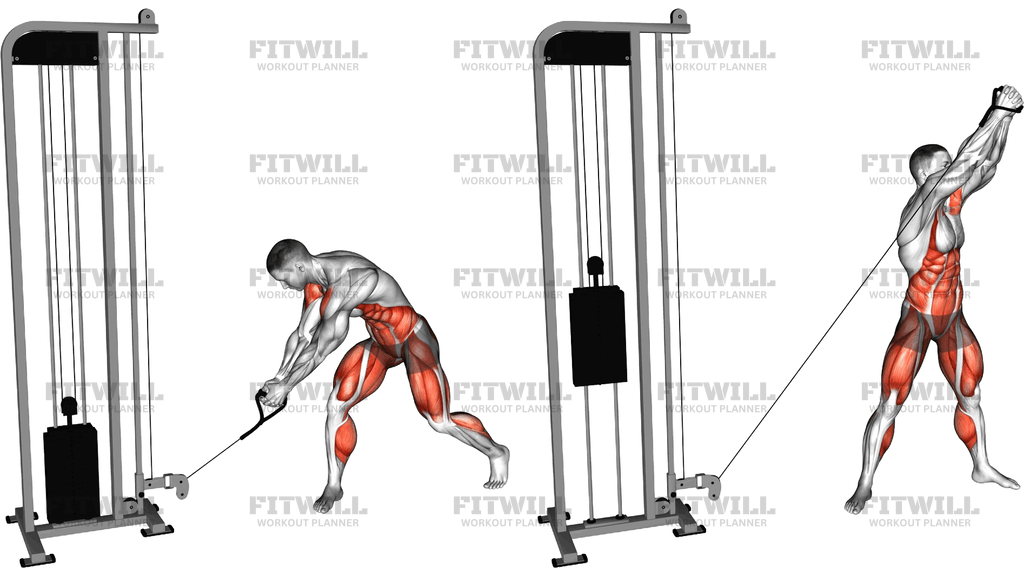
The Cable Reverse Woodchop is a rotational core exercise performed on a cable machine with the pulley set to its lowest position. Unlike the standard woodchop, which cuts from high to low, the reverse version starts low and travels diagonally up and across the body, finishing with your arms extended overhead toward the opposite side. It mimics real-world lifting patterns like shoveling soil or hauling a bag up onto a shelf, which is exactly why it carries the name.
The main drivers are the obliques on the side you are rotating away from and toward, but the movement draws on far more than the waist. The deep core stabilizes the spine while the glutes and legs load the starting position, the shoulders and upper back help steer the handle overhead, and the lower back works to keep the trunk from collapsing under the diagonal pull. Because the cable creates constant tension through the entire arc, the muscles never get a rest at the top or bottom of the rep.
Setup matters more here than in most core exercises. The low pulley anchors the line of resistance, and your distance from the machine determines whether the cable stays taut and the pull stays clean. Stand far enough away that the cable stretches slightly at the start, but not so far that the stack drifts or the handle drags against the machine. If you stand too close, you lose tension before the handle reaches the top; too far, and the start position becomes awkward.
Execution comes down to rotating from the ground up. The legs and hips initiate the turn, the torso follows, and the arms mostly go along for the ride with the elbows held fairly straight. If you let the arms lead, the exercise turns into a shoulder raise and the obliques stop doing their job. Think of the hands as an extension of the torso rather than the source of the movement.
This exercise suits lifters who want stronger rotational control, athletes in sports that involve swinging, throwing, or changing direction, and anyone tired of crunch-style ab work that ignores how the core actually functions. It is typically done for moderate to higher reps, somewhere in the 8 to 15 range per side, with a weight light enough to keep the ribs stacked over the pelvis. Both sides should be trained evenly to avoid building a rotational imbalance, and anyone with a cranky lower back should start with a lighter load and a shorter range until the pattern feels solid.
[ Workout Log & Planner ]
Put your next workout in Fitwill
Keep your plan and training log ready when you are.


Instructions
- Set the pulley on the cable machine to its lowest position and attach a single handle.
- Stand side-on to the machine with the cable to your left, feet slightly wider than hip width, and grip the handle with both hands, fingers interlaced or one hand over the other.
- Rotate your torso toward the machine and hinge slightly at the hips and knees so the handle sits low, just outside your left thigh, with your arms nearly straight and the cable taut.
- Brace your core and pull your shoulders down before initiating the rep so your ribs are not flaring upward.
- Drive the movement by pushing through your legs and rotating your hips and torso up and to the right, letting the handle travel in a diagonal line across your body.
- Finish with the handle above and outside your right shoulder, arms extended overhead, and your torso turned so you can feel the obliques on the working side shorten.
- Pause briefly at the top, then lower the handle slowly along the same diagonal path back to the starting position by your left thigh, resisting the cable the whole way down.
- Exhale as you rotate up and inhale as you return under control.
- Complete all reps on one side, then step to the other side of the machine and repeat the same number on the opposite side.
Tips & Tricks
- The most common error is turning this into an arm exercise. If your elbows bend and your shoulders do all the pulling, drop the weight and focus on rotating from the hips and trunk while the arms stay long.
- Keep the diagonal path honest: the handle should travel from outside one thigh to above the opposite shoulder. If it swings straight up in front of you, you are probably standing too square to the machine.
- Watch for the lower back doing the twisting. If your pelvis stays glued forward and only your spine rotates, deliberately turn your back hip inward on the way down and let it drive the turn on the way up.
- Do not let the cable slack at the top of the rep. If the stack clinks down between reps, the tension has dropped; either move your feet slightly farther from the machine or use a lighter plate for a smoother path.
- Hinge a little at the start rather than standing bolt upright. The slight forward lean loads the glutes and gives the obliques a longer working range through the chop.
- Avoid jerking the handle upward using momentum. A controlled two-second pull with a one-second pause at the top tells you far more about your true rotational strength.
- Keep your front heel planted. Rising onto the toes as you rotate usually means the weight is too heavy or the stance is too narrow for the turn.
- Face the mirror or a wall perpendicular to your travel line at first so you can see whether your shoulders actually rotate or your arms are just drifting sideways.
- Train both sides with the same weight and reps even if one side feels stronger, especially if you play a one-sided sport.
Frequently Asked Questions
Which muscles does the Cable Reverse Woodchop work hardest?
The obliques on both sides of your waist do most of the rotational work, supported by the deep core, glutes, and shoulders. The lower back and upper back help control the diagonal path and keep your torso stable under the cable's pull.
Why does the Cable Reverse Woodchop start from the low pulley instead of the high one?
The low pulley reverses the standard woodchop line, so you pull from a low hinge position up to overhead. This emphasizes hip extension driving the rotation and challenges the core through the upward half of the arc.
Is the Cable Reverse Woodchop suitable for beginners?
Yes, as long as the weight starts light. Beginners should master the hip-and-torso rotation with a light plate for 10 to 12 slow reps per side before adding load, since the arms will happily take over if the weight gets ahead of the pattern.
Should my arms stay straight during the Cable Reverse Woodchop?
They should stay long and relaxed with only a soft bend at the elbows. Locked-stiff arms make the top position awkward, and bent arms turn the exercise into a shoulder press-plus-pull, both of which take work away from the obliques.
How do I know if I am standing the right distance from the cable machine?
At the starting position the cable should be taut with the handle just outside your lower thigh, and at the top the weight stack should not settle or clink. If the cable goes slack mid-rep, step a little farther away; if the start feels stretched and unstable, move slightly closer.
What is the most common mistake with this exercise?
Yanking the handle up with the arms and shoulders while the hips stay still. The fix is to consciously turn the back hip and trunk toward the finish and treat the hands as passengers holding onto the handle.
Can I do the Cable Reverse Woodchop with a resistance band instead?
Yes. Anchor the band near the floor, grip both ends, and use the same low-to-high diagonal path. The tension curve differs slightly since bands ease off at the bottom, but the movement pattern carries over well.
How many sets and reps should I use for the Cable Reverse Woodchop?
Two to four sets of 8 to 15 reps per side works well for most lifters. Because the exercise is about controlled rotation rather than max force, prioritize smooth reps over heavy plates.
Is it safe for my lower back?
When performed with a braced core, a hinged but neutral spine, and a weight you control, it is generally well tolerated. If you feel twisting or pinching in the lower back rather than the sides of your waist, reduce the load, shorten the range, and make sure your hips are rotating with your torso instead of staying planted.
Should I train both sides even if one feels weaker?
Always. Start with your weaker side, match the reps and weight on the stronger side, and only progress when the weak side can handle the same load with the same control.