Cable Single Arm High Row With Chest Support
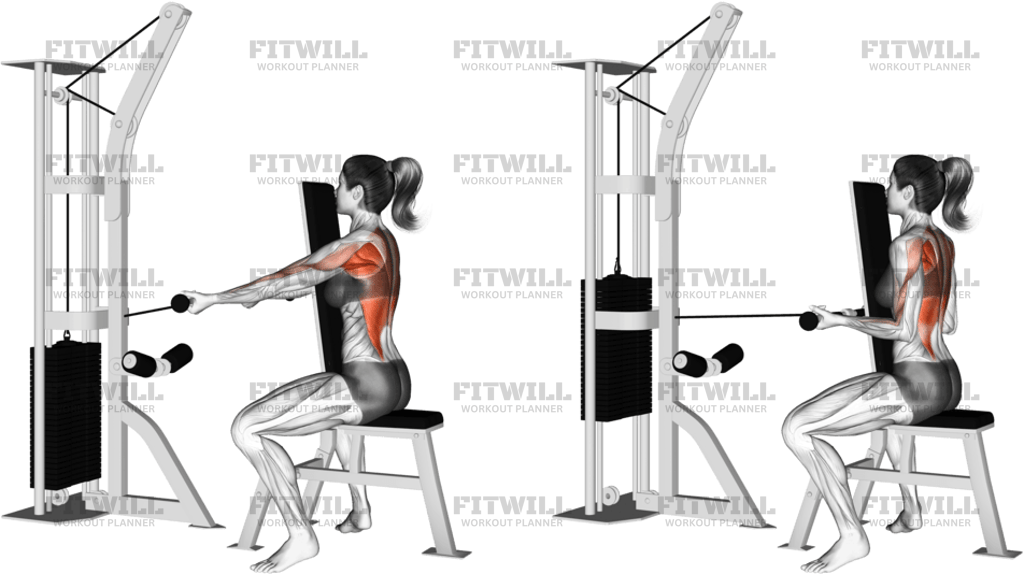
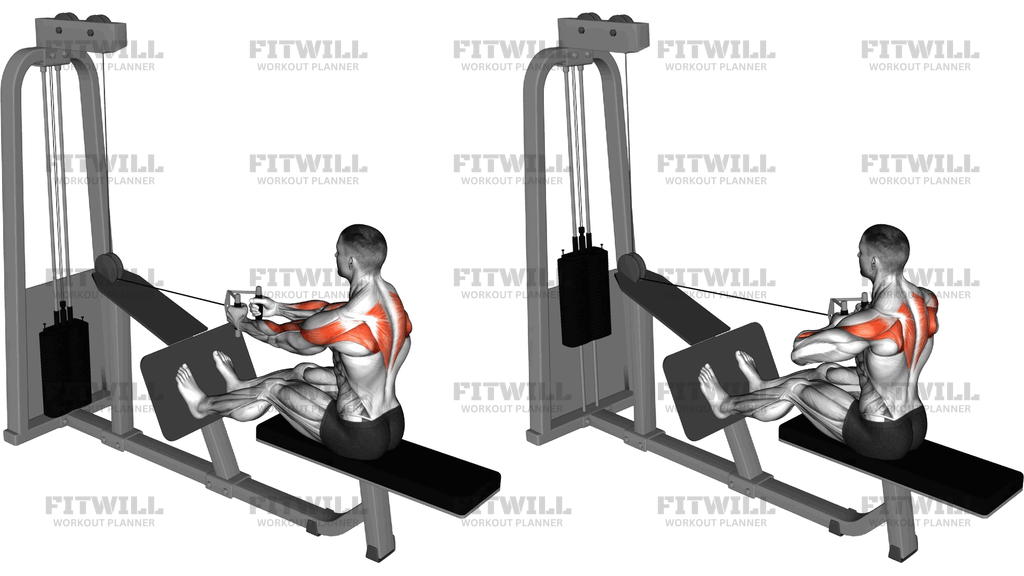
The Cable Single Arm High Row With Chest Support is a seated cable row variation performed from a high pulley while your chest stays pressed against an angled support pad. You sit on the bench facing the machine, brace your free hand against the pad, and pull a single handle from up near shoulder height down toward your ribs on one side at a time. Because the pulley sits above you, the cable pulls your arm up and slightly forward, which puts the lat and upper back into a long, loaded stretch before each pull.
The chest pad is what separates this from most rowing variations. With your torso pinned against the support, you cannot lean back, rotate your spine, or jerk the weight toward you with body English. That makes it a very honest movement: the target muscles on the working side have to do the work, and the amount of cheating available is close to zero. It is a strong choice for lifters who have gotten sloppy on seated rows, for anyone rehabilitating their focus after a lower back issue, and for trainees trying to even out side-to-side differences in back development.
Muscularly, the pull is driven by the lat on the working arm, with the rhomboids, mid traps, and rear shoulder finishing the contraction as the shoulder blade retracts. The biceps and forearm muscles assist as the elbow bends, and the bracing hand, chest contact, and seated position quietly challenge your core to keep the torso square. Working one side at a time also lets the shoulder blade move through a slightly fuller range than a two-handed bar row typically allows.
To execute it well, think of the movement as driving your elbow down and back toward your hip rather than pulling the handle to you. Keep your chest glued to the pad from the first inch to the last, let the shoulder blade travel forward at the top for a full stretch, and pull until your hand is beside your ribs with your elbow tight to your body. Pause briefly at the contraction, then return the handle with control so the stack does not slam.
In practice, this exercise slots into back days as a mid-to-late movement, usually after heavier compound pulls when fatigue makes strict form harder to fake. It is also a common pick in programming that emphasizes controlled tempo and range of motion, since the chest support makes the stretch and squeeze easy to feel. Lighter loads and higher repetitions tend to suit it best, as the setup loses its purpose the moment the weight forces your torso off the pad.
A few practical points protect both the shoulders and the quality of the set. Set the seat height so the pad presses against your chest rather than your shoulders or stomach, keep your working shoulder relaxed away from your ear, and stop the set the moment your chest starts to drift off the support. If your torso twists toward the cable, the weight is too heavy for the intent of the exercise.
[ Workout Log & Planner ]
Put your next workout in Fitwill
Keep your plan and training log ready when you are.


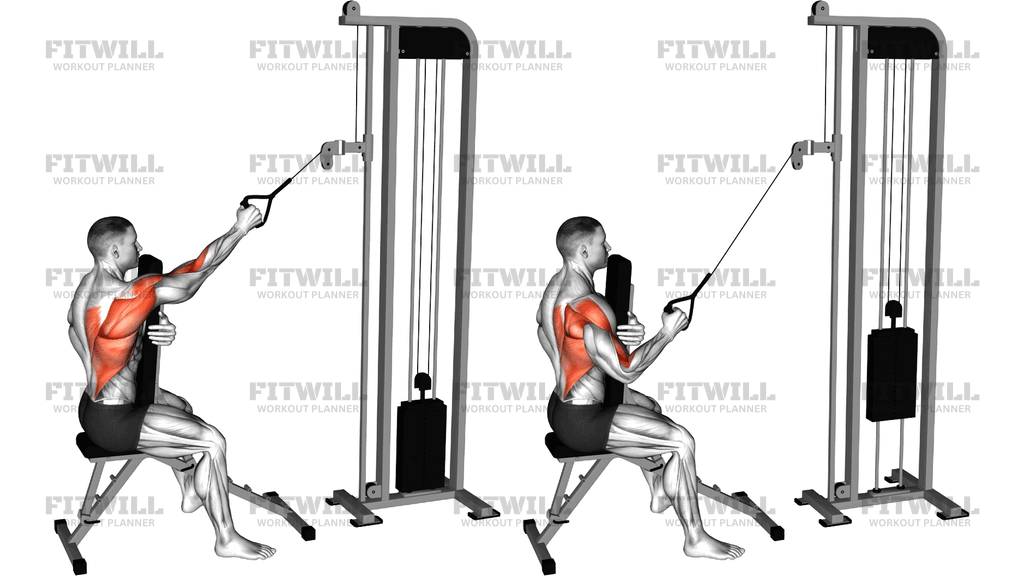
Instructions
- Set the seat height so the angled chest pad sits flat against your upper chest when you are seated, and adjust the cable column so the pulley is above shoulder height.
- Attach a single handle to the high pulley, sit on the bench facing the machine, and plant both feet flat on the floor with your knees bent comfortably.
- Grip the handle with one hand in a neutral grip, press your chest firmly into the pad, and brace your free hand against the pad or side of the support for stability.
- Let the cable pull your working arm up and forward until you feel a stretch across your lat and the back of your shoulder; keep your shoulder blade reaching with it rather than shrugging.
- Brace your trunk lightly and keep your torso square to the machine before starting the pull.
- Pull the handle down and back toward your ribs, leading with the elbow and keeping it close to your side; your hand should finish beside your lower chest or upper stomach.
- Squeeze your shoulder blade down and back at the end of the pull and hold the contraction for a beat.
- Return the handle slowly along the same path, letting the arm extend and the shoulder blade move forward until the lat is fully stretched again.
- Exhale as you pull, inhale as you extend the arm back to the start.
- Complete all repetitions on one side, then reset your chest contact on the pad and repeat on the other arm.
Tips & Tricks
- The most common fault in this setup is letting the chest peel off the pad as the weight gets heavy; if it happens, the load has exceeded what your upper back can move without torso momentum.
- Do not rotate your trunk toward the working arm to finish the pull. If you notice your shoulder twisting toward the cable, drop the weight and keep the chest square against the support.
- Aim the handle at your lower ribs, not your shoulder or face. A high pull shifts work toward the upper traps and reduces the lat involvement this angle is designed to create.
- Let the shoulder blade protract fully at the top of each rep. Cutting the stretch short turns a full range row into a short, partial movement with little benefit at the endpoints.
- Keep the working shoulder depressed away from your ear throughout. Shrugging the arm up as the cable pulls is a sign the load is too high or fatigue has set in.
- Grip the handle just firmly enough to keep it secure. Squeezing hard shifts tension into the forearms and usually causes grip failure before the back is worked.
- Use a deliberate tempo, roughly one second down, a short pause, and two to three seconds back. The chest support rewards slow work because you cannot use momentum anyway.
- Match repetitions and effort between arms, starting with your weaker side so the stronger arm does not set an uneven standard.
- If your feet slide forward during the pull, reposition them so they are planted firmly; leg drive against the floor helps you hold chest contact without bracing harder with the arms.
Frequently Asked Questions
What muscles does the Cable Single Arm High Row With Chest Support work?
The lat on the working side does most of the pulling, with the rhomboids, middle traps, and rear shoulder contracting as the shoulder blade retracts. The biceps and forearms assist, and the core works to keep the torso square against the pad.
Why does this row use a high pulley instead of a low one?
The high pulley pulls your arm up and forward, which loads the lat and rear shoulder in a stretched position before each rep and changes the pull angle toward your lower ribs. It is a different line of resistance than a standard low-to-high seated row.
Is the chest pad actually necessary, or can I row without touching it?
The pad is central to the exercise. It pins your torso so you cannot lean back or twist, forcing the upper back and lat to move the weight on their own; floating off the pad turns it into a generic, easier-to-cheat row.
Can beginners do the Cable Single Arm High Row With Chest Support?
Yes, and the chest support actually makes it beginner-friendly because it blocks most of the common form errors. Start with a light weight, focus on the stretch and the squeeze, and learn the elbow path before adding load.
How can I tell if I am using too much weight on this exercise?
The clearest signs are your chest lifting off the pad, your trunk rotating toward the cable, or your shoulder shrugging up toward your ear. Any of these means the back can no longer move the load strictly.
Should I keep my elbow tucked or flared during the pull?
Keep the elbow close to your side and drive it down and back toward your hip. Flaring it wide shifts the emphasis away from the lat and toward the rear shoulder and traps.
What can I substitute if my gym has no chest-supported cable row setup?
A single-arm cable row from a low pulley while holding a fixed upright with the free hand covers similar ground, as does a chest-supported machine row. A dumbbell row braced on a bench is another option, though it offers less stability.
How do I set up the seat and pad correctly?
Sit so the pad contacts your upper chest firmly, not your collarbones or stomach, with your feet flat on the floor and knees bent. If the pad sits too low or high, the pull angle and your chest contact both suffer.
Is this exercise safe for the lower back?
The chest pad supports the trunk and removes the leaning and twisting that usually strain the lower back during rows. As with any exercise, progress the load gradually and stop if you feel discomfort rather than muscular effort.
Should I do both arms in the same set or alternate reps?
Finish all repetitions on one side before switching so you can concentrate on the working shoulder blade's path. Start with your weaker arm and match that rep count on the stronger side to keep development even.