Bound Angle Yoga Pose Baddha Konasana
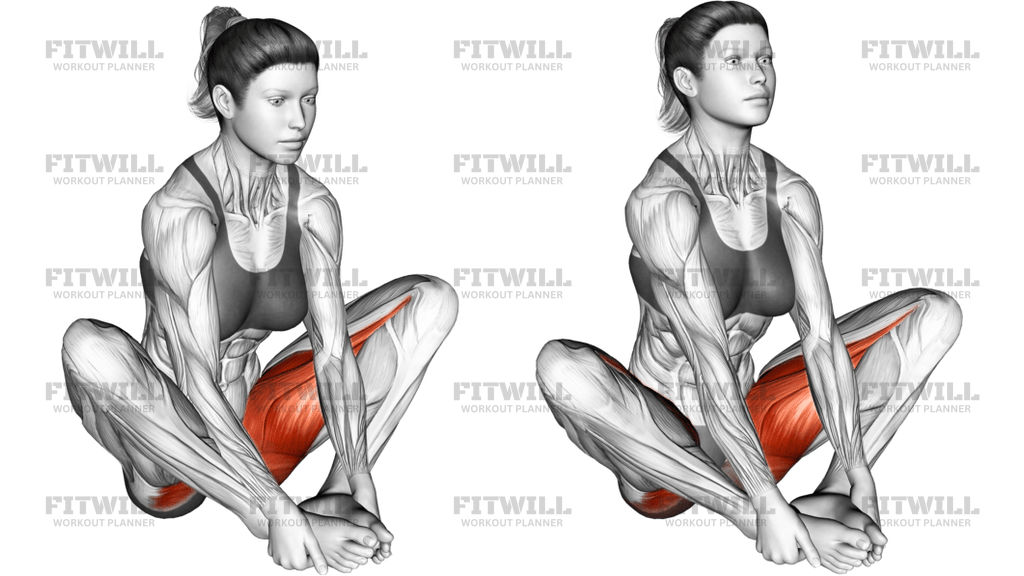
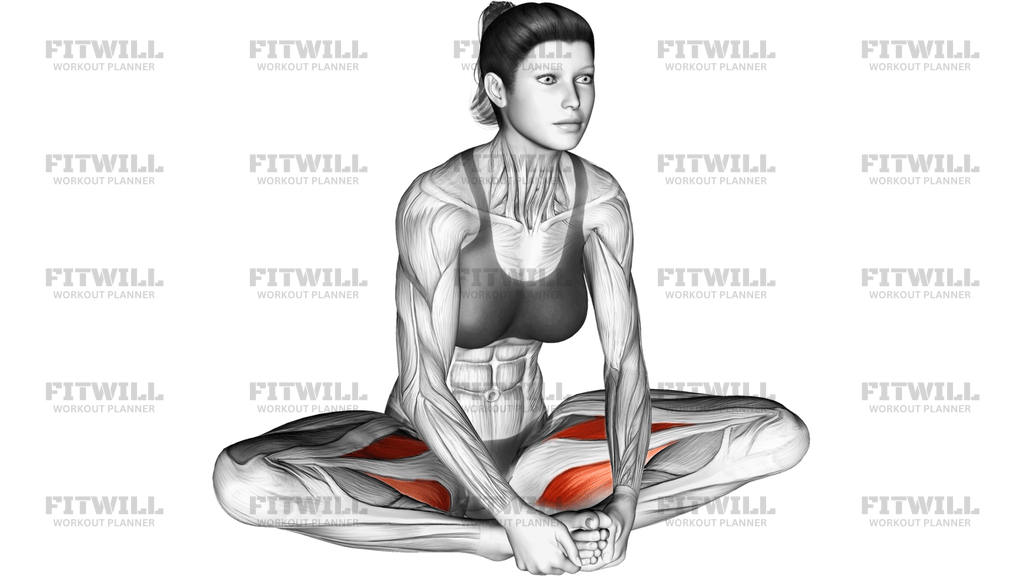
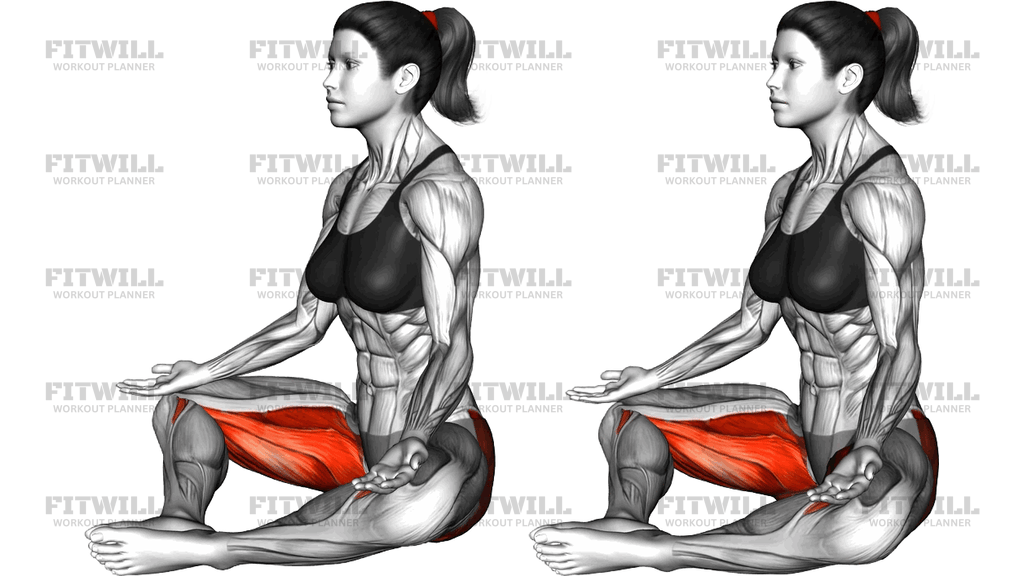
Bound Angle Yoga Pose, known in traditional yoga as Baddha Konasana and often called Butterfly Pose, is a seated hip-opening stretch performed with the soles of the feet pressed together and the knees dropped out to the sides. The image shows the classic setup: sitting tall on the sit bones, hands resting on the knees or feet, with the adductor muscles along the inner thigh clearly under stretch as the legs fold outward. It is a static, body-weight stretch rather than a strength or mobility drill with load, and it rewards patience and breathing far more than force.
This pose is one of the most accessible deep hip openers, which makes it a staple for anyone who spends long hours sitting, runners and cyclists with chronically tight inner thighs, and pregnant practitioners who use it to maintain pelvic floor and inner thigh suppleness. It also shows up near the end of many yoga sequences because the position calms the nervous system while still working the hips hard. If your knees hover well above the floor at first, that is normal and not a sign you are doing it wrong.
The primary target is the adductor group of the inner thighs, with secondary stretch reaching the hip rotators, the groin, and sometimes the lower back when you fold forward. Sitting tall also gently engages the spinal erectors, so you get a mild postural element as you hold the upright position. The feet act as a natural brace: pressing the soles together and drawing them slightly toward the pelvis sets the intensity of the stretch, and moving them closer or farther away is your main tuning dial.
Setup matters more than depth here. Sitting on a folded blanket or the edge of a cushion tilts the pelvis forward, which lets the knees descend without rounding the lower back. If you force the knees down with your hands before the hips are ready, you tend to stress the inner knee ligaments rather than stretch the adductors, so pressure should always be on the thighs, never directly on the knee joints.
Execution is simple but easy to rush. Sit with a tall spine, bring the soles of the feet together, let the knees fall open, and hold the outer edges of the feet or rest your hands on your knees. Breathe slowly and let gravity do the lowering for one to three minutes. For a deeper release, hinge forward from the hips with a long chest rather than a rounded back. Common use cases include post-workout hip recovery, evening unwinding, and warm-downs after lower body training. Stop or ease off if you feel sharp pain in the groin or any pinching inside the knees; the stretch should feel like a broad pull through the inner thighs, not a strain at a single point.
[ Workout Log & Planner ]
Put your next workout in Fitwill
Keep your plan and training log ready when you are.


Instructions
- Sit on an exercise mat with your legs extended in front of you and your spine tall.
- Bend your knees and draw your heels toward your pelvis, then press the soles of your feet together and let your knees drop open toward the floor.
- Hold the outer edges of your feet with both hands, or rest your palms on your knees with the fingers relaxed.
- If your lower back rounds, sit on the edge of a folded blanket or cushion so your sit bones lift and your pelvis tips slightly forward.
- Inhale to lengthen the spine up through the crown of the head, and draw your shoulders down away from your ears.
- With each exhale, allow your knees to release a little closer to the floor under gravity; never shove them down with your hands.
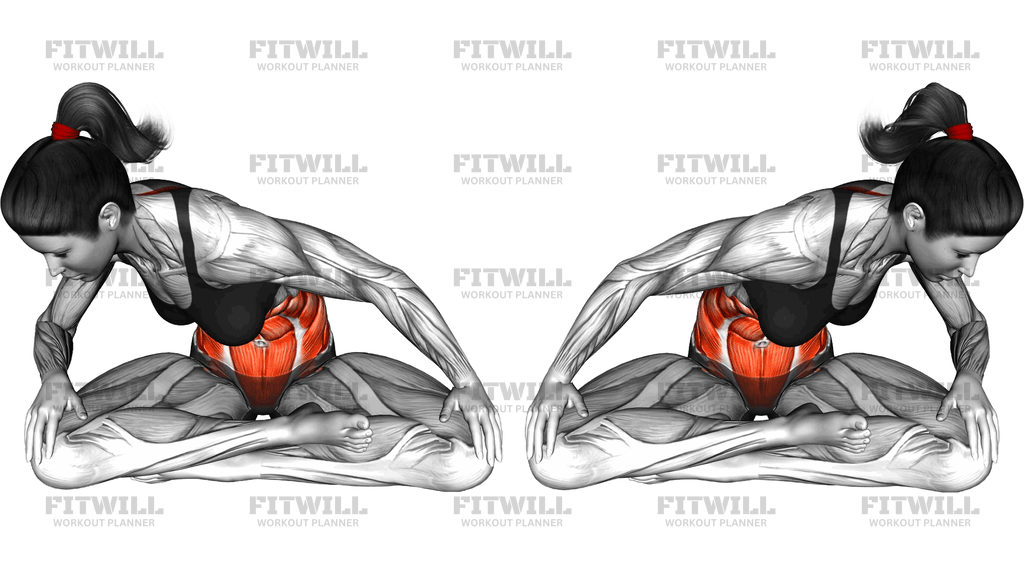
- To deepen the stretch, hinge forward from the hips, leading with the chest while keeping the back long, and hold the folded position for several breaths.
- Keep breathing slow and even through the nose for 1 to 3 minutes, letting the inner thighs soften on every exhale.
- To come out, inhale back up to tall sitting if you folded forward, then release your feet and gently extend both legs in front of you.
- Shake out or lightly bounce the legs for a few seconds before moving to your next pose or finishing the session.
Tips & Tricks
- The most common mistake is pressing straight down on the knees. Place your hands on the mid-thighs instead so the stretch loads the adductors and hip joints, not the knee ligaments.
- If your knees sit far from the floor, move your feet a few inches away from your pelvis. That small change alone often shortens the distance to the floor dramatically.
- Rounding the lower back to look deeper than you are actually shortens the adductor stretch. Keep the chest long and let the hips, not the spine, create the angle.
- Sitting flat on a hard floor tilts the pelvis backward and blocks the knees. A folded blanket under the sit bones is the single easiest fix for tight hips.
- Do not chase the knees to the floor in one session. The adductors respond to consistent, frequent holds of one to three minutes, not to one aggressive push.
- If you feel a sharp or pinpoint sensation in the groin, back off immediately; a productive stretch feels like a broad pull along the whole inner thigh.
- Keep the soles of the feet actively pressed together rather than letting them splay open, which keeps the ankles and knees aligned in the pose.
- Forward folding is optional. If your hamstrings or lower back complain, stay upright and rest the backs of your hands on your thighs for the full hold.
- Warm hips stretch far better than cold ones, so the pose works best after a workout, a walk, or a few rounds of gentle movement rather than first thing in the morning.
Frequently Asked Questions
Which muscles does the Bound Angle Yoga Pose stretch?
The main targets are the adductors of the inner thighs, with supporting stretch through the groin, hip rotators, and glutes. Sitting tall also lightly works the muscles that hold the spine upright.
Is Bound Angle Yoga Pose suitable for complete beginners?
Yes, it is one of the most beginner-friendly hip openers because you control the depth simply by how far your heels sit from your pelvis. Prop your sit bones on a blanket and let the knees stay high if that is where your hips are today.
Why can I not get my knees to the floor in Baddha Konasana?
Tight adductors and hip rotators hold the knees up, and this varies a lot between people due to hip socket structure as well as flexibility. Rest the knees where they fall comfortably and let long, regular holds bring them down over weeks and months.
Should I press my knees down with my hands?
No, direct downward pressure on the knees can strain the inner knee ligaments. If you use your hands at all, apply pressure to the mid-thighs or simply hold your feet and let gravity lower the legs.
How long should I hold the Bound Angle Yoga Pose?
One to three minutes is a good working range for a flexibility focus. In a yin or restorative style, the pose can be held for five minutes or more with support under the thighs.
What can I use if my hips are too tight to sit upright?
Sit on the edge of a folded blanket, cushion, or yoga block to tilt the pelvis forward, and place a rolled towel or block under each thigh for support. This removes strain while keeping the adductors on stretch.
Is it better to sit upright or fold forward in this pose?
Sitting upright is the base position and is enough for most people; folding forward adds intensity for the adductors and lightly stretches the lower back. Fold only if you can keep a long spine, and skip it if rounding your back is the only way to reach forward.
Is Bound Angle Yoga Pose safe during pregnancy?
It is commonly used during pregnancy to maintain inner thigh and pelvic openness, but comfort and clearance vary by individual. Keep the knees well supported, stay upright rather than folding deeply, and follow the guidance of your healthcare provider.
What is the difference between Bound Angle Yoga Pose and Butterfly Stretch?
They share the same base position of soles together and knees open. Butterfly Stretch usually refers to the casual version, sometimes with gentle leg flapping, while Baddha Konasana emphasizes the tall spine, held feet, and long, still breathing.
When should I avoid this pose?
Skip or modify it if you have a recent groin strain, a knee injury thatpinches when the leg rotates outward, or pain deep in the hip socket during the hold. A supported version with blocks under the knees is a safer place to restart.