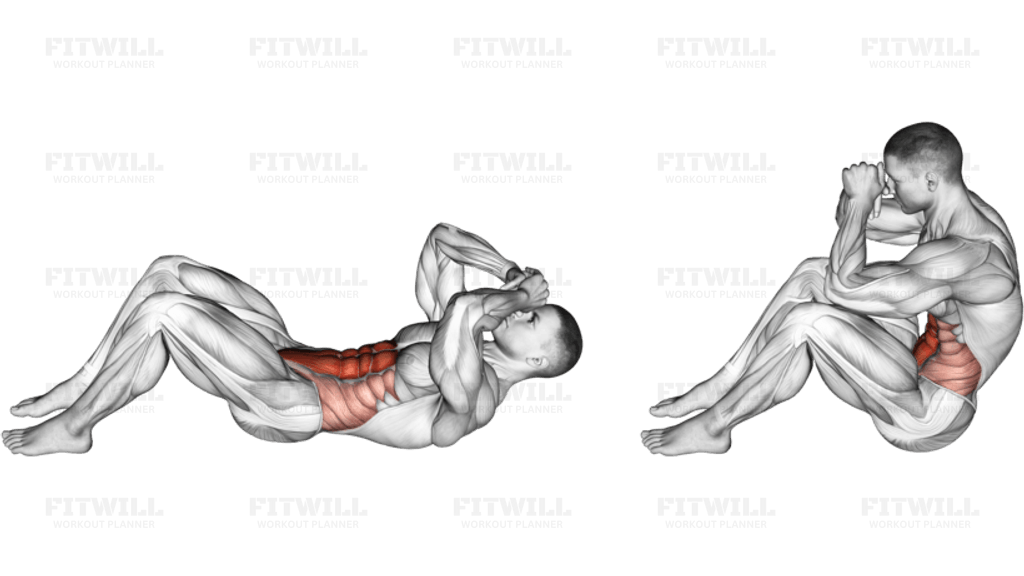
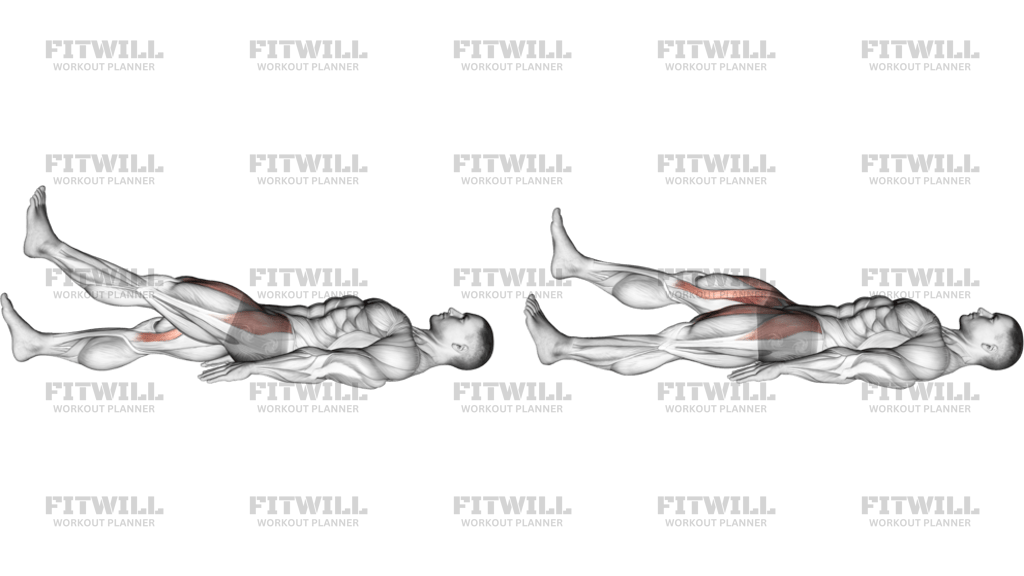
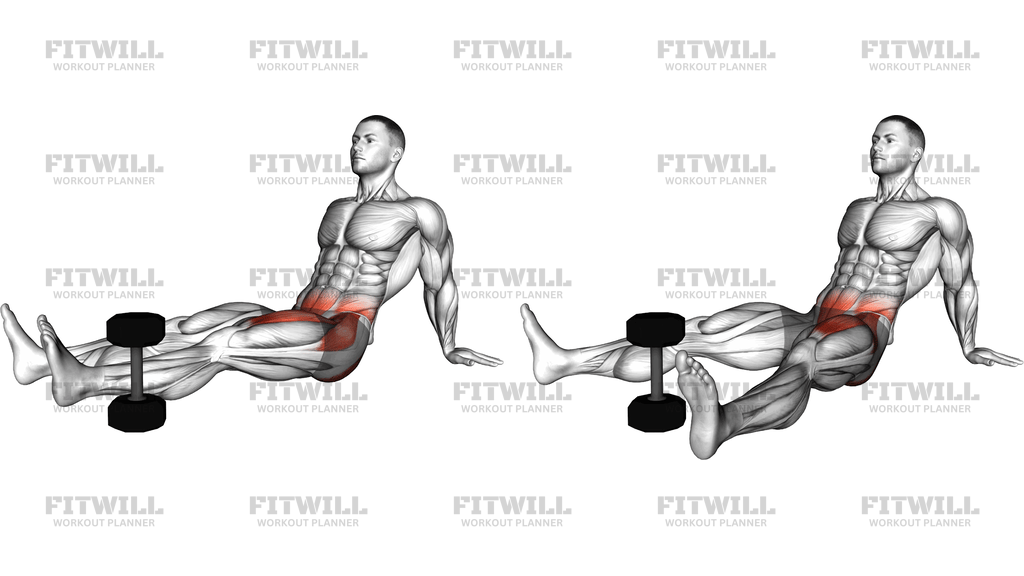
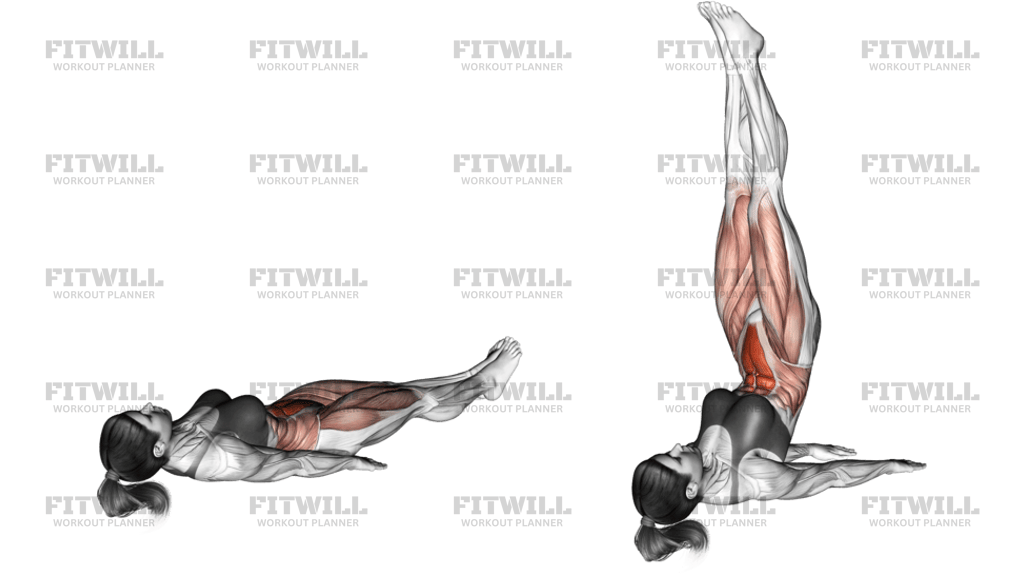
Lying Frog Crunch Feet Together
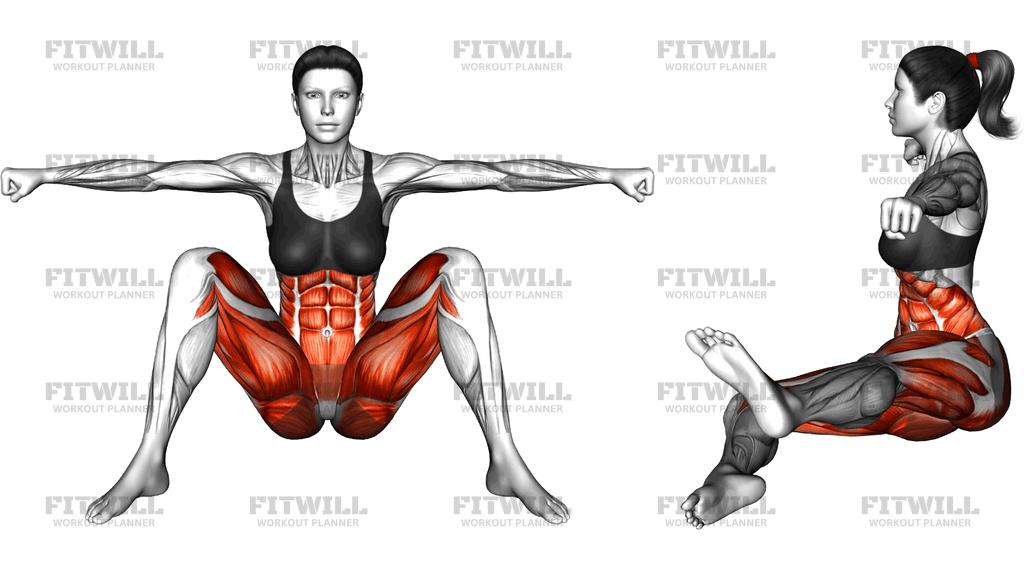
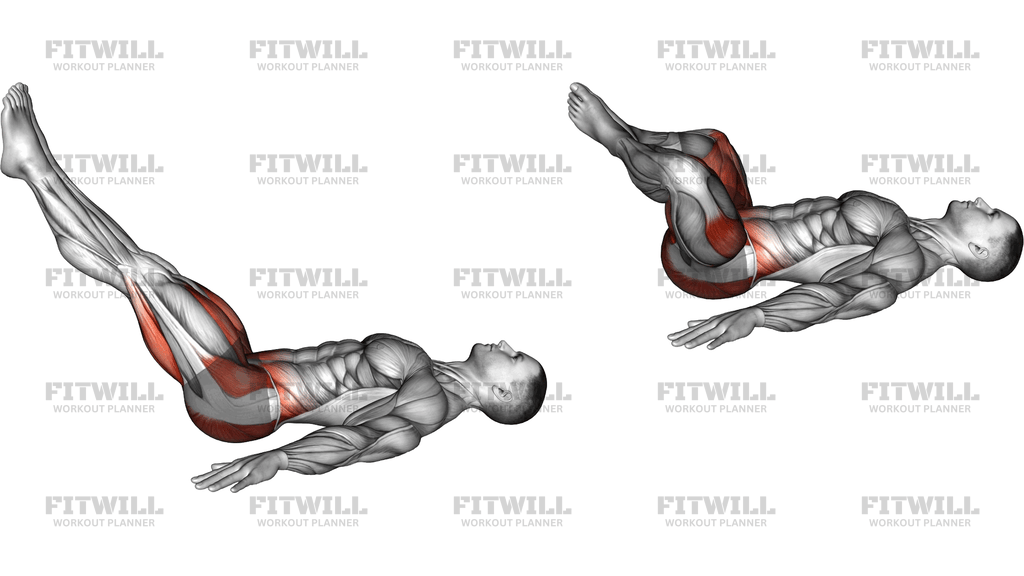
The Lying Frog Crunch Feet Together is a floor-based abdominal exercise where you lie on your back, press the soles of your feet together with knees turned out in a frog position, and curl your hips up off the floor so your knees travel in toward your chest. Unlike a standard reverse crunch where the legs stay together, the frog foot position rotates your hips externally and places the adductors on stretch, which changes the feel of the contraction and tends to bias the lower portion of the abs while still involving the deep trunk stabilizers.
This movement is useful for almost anyone training abs at home or at the end of a gym session, because it requires nothing more than floor space and, ideally, a mat. It suits lifters who want a lower-ab-focused crunch without hanging from a bar, and it is often easier on the lower back than straight-leg raising variations because the bent-knee position shortens the leverage the legs create on the pelvis. People with tight hips often find the frog position more comfortable than a strict legs-together reverse crunch.
The main muscles worked are the rectus abdominis, with strong emphasis on the lower fibers, along with the transverse abdominis as you control the pelvic tilt. The hip flexors assist as the knees draw toward the torso, and the inner thighs work isometrically to hold the soles of the feet together throughout the rep. Because the hips lift rather than the torso, this is technically a reverse direction crunch, which many people feel more clearly in the lower belly than a standard sit-up style crunch.
Setup matters more than speed here. Your lower back should stay in contact with the floor, and the movement should come from rolling the pelvis upward, not from swinging the legs. If you let momentum drive the knees in, the abs stop doing the work and the lumbar spine takes the load. A slow, deliberate curl with a brief pause at the top and a controlled lowering phase is what makes this exercise effective.
To execute it well, keep the feet pressed together and knees relaxed outward for the entire set. As you exhale, pull your knees toward your chest and think about tucking your tailbone toward the ceiling so your hips and lower back peel off the mat. Lower with control until your hips touch back down and you feel a gentle stretch across the front of the hips and inner thighs, then repeat. Common use cases include home ab circuits, warm-up activation before heavier lifting, and finisher sets after squats or deadlifts. Stop the set when you can no longer lift the hips cleanly, as grinding out reps with a swinging pelvis teaches poor movement habits.
[ Workout Log & Planner ]
Put your next workout in Fitwill
Keep your plan and training log ready when you are.


Instructions
- Lie flat on your back on an exercise mat with your arms relaxed at your sides and palms facing down for support.
- Bend your knees and press the soles of your feet together, letting your knees fall open toward the sides into the frog position.
- Draw your belly button in slightly and gently press your lower back toward the floor to set a stable, braced trunk before moving.
- Start with your hips and lower back in full contact with the floor and your knees positioned comfortably over your hips.
- Exhale and pull your knees in toward your chest, curling your tailbone and hips up off the floor as far as you can control.
- Pause for a beat at the top with your hips lifted and your feet still pressed together, feeling the abs shorten.
- Inhale and lower slowly, reversing the path so your spine rolls back down vertebra by vertebra until your hips rest on the mat again.
- Keep the knees soft and turned out for the whole set, and avoid letting the feet separate or the legs swing for momentum.
- Complete your target reps, then release the feet, stretch the hips briefly, and reset your back position before the next set.
Tips & Tricks
- Think of the rep as a pelvic curl, not a leg movement; if only the knees travel and the hips never leave the floor, the lower abs are not being challenged.
- If your neck or shoulders tense up, place your hands flat beside your hips and actively press them into the mat instead of letting the arms float.
- Tight inner thighs or groin discomfort in the frog position means you should let the knees open only as far as is comfortable; range at the hips does not need to be forced.
- A common mistake is lowering the legs all the way toward the floor between reps, which shifts work to the hip flexors and arches the lower back; keep the knees over the hips at the bottom.
- Slow the lowering phase to a two- or three-second count; most people get more out of the eccentric return than from an extra five fast reps.
- If you feel the movement in your hip crease rather than your abs, reduce the range and focus harder on tucking the tailbone up at the start of each rep.
- Do not let the lower back slap down onto the mat as you return; catch the descent just before contact so the abs stay under tension.
- Breathe out sharply as the hips rise; holding your breath usually coincides with a loss of the posterior tilt that makes this exercise work.
Frequently Asked Questions
What muscles does the Lying Frog Crunch Feet Together work?
It primarily targets the rectus abdominis with emphasis on the lower fibers, supported by the transverse abdominis. The hip flexors assist the knee drive and the inner thighs hold the feet-together frog position.
Why are the feet held together instead of kept apart?
Pressing the soles of the feet together turns the hips outward and keeps the adductors involved throughout the rep. It also shortens the leg lever slightly, which many people find easier on the lower back than a straight reverse crunch.
Is the Lying Frog Crunch Feet Together good for beginners?
Yes, it is a reasonable first reverse crunch variation because the bent knees reduce the leverage on the spine. Beginners should use a small hip lift and prioritize a controlled lowering phase over range.
Should my hips actually leave the floor during this exercise?
Yes, at the top of each rep your tailbone and hips should peel off the mat as the knees come toward the chest. If the hips never lift, you are only moving the legs and missing the crunch portion.
Why do I feel this more in my hips than my abs?
That usually means the hip flexors are dominating because the pelvis is not tucking. Slow the rep down, start the movement by curling the tailbone upward first, and use a shorter range until the abs take over.
Can I do the Lying Frog Crunch Feet Together without a mat?
You can perform it on carpet or another padded surface, but a mat is recommended because the tailbone and spine roll directly against the floor. Hard floors can make the movement uncomfortable and cause you to rush the descent.
What is a good substitute if the frog position bothers my groin?
Use a standard reverse crunch with the knees bent and legs together, or keep the same knee position but let the feet rest hip-width apart. Both preserve the hip-curling action without the outer rotation.
How many reps and sets should I do?
Two to four sets of 10 to 15 controlled reps works well for most people, either as activation before training or as a finisher. Stop the set once you cannot lift the hips cleanly without swinging.
Is it safe for people with lower back sensitivity?
The bent-knee frog position is often more forgiving than straight-leg raising, but anyone with a history of back issues should move within a pain-free range and stop if symptoms appear. Pressing the hands into the floor and limiting how far the hips lower also reduces stress on the lumbar spine.