Seated Back Shift
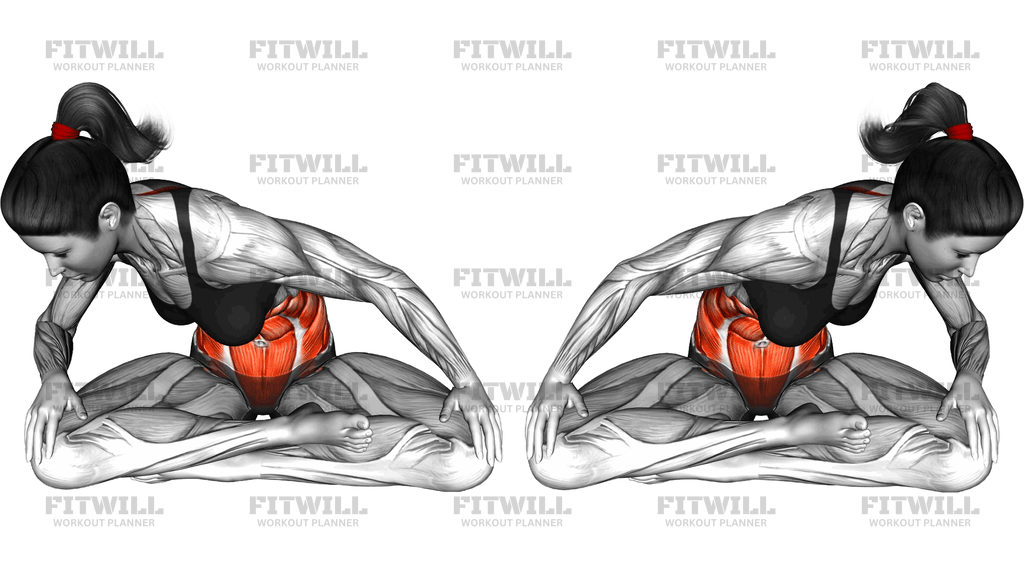
The Seated Back Shift is a body-weight core drill performed from a cross-legged position on the floor. You sit tall with your hands resting on your knees, then shift your entire torso forward so the chest travels ahead of the hips, before drawing the torso back over your seat. The movement looks small from the outside, but it asks the abdominal wall — especially the deep transverse abdominis and the rectus abdominis — to control the position of the ribcage and pelvis through every inch of the shift.
This exercise suits anyone who wants to train the core without loading the spine with weight or lying on the ground. Because the legs stay crossed and passive, the hips and inner thighs settle quickly, and all the attention goes to the trunk. It is a useful choice for beginners learning what abdominal bracing actually feels like, for desk workers who spend long hours sitting and need to reintroduce controlled spinal movement, and for lifters who want a low-fatigue way to warm up the midsection before heavier training.
Setup matters more here than in most floor drills. If you slouch into the cross-legged seat or let the lower back round, the abs never get a fair chance to work and the shift turns into a passive slump. Sit on a folded mat or thin cushion if your hips sit lower than your knees, place the hands firmly on the knees or the floor beside the thighs, and lengthen the spine before the first rep. A stable base lets the torso pivot cleanly over the pelvis instead of wobbling side to side.
To execute well, exhale gently and draw the lower abdomen in as you drift the chest forward, keeping the shoulders relaxed and the neck neutral. The hips stay planted the entire time — the shift comes from the trunk pivoting at the hip crease, not from rocking the pelvis or lifting the seat. Move slowly enough that you could stop and hold the position at any point, then reverse the path with the same control, stacking the ribs back over the pelvis at the top.
In practice, the Seated Back Shift shows up in warm-ups, Pilates-style core sessions, and recovery days. Common mistakes include leading with the head, holding the breath, and letting the lower back do all the hinging. Keep the range honest — a modest, fully controlled shift trains the abdominals better than a large, loose one — and treat any sharp discomfort in the lower back or hips as a signal to reduce the range rather than push through it.
[ Workout Log & Planner ]
Put your next workout in Fitwill
Keep your plan and training log ready when you are.


Instructions
- Sit on the floor or on a folded exercise mat with your legs crossed, each foot resting over the opposite thigh if your hips allow, or simply crossed at the shins if not.
- Place your palms down on your knees, or on the floor just beside your outer thighs, with your arms softly bent and ready to help steer the movement.
- Sit up on your sitting bones and lengthen your spine so your ears, shoulders, and hips line up; this upright stack is your starting position.
- Exhale and gently brace your lower abdomen, drawing the belly button slightly toward the spine without holding your breath.
- Slowly shift your torso forward, letting the chest drift ahead of your hips while your seat stays planted and your hands press lightly into the knees to guide the path.
- Pause for a beat at the forward position with the spine still long and the abdominals engaged, avoiding any rounding of the lower back.
- Reverse the shift with control, drawing the ribs back until they stack directly over the pelvis to finish the rep.
- Breathe continuously throughout — inhale as you shift back to center, exhale as you shift forward.
- Complete your target repetitions, then uncross the legs and re-cross them the opposite way before the next set to balance the hips.
Tips & Tricks
- If your knees sit higher than your hips when cross-legged, raise your seat on a cushion or folded mat — otherwise the pelvis tucks under and the shift collapses into a back slump.
- The most common error is rocking the pelvis or lifting the seat off the floor; pin the sitting bones down first and let only the trunk travel.
- Avoid leading with the chin and head. Imagine the sternum moving forward as one block with the rest of the ribcage.
- Keep the shift small at first. A range of a few inches done with real abdominal tension beats a big floppy lean every time.
- If you feel the work only in your lower back, you are likely hinging instead of bracing — re-engage the lower abdomen and reduce the forward distance.
- Press the hands into the knees rather than gripping them; the hands are there to steer and stabilize, not to haul the torso around.
- Switch the cross of your legs between sets. Most people have one hip that resists the position, and the imbalance shows up as a sideways drift during the shift.
- Slow the return down deliberately. The drawing-back phase is where the abdominals work hardest, and it is the phase most people rush.
- On days when the hips feel tight, shorten the hold at the forward position instead of forcing a deeper lean.
Frequently Asked Questions
Which muscles does the Seated Back Shift work?
The abdominals do the main work, particularly the deep transverse abdominis and the rectus abdominis, which control the trunk as it shifts over the pelvis. The hip flexors and lower back muscles contribute as stabilizers throughout.
Is the Seated Back Shift suitable for complete beginners?
Yes. There is no equipment or load involved, and the cross-legged seat makes it easy to feel the abdominals working. Beginners should start with a short forward shift and focus on keeping the pelvis planted.
Why do my hands rest on my knees during the Seated Back Shift?
Pressing lightly into the knees gives you a reference point and helps steer the trunk along a straight path. It also offloads a little tension from the hip flexors so the abs stay the focus.
I cannot sit cross-legged comfortably — can I still do this exercise?
Yes. Sit with a cushion under your hips, cross your legs loosely at the shins, or extend the legs slightly in front of you with a soft bend in the knees. The core demands of the shift stay the same.
How is the Seated Back Shift different from a seated forward fold stretch?
A forward fold is a passive stretch where you relax into the position. In the Seated Back Shift the abdominals stay braced and the trunk actively pivots forward and back, so it trains control rather than flexibility.
My lower back aches after a few reps — what am I doing wrong?
You are most likely rounding the lower back at the forward position or hinging from the lumbar spine instead of pivoting at the hips. Sit taller, brace the abdomen before shifting, and cut the range until the ache disappears.
How many repetitions of the Seated Back Shift should I do?
Eight to twelve slow, controlled shifts per set works well, for two to three sets. Because the drill is low fatigue, it fits nicely into a warm-up or a core finisher.
Should I switch which leg is crossed between sets?
Yes. Reversing the cross balances the hips and prevents one side from dominating the shift. Most people notice one configuration feels noticeably tighter, which is exactly why the swap is worth doing.
Can I do the Seated Back Shift every day?
Generally yes, since it uses body weight and no external load. Keep the daily volume modest and treat any persistent hip or back discomfort as a reason to scale back and check your position.