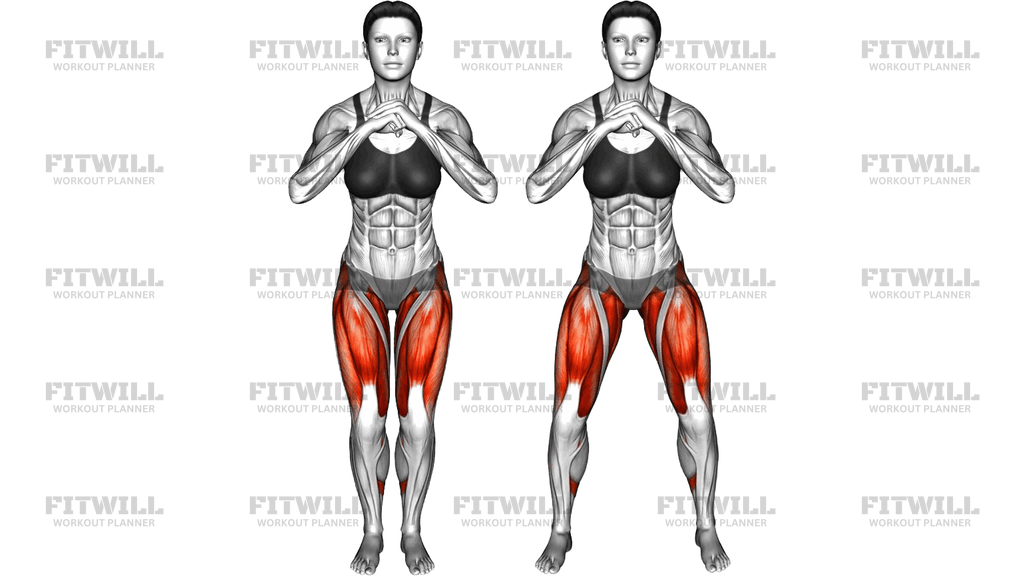
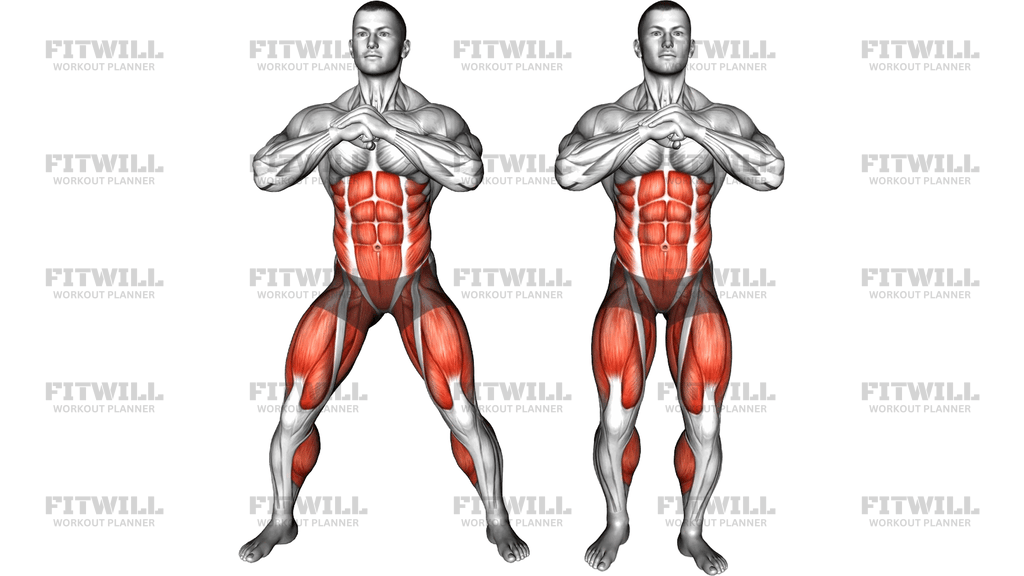
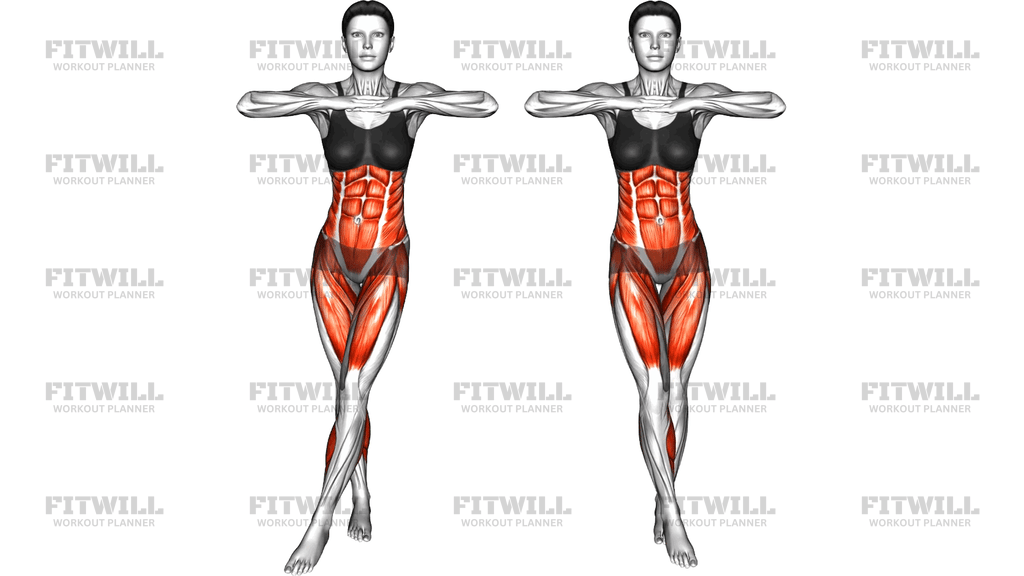
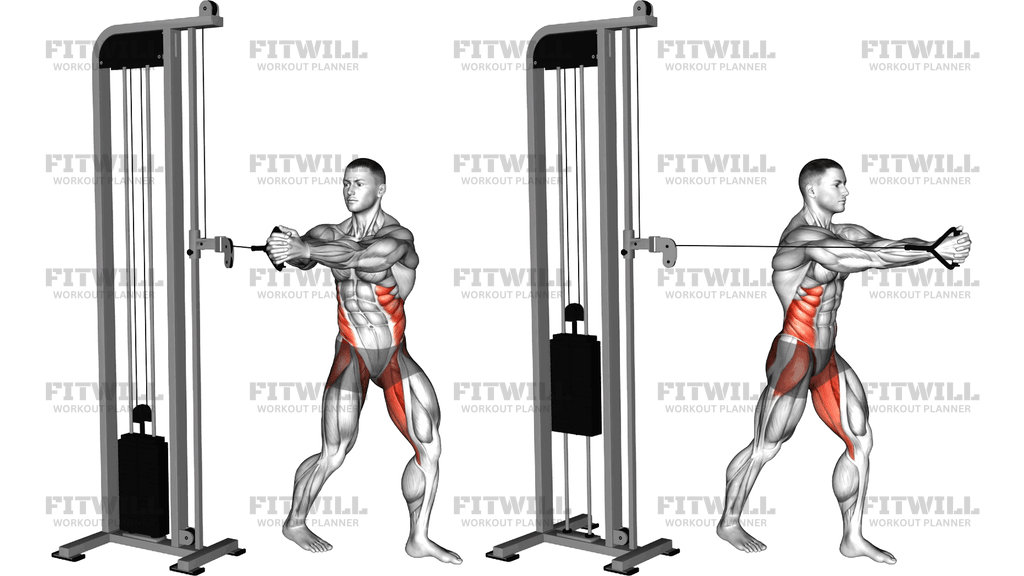
Lying Frog Push
The Lying Frog Push is a bodyweight inner-thigh exercise performed on your back with your legs raised toward the ceiling. You begin with your knees bent out wide and the soles of your feet pressed together in a frog position, then drive the legs straight up by squeezing the inner thighs together. It isolates the adductor group in a way few standing exercises can, because your body weight is supported by the floor and the legs move freely against gravity.
This movement is especially useful for people who feel their quads or hamstrings taking over in exercises like squats or sumo movements. Because the knees start bent and the feet stay together, the only way to complete the push is through active adduction at the hips. That makes it a go-to choice for anyone rebuilding inner-thigh strength, addressing tight or weak groin muscles, or adding focused volume for the adductors without loading the spine.
Beyond the inner thighs, the exercise asks for real contribution from the deep core and hip flexors. Holding straight legs vertical while the pelvis stays heavy on the floor requires the lower abdominals to brace and stabilize, and the glutes work to keep the hips from tilting. The result is a targeted inner-thigh drill with a built-in core stability demand.
Setup matters here. Your lower back should stay flat or gently pressed into the floor, your arms relaxed out to the sides for balance, and your knees opened only as far as your hips comfortably allow. If the lower back arches or lifts, the legs are probably too low or the core is disengaged, and the work shifts away from the adductors.
To execute well, think of the push as coming from the groin, not from kicking the feet. Press the soles together, squeeze the knees toward each other as the legs lengthen, and pause briefly with the legs nearly straight overhead. Lower back into the wide frog position slowly, letting the inner thighs control the opening rather than letting gravity drop the knees apart.
You will see this exercise in warm-ups for lower-body sessions, in postpartum and general hip-strengthening programs, and as a finisher on leg days when the adductors need direct work. Keep the reps smooth and moderate, and stop short of any pinching in the groin or hip. If floor work bothers your tailbone or lower back, a thin mat or folded towel under the hips makes the position comfortable.
[ Workout Log & Planner ]
Put your next workout in Fitwill
Keep your plan and training log ready when you are.


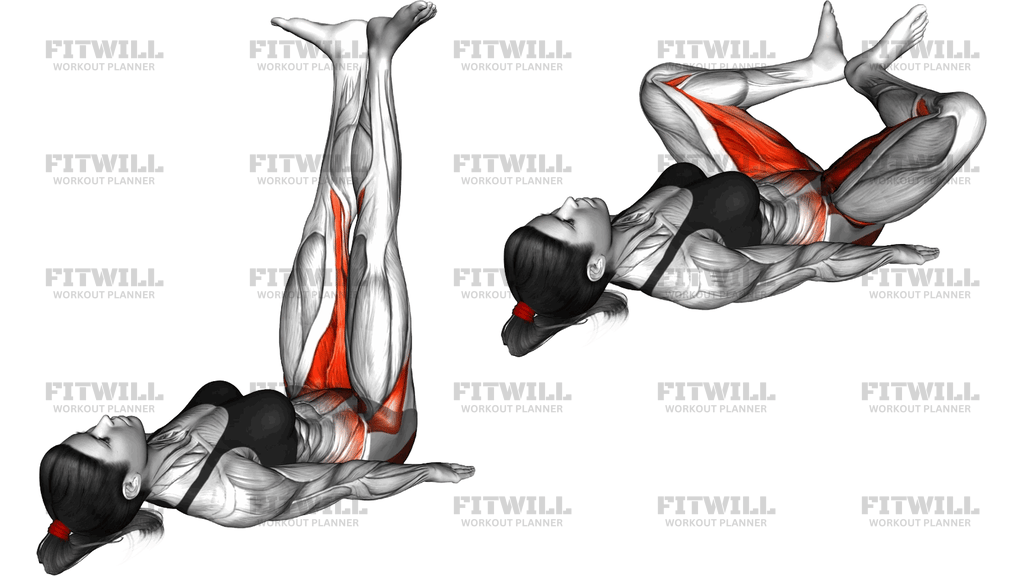
Instructions
- Lie flat on your back on a mat with your arms resting at your sides, palms down, and your lower back in contact with the floor.
- Raise both legs toward the ceiling, then bend your knees and let them fall open to the sides so the soles of your feet meet in a frog position, shins forming a wide diamond.
- Draw your belly button in slightly and press your lower back gently into the floor to set your core before moving.
- Press the soles of your feet firmly together and begin squeezing your knees in toward each other.
- Keep squeezing as you straighten the legs upward until they are nearly vertical and the inner thighs are fully contracted.
- Hold the top position for a brief moment with the feet still pressed together.
- Reverse the path under control: bend the knees and let them open back out to the wide frog position, resisting the pull of gravity.
- Exhale as you push the legs together and up; inhale as you lower back into the open position.
- Complete your reps with steady rhythm, then rest by bending the knees and placing your feet flat on the floor before your next set.
Tips & Tricks
- If your lower back arches as the knees open, raise the starting position slightly by keeping the hips stacked and the knees a little closer to the chest.
- The most common mistake is kicking the feet upward to generate momentum; the soles should stay pressed together and the knees should travel on muscle power alone.
- Do not force the knees wider than your natural hip range. A comfortable diamond shape works the adductors just as well as an extreme stretch.
- Squeeze the inner thighs hardest at the top, when the legs are almost straight, rather than relaxing once the feet leave the open position.
- Keep the arms quiet on the floor. Pressing the hands down to heave the legs steals work from the target muscles and the core.
- If your hips click or pinch at the top, shorten the range slightly and stop just short of full leg extension.
- Control the opening phase as much as the push. Letting the knees drop apart quickly turns a strength exercise into an uncontrolled stretch.
- Pair this with a stretch such as a seated butterfly hold afterward, since the adductors often feel tight after direct work.
Frequently Asked Questions
What muscles does the Lying Frog Push work?
The inner thighs, or adductors, are the primary movers. The lower abdominals and hip flexors stabilize the pelvis and hold the legs up, while the glutes help control hip position throughout.
Is the Lying Frog Push good for beginners?
Yes. It uses only body weight, the floor supports your back, and the range is easy to scale by adjusting how wide the knees open. Beginners should start with a modest range and focus on the squeeze.
Why do my legs shake when pressing the soles of my feet together?
Shaking usually means the adductors are working close to their current capacity, which is normal for this exercise. Reduce the number of reps per set and build up gradually as the muscles adapt.
How does the Lying Frog Push differ from a regular leg raise?
A leg raise moves the whole leg as one lever and challenges the hip flexors and abs, while the frog position bends the knees and opens the hips so the push comes almost entirely from the inner thighs pulling the legs together.
Can I do the Lying Frog Push without a mat?
You can, but a mat or folded towel under the hips and spine makes the position much more comfortable, especially on hard floors, and helps you focus on the movement instead of the surface.
How many reps and sets should I do?
Two to four sets of 10 to 15 controlled reps is a solid starting point. Because the adductors respond well to volume, prioritize smooth tempo over squeezing out extra reps.
My knees feel pinching when they open wide. What should I change?
Reduce how far the knees drop out so the diamond shape is smaller, and make sure the hips stay relaxed rather than forced. If pinching continues, shorten the range and consult a professional before continuing.
What can I use as a substitute for the Lying Frog Push?
Lying adduction with a light resistance band looped around the legs, seated ball squeezes, or side-lying inner-thigh raises all hit the adductors with a similar focus when floor space or mobility is limited.
Should I keep my legs perfectly straight at the top?
Straighten them as much as you can while keeping the feet pressed together and your back flat, but a slight knee bend is fine. Full extension is the goal, not a requirement for the inner thighs to work.
Is it safe to do this exercise every day?
Light, easy sets can be done frequently since the load is low, but treat it like any strength work and allow at least a day of recovery between more demanding sessions so the adductors can adapt.