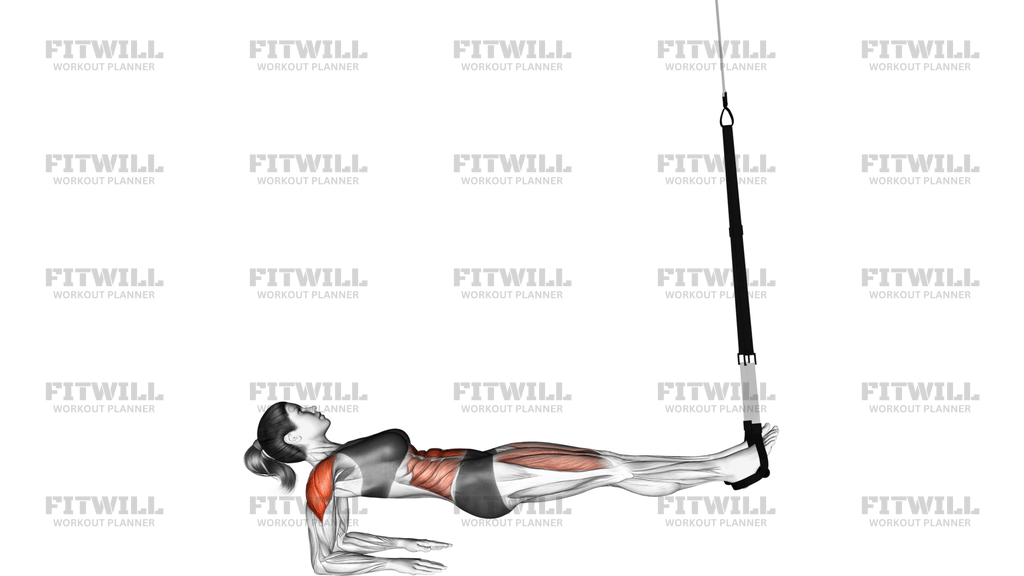
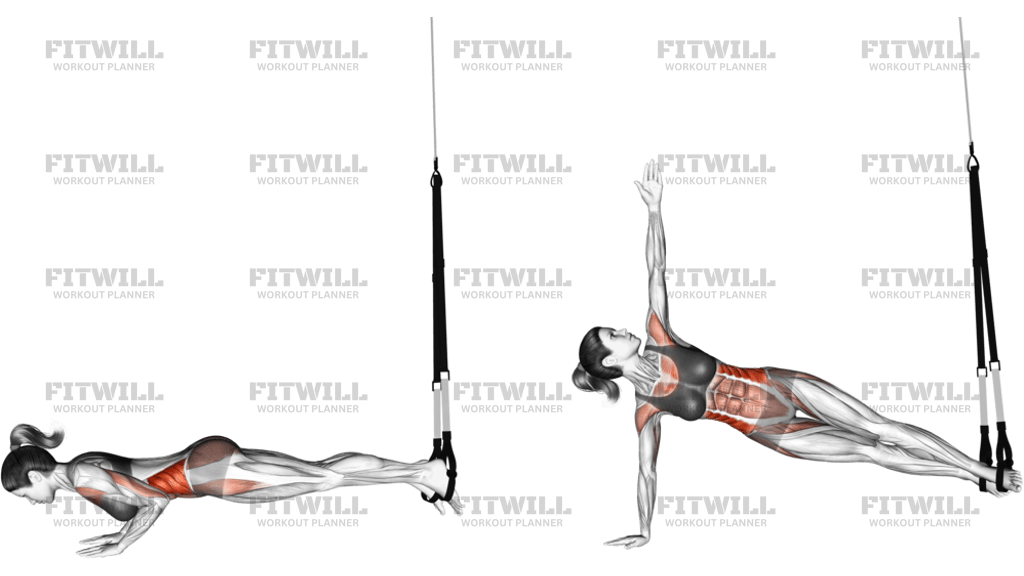
Ring Back Roll To Support
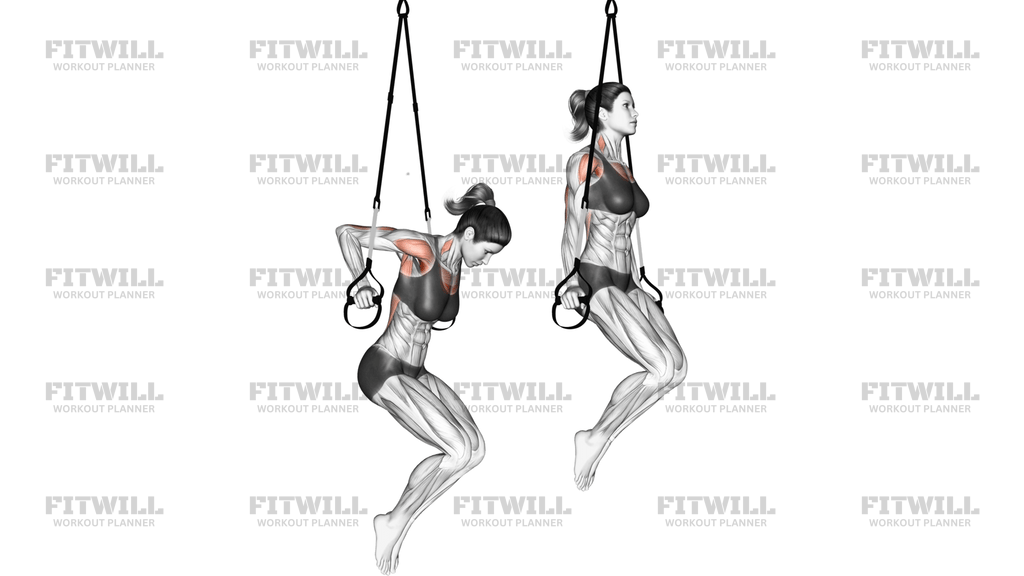
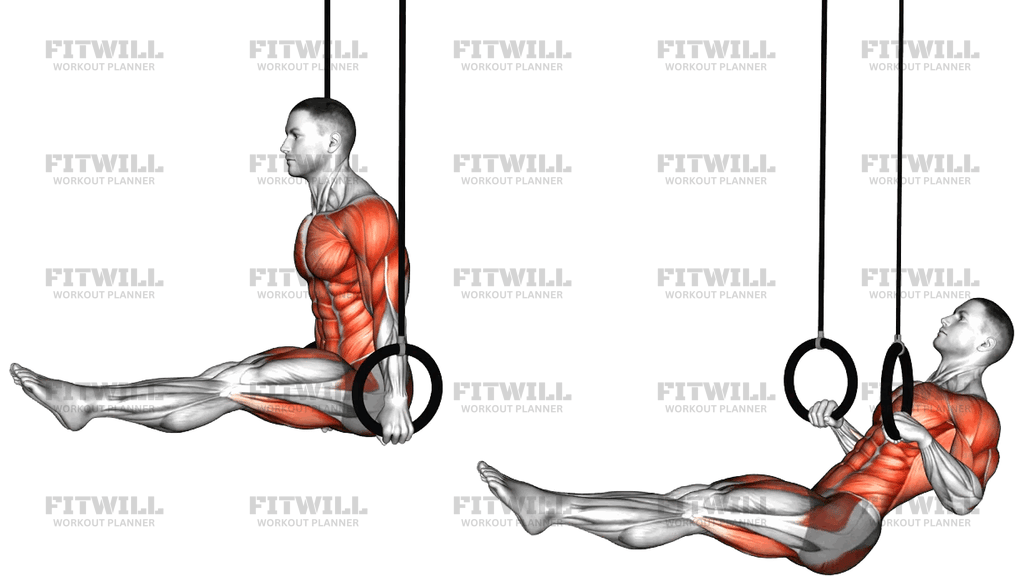
The Ring Back Roll To Support is a gymnastics-style strength skill performed on suspended rings. You begin hanging beneath the rings with your body held in a tight, reclined hollow position, legs extended straight out in front of you, and then roll your shoulders up and over your hands until you finish in a supported position on top of the rings with your legs held out in front. It is essentially a controlled rotation from a back-hang into a ring support, which makes it far more demanding than either position alone.
This movement is aimed at intermediate to advanced trainees with ring experience. You need a solid support hold, a strong hollow body, and comfortable straight-arm pulling strength before attempting it. It is a staple in gymnastic strength training because it teaches the shoulder girdle to stay stable while the body rotates around the hands, something no fixed bar can replicate since the rings swing and turn freely.
The primary demand lands on the shoulders, triceps, and upper back, which must press and stabilize through the entire roll, while the lats and chest drive the pull that brings the rings down toward your hips. Your abdominals and hip flexors work isometrically the whole time to keep the legs extended and the lower back from arching. Because the rings are unstable, the rotator cuff and smaller stabilizers around the shoulder joint get significant work as well.
Setup matters more than raw strength here. The rings should hang at a height that lets you clear the floor with your legs fully extended, and both straps need to be even so the rotation stays balanced. Starting with your hands too wide or your hips sagging changes the entire path of the roll and usually ends with you spinning off to one side or dropping back into the hang.
To execute it well, keep the arms straight for as long as possible during the roll and let the rotation happen over the hands rather than pulling yourself up with bent elbows. Think of pressing the rings down toward your hips as your shoulders travel forward over the top of them. The end position is a firm support: elbows locked, shoulders pressed down away from the ears, rings turned slightly outward, and legs held straight ahead.
Use the Ring Back Roll To Support as a skill and strength builder near the start of a session, when you are fresh. It pairs well with ring support holds, back lever work, and straight-arm pulling drills. If you cannot yet hold a stable ring support for thirty seconds or control a slow lower from support to hang, build those pieces first, and always practice over a mat or soft surface until the movement is consistent.
[ Workout Log & Planner ]
Put your next workout in Fitwill
Keep your plan and training log ready when you are.


Instructions
- Set the rings so that when you hang from them, your extended legs clear the floor by a comfortable margin, and check that both straps are adjusted to equal length.
- Grip the rings firmly with a neutral, slightly turned-out grip and settle into a hanging position below them with your body facing the ceiling.
- Extend both legs straight out in front of you into a hollow reclined position, squeezing the thighs and glutes and pointing the toes so the body forms a rigid line.
- Brace the abdominals hard and pull the shoulder blades down to keep the shoulders stable in their sockets before any rotation begins.
- Begin the roll by pressing the rings down toward your hips while your shoulders travel forward and up over the top of your hands.
- Keep the arms straight through the rotation as long as you can, letting the body pivot around the hands rather than rowing yourself up with bent elbows.
- As you come over the top, press down hard to lock the elbows out and finish in a support position with your legs still extended straight ahead and your hips slightly forward of the rings.
- Exhale steadily through the roll, and avoid holding your breath at the sticking point where your shoulders pass over the hands.
- To reset, either lower back down through the same controlled path or drop safely to the mat, then re-establish the hollow hang before the next repetition.
Tips & Tricks
- If you spin to one side mid-roll, one strap is longer than the other or one hand is pressing harder; measure both rings to the same height before you start.
- A common failure is bending the elbows early and muscling into a dip position instead of rolling over the hands; cue yourself to push the rings toward your hips with straight arms.
- If your legs drop during the rotation, the hollow position is too loose; practice holding the reclined hang statically for ten to fifteen seconds before adding the roll.
- Keep the rings turned slightly outward as you come into support; letting them rotate inward crushes the wrists and makes the lockout unstable.
- Shoulders shrugging up at the top of the support means you are finishing with passive structure instead of active pressing; drive the rings down and lift your chest instead.
- Film from the side once in a while, because the difference between a clean roll and a hips-first grind is hard to feel but obvious on video.
- Start with a lower ring height so your feet stay close to the ground; a shorter fall builds confidence and lets you practice the turnover without full commitment.
- Avoid doing this exercise late in a session when your grip and shoulders are fatigued, since the turnover demands fresh, precise pressing strength.
- If you cannot finish the roll, train the top half separately by mounting into support and lowering slowly back to the hang, then reversing the path.
Frequently Asked Questions
Which muscles does the Ring Back Roll To Support work the most?
The shoulders and triceps carry the pressing and stabilization load, while the lats and chest drive the pull that brings the rings down toward the hips. The abdominals and hip flexors hold the legs extended and the body rigid throughout.
Can beginners do the Ring Back Roll To Support?
It is not a good first ring exercise. Build a stable thirty-second ring support hold, a solid hollow hang, and comfortable straight-arm strength first, then learn the roll at a low ring height over a mat.
How high should the rings be set for this movement?
Set them so your fully extended legs clear the floor when you hang in the reclined position. Lower rings make the skill safer to learn because your feet can act as a spot if the roll stalls.
Why do I keep spinning off to one side during the roll?
Uneven strap lengths or asymmetric pressing almost always cause this. Double-check that both rings are set to the same height and consciously press down with both hands through the turnover.
Should my arms stay straight during the Ring Back Roll To Support?
Yes, straight arms are the hallmark of a clean roll. Bending the elbows early turns it into a strength grind and usually breaks the rotation path over the hands.
What can I substitute if I do not have rings?
There is no true substitute on a fixed bar, because the free-turning rings are what allow the rotation into support. The closest options are ring support holds and straight-arm lowers on rings or a suspension trainer to build the pieces.
How do I know when I am ready to attempt the full Ring Back Roll To Support?
You should be able to hold a firm ring support with locked elbows for around thirty seconds and lower from support back to a controlled hollow hang. If both of those feel solid, the roll is a reasonable next step.
Is it safe to practice this movement alone at home?
Use rings hung from a rated anchor point, place a mat or soft surface beneath you, and start at a low height. Until the turnover is consistent, expect the occasional failed roll and position yourself so a drop is uneventful.
Where should the Ring Back Roll To Support fit in my training session?
Treat it as a skill, not a conditioning move, and do it early in the session while your grip and shoulders are fresh. Two to four quality repetitions per set with full recovery between sets works well.