Suspension Chest Dip
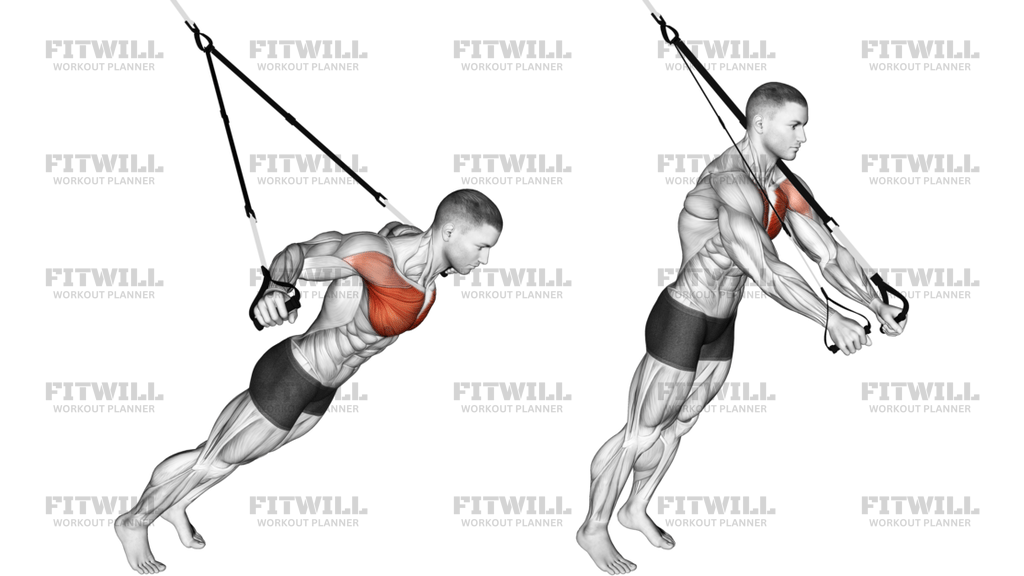
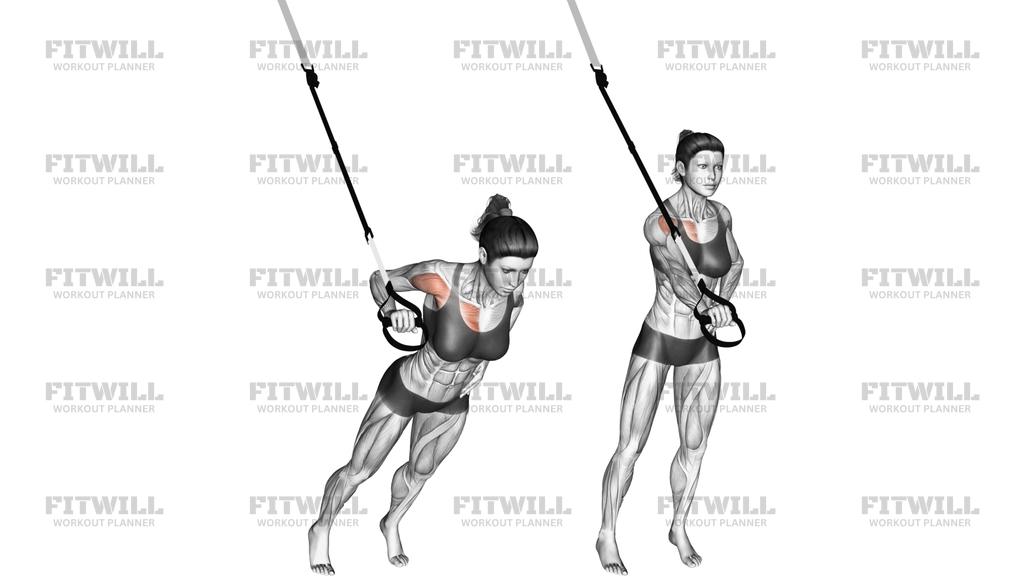
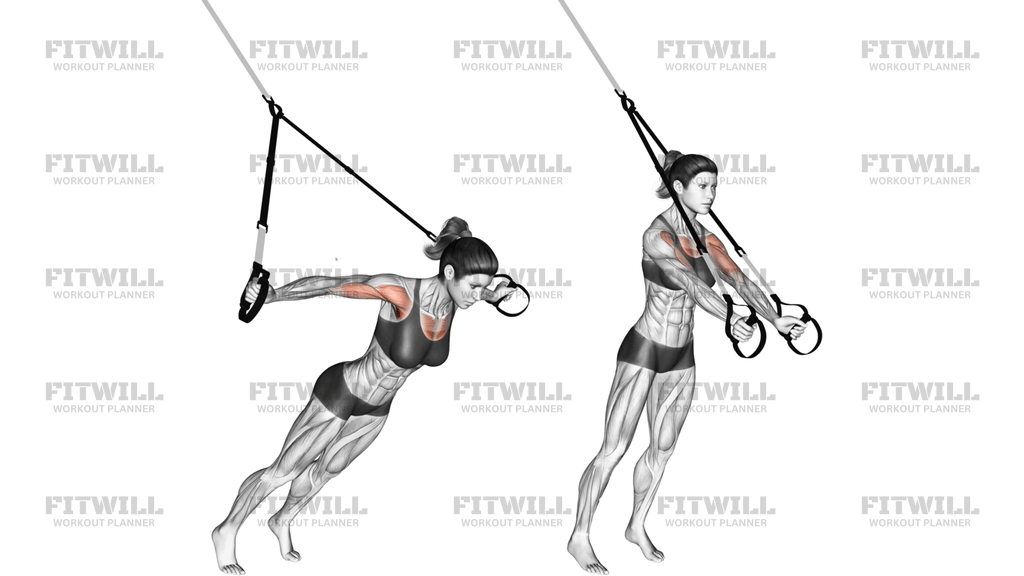
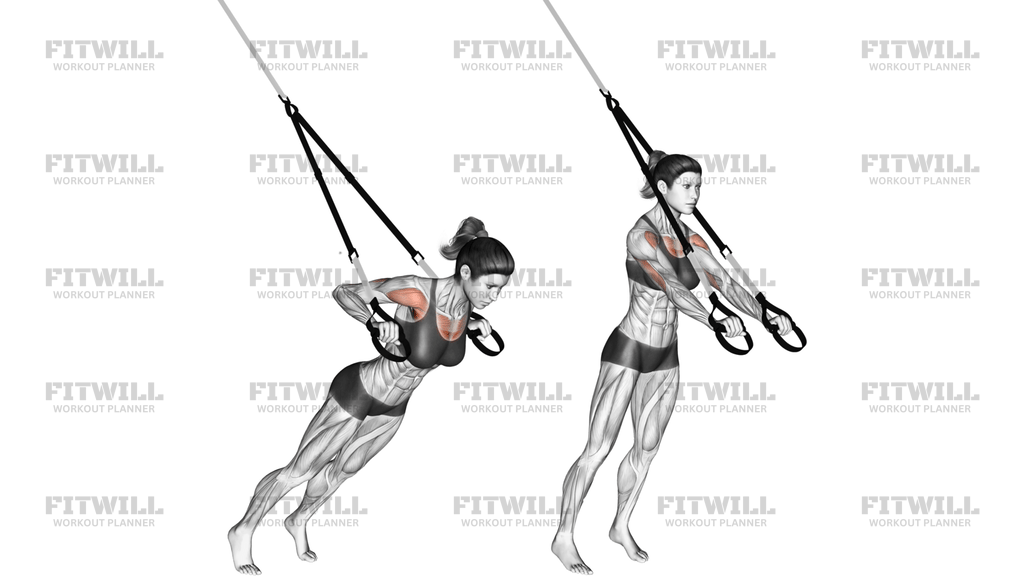
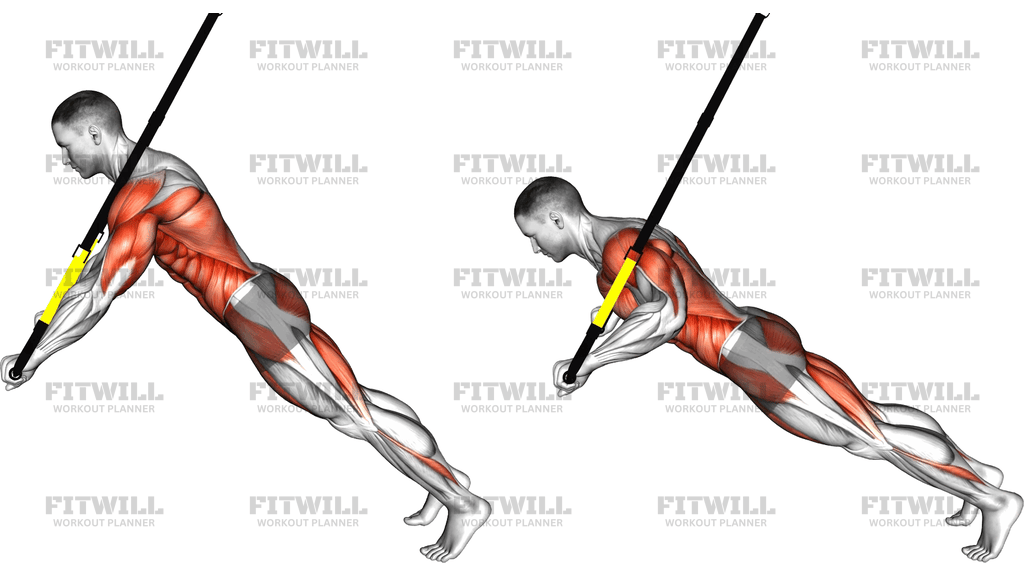
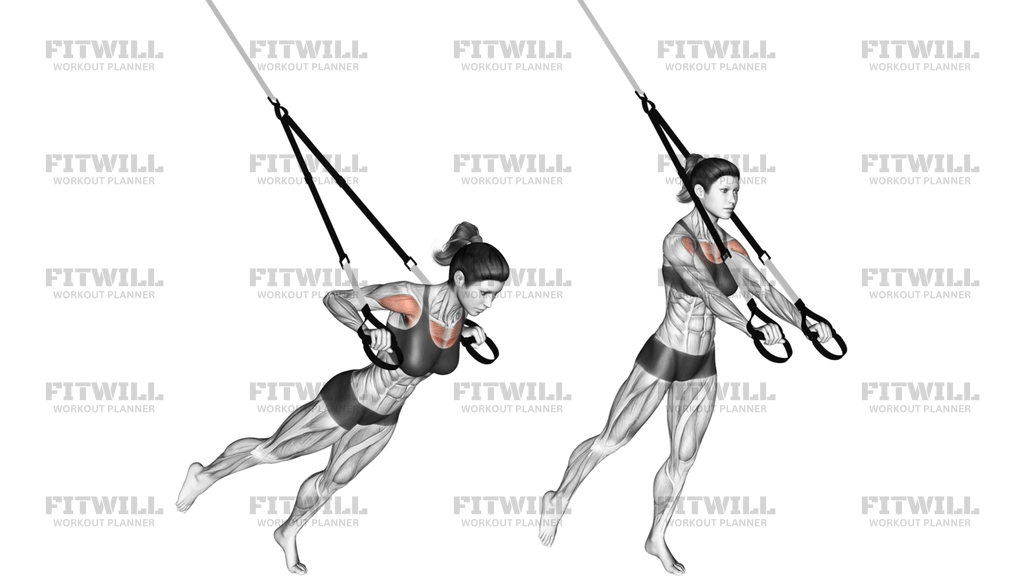
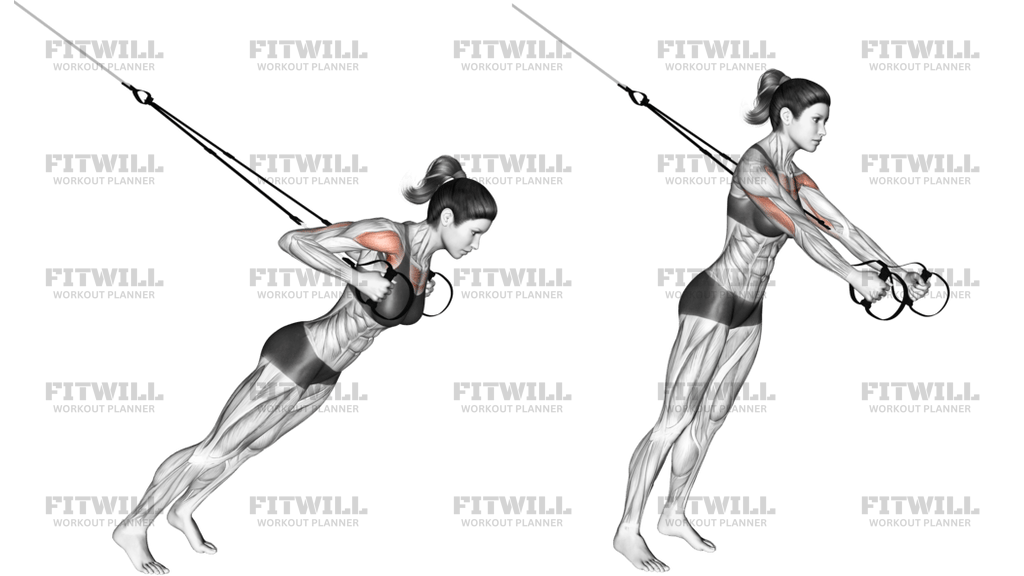
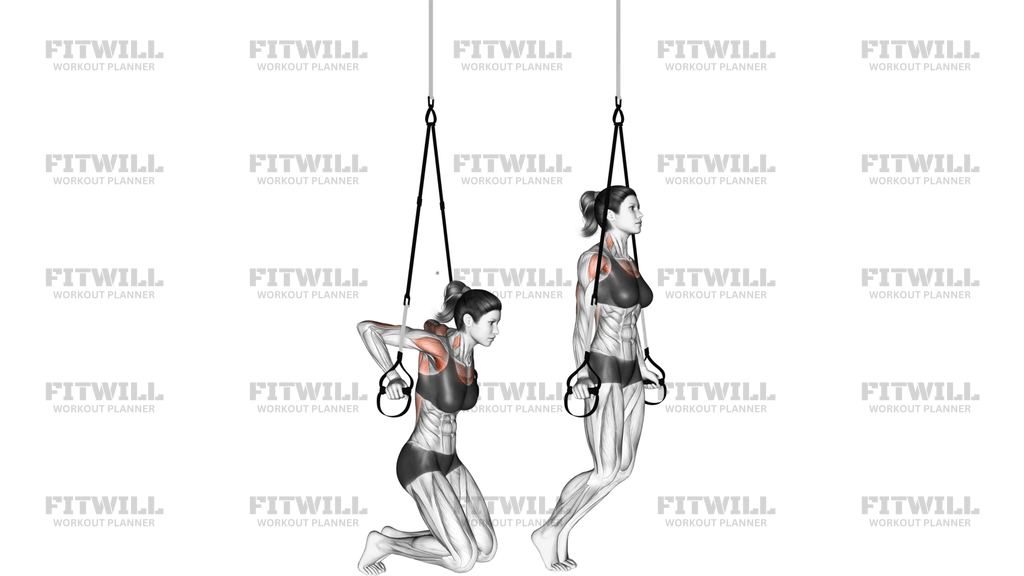
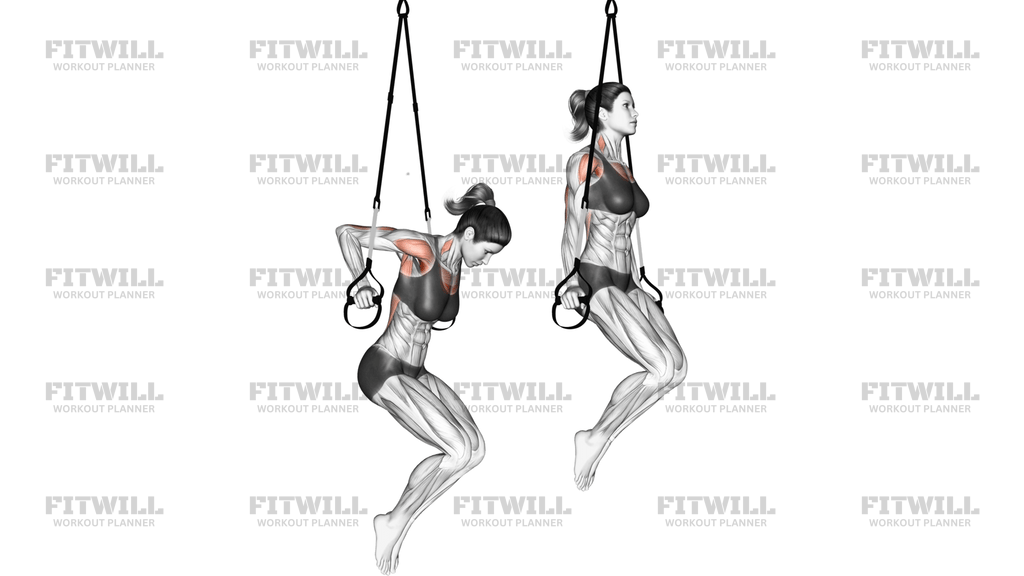
Suspension Chest Dip is a bodyweight pressing exercise performed on suspension straps with the torso leaning forward to bias the chest. In the image, the shoulders stay slightly in front of the hands, the elbows bend behind the body, and the feet remain lightly set to control how much load the upper body has to support. That forward angle is what turns this from a pure triceps press into a chest-focused dip variation.
The main training effect is strong pressing work through the pectorals, with the front delts, triceps, and core helping to stabilize the bottom and finish each rep. In anatomy terms, the primary work is on the Pectoralis major, with support from the Anterior deltoid, Triceps brachii, and Rectus abdominis. Because the handles move freely, the exercise also asks your shoulders and trunk to organize the path instead of letting the straps swing or drift outward.
Setup matters more here than on a fixed bar dip. A forward lean, quiet shoulders, and a firm grip on the handles determine whether the movement feels like controlled chest work or a loose shoulder-driven press. Keep the straps close to your sides, set your feet so you can regulate how much bodyweight you are pressing, and start with the chest open rather than collapsed. If the shoulders roll forward or the ribs flare, the exercise quickly shifts away from the target muscles and can become hard to control.
Each rep should travel in a smooth arc: lower until the upper arms are behind the torso only as far as you can maintain shoulder control, then press up and slightly forward to return to the starting position. The elbows should track back rather than flare wide, and the shoulders should stay depressed and stable instead of shrugging toward the ears. A small pause at the bottom can help you own the position, but only if the shoulders remain comfortable and the straps stay steady.
This is useful as an accessory pressing movement when you want chest stimulation without a barbell or machine, or when you need a challenging bodyweight pattern that also taxes trunk control. It is best kept in a pain-free range with deliberate tempo and enough assistance from the feet to keep the rep clean. When loaded or executed poorly, the exercise can turn into a shoulder strain or an uncontrolled swing, so the quality of the setup and the return phase should govern how hard you push it.
[ Workout Log & Planner ]
Put your next workout in Fitwill
Keep your plan and training log ready when you are.


Instructions
- Grab the suspension handles and set your feet under you so you can lean forward with the straps hanging close to your sides.
- Step or walk your feet into position until your body is supported, then set a slight forward chest lean and keep your ribs down.
- Start with your elbows bent and behind your torso, shoulders depressed, wrists neutral, and palms facing each other or angled slightly inward.
- Lower by bending the elbows and letting the shoulders move back only as far as you can keep the straps steady and the chest open.
- Keep the upper arms tracking back as you descend, and avoid letting the elbows flare wide or the shoulders roll forward.
- Press through the handles to drive your body upward and slightly forward until the arms are straight but not aggressively locked out.
- Exhale as you press up, then inhale as you lower under control into the next repetition.
- Adjust foot pressure or bend the knees more if you need less load, and stop the set if the straps start swinging or the shoulders lose position.
Tips & Tricks
- The more you lean forward, the more this feels like a chest exercise; a more upright torso shifts work toward the triceps.
- Keep the handles beside the ribs rather than drifting behind the body, which helps protect the front of the shoulders.
- Use your feet as a load adjuster: more foot support makes the rep easier, less support makes every rep demand more control.
- Do not sink so deep that the shoulders shrug up or the chest collapses between the straps.
- A brief pause in the bottom position is useful only if you can keep the straps still and the elbows controlled.
- Think about pressing the handles down and slightly back under your torso instead of bouncing straight up.
- Keep your neck long and your gaze neutral; craning the head forward often causes the ribs to flare and the torso to lose tension.
- If the handles rotate or drift during the rep, slow the tempo and reduce range before adding more volume.
- Use a controlled lowering phase so the straps never yank you into the bottom position.
Frequently Asked Questions
What muscles does Suspension Chest Dip work most?
It mainly targets the chest, especially the lower and mid portions of the pecs, with the front shoulders, triceps, and core helping to stabilize and press.
How do I make the dip more chest-focused?
Lean your torso forward, keep the handles close to your sides, and let the elbows travel back rather than flaring out. That forward angle shifts the work away from a pure triceps press.
How do I make the movement easier?
Put more weight through your feet, shorten the range slightly, and keep the torso less forward. Those changes reduce how much of your bodyweight the straps have to support.
What is the most common mistake on the suspension handles?
Letting the straps swing or drifting the elbows wide. The rep should feel controlled and close to the body, not loose or unstable.
How deep should I go on the bottom of the dip?
Go only as low as you can while keeping the shoulders down, the chest open, and the handles steady. If the shoulders roll forward, the range is too deep for that set.
Can I use this exercise if I am a beginner?
Yes, but start with a large amount of foot support and a small range of motion. The free-swinging straps make control more important than chasing depth.
What should my elbows do during the rep?
They should bend back and stay fairly close to the torso. A wide elbow flare usually puts the shoulders in a less stable position.
How should I breathe during Suspension Chest Dip?
Inhale on the way down and exhale as you press yourself back up. Keep the brace steady so the torso does not fold or overextend.