Suspension Mountain Climber Push-Up
Suspension Mountain Climber Push-Up is a suspension-trainer core and upper-body drill performed with the feet supported in straps and the hands on the floor. The exercise combines a rigid plank, alternating knee drives, and push-up strength work, so the goal is not just to move fast but to keep the torso from twisting while each leg comes through under control.
The setup is what makes this movement work. When the straps hold the feet, the body becomes a long lever from shoulders to ankles, and every rep asks the abs, hip flexors, glutes, and shoulder stabilizers to resist rotation. The arms also contribute through the chest, triceps, and front delts because the push-up position must stay solid while one knee pulls forward.
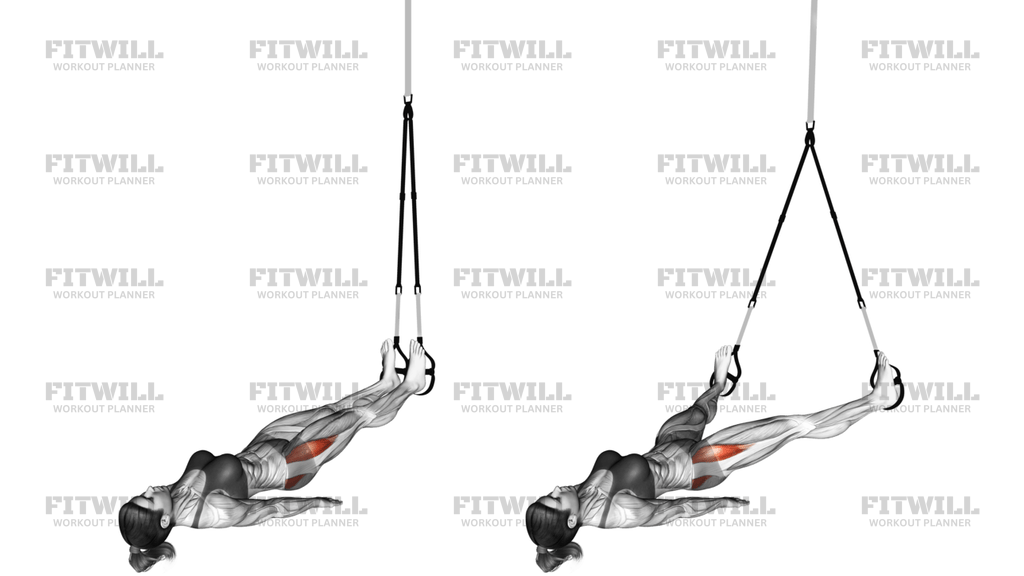
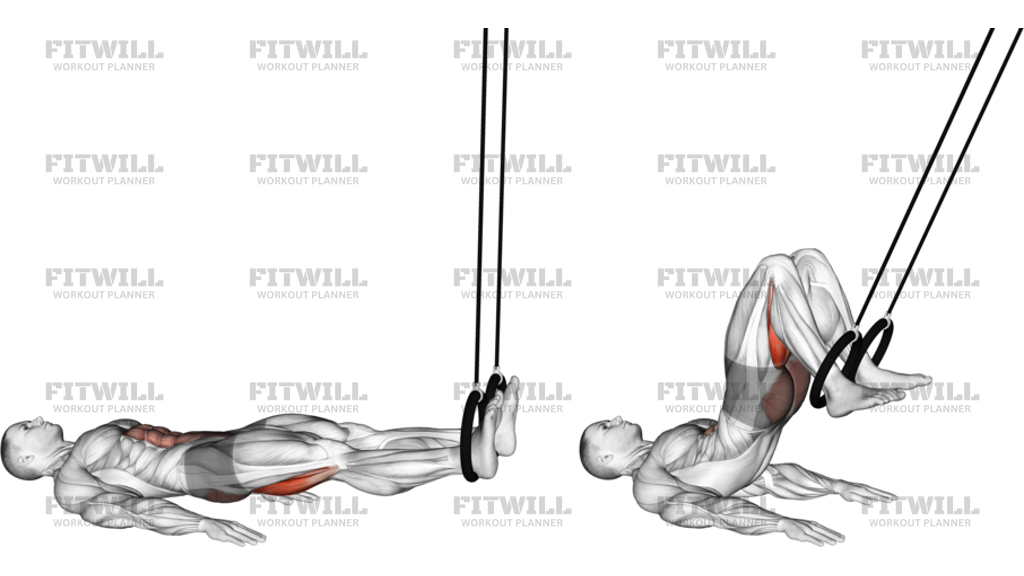
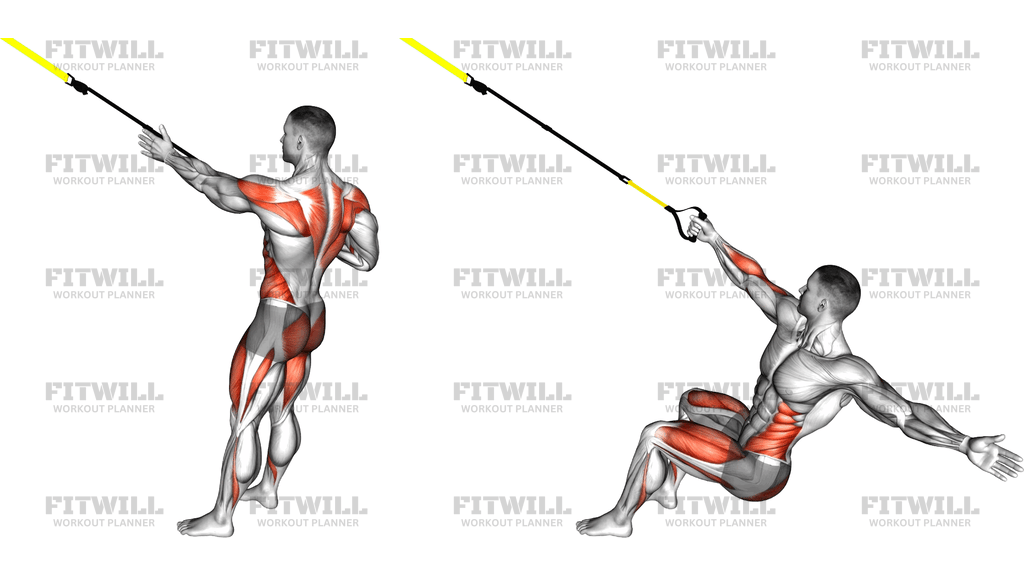
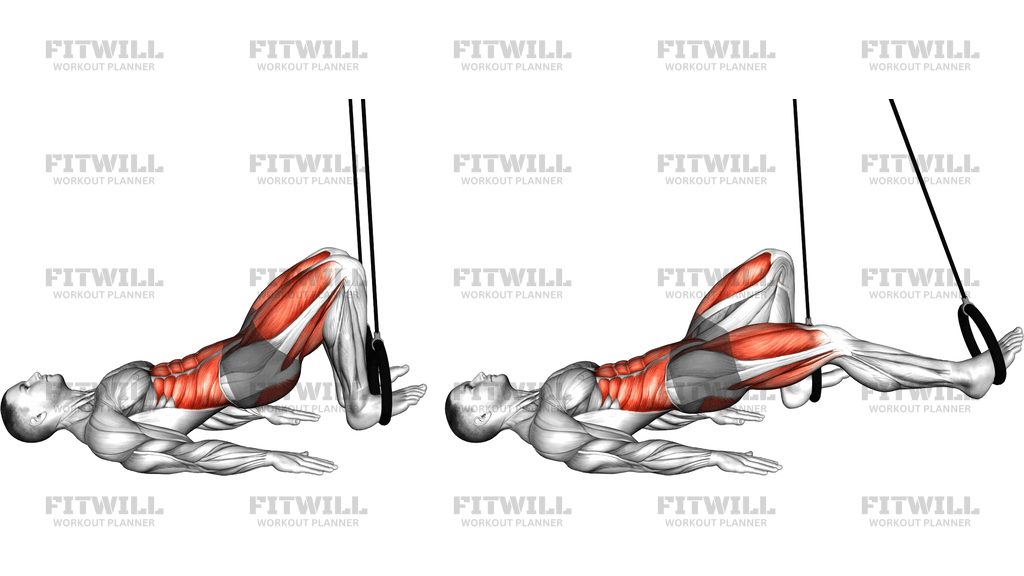
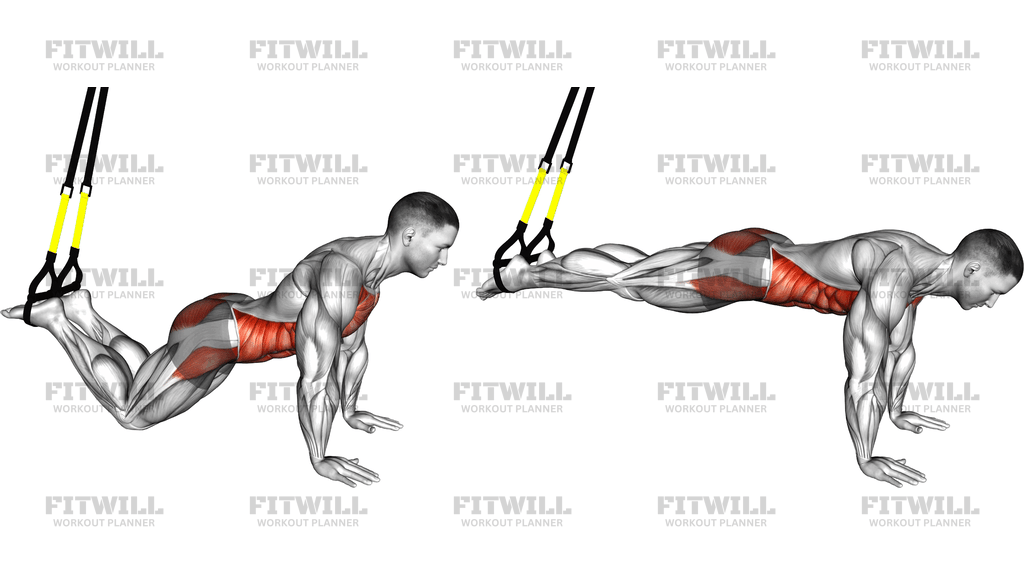
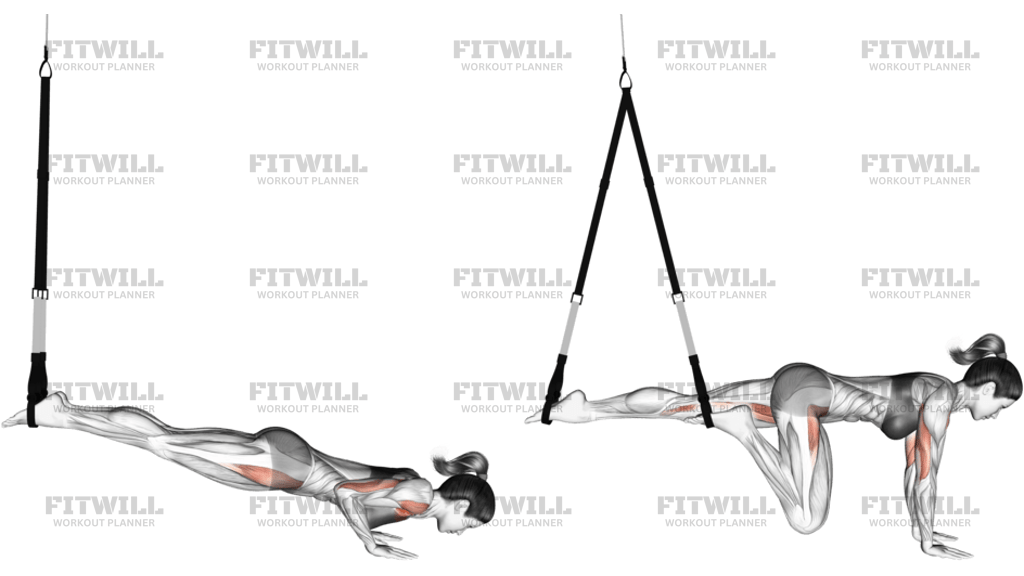
In the image, the athlete starts in a straight-body plank with both feet suspended behind the body, then brings one knee toward the chest while the opposite leg stays long. That alternating action creates a mountain-climber pattern, and the push-up component adds more demand on the upper body. Keep the hips level, the ribs pulled in, and the neck long so the movement stays organized instead of collapsing into the shoulders or lower back.
This exercise is useful when you want core training that also carries over to pressing stability, athletic bracing, and body-control work. It fits well in a conditioning block, a core-focused session, or as a demanding accessory exercise after the main lifts. Because the feet are unstable, the exercise usually feels harder than a standard floor mountain climber or push-up, so load selection should favor clean repetitions over speed.
Use a smaller range or a slower pace if the hips start bouncing, the low back arches, or the straps swing side to side. The best repetitions look smooth, deliberate, and symmetrical, with each knee driving in under the torso and each press returning to a firm plank before the next rep.
[ Workout Log & Planner ]
Put your next workout in Fitwill
Keep your plan and training log ready when you are.


Instructions
- Set the suspension straps so the foot cradles are stable, then place both feet in the straps and set up a high plank with your hands under your shoulders.
- Walk your hands forward or back until your body forms a straight line from head to heels, with the shoulders stacked over the wrists and the feet hanging at the same height.
- Brace your abs, squeeze your glutes, and keep your ribs down before you move so the low back does not sag.
- Lower into the push-up by bending your elbows and keeping them at a comfortable angle as your chest moves toward the floor.
- Press back up to a strong plank while keeping the straps quiet and the torso square to the floor.
- From the top of the plank, drive one knee toward your chest under the body without letting the hips spin open.
- Extend that leg back into the strap and switch sides on the next rep or on the next knee drive, depending on how the set is programmed.
- Keep breathing steady, exhaling through the press or knee drive and inhaling as you return to the long plank.
- Finish each rep with the body re-stacked before starting the next one, and step out carefully if the straps begin to swing or the shoulders lose position.
Tips & Tricks
- Think of the floor contact as a push-up plank first and a climber second; if the shoulders drift behind the wrists, the whole rep gets unstable.
- Keep the suspension straps still. If they swing a lot, shorten the range or slow the tempo until your trunk can control the load.
- Let the knee travel forward under the torso, not out to the side, so the hips stay square and the abs do the work instead of the low back.
- Press the floor away at the top of the push-up to keep the shoulder blades active instead of collapsing between the shoulders.
- Do not chase depth on the push-up if the feet start rising or the pelvis drops; the plank position is part of the exercise.
- A short pause in the top plank can clean up the transition between the push-up and the knee drive.
- Choose a rep pace that lets you return to a neutral body line before the next knee drive or press.
- If the wrists get irritated, widen the hand position slightly and keep the elbows at a moderate angle on the descent.
- Stop the set as soon as the hips start rotating or the chest hits the floor out of control, because both issues usually mean the straps are doing the stabilizing for you.
Frequently Asked Questions
What does Suspension Mountain Climber Push-Up train most?
It trains the core, shoulders, chest, triceps, and hip flexors while challenging anti-rotation control through the suspension straps.
How do I set my body up in the straps?
Place both feet in the suspension cradles, set the hands under the shoulders, and hold a straight plank before you start the first push-up or knee drive.
Should my hips stay level during the knee drive?
Yes. The goal is to bring one knee forward without letting the pelvis twist or pike up, because that usually shifts work away from the core.
Do I lower into a full push-up on every rep?
Use the push-up range that you can control while keeping the feet stable. A smaller range is better than losing the plank and swinging the straps.
What is the most common mistake?
Most people rush the knee drive and let the low back arch or the straps swing side to side, which turns the movement into momentum work.
Can beginners use this exercise?
Beginners can try it, but they should start with a slower pace, a shorter push-up range, and very controlled knee drives.
Where should I feel the exercise?
You should feel the abs and hip flexors during the knee drive, with the chest, shoulders, and triceps working during the push-up.
How can I make it easier or harder?
Make it easier by reducing the push-up depth or working one action at a time. Make it harder by slowing the tempo, pausing in plank, or keeping the straps less stable.