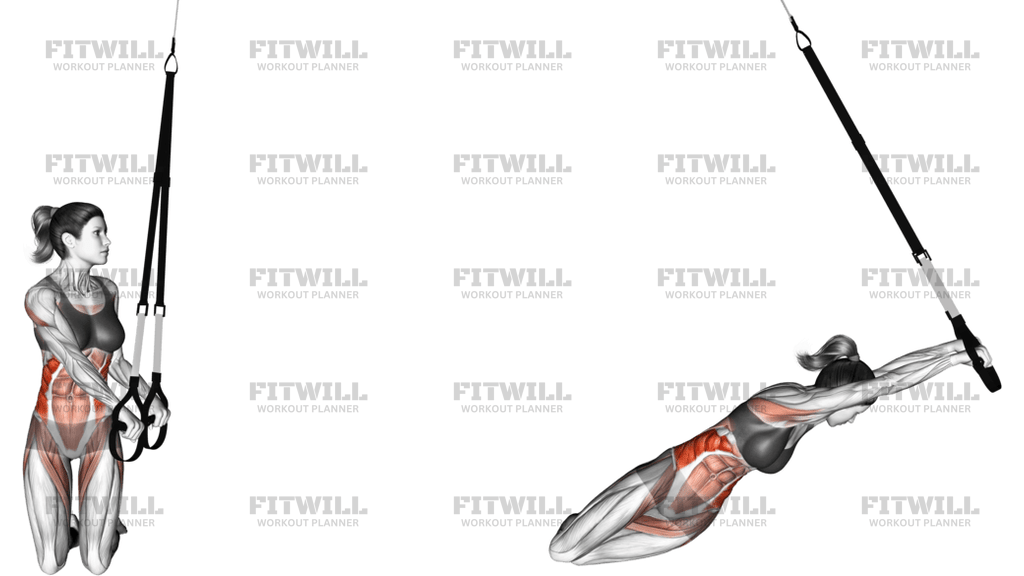
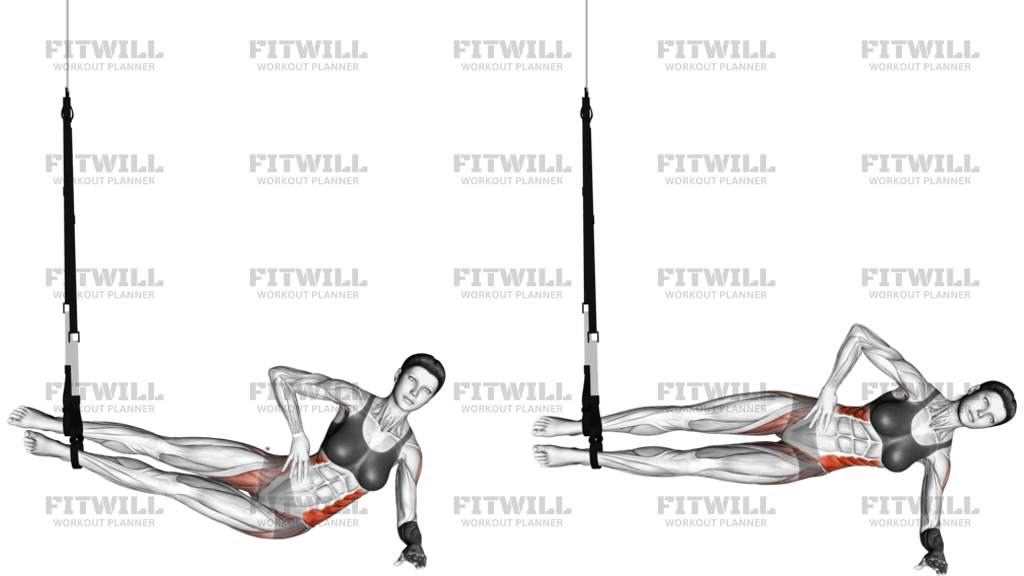
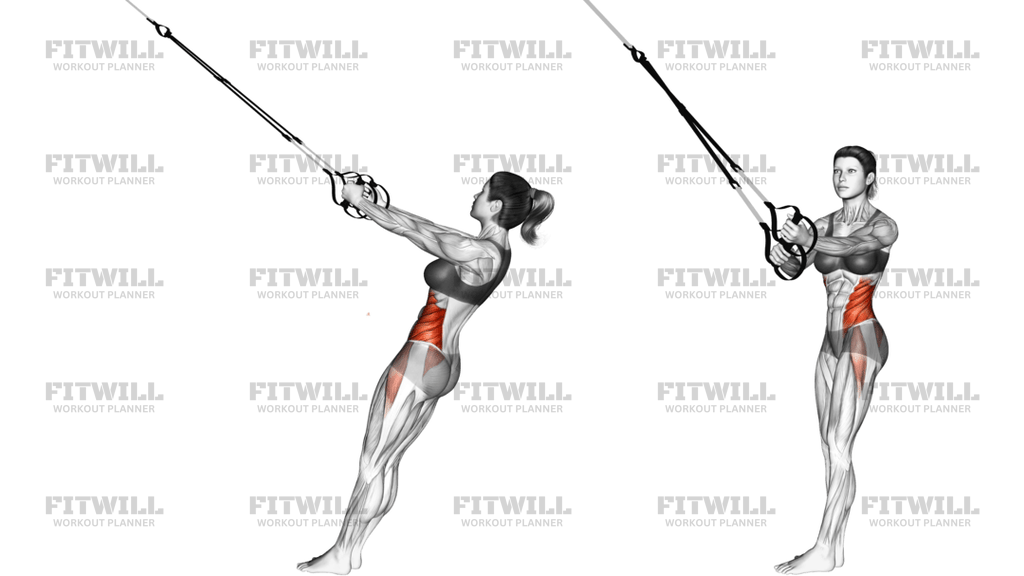
Suspension Star Push-Up
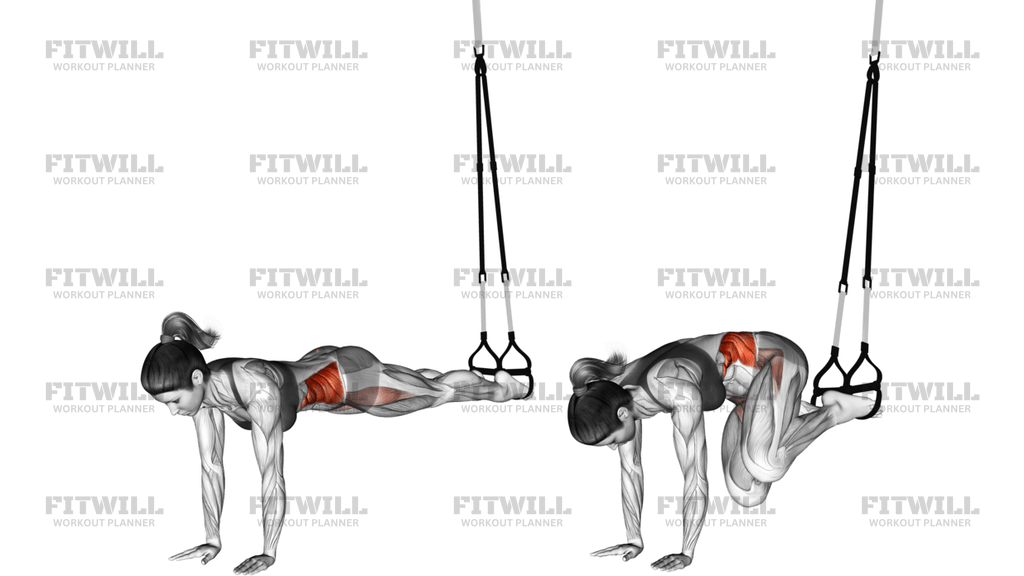
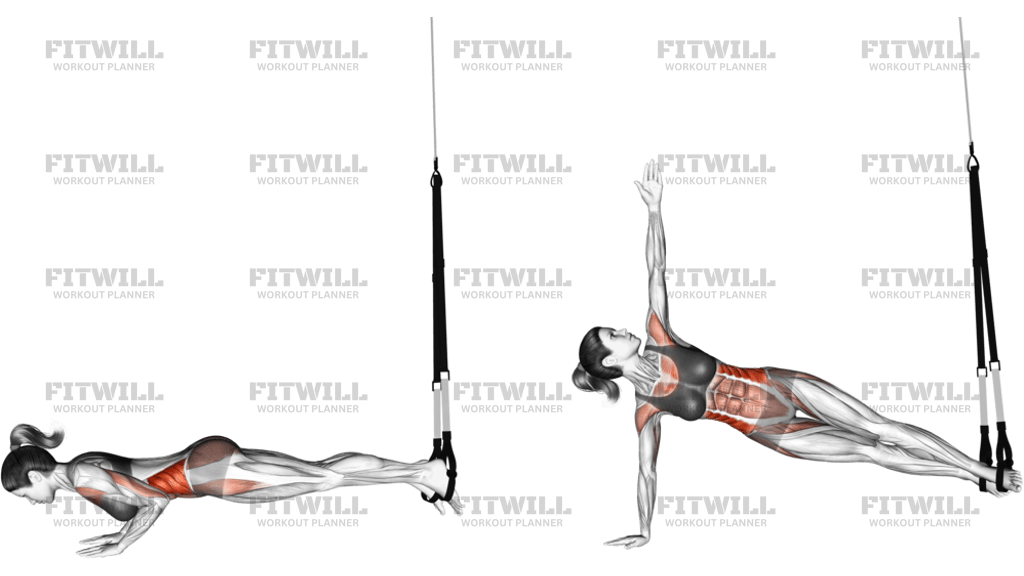
Suspension Star Push-Up is a suspension-trainer push-up and side-plank combination that places the feet in the straps and asks you to press, rotate, and open into a star position with control. The body has to stay long and organized while the hands support you on the floor, so the exercise quickly exposes any loss of trunk tension or shoulder control.
The main training effect is core stiffness under movement. The chest, triceps, front delts, and serratus help you press, but the obliques and deeper abdominal muscles work hard to keep the ribs and pelvis aligned as the body opens to one side. That makes this a strong anti-rotation and lateral stability drill as much as a pushing exercise.
The setup matters because the suspension straps amplify every mistake. Place both feet securely in the cradles, set the hands under the shoulders, and walk out until the straps are taut and the body forms a straight line from head to heels. From there, lower with control, press back up, and rotate into the open side-plank reach without letting the hips twist away from the line of the torso.
A clean rep looks smooth, not explosive. The elbows should track at a comfortable angle, the feet should stay level in the straps, and the lifted arm should reach long rather than shrugging the shoulder upward. Keep the neck relaxed, exhale through the press and rotation, and return to the starting plank under the same control you used on the way out.
Because the movement is demanding, it works best for athletes or trainees who already own a basic suspension push-up and can keep a stable plank under fatigue. Use it in warm-ups, accessory blocks, athletic conditioning, or core-focused sessions. If the straps start swinging, the shoulders pinch, or the low back takes over, shorten the range, slow the tempo, or regress to a standard suspension push-up before adding the star rotation.
[ Workout Log & Planner ]
Put your next workout in Fitwill
Keep your plan and training log ready when you are.


Instructions
- Adjust the suspension straps so both foot cradles hang at the same height, then place both feet securely in the straps.
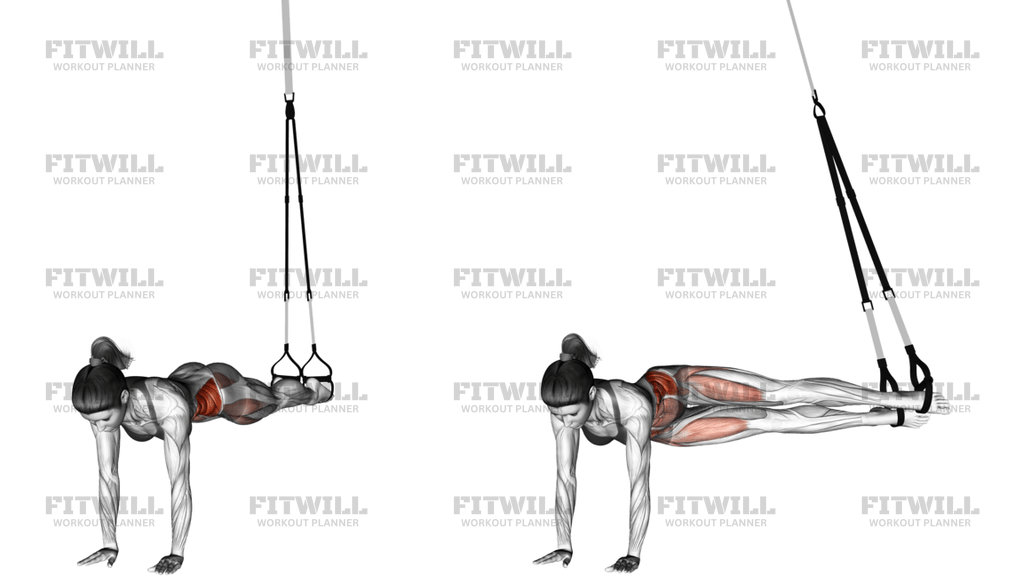
- Set your hands on the floor under your shoulders and walk forward until the straps are taut and your body is in a straight line.
- Brace your ribs down, squeeze your glutes, and keep your neck long before you start the first rep.
- Lower your chest toward the floor by bending your elbows to about 30-45 degrees from your torso.
- Press back up to a strong plank without letting your hips sag or twist.
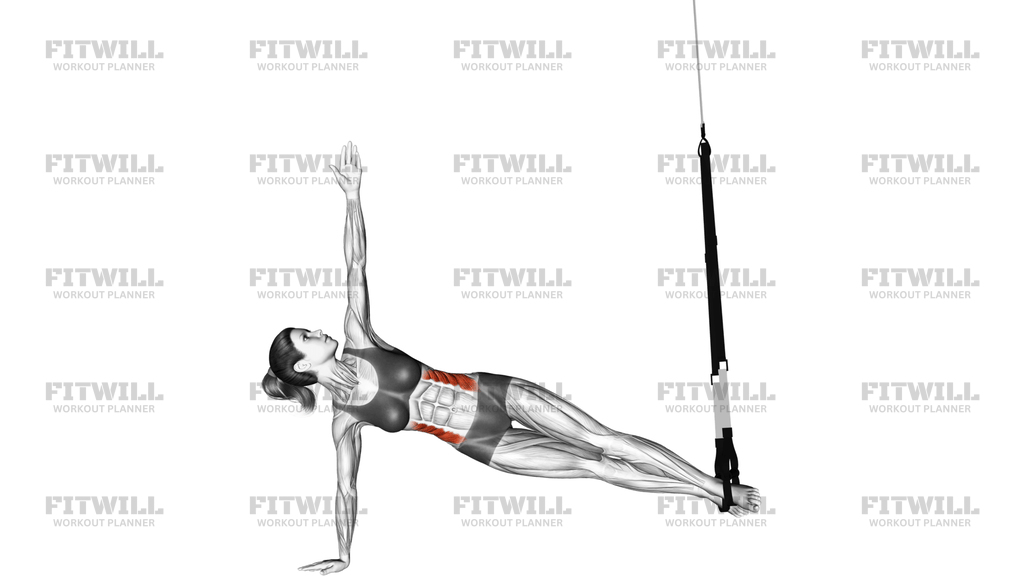
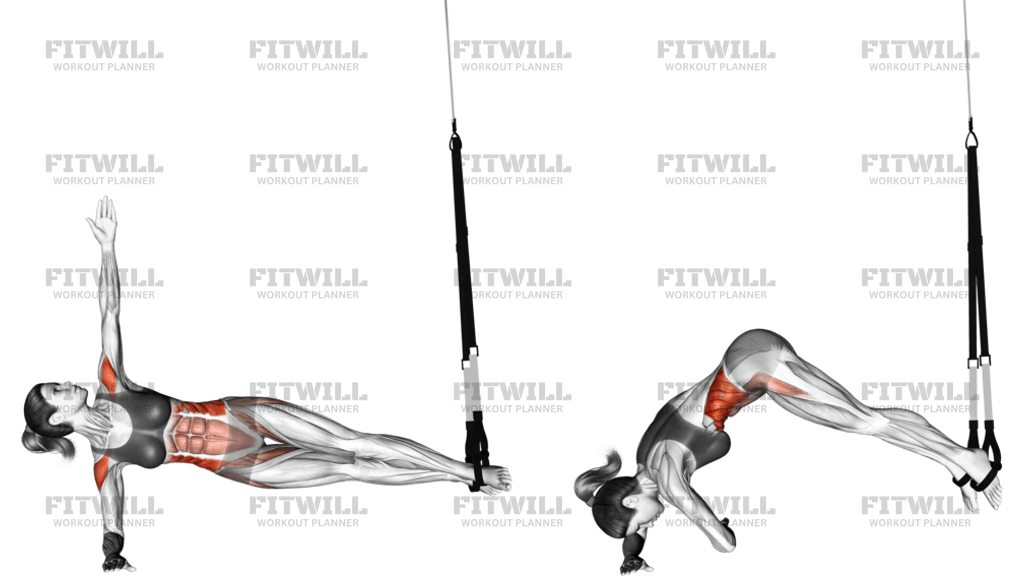
- Shift your weight onto one hand and rotate the body open into the star position.
- Stack the shoulders and hips, then reach the free arm toward the ceiling while keeping both feet level in the straps.
- Reverse the rotation under control, return to the two-hand plank, and repeat on the other side or for the programmed reps.
- Breathe in on the lowering phase, exhale through the press and rotation, and reset your shoulder blades before each rep.
Tips & Tricks
- Keep both straps the same length; uneven straps make the rotation lopsided and harder to control.
- If the straps swing, shorten the rep by reducing depth or slowing the transition into the star position.
- Let the press come from the chest and triceps, but let the obliques decide how far you open.
- Keep your hips stacked in the star position instead of letting the top hip roll backward.
- Use a hand position that keeps the wrists comfortable; a slightly wider base is better than collapsing into pain.
- Squeeze the glutes hard when you press so the low back does not take over.
- Reach the free arm long instead of shrugging it toward the ear.
- Stop the set when your torso starts to wobble more than it rotates.
- Start with slow singles before you try continuous alternating reps.
Frequently Asked Questions
What does Suspension Star Push-Up train most?
It hits the obliques hardest, while the chest, triceps, shoulders, and abs assist.
Is this harder than a regular suspension push-up?
Yes. The open side-plank rotation adds anti-rotation strength and balance demand on top of the press.
Where should my feet go in the straps?
Place both feet securely in the cradles with the straps even so the body stays centered as you rotate.
How should my elbows track during the push-up?
Keep them about 30-45 degrees from your torso instead of flaring straight out to the sides.
Why do my hips sag when I rotate?
Usually the core or glutes are losing tension, or the range is too big for your current strength.
Can I do this one side at a time?
Yes. Many people perform all reps to one side before switching, which usually keeps the rotation cleaner.
What is the best regression if this is too hard?
Use a standard suspension push-up or a side plank hold before combining the two patterns.
Should I feel this in my lower back?
No. The lower back should stabilize, not dominate. If it takes over, shorten the range and slow down.