Cable Half Kneeling Single Arm Row
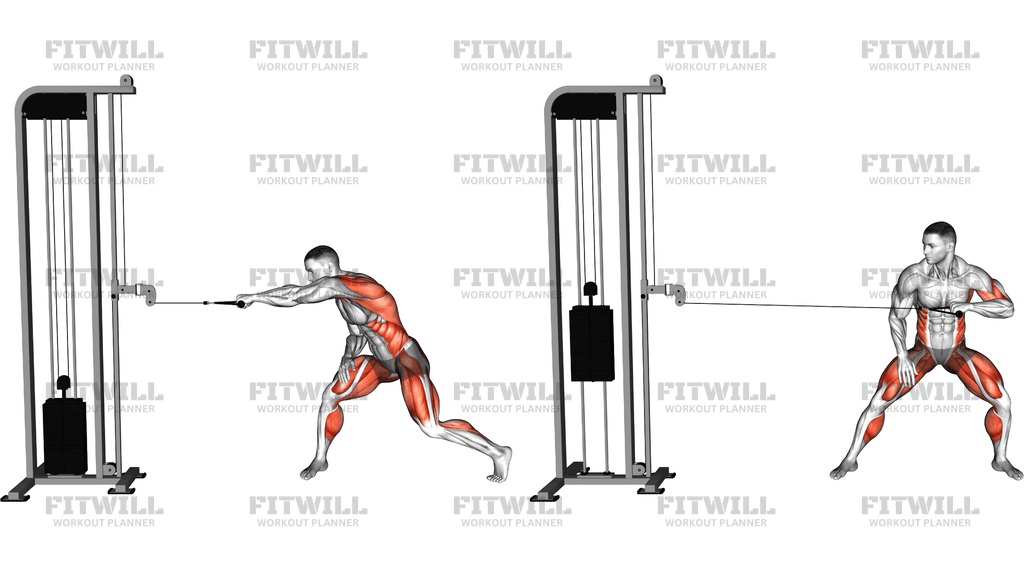
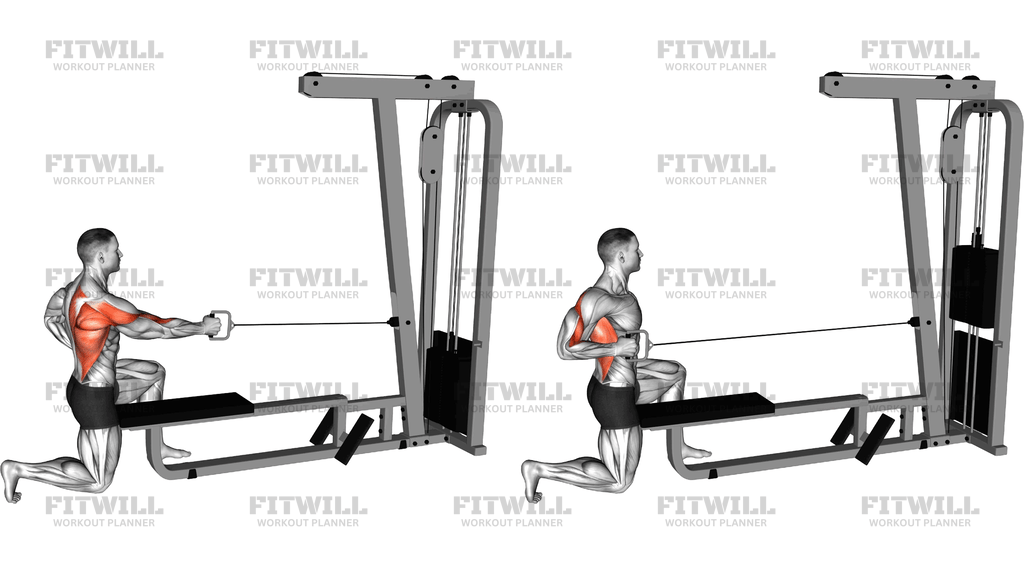
The Cable Half Kneeling Single Arm Row is a unilateral back exercise performed from a half-kneeling stance, with one knee down on the floor and the other foot planted forward, while you pull a single cable handle attached to a low pulley toward your torso. Because you work one arm at a time from an unstable, narrow base, the exercise challenges your lats, rhomboids, and mid-traps to pull while your core and hips work hard to keep your torso from rotating toward the cable.
This setup is particularly useful for lifters who want the back-building benefit of a row without the lower back loading that comes from heavy bent-over barbell rows. The half-kneeling position shortens your base of support and places your hips in a controlled position, so any twisting, leaning, or shrugging becomes obvious. That makes it a favorite for correcting side-to-side strength differences, teaching scapular retraction, and reinforcing anti-rotation core control at the same time.
To execute it well, set the pulley to the lowest position and position yourself far enough back that the cable stays under tension at full arm extension. Grip the handle with the hand on the same side as your down knee or opposite it, depending on your preference and comfort, and keep your front shin close to vertical. As you pull, drive the elbow back close to your ribs rather than flaring it wide, and finish by drawing the shoulder blade back without hiking the upper trap toward your ear.
The cable's constant tension is one of the main advantages here. Unlike a dumbbell row, where tension drops at certain angles, the cable keeps the back muscles loaded through the entire arc, including the stretch at full extension. The smooth return phase is where many lifters rush, but controlling the weight back to the start is what builds strength through the stretched position and keeps your torso honest.
You will see this movement used in rehab-informed strength programs, athletic training for anti-rotation control, and general hypertrophy routines as a secondary row. If balance in the half-kneeling stance is difficult at first, widen your front foot slightly or hold a stable object with the free hand until your hip stabilizers adapt. Start with a moderate weight you can control for ten to twelve slow reps per side, and only progress the load once your torso stays square through every rep.
[ Workout Log & Planner ]
Put your next workout in Fitwill
Keep your plan and training log ready when you are.


Instructions
- Attach a single handle to the low pulley of a cable machine and select a light-to-moderate weight to start.
- Set up in a half-kneeling stance facing the cable: one knee resting on the floor directly under your hip, the other foot planted forward with the shin roughly vertical, and the cable running at about hip height along your side.
- Grip the handle with a neutral palm-facing-in grip and extend your arm fully toward the pulley so the cable is taut before the first rep.
- Brace your core, tuck your pelvis slightly, and square your shoulders and hips to face forward, resisting the cable's pull toward the machine.
- Pull the handle toward your lower ribs by driving your elbow back close to your side, keeping your wrist straight and your shoulder down away from your ear.
- At the end of the pull, squeeze your shoulder blade back and hold for a brief pause without letting your torso rotate.
- Slowly extend your arm back to the starting position, allowing the shoulder blade to proscribe forward under control while keeping tension on the cable.
- Exhale as you pull the handle in, inhale as you return it to full extension.
- Complete all reps on one side, then switch the handle to the other hand, reverse your kneeling stance, and match the rep count on the second side.
Tips & Tricks
- If your torso twists toward the cable on each pull, the weight is too heavy or your front foot is too narrow — reduce the load and widen your front foot slightly until you can stay square.
- Keep the working elbow tracking close to your ribs; pulling with a flared elbow shifts emphasis away from the lats and toward the rear delts and can irritate the shoulder.
- Do not let the down-knee hip drift sideways or sag — squeeze the glute on the kneeling side to keep your pelvis level throughout the set.
- Avoid shrugging at the top of the pull; if your upper trap climbs toward your ear, consciously pull the shoulder blade down and back instead of up.
- Let the shoulder blade move at the start of the return rather than locking it in place — a rigid scapula shortens the useful range and reduces the stretch on the lats.
- Position yourself far enough from the machine that the weight stack never fully settles between reps; losing cable tension removes the stretch stimulus at the end of each rep.
- Check your front knee: it should stay stacked over or slightly behind the ankle, not collapsing inward or shooting past the toes.
- Alternate which knee is down between sets or sessions so one side does not always carry the balance demand.
- Slow the return phase to a two- to three-second count; most of the control challenge in this exercise lives in the eccentric, and rushing it defeats the half-kneeling setup.
Frequently Asked Questions
Which muscles does the Cable Half Kneeling Single Arm Row work?
The primary movers are the lats, with strong contributions from the rhomboids, mid-traps, rear delts, and biceps. The half-kneeling stance also makes the obliques and hip stabilizers work isometrically to prevent your torso from rotating toward the cable.
Why kneel instead of standing for this single arm row?
Half-kneeling removes momentum from the legs and locks your hips into a fixed position, so cheating by leaning or twisting becomes much harder. It also adds an anti-rotation and hip stability challenge that a standing row with a wide base does not provide.
Is the Cable Half Kneeling Single Arm Row good for beginners?
Yes, it is a solid beginner back exercise when kept light, because the kneeling position gives immediate feedback on torso control. New lifters should master the square-hip, no-twist position before adding meaningful load.
Should the handle be pulled to the same side as the down knee or the front leg?
Both versions work, and they slightly change the balance demand. Pulling with the arm on the same side as the front foot tends to feel most stable, while pulling with the down-knee side arm increases the anti-rotation challenge — start with the more stable version.
What is the most common mistake in this exercise?
Rotating the torso toward the cable to help finish the pull, usually because the weight is too heavy. If your shoulders or hips turn during the rep, drop the load until every rep can be done with a square torso.
How does this compare to a dumbbell single arm row on a bench?
The cable version keeps constant tension through the full range, including the stretched position, and does not require a bench to support the torso, which means your core does more work. The dumbbell version generally allows heavier loads but with less tension at certain angles.
What can I use if I do not have a cable machine?
A resistance band anchored low to a sturdy point is the closest substitute — loop it around the hand and perform the same half-kneeling single arm pull. Dumbbell or kettlebell rows are alternatives, though they lose the constant-tension and anti-rotation qualities.
How many reps and sets should I do?
For strength and muscle, three sets of eight to twelve controlled reps per side works well, resting between sides. Because balance is a limiting factor, prioritize slow, square reps over heavy loads.
Is it safe for my lower back and knees?
The half-kneeling position places minimal load on the spine compared with bent-over rows, and the front knee only bears body weight. If kneeling bothers your knee, place a pad under the down knee, and if balance is an issue, widen your stance or hold something stable with the free hand.
How far should I set up from the cable machine?
Set up far enough back that your arm reaches full extension with the cable still taut and the weight stack slightly lifted. If the stack settles between reps, you have drifted too close or the weight is set too low.