Lying Single Leg Hamstring Stretch Against Wall
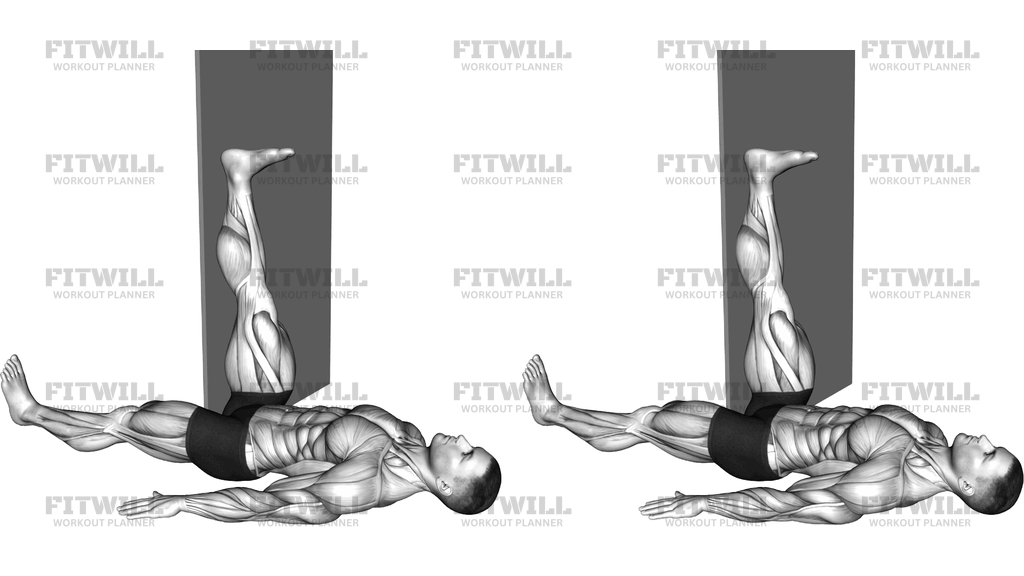
The Lying Single Leg Hamstring Stretch Against Wall is a supported flexibility drill performed on your back with one leg extended up a wall and the other leg resting flat along the floor. Instead of pulling your leg toward you with a strap or your hands, the wall does the work: you simply position your heel against the surface and let gravity ease your straight leg into a hamstring stretch. This makes it one of the most relaxed ways to open up the back of the thigh, because there is no active holding or strain involved.
This setup suits a wide range of people. It works well after lower body training sessions, on rest days, or in the evening when the hamstrings feel tight from sitting. It is also a good option for anyone who finds floor stretches like the seated forward fold uncomfortable on the lower back, since lying down keeps the spine fully supported and the pelvis in a neutral position.
The main target is the hamstring group along the back of the elevated thigh, with the calf of the same leg also lengthening when the knee is kept straight. The hip flexors of the bottom leg get a mild stretch as well, because that leg extends fully along the floor while the other one rises. Keeping the bottom leg long and grounded is what separates this from a two-leg legs-up-the-wall pose and gives the stretch its single-leg focus.
Distance from the wall matters more than most people expect. Too close and the leg cannot straighten or the pelvis tucks under; too far and the stretch never reaches a useful intensity. Start with your hips a few inches from the wall, then adjust until you feel a moderate pull along the back of the thigh without any pinching behind the knee.
To perform it well, lie on your back close to the wall, slide one leg up so the heel rests against the surface, and extend it as straight as feels comfortable. Keep the other leg flat and relaxed, arms loose at your sides, and breathe steadily while you hold. There should be no need to force anything; the wall holds the position so you can focus on softening into the stretch.
Common use cases include post-run cooldowns, hamstring flexibility programs, warm-ups for squatting and hinging patterns, and general recovery. A hold of 30 to 60 seconds per side is a sensible starting point, and the mild, self-limiting nature of the wall support makes it easy to control exactly how much stretch you take on.
Fitwill
Log Workouts, Track Progress & Build Strength.
Achieve more with Fitwill: explore over 9600 exercises with images and videos, access built-in and custom workouts, perfect for both gym and home sessions, and see real results.
Start your journey. Download today!




Instructions
- Sit sideways next to a clear wall, then swing your legs up and lie back so your head and shoulders rest flat on the floor.
- Shuffle your hips toward the wall until one heel can rest against it, keeping that leg nearly straight, and lower the other leg flat along the floor with the toes pointing up.
- Adjust your distance from the wall so you feel a moderate pull along the back of the elevated thigh, not a sharp strain.
- Relax your arms out to your sides with palms up, and let your lower back settle gently toward the floor.
- Keeping the elevated knee straight, let the heel press lightly into the wall so the hamstring lengthens steadily.
- Hold the end position for 30 to 60 seconds while breathing slowly and evenly through your nose.
- If you want a slightly deeper stretch, nudge your hips a little closer to the wall; to ease off, scoot slightly away.
- To finish, bend the elevated knee, place your foot against the wall, and slide it down before switching to the other leg.
- Repeat the same hold on the opposite side, taking the same distance from the wall so both legs get an identical stretch.
Tips & Tricks
- The most common error is scooting too close to the wall, which rounds the lower back and tucks the pelvis. If your tailbone lifts off the floor, move a few inches farther away.
- Point the toes of the raised leg toward the ceiling rather than letting the foot flop outward; a straight ankle with toes up keeps the knee tracking cleanly and lets the calf lengthen evenly.
- Do not lock the knee hard into the wall. A soft, nearly straight knee gives a better hamstring stretch than jamming the joint backward.
- Watch the bottom leg. Many people let it bend or drift out to the side, which shortens the hip flexors and reduces the stretch on both legs. Keep it long and anchored to the floor.
- Avoid pushing the heel aggressively into the wall. The wall should hold the leg, while your muscles stay relaxed; tension in the hamstring will actually block the lengthening you are after.
- If you feel tingling or a sharp line behind the knee instead of a broad pull through the thigh, bend the knee slightly or back away from the wall.
- Breathe out slowly as you settle into the hold. Holding your breath raises overall muscle tension and makes the stretch feel tighter than it needs to be.
- Keep your neck and shoulders relaxed on the floor. Craning the head up to look at the raised leg only creates tension through the upper body with no benefit to the hamstring.
- For a calf emphasis on the same setup, gently pull the toes of the raised leg back toward the shin once the hamstring stretch feels comfortable.
Frequently Asked Questions
Which muscles does the Lying Single Leg Hamstring Stretch Against Wall target?
The primary target is the hamstrings on the back of the elevated thigh, with the biceps femoris, semitendinosus, and semimembranosus all lengthening. The calf of the raised leg stretches too when the knee stays straight, and the hip flexors of the bottom leg get a mild release.
How far from the wall should I position my hips?
Start with your hips a few inches from the wall and adjust from there. If the stretch feels too intense or your lower back rounds off the floor, move farther away; if you feel nothing, scoot closer until you get a moderate pull.
Is this stretch suitable for beginners?
Yes, it is one of the more beginner-friendly hamstring stretches because the wall supports the leg and there is no need for flexibility to reach the foot. Beginners can simply start farther from the wall and take a gentler angle.
Why stretch one leg at a time instead of putting both legs up the wall?
The single-leg version keeps the bottom leg long on the floor, which adds a mild hip flexor stretch and lets you focus on one hamstring at a time. It also makes it easy to notice and correct differences between your left and right sides.
How long should I hold the Lying Single Leg Hamstring Stretch Against Wall?
Hold for 30 to 60 seconds per side, breathing steadily throughout. If you are working on long-term flexibility, repeating two to three holds per leg after training or in the evening works well.
My knee hurts when my leg is straight against the wall. What should I change?
Back your hips away from the wall slightly and allow a small bend in the knee, then gradually straighten it over time as tolerated. A sharp sensation behind the knee is a signal to ease off, not push through.
What can I use instead of a wall if none is available?
You can lie on your back, raise one leg, and hold the thigh behind it with your hands or a towel looped around the foot, keeping the knee mostly straight. The wall version is more relaxing, but the towel version works anywhere.
Should I do this stretch before or after a workout?
It fits best after training, after a run, or on rest days when your muscles are warm. Long static hamstring holds immediately before heavy squatting or deadlifting are better saved for afterward.
Can I deepen the stretch by pressing my heel hard into the wall?
Pressing harder usually tightens the hamstring instead of lengthening it, so keep the contact light and let the wall passively hold the leg. To increase intensity, move your hips closer to the wall instead.