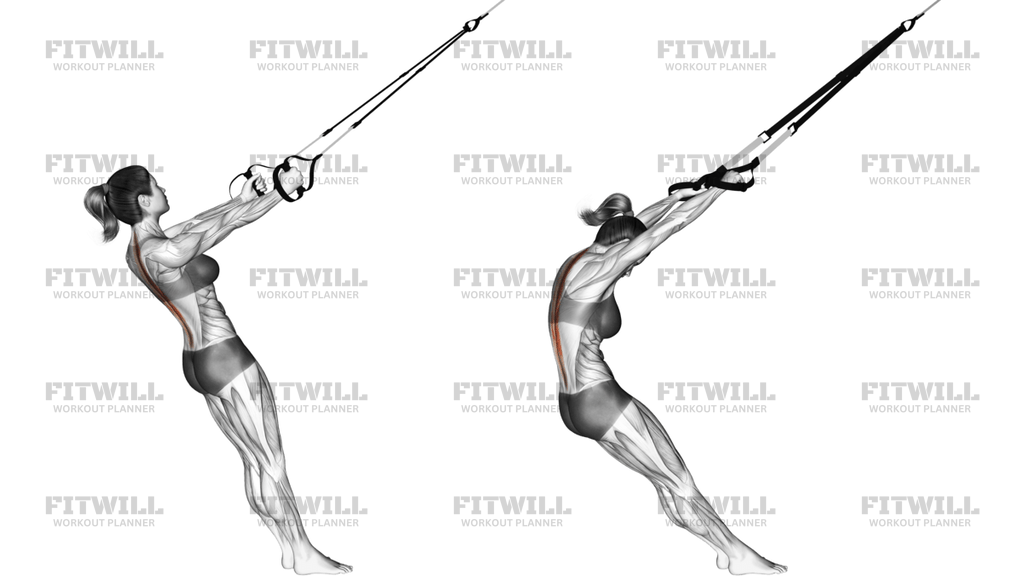
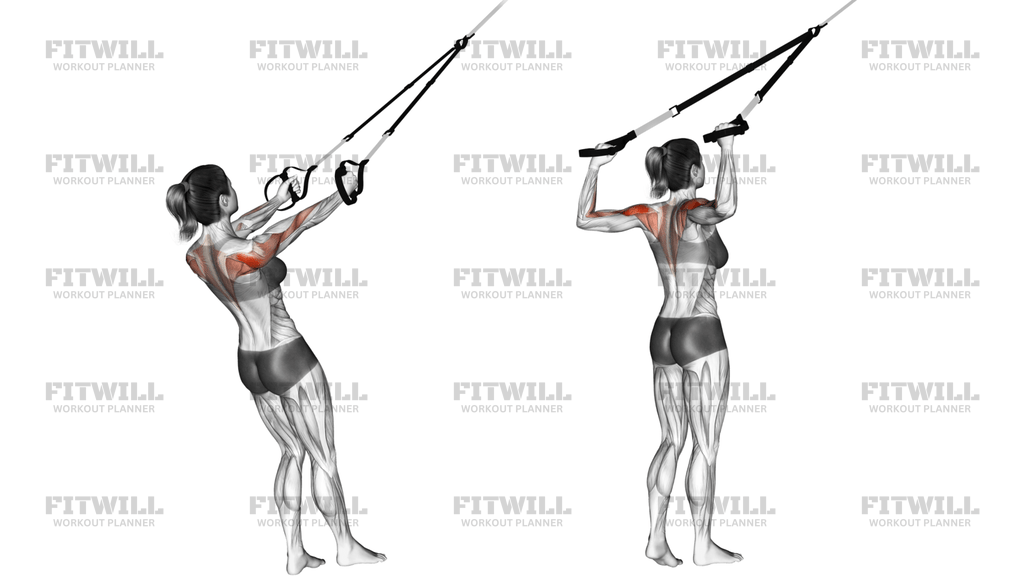
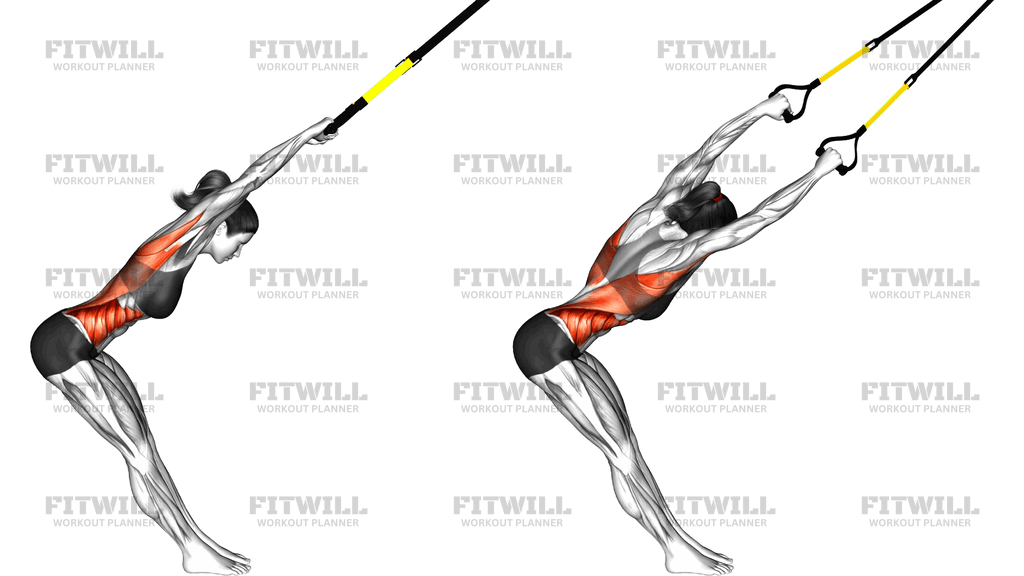
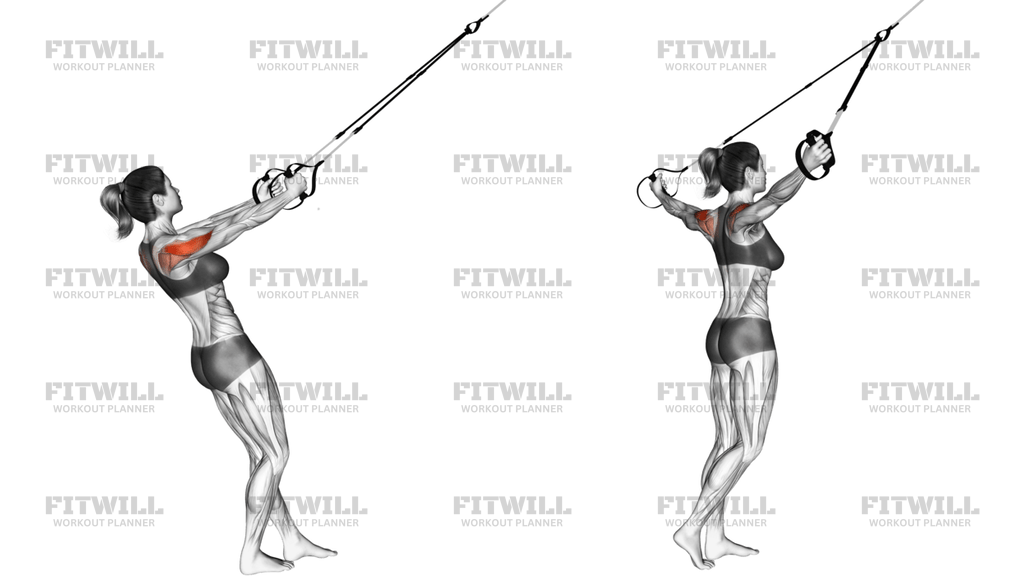
Ring Neutral Grip Inverted Row
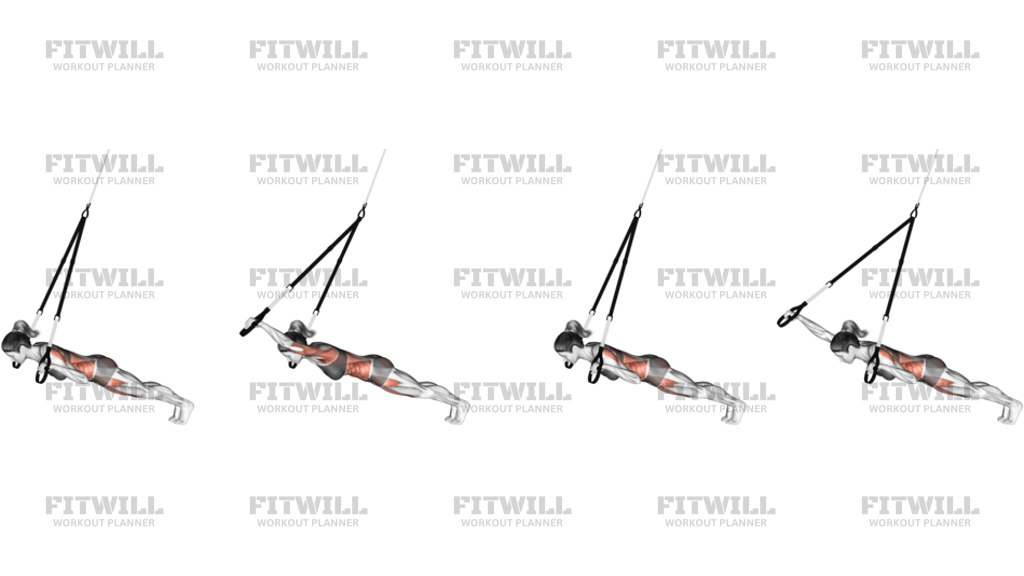
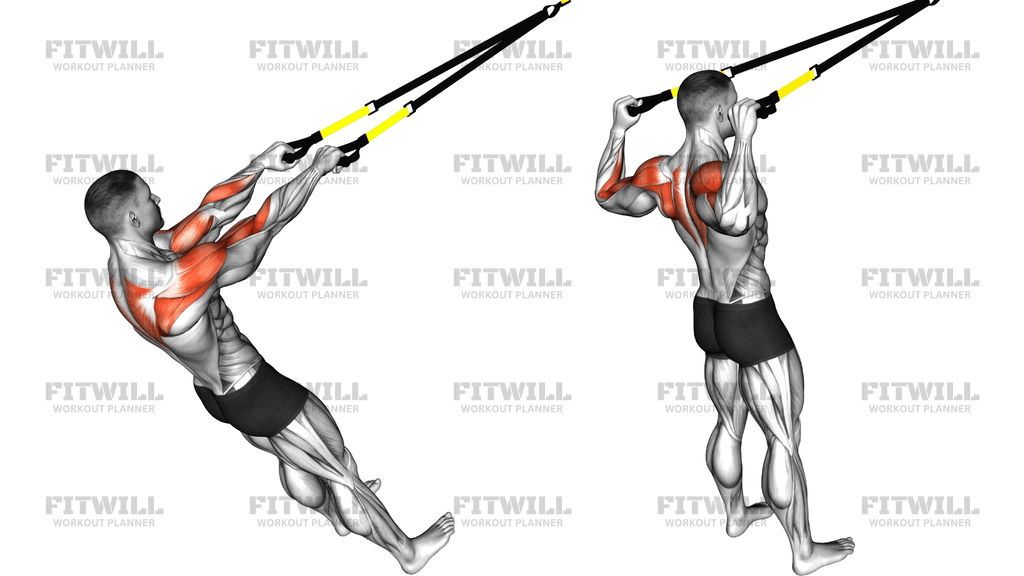
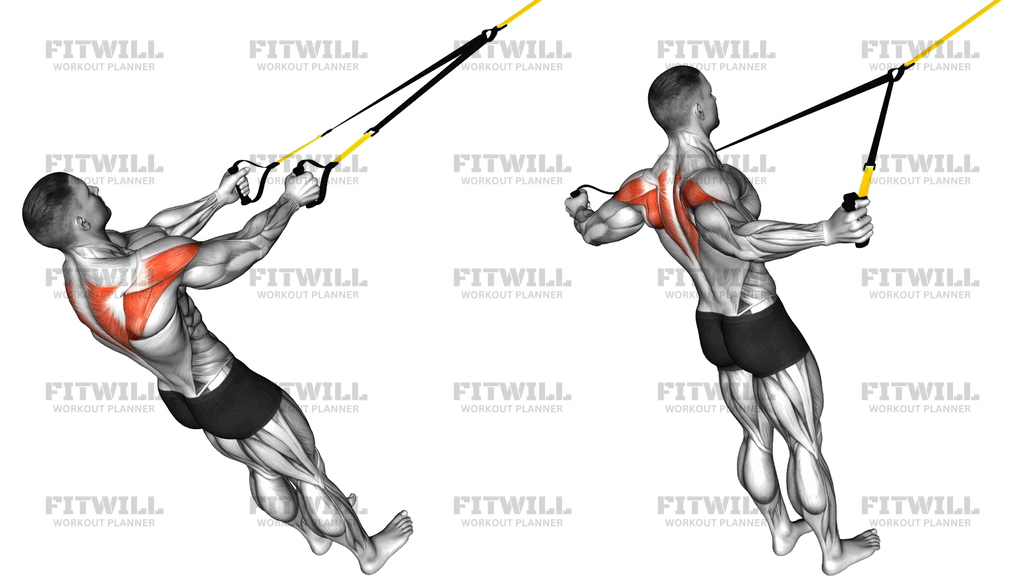
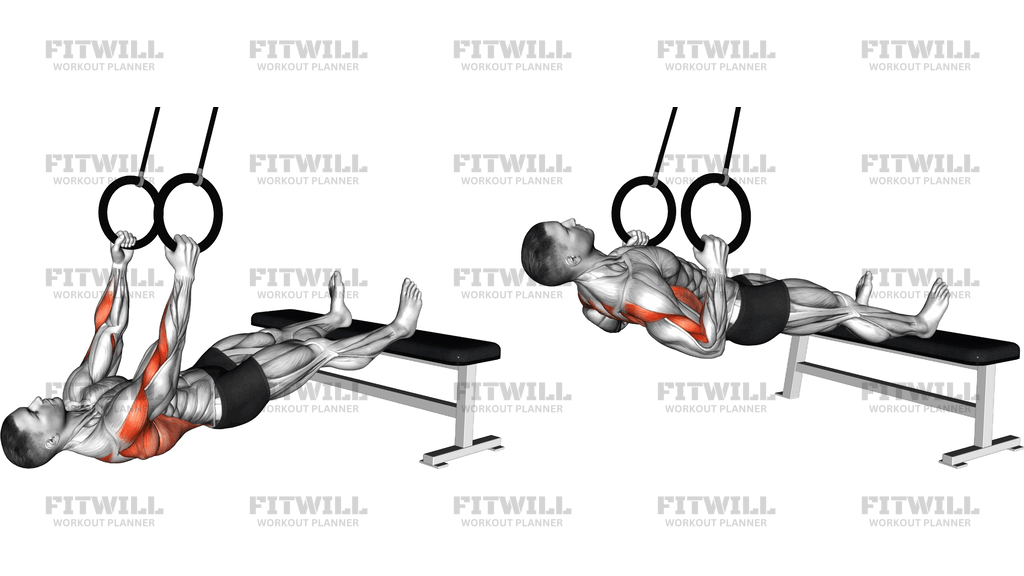
The Ring Neutral Grip Inverted Row is a horizontal pulling exercise performed on gymnastic rings or a suspension trainer, with your heels resting on a flat bench so your body forms a straight, elevated plank facing the ceiling. Unlike barbell or fixed-handle inverted rows, the rings move independently, which lets your wrists and elbows travel along a natural path while you pull your chest toward them. The neutral grip, with palms facing each other, tends to be comfortable for the shoulders and gives the biceps a strong pulling line.
This movement earns its place in almost any program. It builds the mid-back muscles, the lats, the rear shoulders, and the biceps, all while your core and glutes work to keep your torso rigid like a plank. Because you can adjust difficulty simply by moving your feet or changing your body angle rather than adding plates, it suits beginners learning their first pulling pattern as well as advanced lifters who want high-tension bodyweight volume.
The setup matters more than most people expect. Placing your heels on a flat bench removes friction from the floor and raises the difficulty, since you cannot use your legs to assist. It also raises your hips slightly, so you have to actively brace to keep your body from sagging at the hips or piking upward. Set the rings roughly hip height or slightly above, grab them with palms facing in, and walk your feet onto the bench until only your heels are supported and your body is horizontal.
To execute well, start each rep from fully straight arms and pull by driving your elbows down and back toward your sides, aiming your chest at the rings rather than yanking with your hands. Pause briefly at the top where your chest is close to or lightly touching the rings, then lower under control until your arms are extended again. Keep your neck neutral, your ribs down, and your heels pressing into the bench throughout.
Common use cases include home training with a suspension trainer, accessory back work after vertical pulling, and rehab-friendly upper back volume for lifters who find fixed-bar rows aggravating at the wrists or shoulders. The main safety points are simple: test the rings and bench for stability before loading the position, keep the movement slow enough that your hips never drop, and stop the set as soon as your lower back starts taking over from your arms and shoulders.
[ Workout Log & Planner ]
Put your next workout in Fitwill
Keep your plan and training log ready when you are.


Instructions
- Set a pair of gymnastic rings or suspension straps so the handles hang at roughly hip height, and place a flat bench a few feet beneath them.
- Sit facing the anchor point, take hold of a ring in each hand with a neutral grip so your palms face each other, then walk your feet forward and place your heels on the bench.
- Slide your body out until your arms are fully extended, your shoulders, hips, and knees form one straight line, and only your heels rest on the bench and your hands on the rings.
- Brace your core, squeeze your glutes, and press your heels lightly into the bench so your hips do not sag toward the floor.
- Initiate the pull by pulling your shoulder blades back and down, then drive your elbows down and out to the sides as your chest travels up toward the rings.
- Continue pulling until your chest is close to ring height and your hands are beside your lower ribs, keeping your wrists straight and your forearms roughly vertical.
- Pause for a beat at the top, then lower yourself slowly by extending your arms until you return to the straight-arm hang position with your body still level.
- Exhale as you pull up and inhale as you lower down, keeping the breathing rhythm steady rather than holding your breath.
- Complete your reps, then carefully step one foot off the bench and back to the floor before releasing the rings.
Tips & Tricks
- If your hips drop toward the floor mid-set, shorten the set or raise the rings slightly; a sagging pelvis means your core has checked out before your back is done.
- Do not let the rings drift wide or flare out at the top. Keep them stacked over your elbows so the mid-back, not just the arms, finishes the pull.
- Pull your chest to the rings, not your chin over them. Leading with the head turns the rep into a partial pull and strains the neck.
- Because the rings can rotate, keep a firm crush grip on them. Loose hands let the rings spin and make the whole body wobble.
- The easiest way to regress the exercise is to raise the rings so your body is more upright with the heels still on the bench; the hardest progression is lowering the rings toward parallel with the floor.
- If your wrists ache with a fixed-bar row, this neutral grip version usually solves it, but keep the rings from rotating inward as you pull.
- Control the lowering phase for two to three seconds. The rings amplify any rush or momentum, and a fast eccentric usually shows up as hips sagging on the next rep.
- Check that the bench cannot slide and the rings cannot slip before your first rep, since your full body weight rests on both once you are horizontal.
- If you stall a few inches from the top, your grip width may be too wide; bring the hands in so they are roughly under your shoulders.
Frequently Asked Questions
Which muscles does the Ring Neutral Grip Inverted Row work?
It primarily targets the mid-back, including the rhomboids and mid traps, along with the lats and rear shoulders. The biceps and forearms handle much of the pulling, while the core and glutes hold your body in a straight line.
Why use rings instead of a bar for inverted rows?
The rings move independently, so your wrists and elbows can find a natural path instead of being locked to a fixed bar. This makes the neutral grip easier on the shoulders and wrists for most people.
Why are my heels on a bench for this exercise?
Elevating your heels on a flat bench removes leg assistance from the floor and puts your whole body weight through the pull. It also raises the difficulty and demands more core tension to keep your torso level.
Is the Ring Neutral Grip Inverted Row suitable for beginners?
Yes, because difficulty scales with body angle. Beginners can raise the rings higher so the torso is more upright, then progress toward a horizontal body position as pulling strength improves.
How do I know if I am doing the Ring Neutral Grip Inverted Row correctly?
Your body should stay in a straight line from shoulders to heels, and your chest should come close to the rings with your elbows traveling down and back rather than flaring forward. If your hips sag or your chin juts up to finish the rep, reduce the range or make the angle easier.
What is the most common mistake with this exercise?
Turning it into a hip-driven pull, where the body bobs up and down from the pelvis instead of the arms pulling the chest to the rings. Bracing the core and pressing the heels into the bench fixes most of it.
What can I substitute if I do not have rings?
A bar in a power rack works with an underhand or overhand grip, though the wrist path is fixed. A suspension trainer is the closest match because it also allows the independent handle movement of the rings.
How does the neutral grip differ from a pronated grip on rings?
The neutral grip, palms facing each other, places the biceps in a strong pulling position and is usually the most shoulder-friendly option. A pronated grip shifts slightly more emphasis toward the upper back but can bother some wrists and shoulders.
Is it safe to do Ring Neutral Grip Inverted Rows alone?
Yes, as long as the rings are anchored to a secure point and the bench is stable and cannot slide. Test the setup with light pressure before putting your full body weight on it, and step off carefully rather than dropping out of the position.
How many sets and reps should I do?
Two to four sets of 6 to 12 controlled reps works well for strength and muscle. If you cannot manage 6 clean reps with heels on the bench, lower the difficulty by raising the rings until you can.