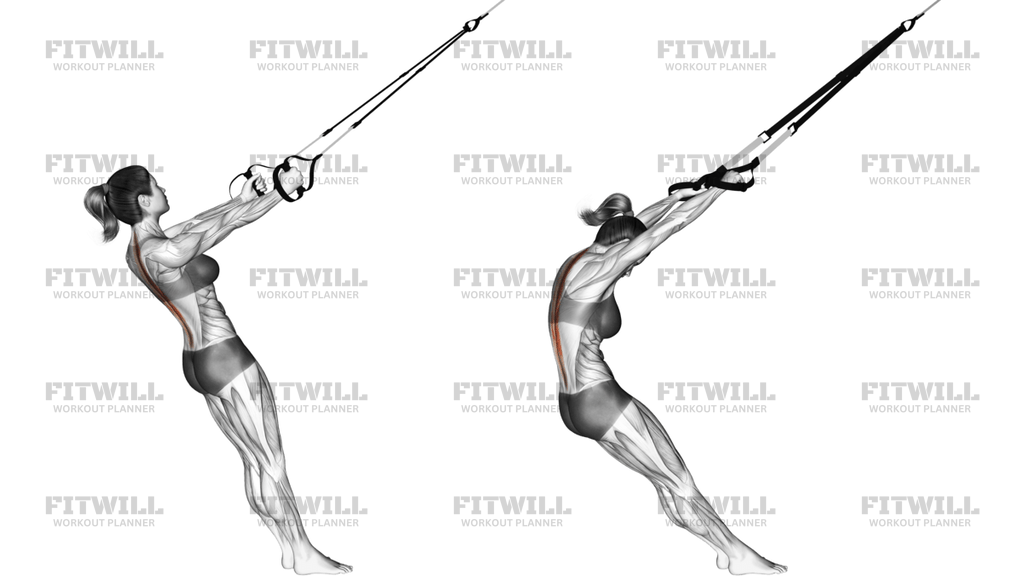
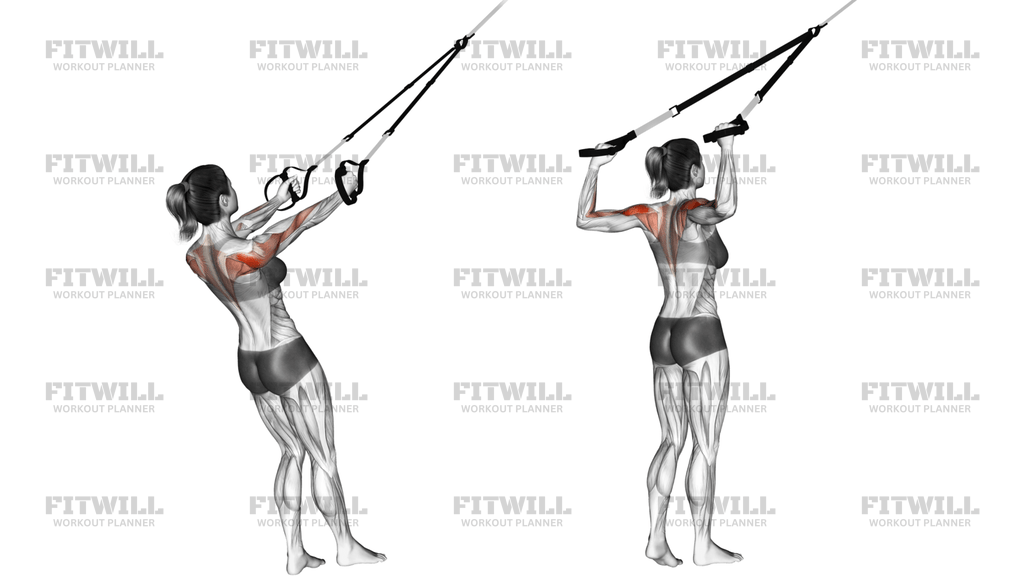
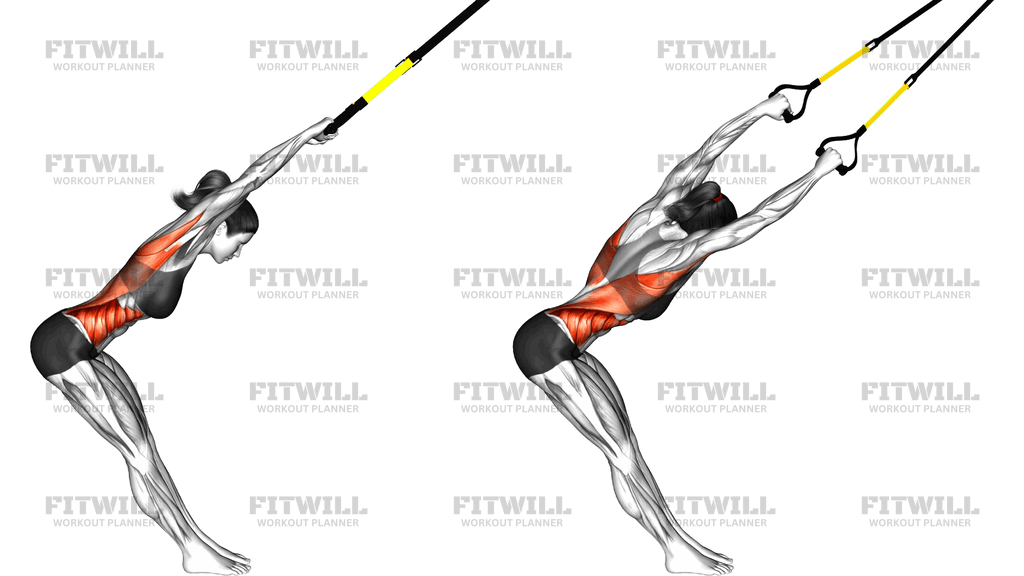
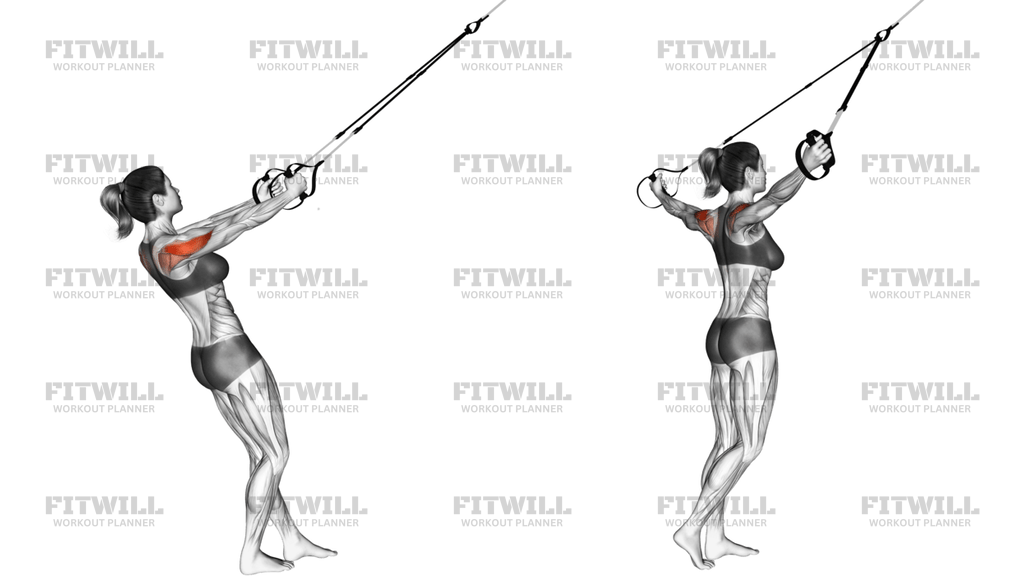
Ring Inverted Row Parallel To The Floor
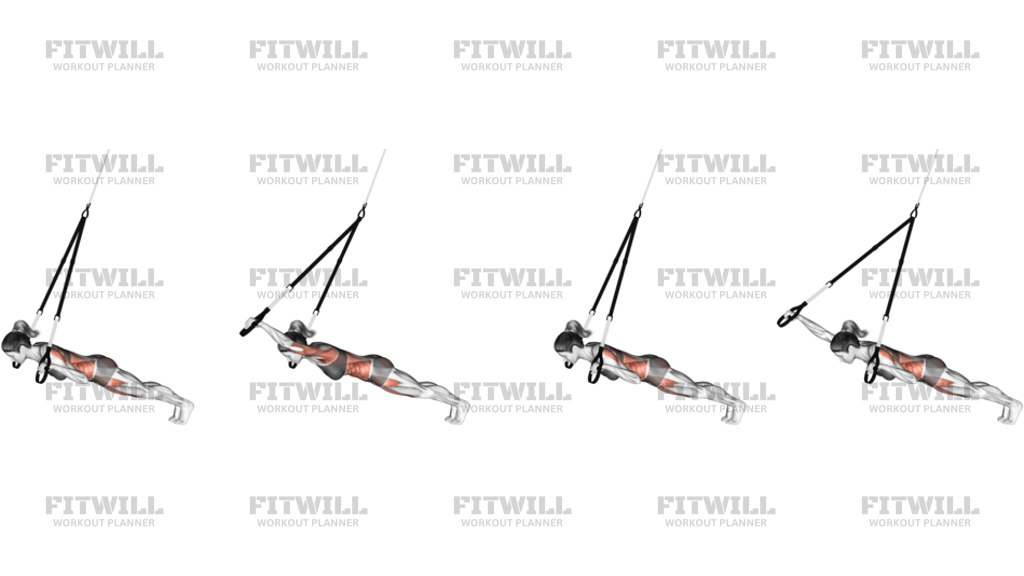
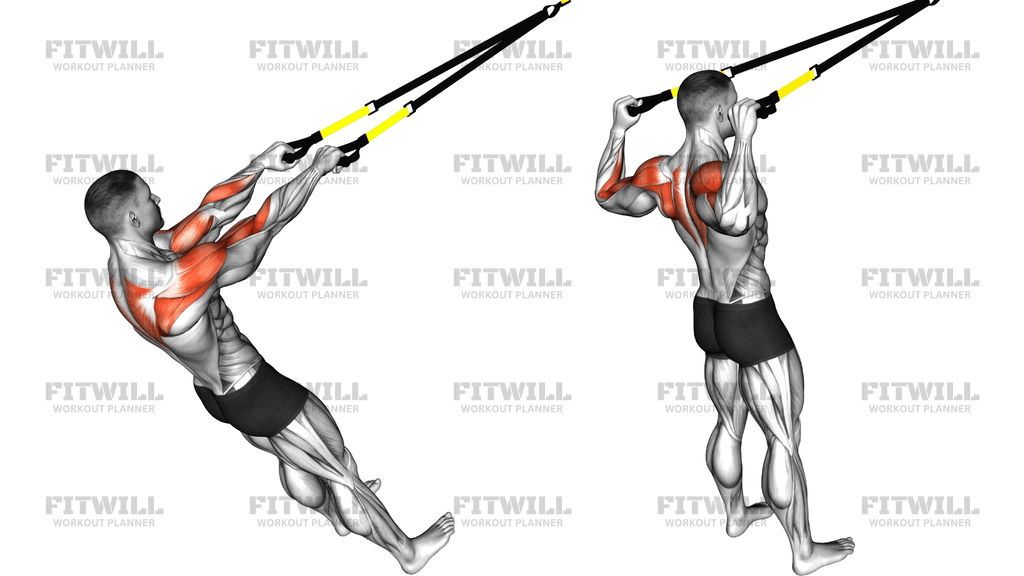
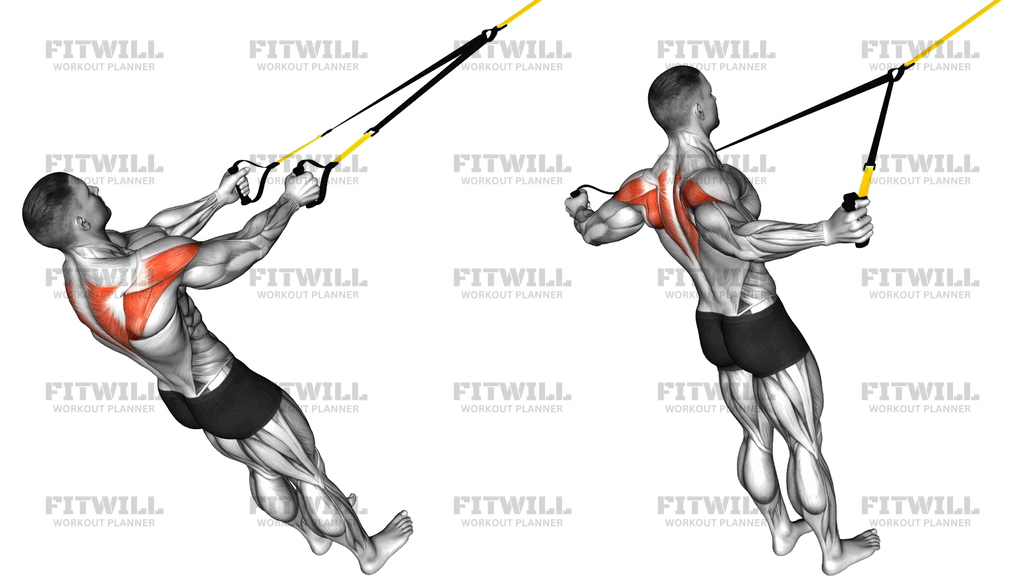
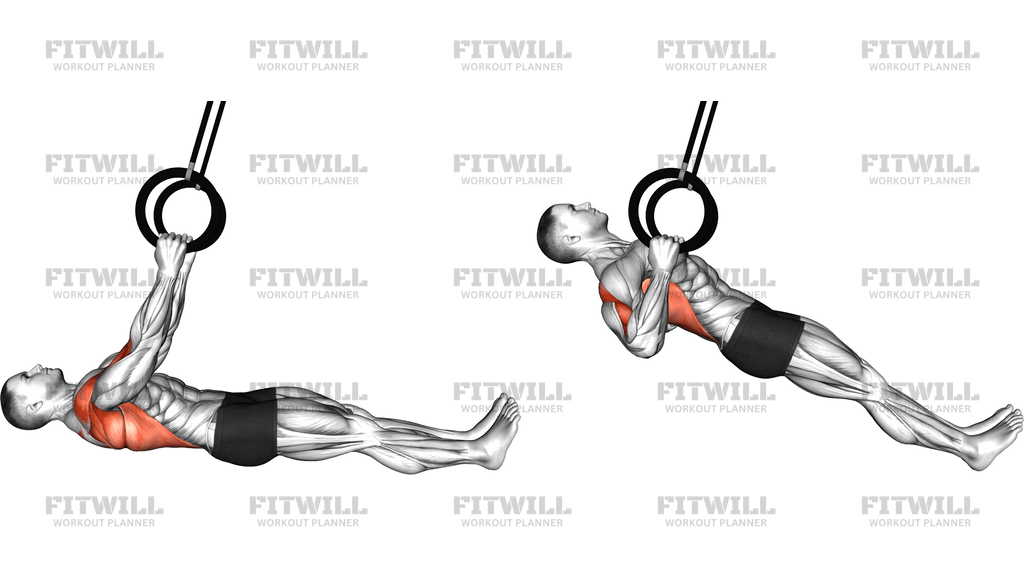
The Ring Inverted Row Parallel To The Floor is a bodyweight horizontal row performed on gymnastic rings with your body held in a straight line, face up, roughly parallel to the ground. You hang from the rings with straight arms, keep your heels planted, and pull your chest up to the rings while your entire torso travels as one rigid plank. Because the rings hang from straps, they move and rotate freely, which makes this version noticeably more demanding than a fixed-bar inverted row.
This movement is one of the best scalable pulling exercises available. Beginners can walk their feet forward and raise the rings to make it easier, while stronger trainees can drop the body closer to parallel or elevate the feet to increase the load. It fits well into calisthenics sessions, upper-body days, and warm-up blocks for barbell pulling, and it is a staple for anyone building toward ring work like front levers or muscle-ups.
The primary work comes from the upper back — the rhomboids and mid-traps retract the shoulder blades as you pull — supported by the lats, rear shoulders, and biceps. Because the rings are unstable, your rotator cuff and grip work overtime to control them, and your core, glutes, and legs stay locked in an isometric plank the whole time. That combination of pulling strength and full-body tension is exactly what makes this exercise carry over so well to other movements.
Setup matters more here than on a bar. The strap length determines your angle, so set both rings evenly and check that they sit level before you commit your weight to them. Your body position — heels down, hips extended, ribs stacked — determines whether the row targets your back or turns into a strain on your lower back. Take a few seconds to brace before the first rep rather than tightening up mid-set.
Execution is simple in principle: pull the rings toward your lower chest by driving your elbows back and squeezing your shoulder blades, pause briefly at the top with the rings at or near your ribcage, then lower yourself under control until your arms are fully extended again. The rings will want to drift apart or spin; keep your wrists neutral and pull them along the same path every rep. Exhale as you pull, inhale on the way down.
The most common errors are sagging hips, shrugging the shoulders up around the ears at the bottom, and cutting the range short so the rings never reach the chest. A brief hold at the top with the blades squeezed, plus a slow three-count on the way down, fixes most of these. If you cannot keep your hips in line, raise the rings or step your feet back — there is no prize for doing a sloppy version at a harder angle.
[ Workout Log & Planner ]
Put your next workout in Fitwill
Keep your plan and training log ready when you are.


Instructions
- Set both rings to equal strap lengths, roughly hip to chest height, and check that the buckles are secure and the rings hang level.
- Grip the rings with a neutral, palms-facing grip and walk your feet forward until your body forms a straight line with only your heels on the floor, adjusting strap length so your torso sits parallel to the ground.
- Squeeze your glutes and brace your abdominals so your hips and shoulders rise and fall together, and let your arms hang fully extended with shoulders pulled slightly down away from your ears.
- Exhale and pull by driving your elbows down and back toward your sides, keeping your wrists neutral and the rings close to your body.
- Continue pulling until the rings reach your lower chest or upper abdomen and your shoulder blades are fully squeezed together; hold that top position for a beat.
- Lower yourself by extending your arms slowly, resisting the descent over about two to three seconds until your elbows are completely straight.
- Reset your brace at the bottom, take a breath in, and begin the next pull before your hips have a chance to sag.
- Keep the rings from drifting outward or rotating by thinking about pulling them straight down along the line of your torso on every rep.
- After your final rep, release your grip one ring at a time or walk your feet back under the anchor point before letting go.
Tips & Tricks
- If your hips drop toward the floor at the bottom of each rep, raise the rings a notch or shorten the angle by walking your feet back — the plank position is the foundation, and the row is built on top of it.
- Shrugging your shoulders up at the hang position shifts work away from your mid-back; think 'long neck, shoulders down' before every pull.
- The rings will try to rotate inward or spin as you tire. A neutral wrist and a firm, even grip on both sides keeps the pull path consistent and protects your shoulders.
- Touch your lower chest to the rings at the top if you can — if the rings only reach your stomach, you are either too horizontal or shortening the range.
- Do not let your chin poke forward to 'finish' the rep. Your chest should come to the rings; your neck stays in line with your spine.
- Because the straps can slide or slip on smooth anchor points, test your setup with a partial pull before committing your full bodyweight.
- Elevating your feet on a bench turns this into a much harder decline version — only progress there once you can hold a rigid parallel position for a full set.
- Grip fatigue often ends sets before the back does. Chalk your hands or use a false grip variation sparingly if the rings keep slipping.
- Pair this with a pushing movement like ring push-ups in a superset; both share the plank-body requirement, so the tension cues reinforce each other.
Frequently Asked Questions
What muscles does the Ring Inverted Row Parallel To The Floor work?
The main movers are the rhomboids and mid-traps in your upper back, with strong support from the lats, rear shoulders, and biceps. Your core, glutes, and grip work isometrically to hold your body in the straight-line position.
How do I make the Ring Inverted Row easier as a beginner?
Raise the rings higher and walk your feet back so your body sits at a steeper angle, which reduces the percentage of your bodyweight you are pulling. You can also bend your knees and plant your feet flat to shorten the lever.
Why is the ring version harder than a barbell or Smith machine inverted row?
The rings hang from straps, so they can move sideways, forward, and rotate, forcing your stabilizers and grip to control the path while you pull. A fixed bar removes that instability, letting you focus purely on the rowing muscles.
Should my body be completely horizontal during this exercise?
Only if your strength allows it. 'Parallel to the floor' is the target position, but the correct rule is simpler: whatever angle you choose, keep your body rigid and straight from shoulders to heels. Sagging hips at a hard angle are worse than a clean row at an easier angle.
What grip should I use on the rings?
A neutral grip with palms facing each other is the standard for this movement and is usually the most shoulder-friendly option. The free rotation of the rings lets your wrists find a natural position as you pull, which many people find more comfortable than a fixed pronated bar.
My hips keep sagging and my lower back aches — what am I doing wrong?
That is a bracing problem, not a pulling problem. Squeeze your glutes, tuck your pelvis slightly, and re-tighten your abdominals before each rep, and raise the rings if you cannot hold the line. If the ache persists, stop and rebuild with a steeper body angle.
Can I substitute the Ring Inverted Row if I do not have rings?
Yes — a bar in a rack at hip height, a sturdy table edge, or a suspension trainer all work. The bar versions are more stable and slightly easier, so they make a good stepping stone before progressing to rings.
How many reps and sets should I do?
For strength and muscle, 3 to 4 sets of 6 to 12 controlled reps works well; adjust the body angle so the last two reps are challenging but clean. For endurance or warm-up purposes, higher reps at an easier angle are fine.
Is it safe to do this exercise every day?
It is a moderate-load pulling movement, so daily practice is possible at easy angles and submaximal effort. If you are training near-maximal horizontal positions or adding pauses, give your upper back and grip 48 hours between hard sessions.