Wall Side Lunge Torso Rotation
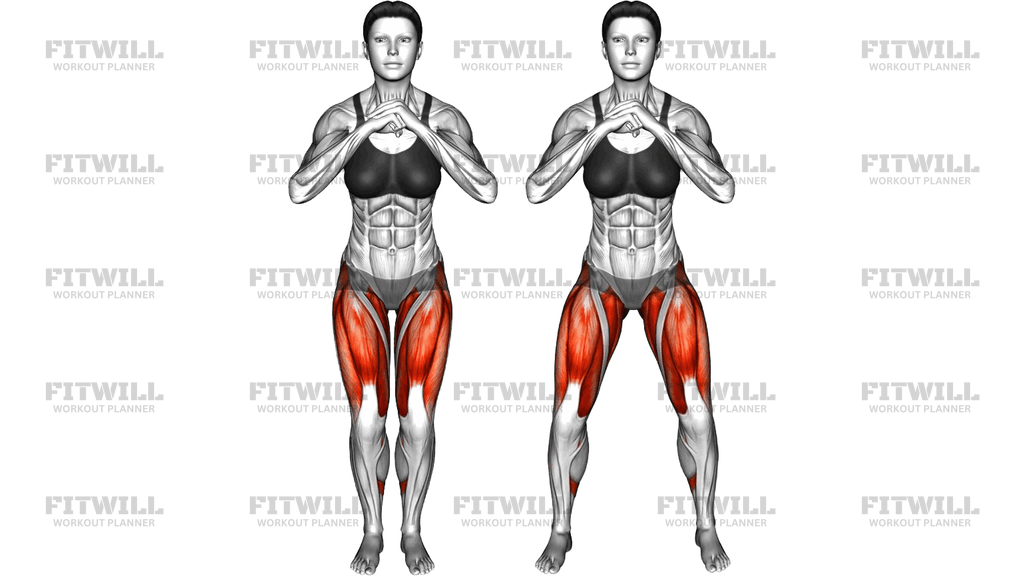
The Wall Side Lunge Torso Rotation is a body weight movement that combines a wide-stance side lunge with a rotation of the upper body toward the working leg, performed with your back close to a wall for reference and support. From a standing position with the feet planted well past shoulder width, you shift your hips sideways over one leg, bend that knee while the opposite leg stays straight, and then turn your torso so your chest and opposite hand reach across the bent thigh. The wall behind you acts as a spatial cue that keeps your hips from drifting backward and gives you something to lightly touch for balance if you wobble.
This movement earns its keep in two areas at once. The side lunge half loads the glutes, quads, and inner thigh muscles of the bent leg while the straight leg holds a long adductor and hamstring stretch. The torso rotation then adds an oblique and mid-back rotation demand on top of a lower body that is already working, so the trunk has to rotate while the hips stay squared toward the wall. That combination of hip mobility, lateral leg strength, and controlled spinal rotation is hard to get from a plain lunge or a plain twist done separately.
People who benefit most from this exercise are those whose lateral hip and inner thigh mobility limits their squat or lunge depth, desk workers with stiff hips and a rotation-deprived upper body, and anyone warming up before sports that involve cutting, swinging, or throwing. Because the load is only your body weight and the wall provides a balance reference, it suits beginners learning the side lunge pattern as well as experienced lifters using it as a dynamic warm-up or mobility drill on lower body days.
Setup matters more here than it looks. Standing roughly a foot in front of the wall with your back near it, feet wide and toes turned out slightly, gives you enough room to sink the lunge without your backside colliding with the wall. The wall's role is feedback, not a crutch: you should be able to hover a fingertip against it, not lean into it. If you set up too close, you will push your hips into the wall and lose the upright torso the rotation needs; too far away and you lose the balance reference entirely.
To execute it well, shift deliberately sideways rather than dropping straight down. Push your hips back and to one side until the working knee tracks over or slightly inside the toes, keep the opposite leg long with the foot flat, and only then rotate the ribcage toward the bent leg, reaching the far hand across the thigh or toward the floor beside it. The rotation should come from the upper back and waist, not from yanking the shoulders or collapsing the lower back. Press through the whole foot of the bent leg to return to the tall, wide stance, then repeat on the other side.
Keep the movement slow enough that you could stop it at any point. A common fault is letting the bent knee cave inward or the straight leg's heel lift off the floor; both usually mean the stance is too wide or the descent is too fast. Start with shallow depth and modest rotation and expand both as your hips and trunk allow, and treat any pinching at the front of the hip or knee as a signal to shorten the range rather than push through it.
[ Workout Log & Planner ]
Put your next workout in Fitwill
Keep your plan and training log ready when you are.


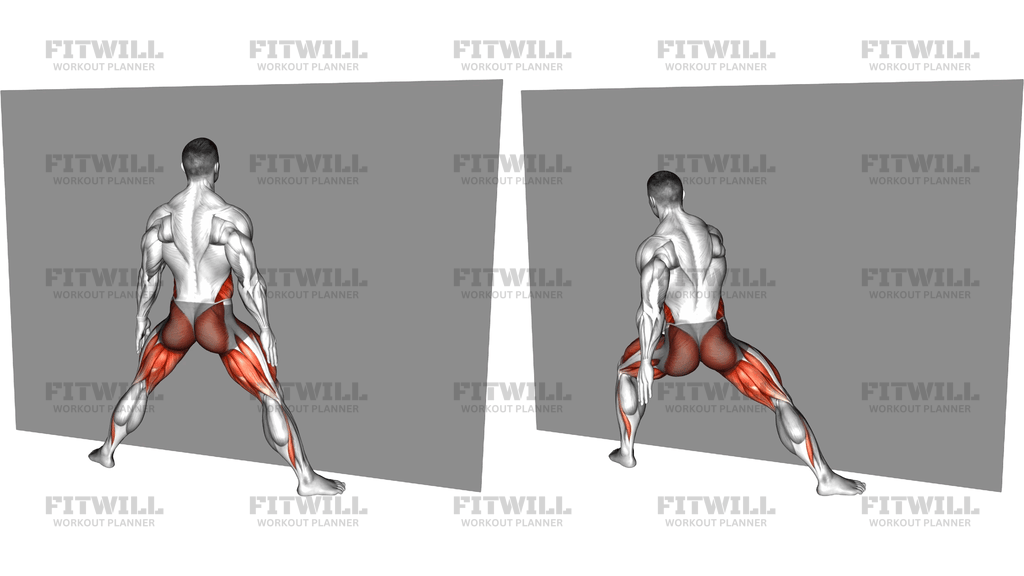
Instructions
- Stand about a foot in front of a clear section of wall with your back facing it, feet spread roughly twice shoulder width apart and toes angled slightly outward.
- Set your arms hanging relaxed at your sides or lightly touch the wall with your fingertips for balance, and take a breath to brace your trunk.
- Shift your hips back and to the right, bending the right knee so it tracks over your right foot while the left leg stays straight with the left foot flat on the floor.
- Lower until the right thigh is near parallel to the floor or as deep as your hips comfortably allow, keeping your back close to the wall without pressing into it.
- From the bottom of the lunge, rotate your torso to the right, turning your chest toward the bent right thigh and reaching your left hand across the thigh or toward the floor beside your right foot.
- Hold the rotated position for a beat, feeling the stretch along the straight left inner thigh and the rotation through your waist.
- Untwist first, bringing the torso square again, then press through the right foot to rise back to the wide standing stance.
- Breathe in as you shift down into the lunge, exhale as you rotate, and breathe normally as you return.
- Repeat the same number of repetitions on the left side, rotating the chest toward the bent left thigh and reaching the right hand across.
- Reset your stance between sets so both feet stay flat and the wall stays behind you rather than becoming something you lean on.
Tips & Tricks
- If your bent knee dives toward the middle, narrow the stance an inch or two and deliberately steer the knee over the little toe side of the foot as you sink.
- When the straight leg's heel lifts, that foot is too far out or too far back relative to the other; angle the toes out more and shorten the descent until the whole foot stays grounded.
- Do the rotation after you reach the bottom of the lunge, not during the descent. Rotating on the way down makes the knee and hip track unpredictably and steals the stretch from the straight leg.
- Keep your back within a few inches of the wall but resist the urge to rest against it. If you feel weight on the wall, pull the hips slightly forward and re-brace.
- The reach across the thigh should lengthen the waist on the straight-leg side. If your shoulders only shrug toward the ear, think about rotating from the ribs instead of lifting the arm higher.
- Aim the rotation so the far hand ends up near the inside of the bent foot rather than past it. Reaching beyond your control range usually twists the lower back instead of the mid-back.
- Slow the transition between sides. Most people rush the return and lose the lunge position entirely; a two-count descent and a two-count return keeps the glutes and adductors doing the work.
- If the wall-side setup feels unstable at first, start with half depth and no reach, just the lunge, and add the torso rotation once your feet feel planted.
- Warm the hips with a few shallow repetitions before going deep. Cold inner thighs often pinch or grab in the straight-leg position during the first few reps.
Frequently Asked Questions
What muscles does the Wall Side Lunge Torso Rotation work?
The bent leg's glutes and quads do most of the lower body work, while the adductors of the straight leg work to control the wide stance and get a lengthening load. The obliques and deep trunk muscles handle the torso rotation toward the bent thigh.
Why is this version done with the back near a wall?
The wall gives you a balance reference and stops the hips from traveling backward, which forces you to move sideways in the frontal plane the way a true side lunge should. You should touch it lightly at most, never lean on it.
Is the Wall Side Lunge Torso Rotation suitable for beginners?
Yes, because the load is body weight and the wall provides stability feedback. Beginners should use a shorter stance, shallower depth, and skip the hand reach until the lunge itself feels steady.
Should the rotation happen on the way down or at the bottom?
At the bottom. Sink into the side lunge first with the chest facing the wall, then rotate toward the bent leg. Rotating during the descent makes the knee and hip path sloppy and reduces the stretch on the straight leg.
How deep should the side lunge go?
Deep enough that the bent thigh approaches parallel to the floor while the knee still tracks over the foot and the straight leg's heel stays down. If either condition fails, the stance is too wide or you are going deeper than your hips currently allow.
My inner thigh on the straight leg cramps or pinches. What should I change?
Reduce the width of your stance and the depth of the lunge, and turn the straight leg's toes out slightly more. The adductors often need a few sessions of shorter-range work before they tolerate the full position comfortably.
Can I substitute this if I don't have wall space?
You can perform the same side lunge with rotation free-standing, but expect more balance demand and a tendency to push the hips backward. A sturdy chair or rack upright behind you works as a similar light-touch reference.
Is this a strength exercise, a stretch, or a warm-up?
It sits between all three. Done slowly with holds at the bottom it behaves as a loaded mobility drill, and done in continuous reps it builds lateral lunge strength in the glutes and adductors while rotating the trunk under control.
How many repetitions should I do per side?
Five to eight controlled repetitions per side works well, either as a pre-workout warm-up or as a standalone set. Prioritize keeping the knee tracking, the heel down, and the rotation smooth over adding more reps.
Is it safe for my knees and lower back?
It is generally low risk when the bent knee tracks over the foot and the rotation comes from the ribs and mid-back rather than cranking the lumbar spine. Stop short of any pinching at the knee or hip and shorten the range before pushing through discomfort.