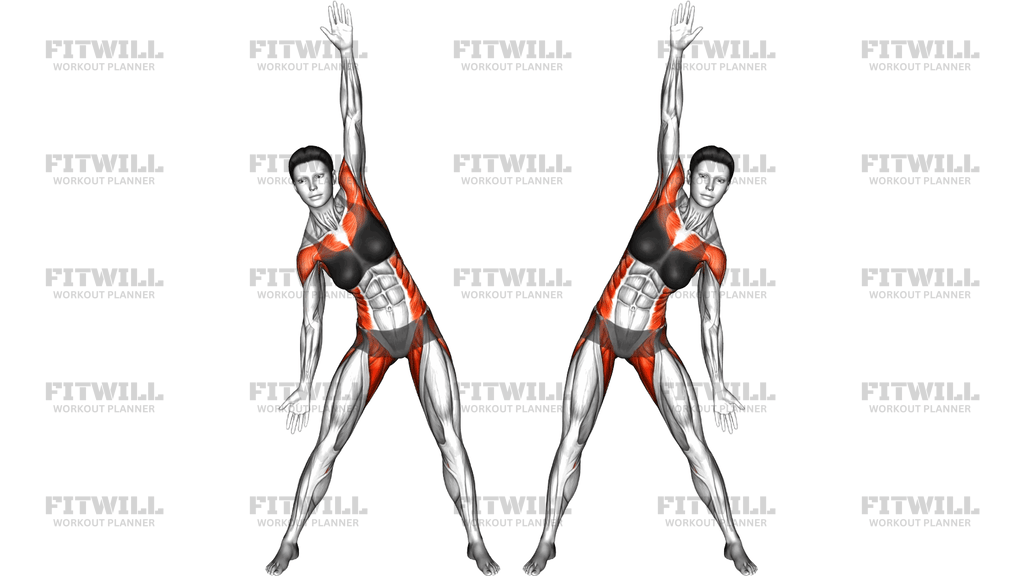
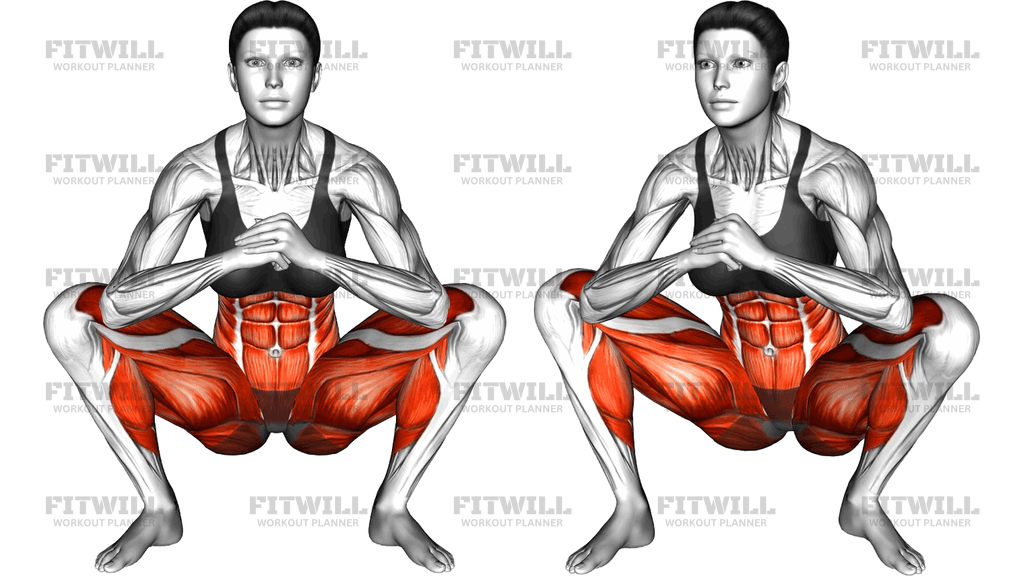
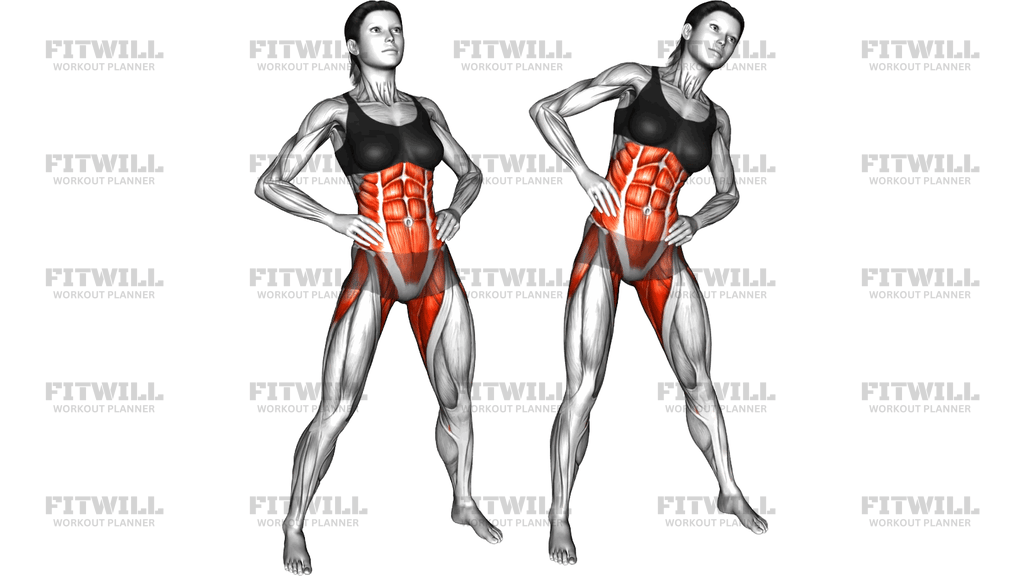
Adductors Stretch Sagittal Plane
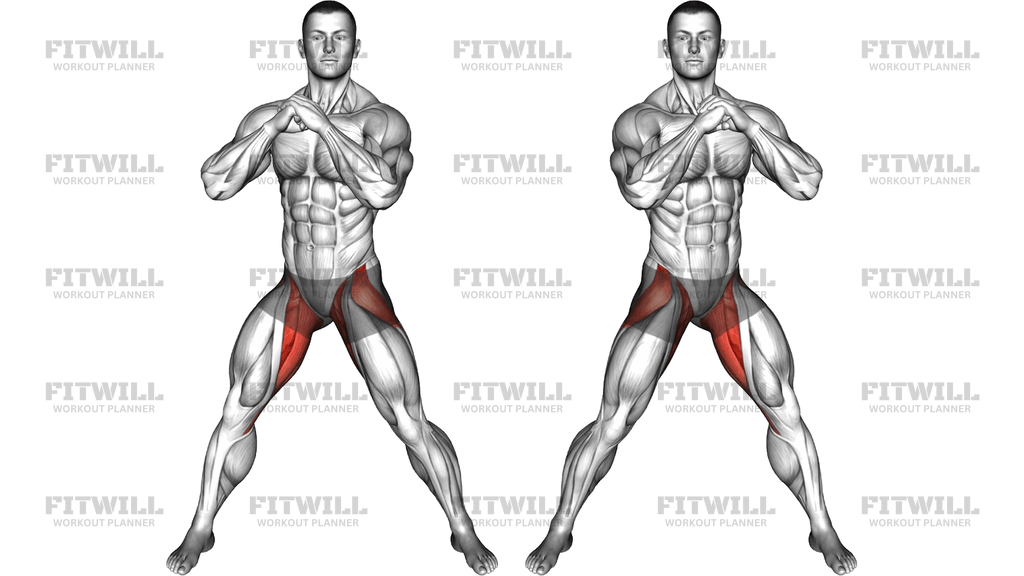
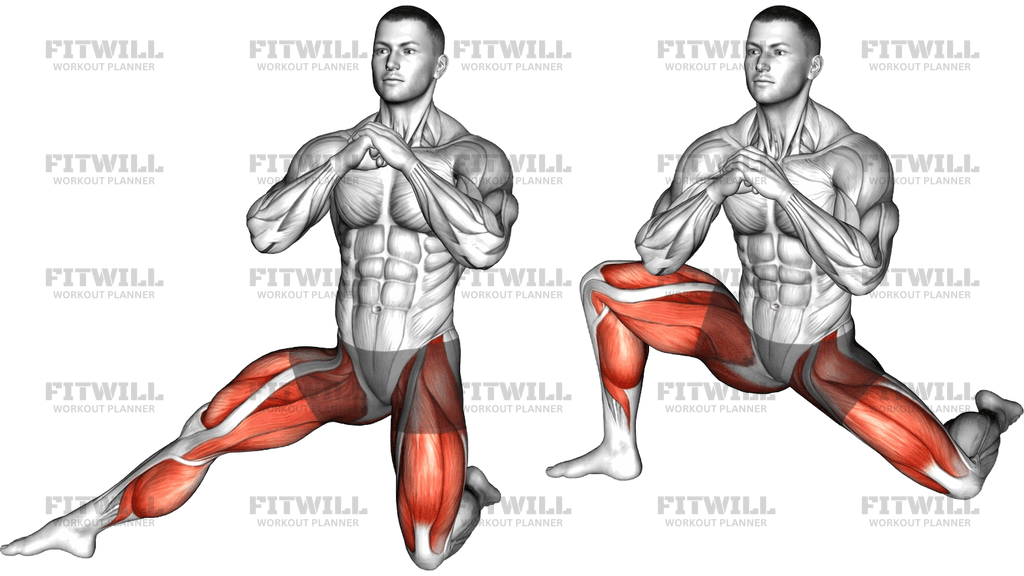
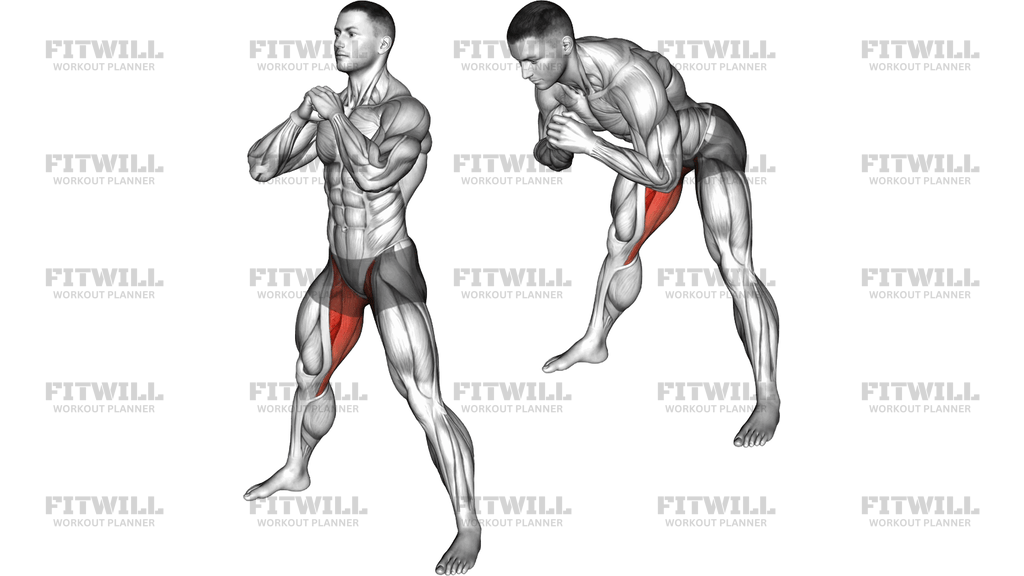
The Adductors Stretch Sagittal Plane is a standing, body-weight stretch that lengthens the inner thigh muscles by moving the hips backward and forward over a wide, planted stance. Instead of dropping into a side split or sliding the legs apart on the floor, you keep both feet fixed and drive the hips straight back while the torso hinges forward, letting the adductors on the loaded leg lengthen under control. The hands stay clasped in front of the chest, which helps you counterbalance as the hips travel behind the heels.
This movement suits anyone whose inner thighs feel tight after squatting, lunging, sprinting, or kicking. It is also a practical warm-up drill because the sagittal plane hinge keeps the knees and ankles in a familiar forward-tracking position, so you can ease into the stretch without forcing the hips into an aggressive lateral split. Lifters who struggle to reach depth in wide-stance squats, and field-sport athletes who decelerate and cut frequently, often notice that this position gives them a usable stretch without much setup.
To perform it well, stand with the feet roughly one and a half to two shoulder-widths apart and the toes turned out only slightly. Clasp your hands in front of your sternum, brace the trunk lightly, and push the hips straight back as the chest lowers toward the thigh of your bent leg. One knee bends and tracks over its foot while the other leg extends behind, heel pressing toward the floor. The stretch should gather along the inner thigh of the working leg, not in the knee joint or the lower back.
The shape of the position matters more than how deep you go. If the torso collapses or the lower back rounds, the stretch leaks into the spine instead of the hips. Keep the chest long, the ribcage stacked over the pelvis, and the front foot fully planted. Small shifts of the hips backward and forward change the intensity noticeably, so make adjustments in centimeters rather than big jumps.
Because no equipment is needed and the range is adjustable in real time, this stretch works equally well as a warm-up primer, an inter-set reset between lower-body exercises, or a short cool-down hold. Most people hold the end position for twenty to forty seconds per side, breathing steadily, then switch sides by simply loading the opposite leg. Stop short of sharp pain, pins-and-needles sensations, or any feeling of pulling at the groin attachment near the pelvis.
[ Workout Log & Planner ]
Put your next workout in Fitwill
Keep your plan and training log ready when you are.


Instructions
- Stand with your feet about one and a half to two shoulder-widths apart, toes pointing forward or turned out only slightly, and let your weight settle through both feet.
- Clasp your hands together in front of your chest with your elbows tucked, so your arms act as a light counterbalance when the hips travel back.
- Brace your trunk lightly and set your spine in a tall, neutral position before any movement begins.
- Push your hips straight back and let your torso hinge forward over one leg, bending that knee so it tracks over or slightly inside the toes of the front foot.
- Let the opposite leg extend behind you with the knee soft, and press that heel toward the floor to keep the inner thigh of the working leg under tension.
- Settle into the end position where you feel a firm but tolerable stretch along the inner thigh of the loaded leg, and pause there for twenty to forty seconds.
- Breathe slowly through the hold, exhaling as you allow the hips to sink a few centimeters deeper on each breath if the stretch feels comfortable.
- Return to standing by driving the floor away through the bent leg and lifting the chest, keeping the spine neutral on the way up.
- Reset your stance if the feet have drifted, then repeat the hinge toward the opposite side to stretch the other leg's adductors.
Tips & Tricks
- A common mistake is rounding the lower back to reach deeper. If your chest starts to collapse toward the thigh, reduce the hinge angle and keep the spine long so the stretch stays at the inner thigh.
- Watch the front knee: if it dives far inside the big toe, widen the stance slightly or turn the toes out a touch more so the knee has a stable track.
- Keep the trailing heel actively pressing toward the floor. Letting it float up steals tension from the adductors and dumps the stretch into the ankle.
- Shift the hips back before you bend the knee. Bending the knee first tends to load the quad and knee joint instead of lengthening the inner thigh.
- Clasp the hands at chest height and use them as a counterweight rather than reaching them forward, which often drags the shoulders and spine out of position.
- Adjust depth in small increments. Because both feet stay planted, moving the hips back two or three centimeters can noticeably change the stretch intensity.
- If the groin attachment near the pelvis feels sharp or pinpointed, come out of the position, narrow the stance a little, and rebuild the range gradually across sessions.
- Warm the hips first with easy body-weight squats or a short walk. Stretching a cold, stiff inner thigh from a standing hinge is less comfortable and less productive.
Frequently Asked Questions
Which muscles does the Adductors Stretch Sagittal Plane target?
It primarily lengthens the adductors of the inner thigh, especially the adductor longus and adductor magnus. The glutes and hamstrings of the loaded leg also work isometrically to control the hinge.
How is this different from a side split or lateral adductor stretch?
Here the hips travel backward and forward in the sagittal plane while both feet stay planted, rather than the legs sliding apart sideways. This lets you load one leg progressively and keeps the knees in a forward-tracking position.
Can beginners do the Adductors Stretch Sagittal Plane?
Yes, and the stance width makes it very scalable. Beginners should start with a narrower stance and a shallow hinge, only deepening as the inner thigh tolerates the position comfortably.
Should my front knee bend fully in this stretch?
The front knee only bends enough to let the hips travel back and the torso hinge forward. If the knee bends deeply and the thigh muscles take over, straighten it slightly until the tension returns to the inner thigh.
Why do I feel this more in my lower back than my inner thighs?
That usually means the spine is rounding as you hinge forward. Reset with a taller chest, reduce the depth, and focus on pushing the hips behind the heels instead of dropping the head and shoulders.
How long should I hold the Adductors Stretch Sagittal Plane?
Twenty to forty seconds per side works well for most people. In a cool-down, longer holds of up to a minute are reasonable as long as the stretch stays comfortable.
What can I use as a substitute if standing is difficult?
A seated butterfly stretch or a kneeling frog stretch trains the same inner-thigh tissues from the floor. The standing version simply adds a balance and hip-hinge component.
Is a pulling sensation near the groin dangerous?
A broad, mild tension along the inner thigh is normal, but a sharp or pinpoint pull near the groin attachment is a warning sign. Ease out of the range immediately and use a shallower angle in future sessions.
Should I do this stretch before or after training?
Short, easy holds work well in a warm-up before squats, lunges, or field sessions, while longer holds fit better after training. Very long, aggressive holds immediately before heavy lifting can feel disruptive, so keep pre-training holds brief.