Wide Child Prasarita Balasana Yoga Pose
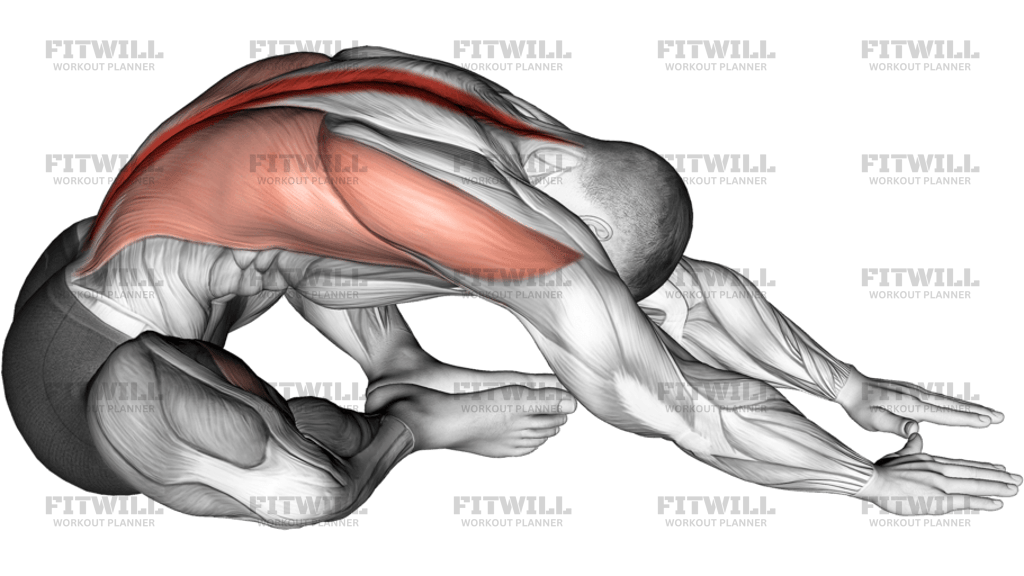
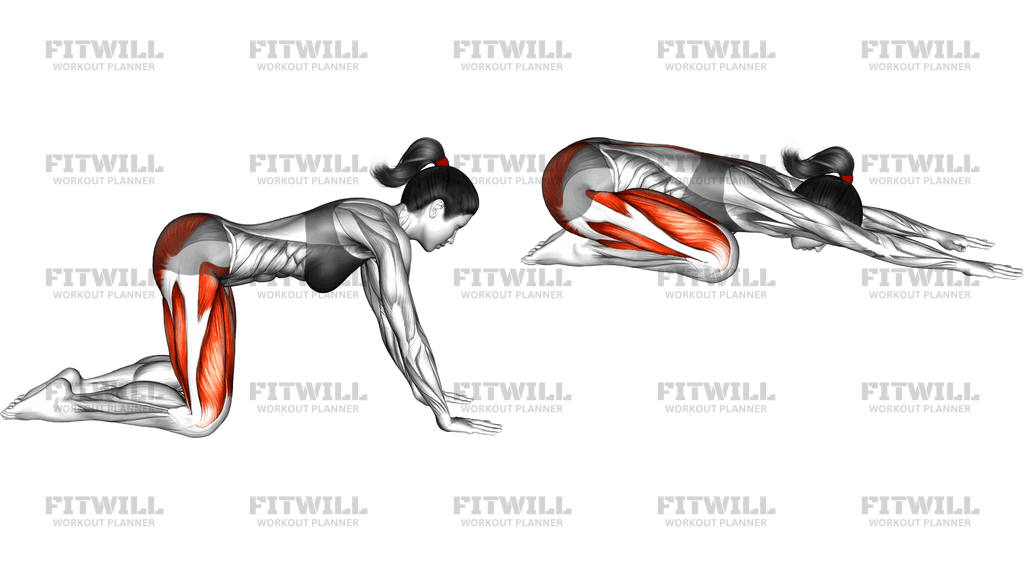
Wide Child Prasarita Balasana Yoga Pose is a resting yoga posture that takes the traditional child's pose and widens the knees well beyond hip distance. From a kneeling position, you sink your hips back toward your heels while letting your torso settle between your thighs and your arms reach long along the floor in front of you. The result is a deep, passive stretch through the inner thighs, hip rotators, and lower back, with a secondary lengthening sensation across the lats and shoulders from the extended arms.
This pose is especially useful for anyone who spends long hours sitting, since tight hip adductors and a compressed lower back are two of the most common complaints from desk work. It is also a favorite among runners, cyclists, and lifters who accumulate tension in the groin and glutes from repetitive training. Because the floor supports your entire body weight, you can hold the position for a minute or more without fatigue, making it a natural cool-down movement or a quiet reset between harder poses.
The wide knee position is what separates this from a standard child's pose. Spreading the knees tilts the pelvis forward and opens the adductor line on the inside of each thigh, while the torso dropping low rounds the lumbar spine gently and decompresses the lower back. Pressing the palms forward and resting the forehead down adds a calming effect that many people use to slow their breathing at the end of a session.
Setup matters more than it looks. If your knees are too close together, the pose becomes mostly a lower back fold and you lose the inner thigh stretch. If they are too wide for your current flexibility, your hips cannot travel back and the pose turns into a strain. Start with knees roughly mat-width apart or slightly wider, and adjust from there. A folded blanket under the hips or between the calves and hamstrings can make long holds comfortable if your knees or ankles complain.
To execute it well, move into the pose slowly and let gravity do the work rather than forcing your chest toward the floor. Keep the big toes touching or close together, let the hips drift back as far as they comfortably go, and walk the hands forward until the arms are fully extended with the elbows off the ground. Breathe into the back of your ribcage and let each exhale soften the hips a little closer toward the heels.
Expect to feel the pose most strongly along the inner thighs and across the sacrum. Mild, even stretching sensations are the goal; sharp pulling in the groin, pinching in the knees, or numbness in the legs are signals to widen or narrow the stance, add padding, or come out and shake the legs before resetting.
[ Workout Log & Planner ]
Put your next workout in Fitwill
Keep your plan and training log ready when you are.


Instructions
- Kneel on an exercise mat with your knees wide apart, roughly mat-width or wider, and bring your big toes toward each other behind you.
- Sit your hips back toward your heels, keeping the knees wide so your torso has space to drop between your thighs.
- Hinge forward from the hips and walk your palms forward along the mat until your arms are fully extended overhead, hands about shoulder-width apart.
- Release your chest toward the floor and let your forehead rest on the mat or a folded blanket, keeping the back of your neck long.
- Relax your shoulders away from your ears and let the weight of your hips sink backward, feeling the stretch along the inner thighs and lower back.
- Breathe slowly through your nose, directing each inhale into the back of your ribcage and letting each exhale soften the hips closer to the heels.
- Hold the position for 30 seconds to several minutes, keeping the arms active by pressing the fingertips lightly into the mat.
- To come out, walk your hands back under your shoulders, press into the palms, and lift your torso upright between your knees.
- Bring your knees together and sit back on your heels for a few breaths, gently moving your ankles or shaking out your legs before the next pose.
Tips & Tricks
- If your forehead does not reach the floor, stack a fist, a yoga block, or a folded blanket under it rather than letting your head hang unsupported.
- A sharp pinch on the inside of the knee usually means the stance is too wide; bring the knees in a few inches and re-check that your hips can still move backward.
- Keep your big toes touching so the tops of the feet stay grounded, since letting the feet drift apart reduces the internal rotation the pose is trying to create.
- Do not force your chest down with your arms; the stretch should come from the hips relaxing, not from pressing your shoulders into the mat.
- If sitting back toward the heels is uncomfortable, tuck a rolled blanket or towel in the crease where your calves meet your hamstrings.
- Let your lower back round naturally in this pose; trying to keep a flat spine defeats the gentle lumbar release that makes it useful after heavy lifting.
- Spread your fingers and root through the fingertips if you feel pressure in your wrists from the extended-arm position.
- Check that both hips are drifting back evenly; favoring one side is a common habit and leaves one inner thigh doing most of the stretching.
- If numbness or tingling develops in your legs during long holds, come out slowly, stretch your legs, and shorten the next hold rather than pushing through it.
Frequently Asked Questions
Which muscles does the Wide Child Prasarita Balasana Yoga Pose stretch?
It primarily targets the inner thighs and hip adductors, along with the hip rotators and glutes. The wide, low torso position also lengthens the lower back, and the extended arms add a stretch through the lats and shoulders.
How is the Wide Child Prasarita Balasana Yoga Pose different from a regular child's pose?
In the wide version the knees are spread much farther apart so the torso sinks between the thighs. That widens the pelvis and shifts the emphasis from the lower back alone to a deep inner thigh and hip stretch.
Is the Wide Child Prasarita Balasana Yoga Pose suitable for beginners?
Yes, it is one of the more accessible hip openers because the floor supports your full body weight. Beginners should start with a more moderate knee width and use a block or blanket under the forehead and hips for comfort.
How long should I hold the Wide Child Prasarita Balasana Yoga Pose?
Thirty seconds is enough for a brief release, but one to three minutes of slow breathing gives the adductors time to relax into the stretch. In a restorative or cool-down context, longer holds of several minutes are common.
Why do my hips stay high in the Wide Child Prasarita Balasana Yoga Pose?
Tight inner thighs or quadriceps often prevent the hips from traveling back toward the heels. Narrow the knee position slightly, place a cushion under the hips, and give the pose more time at this depth before trying to widen further.
What should I do if my knees hurt in this pose?
Reduce the width of the stance, pad directly under the knees with a folded blanket, and make sure the tops of the feet are flat on the mat rather than twisted. Persistent knee discomfort is a reason to choose a different hip opener such as a reclined butterfly stretch.
When is the best time to use the Wide Child Prasarita Balasana Yoga Pose?
It works well as a cool-down after leg training or running, as a counter-pose after backbends, and as a calming hold at the end of a yoga session. Some people also use it briefly between sets of squats or deadlifts to ease the lower back.
Can I practice the Wide Child Prasarita Balasana Yoga Pose during pregnancy?
Many practitioners continue a modified version with a narrower or fully supported stance, but it is best to confirm with a qualified prenatal instructor or healthcare provider first. Raising the hips onto a bolster so the belly has space is a common adaptation.
What equipment do I need for the Wide Child Prasarita Balasana Yoga Pose?
An exercise mat is enough, since the pose only requires a soft, non-slip surface. A folded blanket, cushion, or yoga block under the forehead or hips improves comfort during longer holds.
How often can I practice the Wide Child Prasarita Balasana Yoga Pose?
Because it is a passive, low-load stretch, it can be done daily, even alongside more demanding training. Just keep each hold comfortable and avoid chasing maximum range on days when the hips feel sore from heavy lifting.