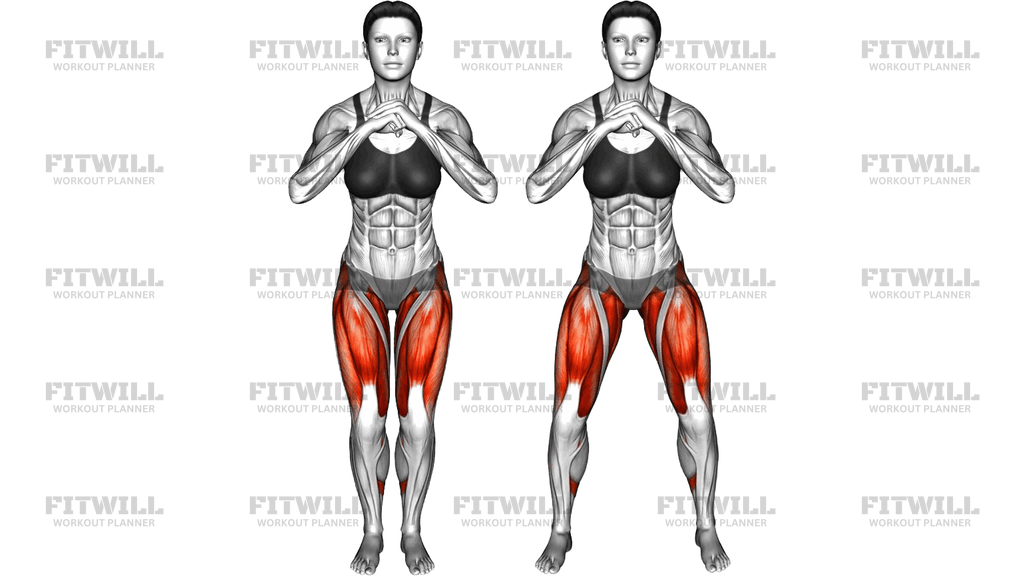
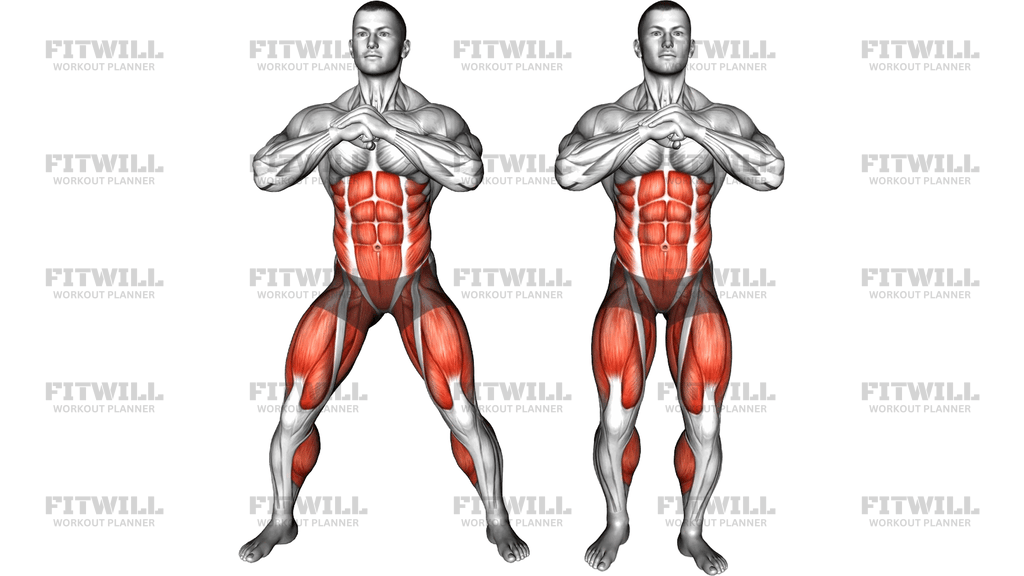
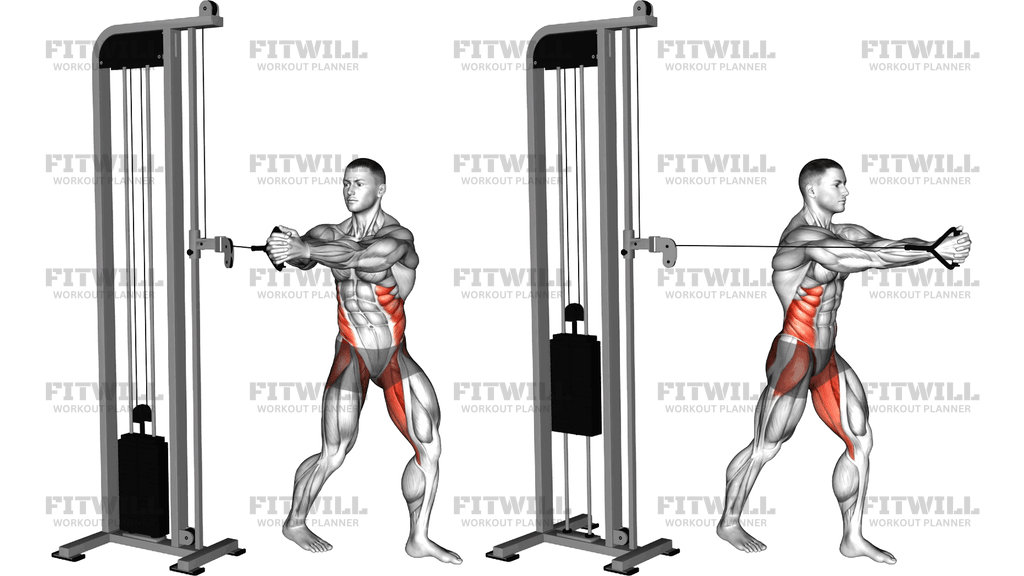
Half Kneeling Side Lunge
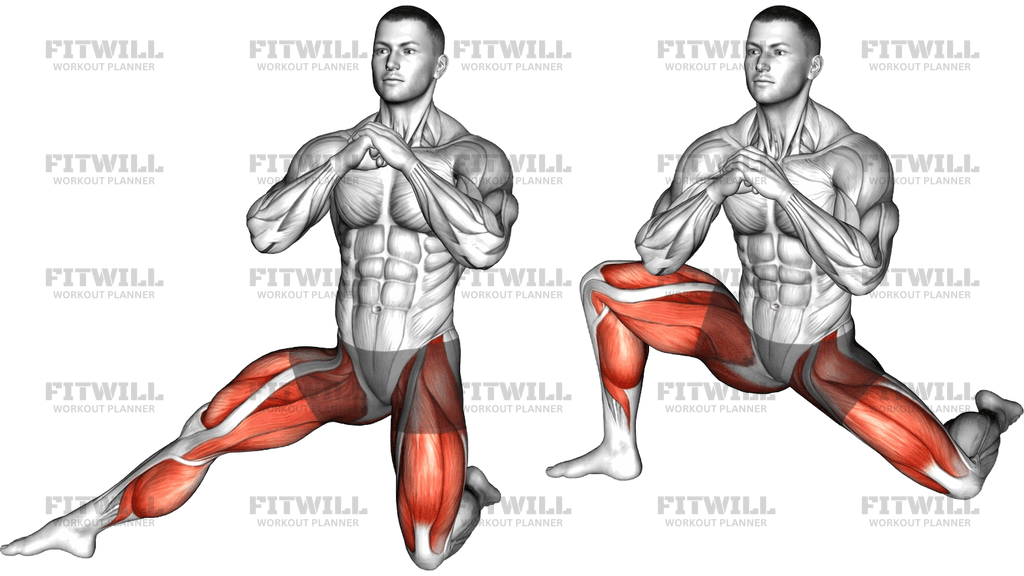
The Half Kneeling Side Lunge is a body weight drill that combines a half-kneeling base with a lateral hip shift toward one straight, wide-planted leg. You kneel on one knee, extend the opposite leg out to the side with the foot flat, clasp your hands at your chest, and then rock your hips back and toward the extended leg. The result is a deep, controlled load through the inner thigh of the straight leg while the kneeling side's glutes and hip stabilizers work to keep your torso level.
This movement sits in a useful middle ground between a stretching drill and a strength exercise. The inner thigh muscles of the extended leg are taken through a long range under light load, the quadriceps and hamstrings help control the shift, and the glute on the kneeling side fights to keep the pelvis square. Because one knee is supported on the floor, you cannot use momentum the way you can in a standing side lunge, which makes it easier to feel exactly where your hip range stops.
It is especially useful for people who feel tight in the groin during squats, change-of-direction athletes such as soccer, hockey, and tennis players, and anyone who sits a lot and has lost comfort in wide-legged positions. Runners also tend to benefit, since the extended leg's adductors and hip stabilizers absorb a lot of sideways force with every stride.
Setup details matter here more than they might seem. Keep the extended foot flat with the heel down and the toes pointing forward or pulled slightly up; if the foot rolls inward, the knee drifts with it and the stretch loses its line. Keep the kneeling knee stacked roughly under the same-side hip rather than letting it wander outward, and hold your hands clasped at the chest as a small counterweight so the torso stays tall.
To execute well, brace your core, then push your hips back and sideways toward the extended leg, hinging slightly at that hip as if reaching your back pocket toward your heel. Allow a small, comfortable bend in the extended knee if that lets you sit deeper without losing the foot position. Pause briefly where you feel a firm but tolerable inner thigh stretch, then drive through the extended heel and the top of the kneeling knee to return your hips to center.
Treat the Half Kneeling Side Lunge as a warm-up primer before lower body training, a mobility block between sets of squats or lunges, or a standalone strength-endurance set for the inner thighs. Move deliberately, match the range to your current hip mobility rather than forcing depth, and keep both sides even, even if one hip is noticeably tighter than the other.
[ Workout Log & Planner ]
Put your next workout in Fitwill
Keep your plan and training log ready when you are.


Instructions
- Kneel down on a mat or soft surface and settle onto one knee, keeping that knee roughly under the same-side hip.
- Step the other leg wide out to the side so it is nearly straight, then place the whole foot flat on the floor with the heel down and the toes pointing forward.
- Clasp your hands together at chest height, elbows pointing down, and sit tall so your shoulders stack over your hips.
- Brace your abdominal muscles lightly and squeeze the glute on your kneeling side to lock the pelvis in place.
- Push your hips back and sideways toward the extended leg, hinging slightly at that hip while your torso stays tall.
- Continue shifting until you feel a strong but comfortable stretch along the inner thigh of the straight leg, allowing only a small bend in that knee.
- Pause for one to two seconds at the deepest point, keeping the extended heel glued to the floor and the kneeling knee still.
- Drive through the extended leg's heel and press down through the top of the kneeling knee to bring your hips back to the center.
- Exhale as you shift out, inhale as you return, and complete all reps on one side before switching legs.
Tips & Tricks
- If your lower back rounds as you shift, you are flexing through the spine instead of hinging at the extended hip — shorten the range and keep the chest lifted.
- Watch the extended foot: when the arch collapses and the ankle rolls inward, the knee twists with it. Press the outer edge of the foot down and keep the toes forward.
- Do not let the kneeling knee drift outward as the hips move. Stacking it under the hip keeps tension on the kneeling side's glute and protects the knee.
- Twisting the torso toward the extended leg is a common cheat that fakes extra depth. Keep your chest facing forward and let the hips do the traveling.
- Start with a shallow shift for the first few reps and gradually deepen it — diving straight into full depth on a cold groin is the fastest way to strain an adductor.
- If the floor irritates your kneeling knee, slide a folded mat or pad under it; changing the surface is better than subtly altering your position to avoid pressure.
- Avoid bouncing at the end range. Hold the bottom position statically and let the tissue lengthen under control instead of pulsing for a few extra inches.
- If one side is much tighter, do one extra set on the tight side but never skip the looser side entirely — keeping the comparison honest is how you track progress.
- Slow the return down rather than snapping back to center; the ride home is where the kneeling leg's glute and the extended leg's adductors do most of their work.
Frequently Asked Questions
Which muscles does the Half Kneeling Side Lunge target most?
The inner thigh muscles of the extended leg take the main load as they lengthen and control the shift. The quadriceps and hamstrings assist, while the glute on the kneeling side stabilizes the pelvis throughout.
Is the Half Kneeling Side Lunge a stretch or a strength exercise?
It is genuinely both. The straight leg works through a deep adductor stretch, but because you move in and out of that range under your own body weight, the muscles also build control at long lengths.
Why should the extended leg stay nearly straight instead of bending like a normal side lunge?
Keeping the leg long and the heel planted directs the movement into the hip and inner thigh rather than the knee. Bending the knee heavily turns it into more of a Cossack squat and reduces the adductor emphasis.
What is the purpose of clasping the hands at the chest?
The clasped hands act as a small counterweight that helps you balance and keeps the chest lifted. Without them, many people reach with the arms and twist the torso to fake extra depth.
How is this different from a standing side lunge?
The kneeling knee removes momentum and support from the bottom position, so you cannot rush the movement. That makes the Half Kneeling Side Lunge a better teaching and mobility tool, while the standing version demands more balance and single-leg strength.
How deep should I shift toward my extended leg?
Shift until you feel a firm inner thigh stretch you can hold while keeping the heel down and the torso tall. Depth that forces the foot to roll in or the back to round is depth you are borrowing from your form.
Is the Half Kneeling Side Lunge safe for beginners?
Yes, it is one of the more accessible lateral lunge variations because the floor supports one knee. Beginners should use a padded surface, keep the range modest, and prioritize a flat foot and level hips over going deep.
My kneeling knee bothers me on hard floors. What can I do?
Place a folded mat or pad under the knee and make sure it stays stacked under the hip. If discomfort persists with the knee properly aligned, switch to a standing or wall-assisted side lunge variation instead.
What can I substitute if the kneeling position does not work for me?
A standing side lunge or a seated butterfly-to-wide-leg rock covers similar inner thigh ground. A Cossack squat is a good progression once you can control the Half Kneeling Side Lunge comfortably.
When should I program the Half Kneeling Side Lunge in my training?
It works well in a warm-up before squats, deadlifts, or any sport involving cutting and change of direction. You can also run it as a higher-rep strength-endurance set for the inner thighs between or after main lifts.