Squat Hamstring Curl
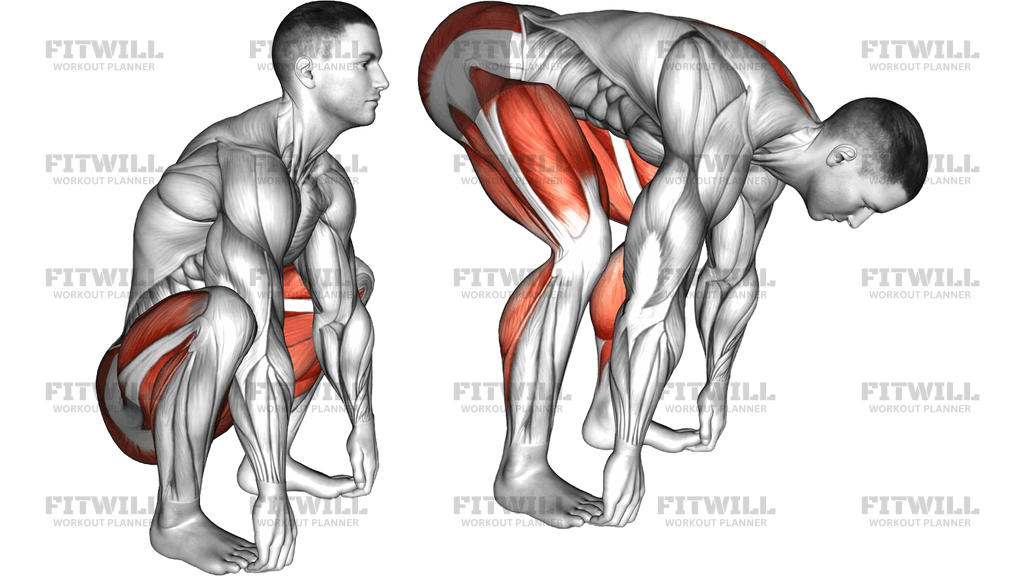
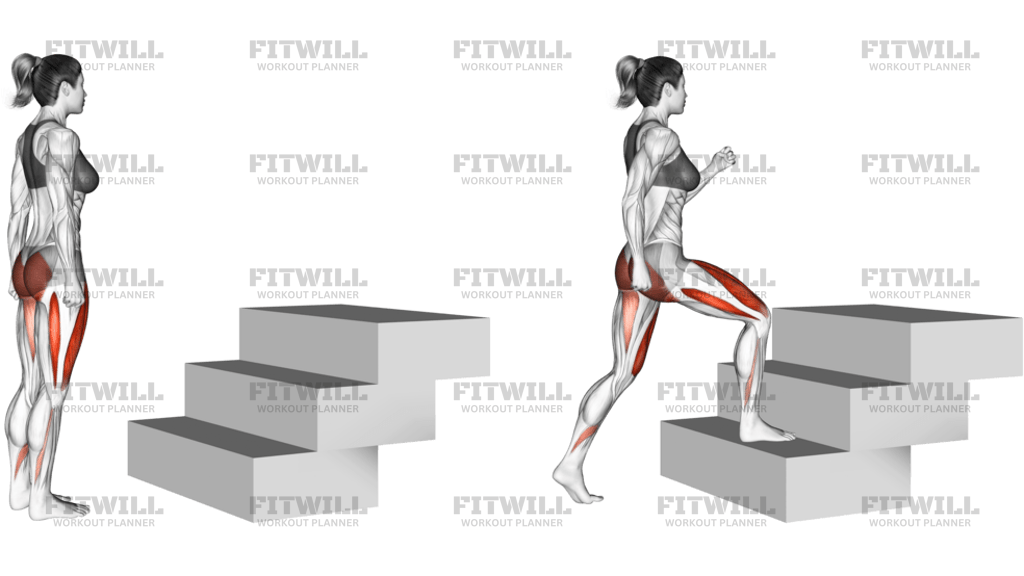
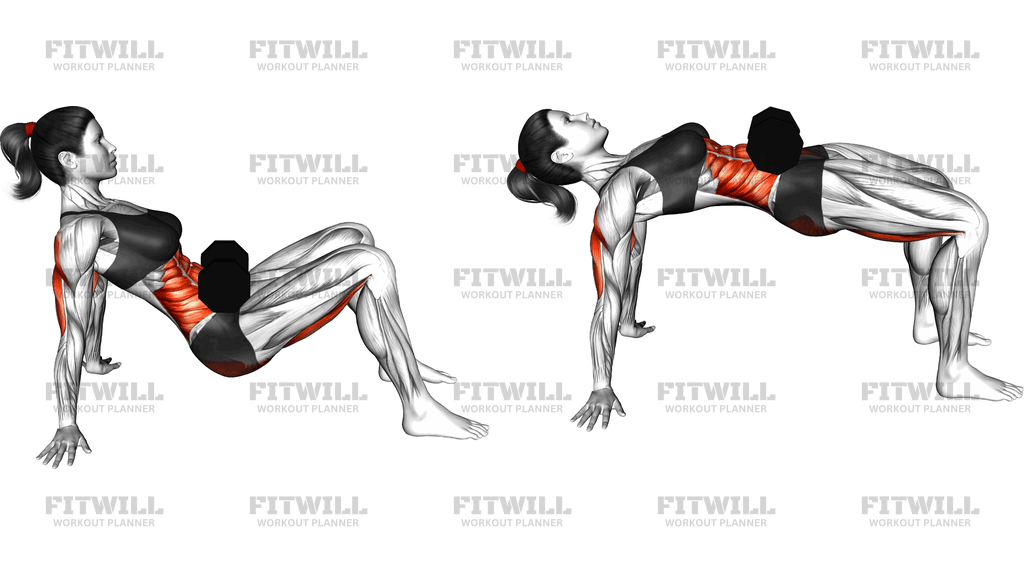
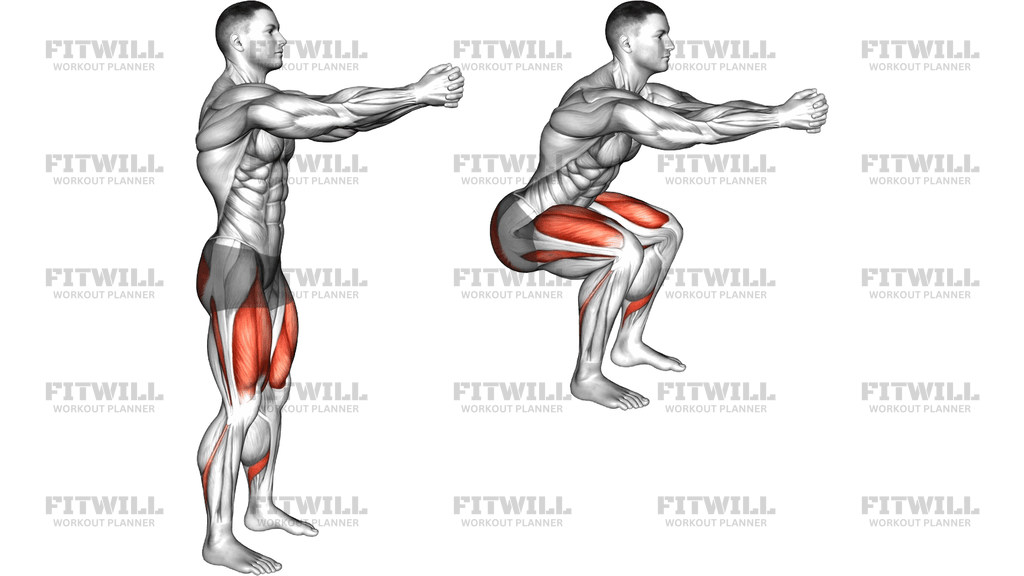
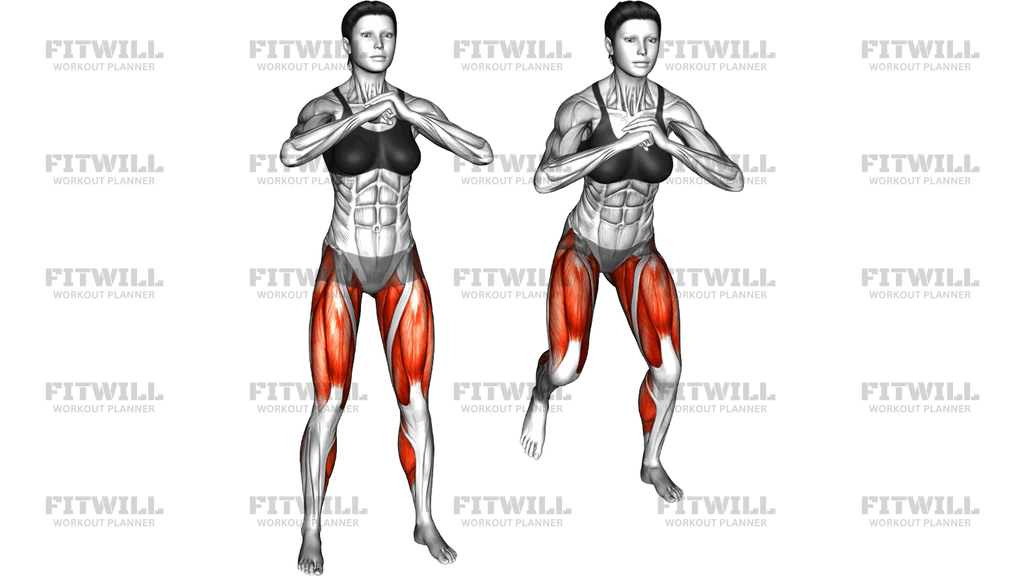
The Squat Hamstring Curl is a bodyweight movement that combines two jobs in one repetition: a shallow single-leg squat with the standing leg, and an active hamstring curl with the free leg. You balance on one foot with your hands clasped at your chest, sit back into a partial squat, and as you return to standing, you pull the heel of your other leg up behind you toward your glutes. The image highlights the quads, hamstrings, and calves of both legs, which reflects how the work is shared — the standing leg handles the squat, while the moving leg drives the curl.
This exercise is useful for anyone who wants to train the hamstrings without machines, bands, or extra equipment. Lying and seated leg curls isolate the hamstrings well, but they leave balance out of the picture. Here, the standing leg has to stabilize your whole body while the other leg moves, so you also train the hip stabilizers, calves, and core in a very practical way. That makes it a good fit for home workouts, warm-ups before lower-body training, and for runners or field-sport athletes who need single-leg control as much as raw strength.
Setup matters more than it looks. Because you are on one foot, your foot placement, torso angle, and where you point your standing knee all determine whether the movement feels smooth or wobbly. Keep the standing foot flat and the knee tracking over the toes, and let the torso hinge forward slightly from the hips — a small forward lean helps you counterbalance the leg swinging behind you. Clasping your hands in front of your chest, as shown, gives you a stable arm position so your upper body is not flailing around while your legs work.
To execute it well, think of the two legs as having separate rhythms. The squat leg lowers with control to about a quarter or half depth, then drives the floor away to stand tall. The curling leg stays relaxed on the way down and then pulls its heel up under the body as you rise, squeezing the hamstring at the top before lowering it back to the floor for the next rep. Avoid rushing; the curl is a deliberate knee-flexion pull, not a kick.
A common use case is as an accessory movement after squats or lunges, or as the main hamstring work in a minimal-equipment routine. Beginners can hold onto a wall or chair for balance and reduce the squat depth, while more advanced lifters can slow the tempo, pause at the top of the curl, or add a light dumbbell held goblet-style.
From a safety standpoint, the main risks are losing balance and letting the standing knee cave inward. Start near a wall until the pattern feels natural, keep the squat shallow enough that you stay in complete control, and stop the set when your balance starts to degrade rather than when your muscles are fully exhausted.
[ Workout Log & Planner ]
Put your next workout in Fitwill
Keep your plan and training log ready when you are.


Instructions
- Stand tall on your right foot with your left foot hovering just off the floor beside or slightly behind you, and clasp your hands together in front of your chest.
- Shift your weight onto the middle of the standing foot, brace your core, and allow a slight forward lean from the hips while keeping your chest up and shoulders back.
- Inhale, then bend the standing knee and push your hips back into a shallow squat, keeping the knee tracking in line with your toes.
- As you exhale and press through the standing foot to rise, bend your left knee and curl your left heel up behind you toward your glutes.
- Squeeze the left hamstring briefly at the top of the curl while you finish standing tall on the right leg.
- Lower the left foot back toward the floor with control as you inhale and begin the next squat descent.
- Keep your gaze fixed on a point a few feet ahead of you to steady your balance throughout the set.
- Complete all reps on the right leg, then switch to standing on the left leg and curling the right heel.
- Reset your stance and brace between legs, and place a hand on a wall or chair if your balance breaks down.
Tips & Tricks
- If you rock forward onto your toes during the squat, your weight has drifted too far ahead — push your hips back first and keep your whole standing foot in contact with the floor.
- A common mistake is swinging the curling leg like a kick; the heel should travel up under your body in a controlled arc so the hamstring, not momentum, does the work.
- Keep the standing knee from collapsing inward as you squat; think of gently spreading the floor apart with your foot to keep the knee over the toes.
- Do not let the squat get deeper than you can balance — a controlled quarter squat with a clean heel curl beats a deep squat with wobbly form.
- If your calf on the standing leg cramps, that usually means your weight is too far forward; redistribute pressure toward the mid-foot and heel.
- Keep the hips square to the front; twisting the pelvis toward the curling leg is a sign you are rotating to make the balance easier.
- Slow the lowering phase of the squat to two or three seconds if the movement feels too easy, rather than adding depth prematurely.
- Hold a wall or doorway with one hand for your first few sessions; as your single-leg stability improves, progress to hands clasped at the chest only.
- Breathe in on the way down and out as you stand and curl — holding your breath makes single-leg balance noticeably harder.
Frequently Asked Questions
Which muscles does the Squat Hamstring Curl work?
The curling leg targets the hamstrings as they flex the knee, while the standing leg works the quads and glutes through the squat. The calves and core contribute heavily to balance and stability.
Is the Squat Hamstring Curl suitable for beginners?
Yes, provided the squat depth stays shallow and balance support is available. Holding a wall or the back of a chair with one hand removes most of the difficulty while keeping the hamstring curl pattern intact.
Why do I wobble when I try the Squat Hamstring Curl?
Single-leg balance is the limiting factor for most people, not leg strength. Fix your gaze on a fixed point ahead of you, keep a slight forward lean, and slow the tempo until your stabilizers adapt.
Should the curling foot touch the floor between reps?
Lightly tapping or hovering just above the floor between reps is fine. What matters is that you lower the heel with control rather than dropping it, so the hamstring stays engaged through the whole range.
How does the Squat Hamstring Curl compare to a machine leg curl?
A machine leg curl provides stable isolation and easier loading, while the Squat Hamstring Curl adds balance, hip stability, and single-leg squat strength at the cost of pure hamstring load. They complement each other rather than replace one another.
How deep should the squat portion be?
A quarter to half squat is enough for most people. Choose the depth where you can keep the standing heel down, the knee tracking over the toes, and complete the heel curl smoothly at the top.
Can I add weight to the Squat Hamstring Curl?
Yes. Holding a light dumbbell or kettlebell at your chest in goblet style adds load to the squat leg, but only add weight once you can balance through a full set without support.
How many reps and sets should I do?
Two to three sets of 8 to 12 reps per leg works well for strength and control. Because balance fades with fatigue, prioritize clean repetitions over chasing higher numbers.
Is the Squat Hamstring Curl safe for my knees?
When performed with a controlled, shallow squat and the knee tracking over the toes, it is generally well tolerated. If you have a current knee injury or pain during the movement, reduce the depth or consult a qualified professional first.
Where does this exercise fit in a workout?
It works well as an accessory after squats, lunges, or deadlifts, or as the primary hamstring and balance drill in a bodyweight-only session. It also serves as an effective warm-up drill before running or lower-body lifting.