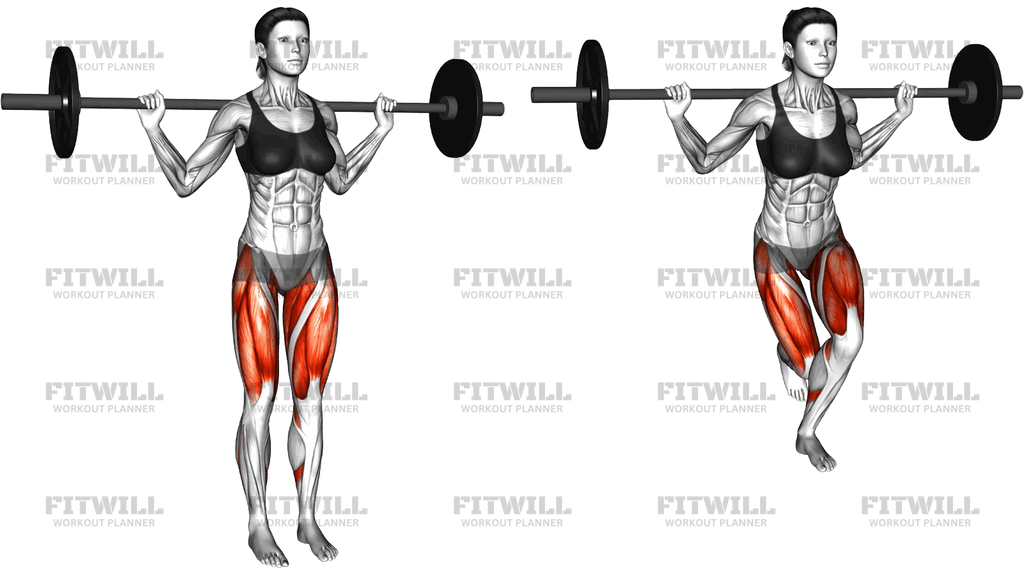
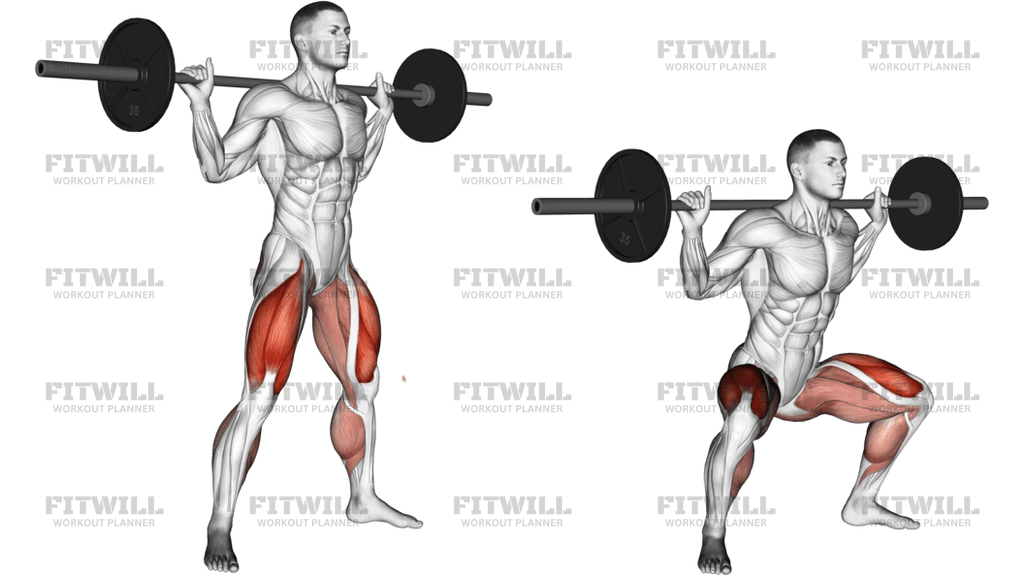
Barbell Cossack Squat
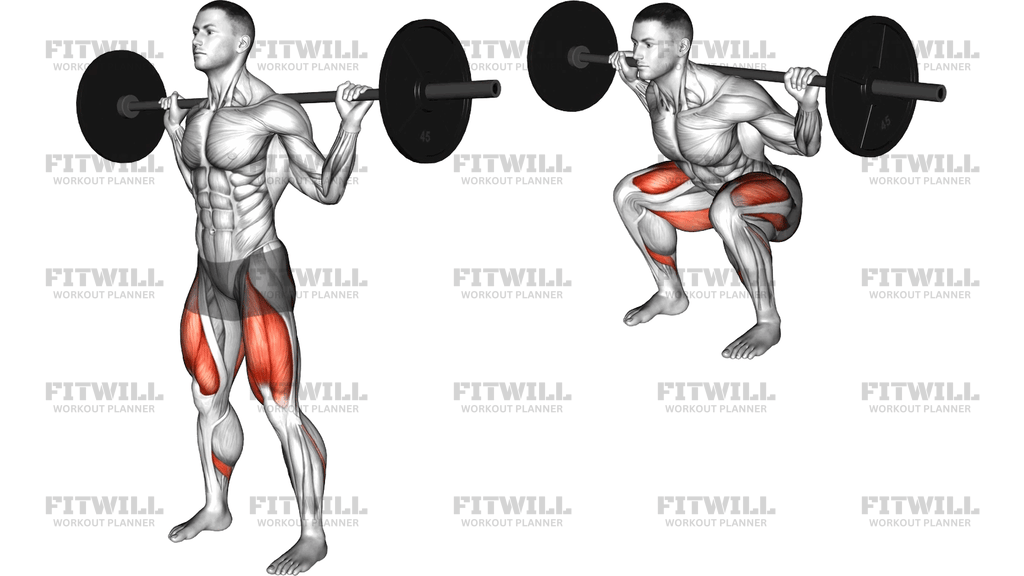
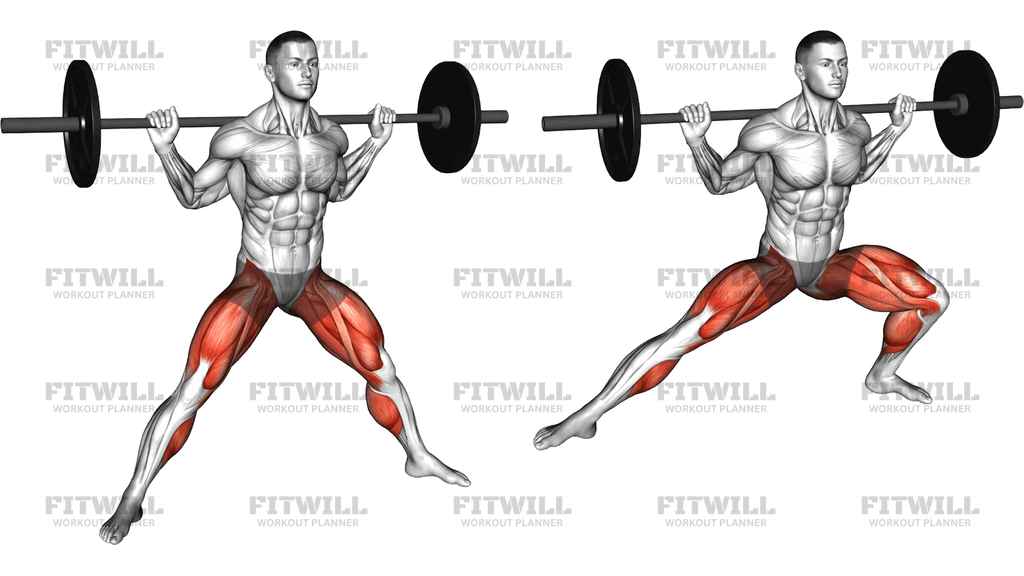
The Barbell Cossack Squat is a lateral squat variation performed with a barbell resting across the upper back, the same position you would use for a back squat. Instead of squatting straight down, you shift your hips sideways over one leg while the opposite leg stays extended and straight. The working knee bends and the hip sits back and down, while the extended leg's foot stays flat or pivots up on the heel, lengthening the inner thigh muscles on that side under load.
This movement is one of the best loaded ways to train hip adduction and abduction at the same time. The leg you shift over works through the quads, glutes, and adductors, while the straight leg gets a deep active stretch through the groin and inner thigh. Because each side works independently, it also exposes and helps correct left-to-right differences in hip mobility, ankle mobility, and leg strength.
The barbell on the back is what separates this from the bodyweight version. The added load turns a mobility drill into a genuine strength exercise, challenging the adductors and quads through a long range while the trunk fights to stay tall and centered. The front-loaded torso angle also demands more from the lower back and core than most people expect from a single-leg lateral movement.
Setup matters more here than in most squat variations. A stance that is too narrow turns the movement into a shallow lunge, and a bar positioned too high on the neck makes it hard to keep the chest up as you sit into the bottom. Take a wide stance, point your toes slightly outward, and keep the bar squeezed into your upper traps so it does not roll as your hips travel sideways.
To execute well, shift your hips laterally rather than leaning your torso toward the working side. Think about sitting back and down over one heel, with that heel glued to the floor and the knee tracking over the toes. The extended leg should stay relatively straight, acting like an outrigger. Descend only as deep as you can keep the working heel down and your spine neutral, then drive through the heel to pull yourself back to center.
This exercise suits lifters who already have a basic squat pattern and want to build adductor strength, improve side-to-side hip mobility, or add unilateral leg work without a heavy bilateral load. It appears in lower-body strength days, martial arts and field-sport conditioning, and as a loaded warm-up for squats and deadlifts. Start light, and treat depth as something you earn as your hips and ankles allow.
Fitwill
Log Workouts, Track Progress & Build Strength.
Achieve more with Fitwill: explore over 9600 exercises with images and videos, access built-in and custom workouts, perfect for both gym and home sessions, and see real results.
Start your journey. Download today!




Instructions
- Set a barbell in a squat rack at about upper-chest height, duck under it, and place it across your upper traps as you would for a back squat.
- Grip the bar slightly wider than shoulder width, squeeze your elbows down and back to secure the bar, and unrack it with a tall spine.
- Step back and set your feet roughly two shoulder-widths apart, toes turned out about 15 to 30 degrees, with your weight spread across both feet.
- Brace your core, lift your chest, and shift your hips directly sideways toward your right foot, keeping the bar centered over your midfoot.
- Bend your right knee and sit your hips back and down over that heel while your left leg stays straight and your left foot stays flat or pivots up onto the heel.
- Descend until your right thigh is near parallel to the floor or until your right heel starts to lift, keeping the knee tracking over the toes.
- Pause briefly in the bottom, then drive through the right heel and mid-foot to pull your hips back to the center position.
- Exhale as you return to center, re-brace, and repeat the same depth on the left side, or complete all reps on one side before switching.
- After your final rep, walk the bar back into the rack and set it down with control rather than rushing the re-rack.
Tips & Tricks
- If the working heel lifts off the floor, your ankles are the limiting factor. Shallow the depth or place a thin wedge or small plate under the heel temporarily rather than forcing depth.
- A common mistake is pushing the knee far past the toes while the hips stay high, which shifts stress to the knee joint. Push the hips back first, then let the knee bend.
- Keep the extended leg genuinely straight. If it collapses inward, the adductor stretch you are chasing disappears, so cue the straight-leg foot to pull lightly toward the floor.
- Keep the bar squeezed into your traps with your elbows pulled down. If the bar drifts forward as you shift sideways, your torso is leaning instead of your hips translating.
- Start with just the empty bar or a very light load. The lateral hip shift under load feels unstable at first, and adding weight before the pattern is smooth makes the hips want to collapse.
- Turn the toes of the working leg slightly out, not straight ahead. A squared-off foot forces the knee to track inward at the bottom.
- Control the eccentric. Dropping fast into the bottom is the most common way lifters lose the heel and round the lower back in this movement.
- If your grip feels like the weak link, widen your hands a little on the bar. A wider grip lets you keep a taller chest with the same bar position.
- Expect one side to move better than the other. Match reps on the weaker, stiffer side and let the better side follow rather than training to the flexible side's depth.
Frequently Asked Questions
What muscles does the Barbell Cossack Squat work?
The primary movers are the quads and adductors of the working leg, with the glutes driving the return to center. The straight leg gets a strong loaded stretch through the inner thigh, and the core and lower back stabilize the bar throughout.
Is the Barbell Cossack Squat suitable for beginners?
It is best treated as an intermediate progression. Learn the bodyweight Cossack Squat first, and add the barbell once you can reach a controlled depth with your heel down and a neutral spine.
How heavy should I go on the Barbell Cossack Squat?
Much lighter than your back squat. Start with an empty bar or light plates and build up over weeks, because the lateral hip shift makes moderate weights feel far heavier than they would in a standard squat.
Should the non-working foot stay flat during the Barbell Cossack Squat?
It can stay flat if your mobility allows, but letting that foot pivot up onto the heel is fine and often more comfortable. The key is keeping that leg straight and the heel in contact with the floor.
Why does my heel lift at the bottom of the Barbell Cossack Squat?
That usually points to limited ankle dorsiflexion or simply more depth than your hips currently allow. Reduce the range, slow the descent, and work on ankle mobility before chasing a parallel thigh.
How is the Barbell Cossack Squat different from a side lunge?
In a side lunge you step out and the torso often leans toward the working leg. In a Cossack Squat your feet stay planted and you shift your hips laterally with a tall torso, which gives a much deeper adductor stretch on the straight leg.
Can I use a dumbbell or kettlebell instead of a barbell?
Yes. A goblet-style hold counterbalances the hip shift and is easier on the upper back, so it is a good stepping stone before loading a bar across your traps.
How many reps and sets should I do?
Two to four sets of 5 to 8 reps per side works well for strength and control. Keep the reps moderate, since form tends to break down quickly on the far side as fatigue builds.
Is it normal for one side to feel much stiffer in the Barbell Cossack Squat?
Yes, and that asymmetry is one of the main reasons to do the exercise. Work to the depth the stiffer side allows, match the reps evenly, and the difference usually narrows over time.
Where should the bar sit during the Barbell Cossack Squat?
Across the upper traps in the standard back squat position, with your elbows pulled down to lock it in place. A bar drifting toward the neck or rolling mid-set usually means the torso is leaning instead of the hips moving sideways.