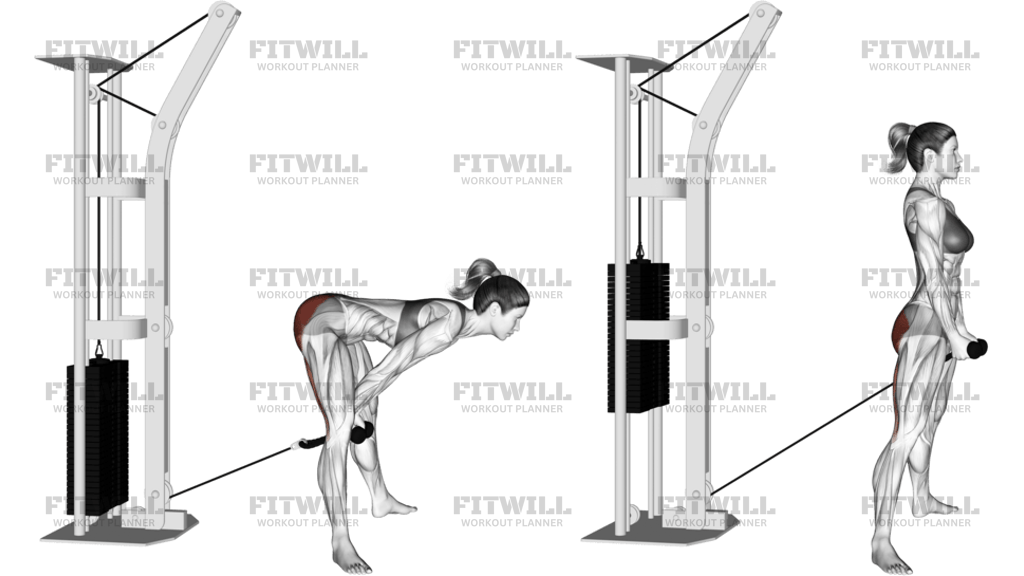
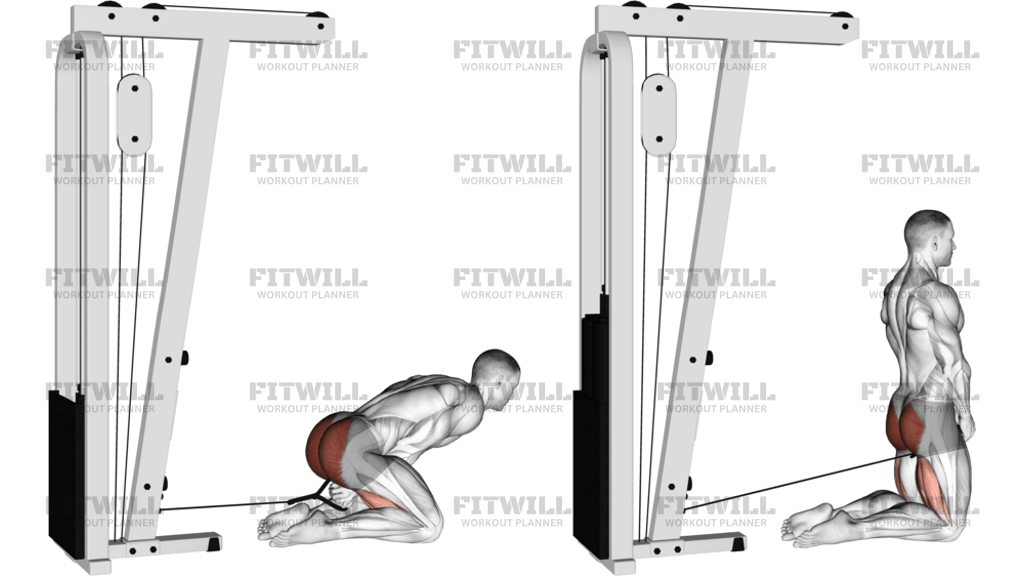
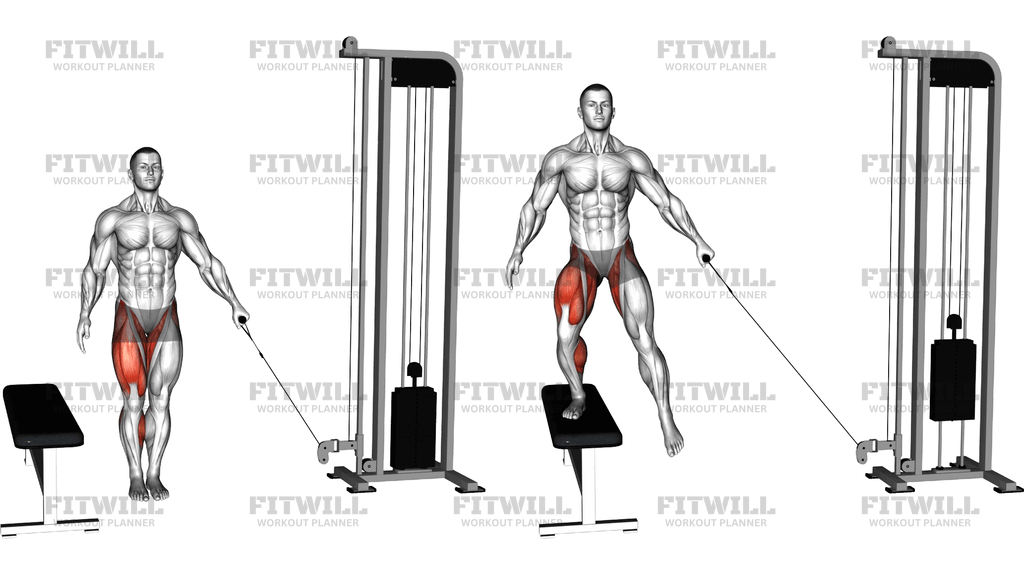
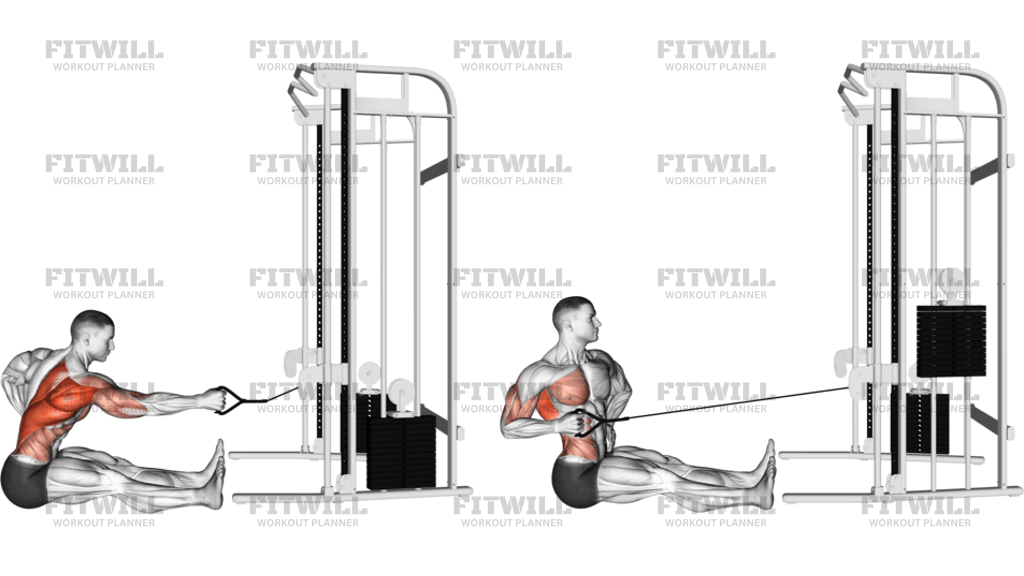
Cable Supported Single Leg Hamstrings Concentratio
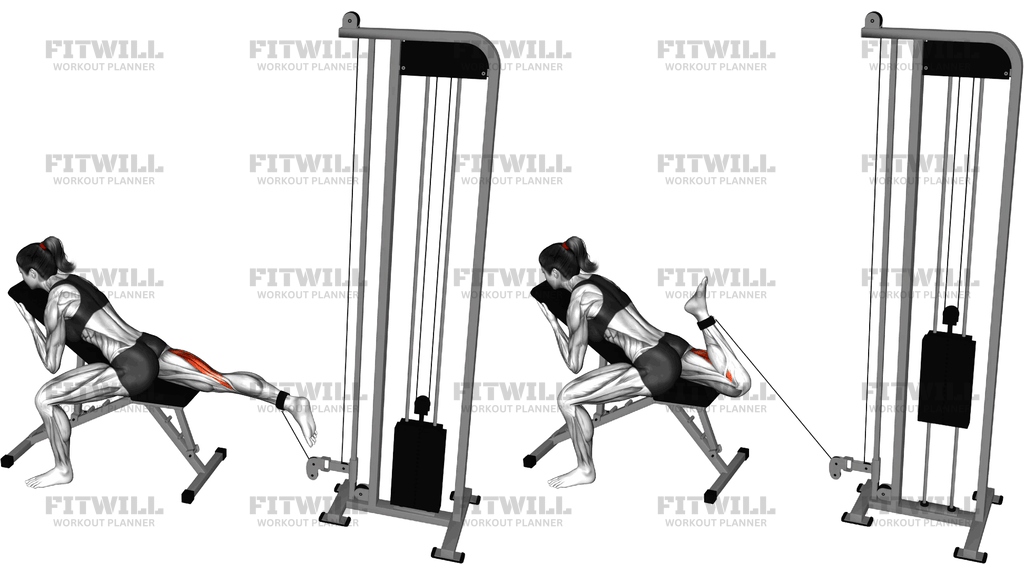
The Cable Supported Single Leg Hamstrings Concentration Curl is a knee-flexion exercise that isolates one hamstring at a time using a low cable pulley and an ankle strap. You rest your chest on an inclined bench with the working leg extended behind you, then curl your heel up toward your glutes against the cable's resistance. Because the cable pulls from behind and below, the hamstring works through its full length in a way that lying or seated curl machines often miss.
This is a genuinely useful option for lifters who have one side noticeably weaker or smaller than the other, since the cable makes each leg carry its own load with no chance of the stronger side compensating. It also suits people who find machine hamstring curls uncomfortable because the fixed hip position of those machines aggravates their hips or lower back — here your torso is supported but your pelvis can settle into a more natural position.
The main muscles worked are the hamstrings on the back of the thigh, with the calf muscles assisting in knee flexion and the glute of the working leg helping hold the hip steady. The bench support means your balance is not a limiting factor, so all your attention can go into feeling the hamstring shorten and lengthen under control.
Setup matters more than most people expect. The bench needs to be close enough to the pulley that the strap stays taut with your leg extended, but not so close that the cable rubs against the bench or your other leg. Your chest should be firmly in contact with the bench and your hips level — if your torso twists or your pelvis rotates during the curl, the working hamstring loses tension and the set gets sloppy.
To execute the movement well, flex the knee in a smooth arc until the heel is close to your glutes, pause briefly at the top, then lower the leg back under control until the knee is almost straight. The return is where most people lose the benefit: dropping the foot quickly lets the weight stack do the work and robs the hamstring of the lengthening phase, which is arguably the most valuable part of the rep.
You will see this exercise used in rehabilitation settings after hamstring or knee issues have been cleared for loaded work, in bodybuilding programs as a finishing movement after heavier leg curls, and in athletic training where single-leg hamstring strength helps address left-right asymmetries. Because the resistance curve of a cable is smooth and the load is easy to adjust in small increments, it is also one of the more beginner-friendly ways to train the hamstrings directly.
[ Workout Log & Planner ]
Put your next workout in Fitwill
Keep your plan and training log ready when you are.


Instructions
- Set an incline bench a short distance in front of a cable machine's low pulley, angled so your chest can rest on the high end while your legs trail behind.
- Clip an ankle strap around the ankle of your working leg and attach it to the low pulley, then straddle or position yourself so the working leg extends straight back behind the bench.
- Place the foot of your non-working leg flat on the floor beside or behind the bench for a stable base, and lean your chest firmly into the bench pad.
- Grip the sides of the bench for support, brace your trunk, and shift forward on the bench until the cable pulls your extended leg slightly backward with the knee almost straight.
- Exhale and curl your heel up toward your glutes by bending the knee, keeping your thigh in line with your torso and letting the cable arc naturally behind you.
- Squeeze the hamstring hard at the top for a one-count with the heel as close to your glutes as the strap allows.
- Inhale and lower your foot back down in a slow, controlled arc until the knee is nearly straight, resisting the stack's pull the entire way.
- Complete all repetitions on one leg, unclip the strap, then switch it to the other ankle and match the rep count on the second leg.
- Stand up carefully between sides and re-tension the cable before your next set so the first rep is not performed slack.
Tips & Tricks
- If the cable goes slack at the bottom of every rep, your bench is too far from the pulley — slide it closer so the hamstring stays loaded even with the knee nearly straight.
- Do not let your knee drift off the bench or your thigh rotate outward as you curl; a wandering knee usually means the weight is too heavy for the hamstring to handle alone.
- Keep your hips square to the bench. A common mistake is hitching the working hip upward to shorten the curl path, which quietly turns the exercise into a hip extension movement.
- If your calf cramps near the end of a set, you are pointing your toe hard into the strap; relax the ankle and let the knee do the flexing instead.
- Aim for a two- to three-second lowering phase. The eccentric part of this curl is where single-leg hamstring strength is actually built, and rushing it is the most common wasted rep.
- Start lighter than you think you need. Unlike a machine curl, there is no backrest or pad locking your thigh in place, so the hamstring must stabilize the leg as well as move it.
- If your chest lifts off the bench as you pull, reduce the weight — trunk lifting is a sign you are recruiting your lower back to help the hamstring.
- Match sides by reps and tempo, not by feel. Because the cable setup is identical for both legs, discrepancies in performance are easy to spot and worth correcting early.
- Shorter people may need to raise the pulley one notch or angle the bench differently so the strap clears their standing foot without the cable dragging on it.
Frequently Asked Questions
Which muscles does the Cable Supported Single Leg Hamstrings Concentration Curl target?
The hamstrings on the back of the working thigh are the primary movers, with the gastrocnemius of the calf assisting in knee flexion. The glutes and trunk work lightly to keep your hips and torso steady on the bench.
Why use an incline bench instead of standing for a cable hamstring curl?
The bench supports your chest so balance never becomes the limiting factor, letting you load the hamstring more directly. It also fixes your torso position, which makes left-to-right comparisons between legs more reliable.
Is the Cable Supported Single Leg Hamstrings Concentration Curl suitable for beginners?
Yes, provided you start with a light weight and learn the movement path first. The cable offers smooth resistance that is easy to adjust in small increments, and the supported torso removes the balance demands of standing single-leg variations.
How close should the bench be to the cable pulley?
Close enough that the strap stays under tension with your working knee nearly straight, but far enough that the cable clears your body and the bench throughout the curl. If the stack slams down at the bottom of each rep, move the bench closer.
My hips rotate when I curl — how do I fix that?
Reduce the load and consciously press both hips level into the bench while gripping the bench sides for stability. Rotating the pelvis shortens the curl and shifts work away from the hamstring, so treat it as a form error rather than a technique variation.
Can I substitute this exercise with a machine leg curl?
Machine leg curls train the same knee-flexion pattern and are a fine substitute, though they usually work both legs together with the hips fixed. The cable version's advantage is unilateral loading and an adjustable starting angle, which machines cannot always replicate.
How many sets and reps should I do per leg?
Two to four sets of 8 to 15 repetitions per leg works well for most training goals, always matching the weaker leg's performance on the stronger side. Because the movement is isolated and controlled, erring toward moderate loads and higher reps is usually more productive.
Is it safe to do this exercise after a hamstring strain?
The smooth, adjustable resistance makes it a popular choice in return-to-training programs, but you should only load a previously injured hamstring once cleared to do so. Start very light, avoid any sharp pain, and follow the guidance of your physiotherapist or medical provider.
Why does my calf fatigue before my hamstring on this movement?
The gastrocnemius crosses the knee and assists in flexion, so it contributes strongly when you point your toe or rush the reps. Keep the ankle relaxed, slow the tempo down, and let the hamstring at the back of the thigh do the curling.
Should the working leg curl from a straight knee or a slightly bent knee?
Start each rep with the knee nearly straight so the hamstring works from a lengthened position, which is where much of the exercise's value lies. A small permanent bend is fine to keep tension, but avoid beginning each rep from a significantly flexed knee.