Ring Incline Plank
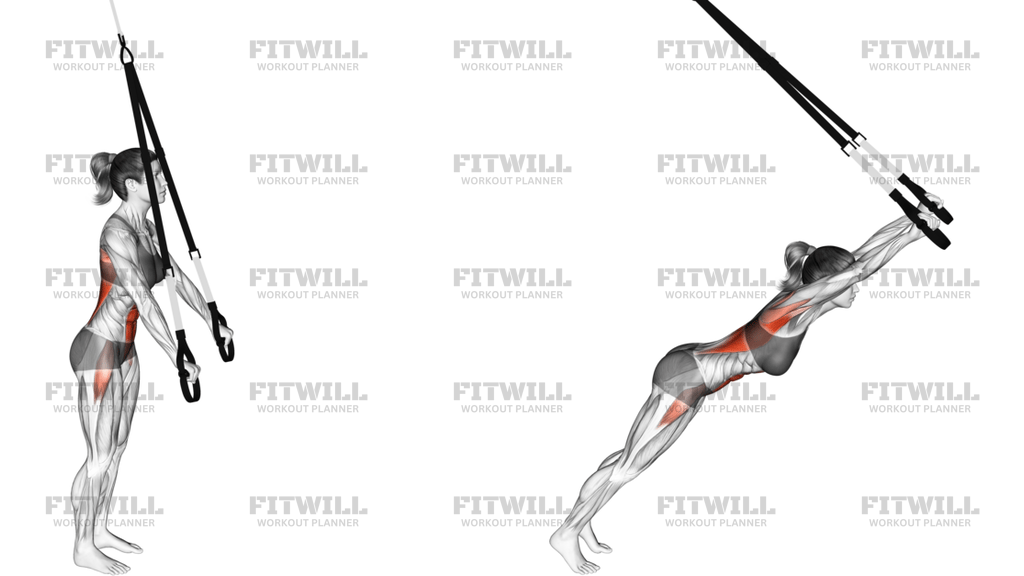
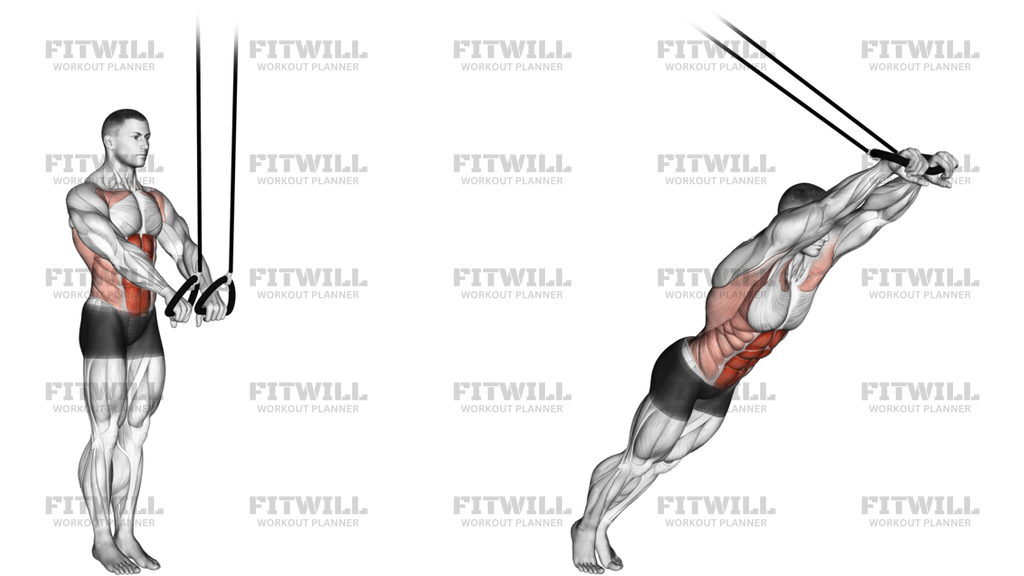
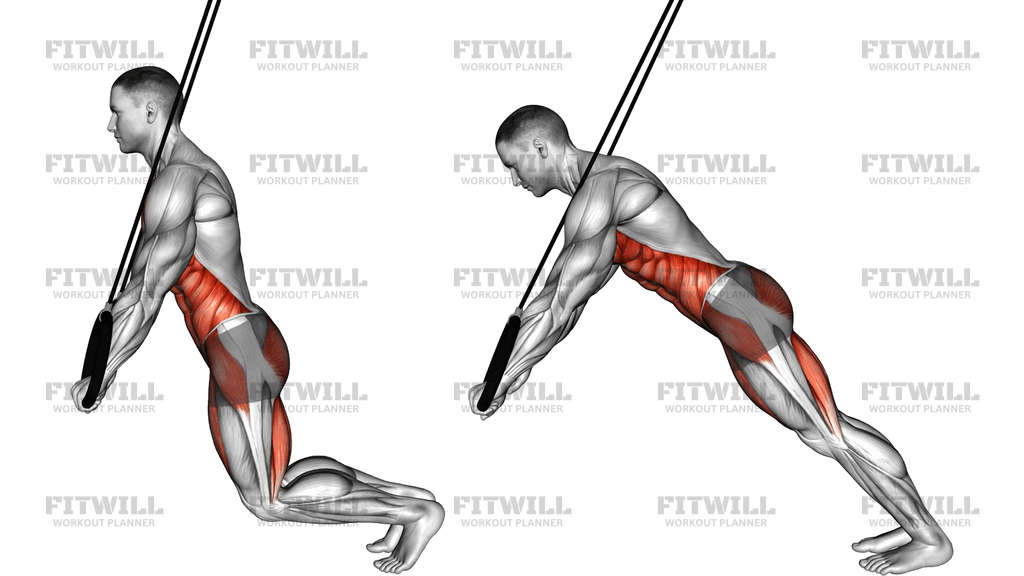
The Ring Incline Plank is an anti-extension core hold performed with your hands gripping suspension rings or straps set above floor height. Because your feet stay on the ground and your hands are elevated, your body forms an incline rather than a horizontal plank, which shortens the lever slightly while the unstable rings add a constant balance demand. The highlight work in this position falls on the deep abdominal wall and obliques, with the shoulders, chest, and glutes working to keep the line of your body intact.
This exercise suits a wide range of lifters because the angle is adjustable. The closer the rings are to the ground, the harder it gets; raising them toward hip height makes the hold far more manageable. That makes it a practical progression tool: you can start with a steep incline and short holds, then gradually lower the anchor point as your midline control improves. People who find floor planks easy but still struggle to brace under unstable conditions get the most out of it.
The real challenge is not holding still — it is resisting the rings as they try to drift apart or swing. Every small wobble forces your deep core to fire reflexively, which is exactly the quality this hold develops. Unlike a static plank on a stable surface, the Ring Incline Plank trains your trunk to stabilize against unpredictable force, which carries over to pressing, carrying, and anything athletic that happens on your feet.
Setup matters more than duration here. Rings hung unevenly, a slack body line, or shrugged shoulders all change which muscles do the work. Before you start the hold, set both rings to the same height, grip them with your wrists stacked over the handles, and walk your feet back until your body forms one straight line from head to heels. Squeeze your glutes and brace your stomach as if bracing for a light punch before you commit to the hold.
A common use case is as a finishing hold after heavy pressing or carrying work, or as a core segment in a suspension training circuit. Twenty to forty seconds of honest tension beats ninety seconds of sagging hips, so treat quality of position as the goal rather than time on the clock. If your lower back starts to arch or your hips pike upward, end the set and reset.
For safety, keep the straps anchored to a secure overhead point and check them before loading your weight. Because your hands are in unstable rings, step your feet in toward the anchor to exit rather than letting go suddenly. If you have wrist or shoulder irritation, use a higher ring setting to reduce load and stop any set that produces sharp joint discomfort.
[ Workout Log & Planner ]
Put your next workout in Fitwill
Keep your plan and training log ready when you are.


Instructions
- Hang the suspension rings from a secure anchor and adjust both straps to the same length, starting with the handles around hip height for your first attempt.
- Grip each ring with a neutral palm-facing-inward grip and step back until your arms are fully extended and the straps hang vertically under tension.
- Walk your feet backward until your body forms a straight incline from head to heels, with your hands slightly ahead of your shoulders.
- Squeeze your glutes, tuck your tailbone slightly, and brace your abdominal wall before you settle into the hold.
- Push the rings down and slightly together to keep the straps taut, and keep your shoulder blades spread wide rather than pinched or shrugged.
- Hold the position with your neck neutral, eyes on a point just below your hands, breathing steadily through your nose.
- Resist any drift: if the rings start to swing apart or your hips sag, correct immediately or end the set.
- To finish, walk your feet forward toward the anchor to shorten the incline, then release your grip one hand at a time while the straps stay under light tension.
- Reset your brace fully between sets instead of flowing straight from one hold into the next.
Tips & Tricks
- Start with the rings higher than you think you need. Most people set them too low, sag within ten seconds, and train a bowed lower back instead of a braced trunk.
- The most common fault is a dropped pelvis. Film yourself from the side once: if your hip line sits below your shoulder line, squeeze the glutes harder and shorten the set.
- Do not let the rings rotate outward. Thinking about pressing your pinkies slightly inward keeps the straps quiet and the forearms from burning out early.
- If your wrists ache, grip with the rings resting across the base of your palm rather than curled into your fingers, and keep the wrist straight instead of bent back.
- Shrugged shoulders near the ears mean you have lost tension through the upper back. Depress the shoulder blades and push the floor away through the rings.
- Progress by lowering the ring height or adding seconds, never both in the same week — the instability makes small angle changes feel much bigger than expected.
- Piking the hips up is the opposite cheat: it unloads the core. If you see your hips creep upward as you fatigue, that is your cue to end the set.
- Bare feet or flat-soled shoes both work, but keep your weight spread across the whole foot; rocking onto the toes makes the whole line wobble.
- Two breaths of full reset between sets keeps your brace sharp — holding your breath through a wobbly rep is how form falls apart.
Frequently Asked Questions
Which muscles does the Ring Incline Plank work most?
The primary demand sits on the deep core and rectus abdominis as they resist extension, with the obliques working to stop rotational drift from the unstable rings. Your shoulders, chest, and glutes support the hold by keeping the arms and hips locked in line.
How high should the rings be when starting the Ring Incline Plank?
Set them around hip height for your first few sessions. If you can hold a clean body line for 30 seconds there, lower the rings a few centimeters in the next session rather than jumping straight to a near-horizontal angle.
Is the Ring Incline Plank suitable for beginners?
Yes, provided the rings are set high enough to keep the incline steep and the holds short. Beginners should prioritize a straight body line over duration — 10 to 15 seconds of honest tension is a good starting target.
Why do the rings wobble more than a floor plank?
Suspended handles can shift and swing in any direction, so your trunk has to correct small movements constantly instead of bracing against a fixed surface. That reflexive correction is the main reason this version feels harder at the same angle.
What is the most common mistake in the Ring Incline Plank?
Letting the hips sag so the lower back arches, usually combined with holding the breath. Squeeze the glutes, exhale into a firm brace, and end the set the moment the line breaks.
Can I substitute the Ring Incline Plank if I do not have suspension rings?
An incline plank with hands on a bench or sturdy elevated surface trains a similar anti-extension pattern, though it removes the instability. A tall plank on a stability ball is a closer match for the balance demand but needs more shoulder control.
How long should I hold the Ring Incline Plank?
Aim for 20 to 40 seconds per set with a perfect body line. If your hips sag or the rings swing before 20 seconds, raise the rings instead of grinding through a sloppy hold.
Where should my shoulders be during the Ring Incline Plank?
Directly active but not shrugged: push the rings away so the shoulder blades stay spread across your ribcage, with elbows locked but not hyperextended. Shrugging toward the ears shifts load into the upper traps and away from the core.
Is the Ring Incline Plank safe for the lower back?
It is generally low-risk when the body line stays straight and the load is scaled to your ability. Discomfort usually signals a sagging pelvis or an angle that is too aggressive, so raise the rings, shorten the set, and rebuild the brace before continuing.