Suspension Oblique Rollout
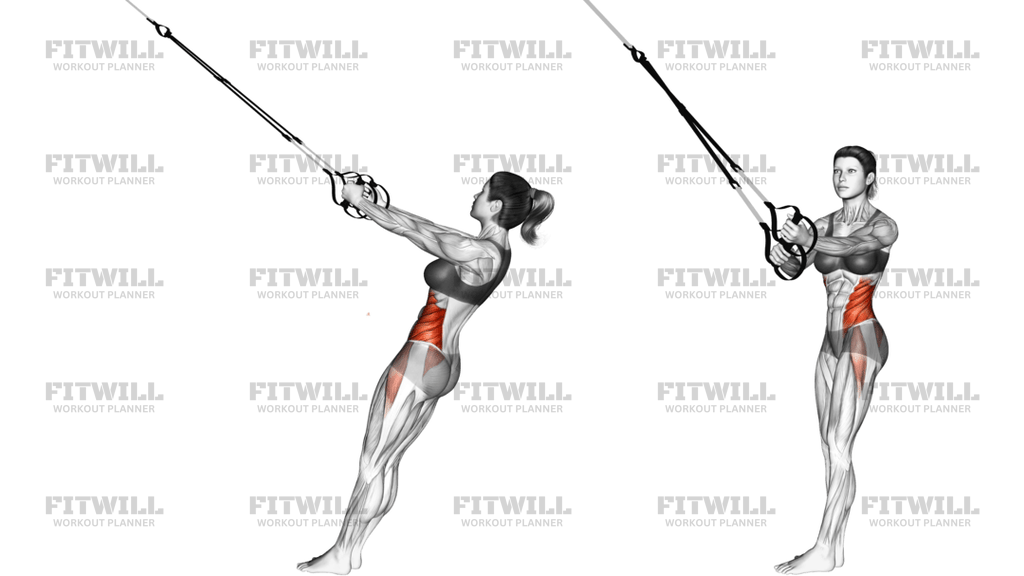
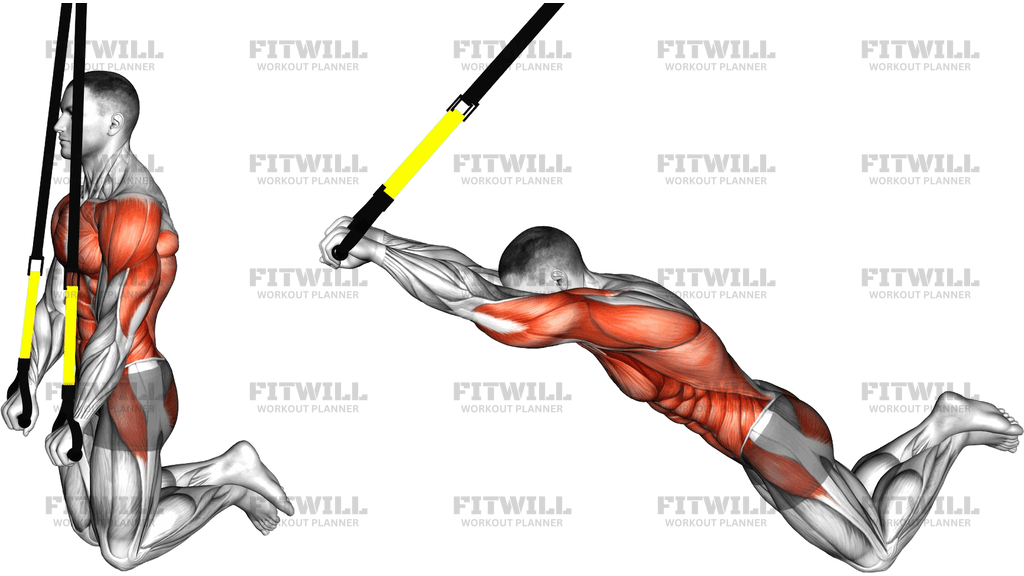
Suspension Oblique Rollout is a kneeling suspension-core drill that challenges the obliques, abs, serratus, and deep trunk stabilizers as you reach the body forward on a diagonal line. Unlike a straight rollout, the off-center path asks your waist to resist both spinal extension and unwanted rotation, which is why the exercise feels so demanding even with bodyweight resistance.
Set the straps to an even length and kneel facing the anchor with the handles in front of your shoulders. Start tall with the ribs stacked over the pelvis, hands gripping the handles, arms straight, and the hips slightly extended so you can control the first inch of movement. A solid setup matters here: if the straps are too long or your knees are too far behind the anchor, the rollout can turn into a shoulder dump or a low-back collapse instead of a clean core drill.
Roll the handles forward and slightly off center as your torso follows the line of the straps. Keep the pelvis tucked just enough to prevent the lower back from arching, and let the shoulders travel only as far as you can hold a long line from knees through hips, ribs, and hands. Exhale as you reach, then pull back by driving through the abs and obliques rather than yanking with the arms. The return should be just as deliberate as the rollout, with no bounce when you come back to the stacked kneeling position.
This exercise fits well in core blocks, warm-ups for pressing or pulling days, and accessory work when you want anti-extension and anti-rotation strength without loading the spine. It is best treated as a control exercise, not a speed drill. If the hips twist, the shoulders shrug, or the lower back starts to sag, shorten the range, bring the anchor closer, or end the set before form breaks down.
[ Workout Log & Planner ]
Put your next workout in Fitwill
Keep your plan and training log ready when you are.


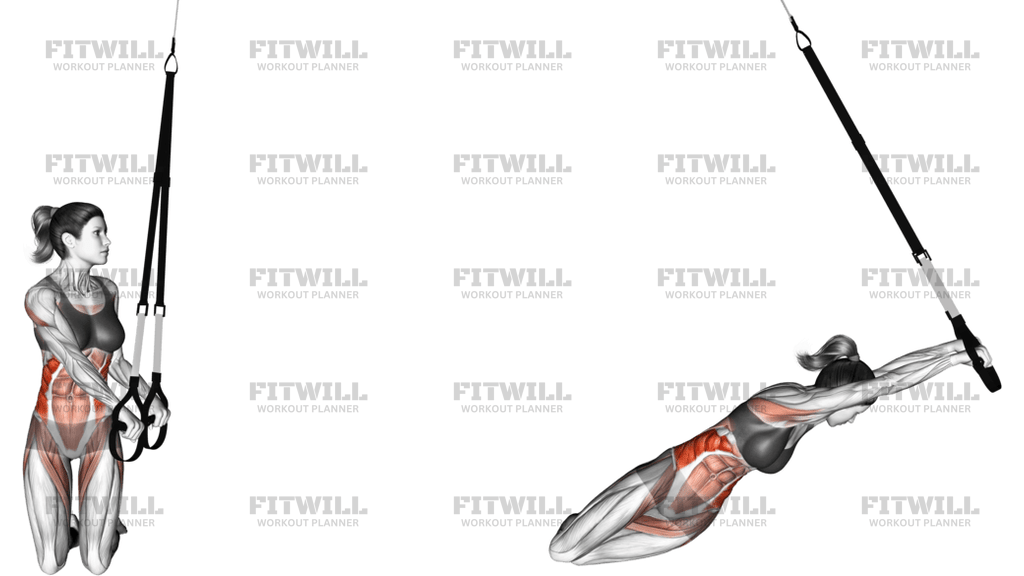
Instructions
- Kneel facing the anchor with both suspension straps even, the handles hanging in front of your shoulders, and your knees under your hips.
- Grip the handles with straight arms, stack your ribs over your pelvis, and set your gaze slightly down so your neck stays long.
- Lightly brace your abs and glutes before the handles leave the vertical line under the anchor.
- Roll the handles forward and slightly off center, letting your torso travel diagonally while both straps stay evenly tensioned.
- Keep your hips and shoulders moving together instead of letting the pelvis twist or the lower back arch.
- Reach only as far as you can keep a strong line from knees through hips, ribs, and hands.
- Exhale as you extend, then pause for a moment in the farthest controlled position.
- Pull yourself back to tall kneeling by squeezing the obliques and abs, then reset before the next rep.
Tips & Tricks
- Keep both straps the same length so the rollout does not drift or twist to one side.
- A smaller diagonal reach usually trains the obliques better than forcing a huge range and losing position.
- If your shoulders shrug toward your ears, shorten the rollout and keep the handles slightly farther from the floor.
- Press the handles down and forward, but do not bend the elbows to help the pull-back.
- Think about pulling the ribs back over the pelvis on the return instead of yanking the body with the arms.
- A light posterior pelvic tilt at the farthest point helps keep the low back from sagging.
- Move slowly enough that the straps stay smooth; any swinging means the core has stopped controlling the path.
- Stop the set when the torso starts rotating more than the handles travel forward.
Frequently Asked Questions
What muscle does Suspension Oblique Rollout target most?
The obliques are the main focus, with the abs, serratus, and deep trunk stabilizers working hard to keep the rollout from turning into a twist.
How is this different from a regular suspension rollout?
The rollout is slightly off center, so your waist has to resist rotation as well as extension. That makes the obliques work harder than they would in a straight-line rollout.
Should my elbows bend during the rep?
No. Keep the arms long and let the handles travel from the shoulders, not from an arm curl or row.
How far should I roll out?
Go only as far as you can keep the ribs stacked, the pelvis controlled, and the straps smooth. If the low back starts to sag, the range is already too long.
Can beginners use this exercise?
Yes, but start with a short rollout and a higher strap setup. The movement gets demanding fast once the arms travel past the shoulders.
Where should I feel the exercise most?
You should feel it around the side abs and front core, with some shoulder work from holding the handles. It should not feel like a low-back stretch or a shoulder shrug drill.
What is the most common mistake with the handles?
Letting one handle drift ahead of the other and turning the movement into a twist. Both straps should stay evenly loaded.
How do I progress the movement?
Progress by reaching a little farther, slowing the return, pausing at the longest controlled position, or lowering the straps so the body has to fight more leverage.