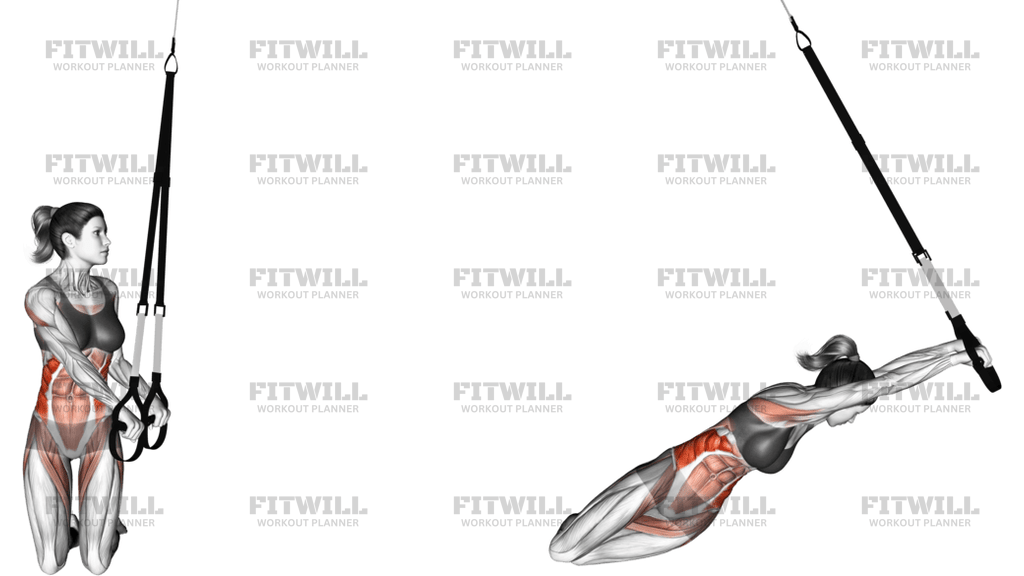
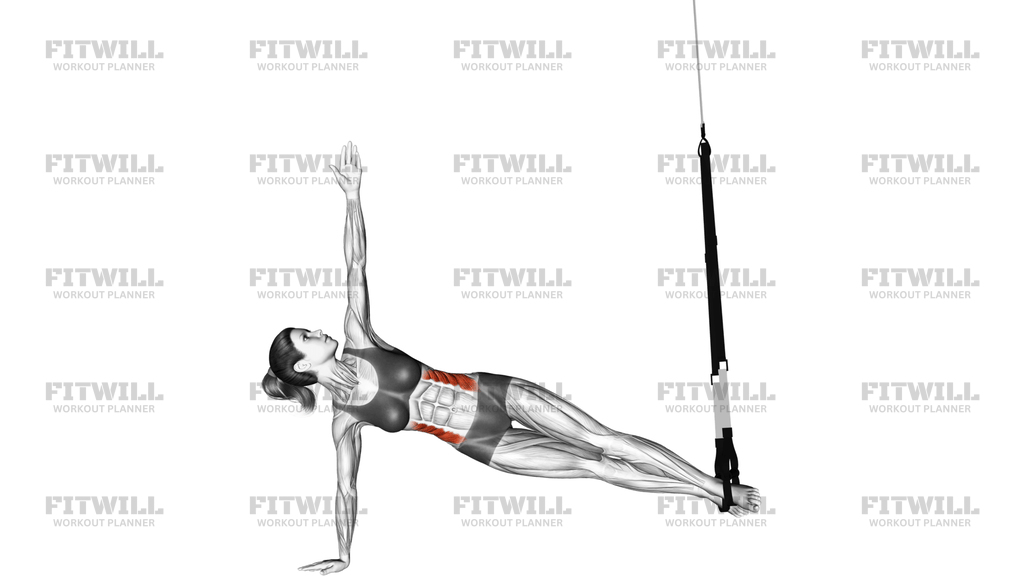
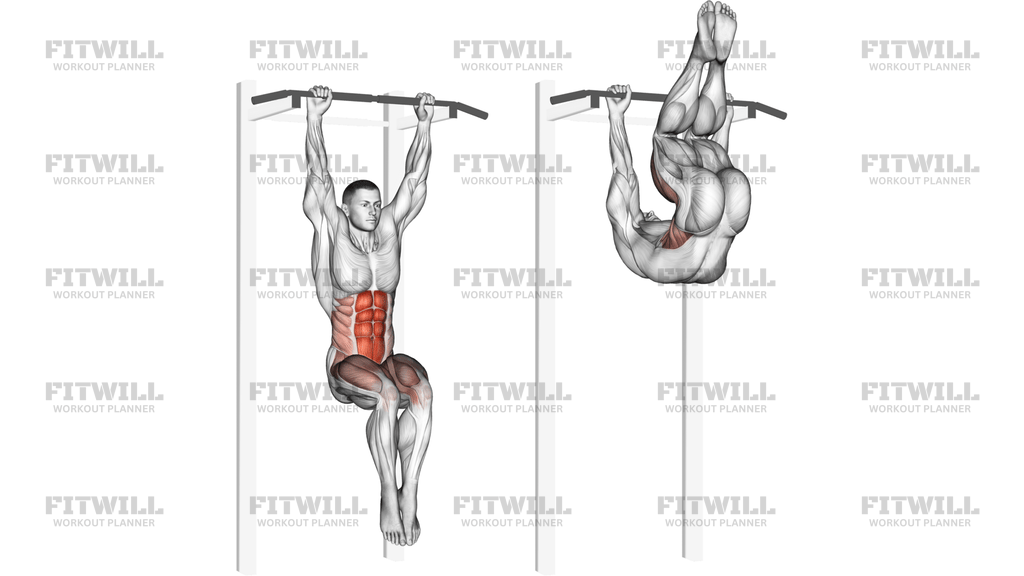
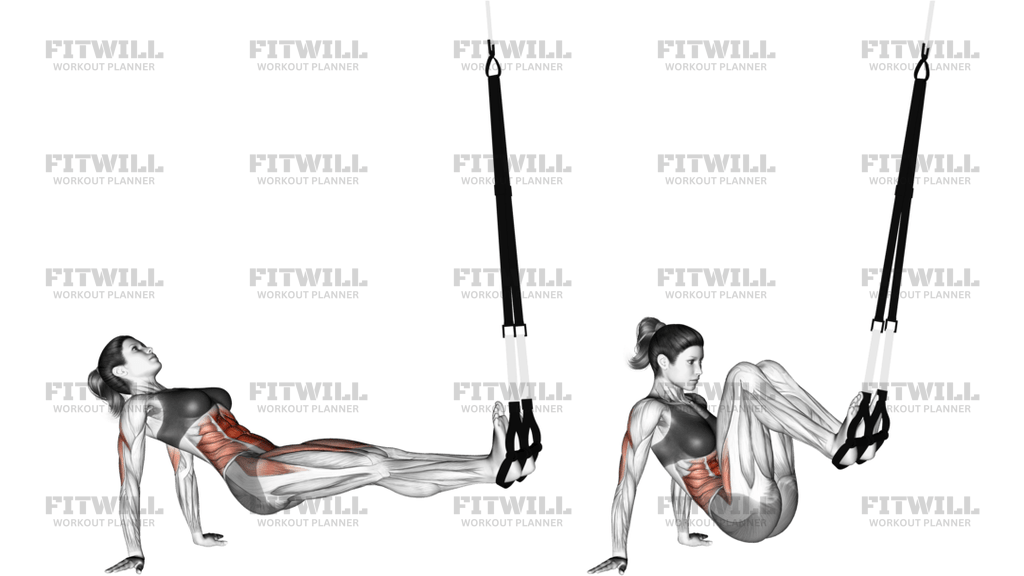
Suspension Jack Knife
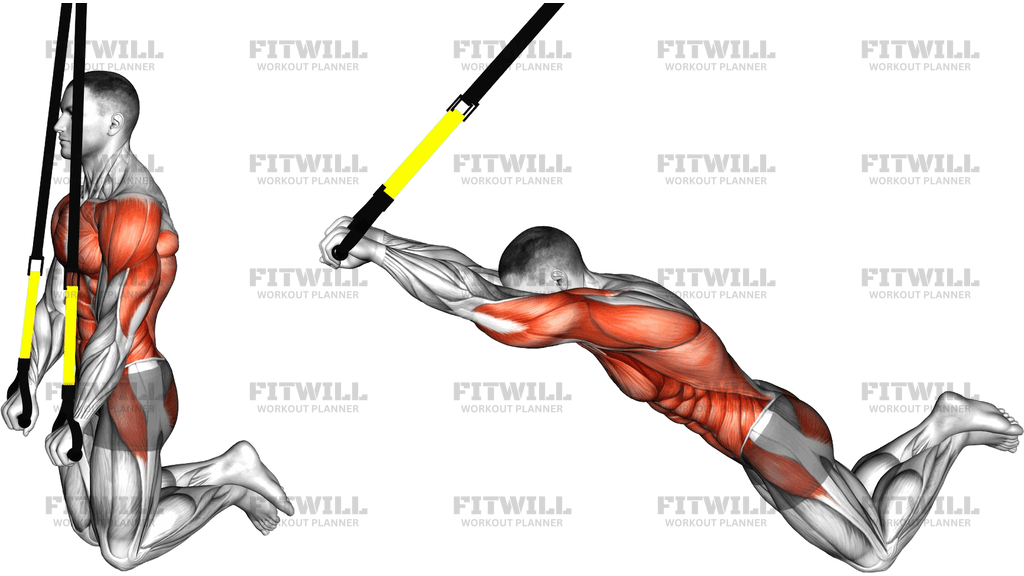
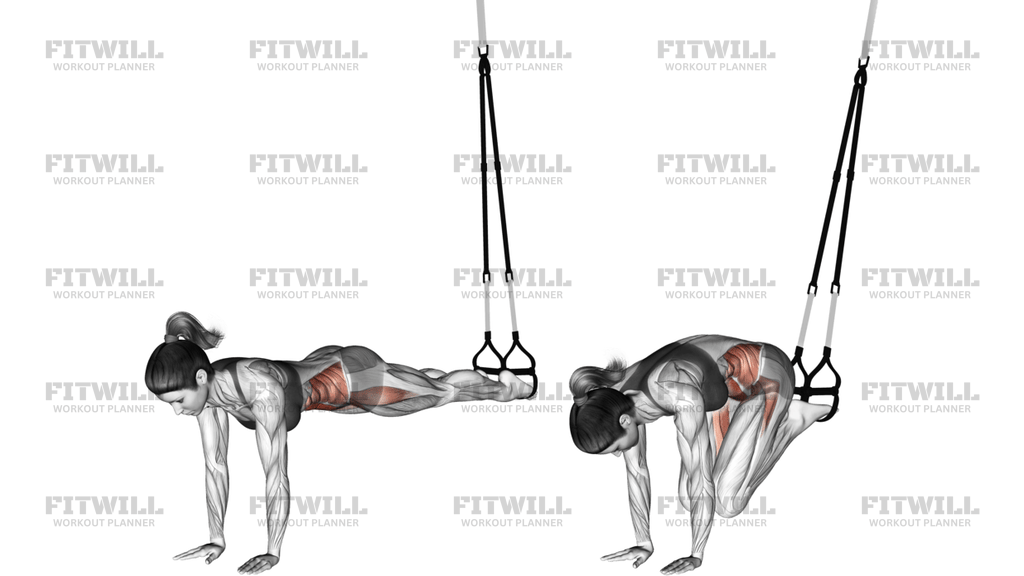
Suspension Jack Knife is a suspension-core exercise that starts in a high plank with the feet supported in the straps and finishes with the hips lifted and the knees tucked under the torso. It is a demanding anti-extension and hip-flexion drill that teaches you to keep the shoulders steady while the lower body moves through a controlled fold.
The main work comes from the abs, with the obliques, hip flexors, and deeper core muscles helping you keep the trunk tight as the feet travel in and out. In anatomy terms, the rectus abdominis does most of the visible shortening, while the external obliques, iliopsoas, and transversus abdominis help control the curl, pelvic position, and return phase. That mix makes the exercise useful when you want core strength that carries over to running, climbing, sprinting, and other movements where the torso must resist collapse.
The setup matters because the suspension straps amplify every mistake. If the handles are too low, too high, or uneven, the body will twist or sag before the first rep even begins. Start with the hands under the shoulders, arms straight, and the body in a long plank from head to heels. The straps should stay steady enough that you can lift the hips without swinging the legs or losing pressure through the hands.
Each repetition should feel like a deliberate fold: draw the knees toward the chest, let the hips rise, and keep the rib cage pulled down instead of flaring. At the top, the torso should form a strong pike or jack knife shape rather than a loose knee tuck. Return slowly to the plank so the abs stay loaded on the way back down, and breathe in a way that supports the brace instead of letting the belly relax completely between reps.
This is not a momentum exercise. Quality matters more than range, and the best sets are the ones where the shoulders stay stacked, the spine stays long, and the straps do not swing wildly. Use it as a core-strength accessory, as part of a suspension circuit, or in an advanced warm-up when you want a challenging bodyweight drill that exposes weak links quickly.
[ Workout Log & Planner ]
Put your next workout in Fitwill
Keep your plan and training log ready when you are.


Instructions
- Adjust the suspension straps so the foot cradles are even, then place both feet in the straps and come into a high plank with your hands under your shoulders.
- Lock your elbows, lengthen your body from head to heels, and keep your shoulders directly over or slightly in front of your wrists before you start the rep.
- Brace your abs so the ribs stay down and the lower back does not sag as you begin the movement.
- Press firmly through your palms and pull the feet toward your hands, lifting the hips as the knees bend under the torso.
- Keep the straps controlled and the legs close together as you fold into the jack knife or pike position.
- Squeeze the abs at the top for a brief moment without letting the shoulders collapse or the head drop.
- Lower the hips slowly and extend the legs back to a straight-body plank while maintaining tension through the core.
- Reset only after you are back in a stable plank, then repeat for the planned number of reps.
Tips & Tricks
- Set the straps evenly before you start so one foot does not travel farther than the other.
- If your hips drop at the start, shorten the range and rebuild the plank position before chasing a bigger tuck.
- Think about lifting the hips first and then pulling the knees in, not just sliding the feet forward.
- Keep the hands planted under the shoulders so the movement stays anchored instead of turning into a push-up shift.
- Do not let the lower back arch as the legs return to plank; keep the ribs pulled down and the abs working.
- Move slowly enough that the straps stay quiet and do not swing through the bottom of the rep.
- Exhale as you fold into the jack knife and inhale as you control the return to plank.
- Stop the set when the shoulders start drifting, the straps wobble, or the knees can no longer stay under control.
Frequently Asked Questions
What does Suspension Jack Knife primarily work?
It primarily targets the abs, especially the rectus abdominis, while the obliques and hip flexors help drive and stabilize the tuck.
Is this the same as a suspension pike?
It is very similar. In this version, the knees bend and travel under the torso as the hips rise, which makes it feel more like a jack knife or knee tuck.
Where should my hands be during the rep?
Keep your hands under your shoulders in a strong plank so your upper body stays anchored while the feet move in the straps.
What is the biggest form mistake?
Letting the hips sag or swinging the straps through the rep is the most common problem. The movement should stay controlled from start to finish.
Can I keep my knees straight the whole time?
Yes, if you can control a straighter-leg pike. Many lifters start with a bent-knee version first because it is easier to keep the torso stable.
Why do my shoulders feel involved?
The shoulders and upper back have to stabilize the plank. That effort is normal, but the core should still do most of the visible work.
Is this exercise appropriate for beginners?
It is usually better for intermediate lifters. Beginners can use a smaller range or a safer regression until they can hold a steady plank in the straps.
How should I progress Suspension Jack Knife?
Progress by cleaning up the plank position, then increasing range, slowing the lowering phase, or doing more reps without letting the straps swing.