Ring Kneeling Ab Rollout
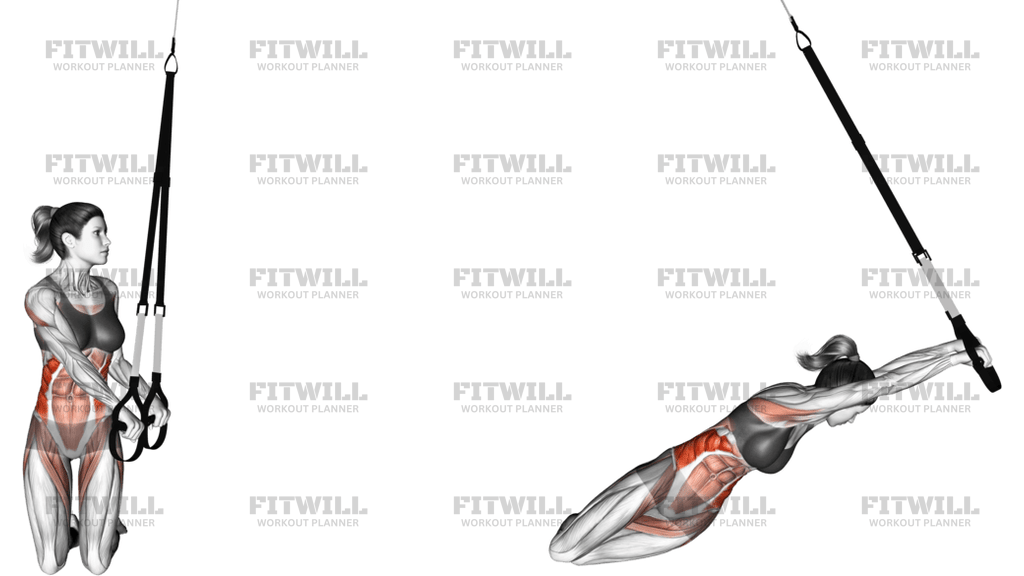
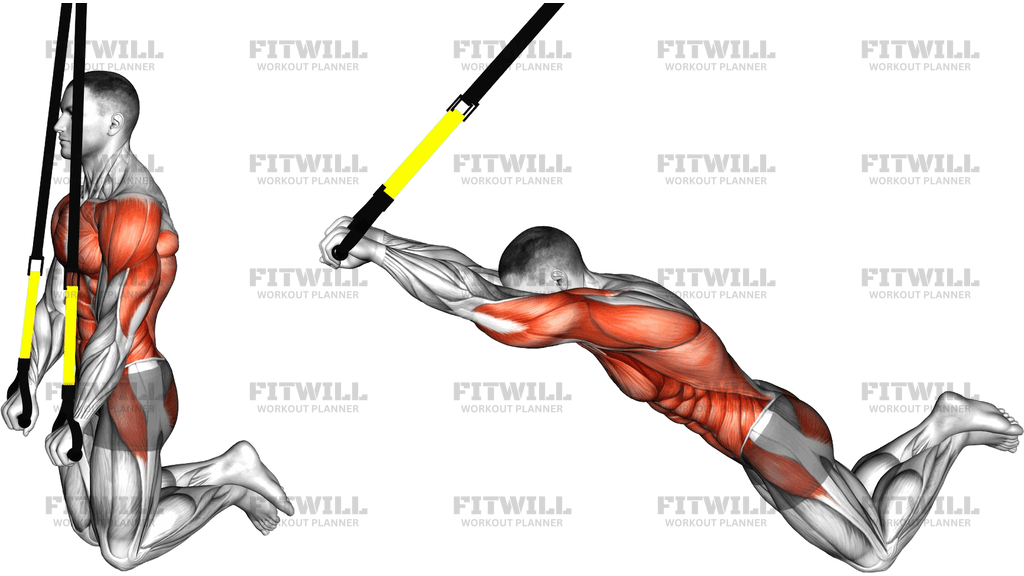
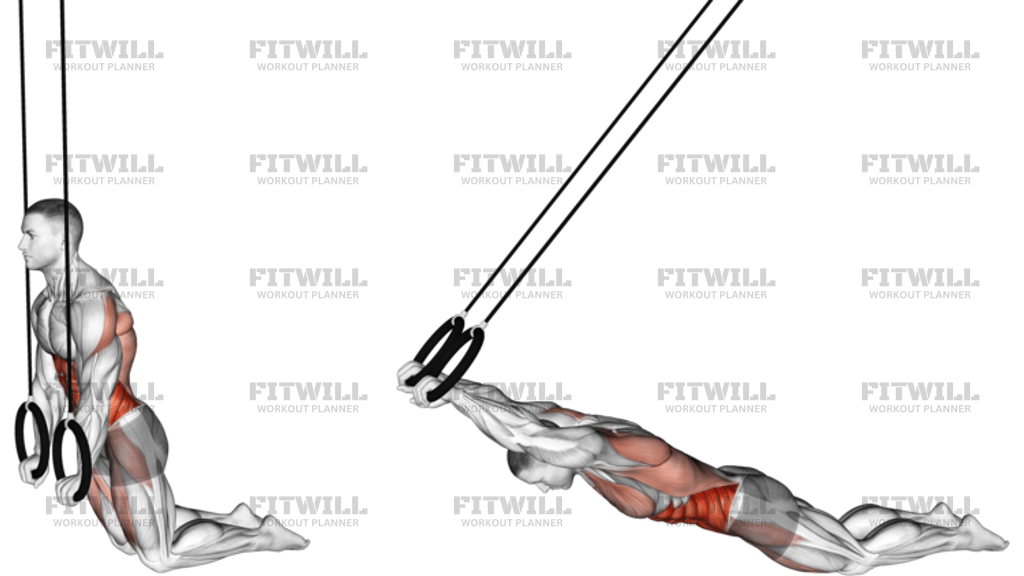
Ring Kneeling Ab Rollout is a suspension-based core exercise performed from a kneeling position. You hold the rings or straps in front of you, let the body travel forward in a long lever, and then pull yourself back by keeping the ribs stacked over the pelvis. The movement is simple in appearance but demanding in practice because the unstable straps magnify every loss of trunk control.
The exercise places the biggest demand on the obliques and the rest of the abdominal wall, with help from the rectus abdominis, transversus abdominis, lats, and shoulder stabilizers. In anatomy terms, the main work centers on the external obliques, with the rectus abdominis and erector spinae helping to manage position as the torso lengthens and returns. That makes the drill useful for anti-extension strength, trunk stiffness, and shoulder control in a compact setup.
The kneeling setup matters. With the shins anchored and the hips extended over the knees, the torso has to resist dropping into a low-back arch as the hands move away from the body. A good rep starts with the rings under tension, the glutes lightly engaged, the pelvis tucked just enough to keep the lower ribs down, and the arms long without shrugging. From there, reach forward gradually instead of falling into the bottom position.
On the rollout, keep the body in one line from knees through hips, ribs, and head as long as possible. The farther the rings travel, the more the core has to fight extension and rotation. Stop the descent before the low back takes over, then pull the rings back toward the shoulders by tightening the abs and lats together. The return should feel controlled, not like a collapse back to upright.
This exercise works well as accessory core strength, as part of an upper-body day, or in a session focused on trunk control and stability. Start with a short range of motion and slow tempo if the straps feel unstable. The best sets are the ones where each repetition looks nearly identical. If the shoulders shrug, the hips drift back, or the ribs flare, shorten the range and clean up the pattern before adding more reps or more leverage.
[ Workout Log & Planner ]
Put your next workout in Fitwill
Keep your plan and training log ready when you are.


Instructions
- Kneel on a mat with the shins and tops of the feet on the floor, then hold the suspension rings so they hang in front of your shoulders.
- Bring the hands just under shoulder height, keep the elbows straight, and set the straps under tension before you start the first rep.
- Tuck the pelvis slightly, squeeze the glutes, and pull the ribs down so your torso starts tall instead of arched.
- Lean forward by reaching the rings away from your knees, letting the body travel as one long line without bending at the hips.
- Keep the shoulders active and the neck long as the arms move farther from the knees.
- Lower only as far as you can keep the lower back from sagging or the straps from shaking out of control.
- Pull the rings back toward the shoulders by tightening the abs and lats, then return to the tall kneeling start position under control.
- Reset your breath at the top and repeat for the planned number of repetitions.
Tips & Tricks
- Set the rings at a height that lets you start with tension immediately; if they are too high or too far away, the first inch of the rollout becomes sloppy.
- Think about pulling the front of the ribs toward the pelvis before each rep so the low back does not take over when the arms move forward.
- A slight glute squeeze helps keep the hips from drifting backward and turning the drill into a hip hinge.
- Keep both straps even; if one ring travels farther than the other, the torso will twist and the obliques will have to fight rotation.
- Use a slow reach on the way out, especially the last third of the range, because that is where control usually breaks down.
- Stop the rollout as soon as the shoulders start shrugging or the lower back starts to extend instead of forcing extra distance.
- Breathe out as you reach forward and inhale on the return if that timing helps you keep the brace organized.
- Treat this as a quality movement, not a high-rep endurance drill; short sets with perfect positions are usually more productive.
Frequently Asked Questions
What muscle does Ring Kneeling Ab Rollout target most?
The obliques are the primary target, with the rectus abdominis, transversus abdominis, and shoulder stabilizers working hard to keep the torso from arching.
Why use suspension rings instead of a fixed ab rollout bar?
The unstable straps make the trunk and shoulders work harder to stay square, which adds a strong anti-rotation demand to the usual ab rollout pattern.
How far should I roll out on the rings?
Only go as far as you can keep the ribs down, the pelvis slightly tucked, and the low back from sagging. A shorter clean range is better than a long messy one.
Should my arms stay straight during the rollout?
Yes. Keep the elbows extended and let the shoulders and trunk control the movement, rather than turning it into a bent-arm pull.
What is the most common form mistake?
Most people let the lower back arch and the hips drift behind the knees, which shifts the work away from the abs and into passive spinal extension.
Is this exercise appropriate for beginners?
Yes, if they start with a short range of motion and can keep the straps steady. Beginners should treat it as a controlled core drill, not a maximal rollout.
Why do my shoulders feel involved so quickly?
The shoulders have to stabilize the rings while the torso travels forward, so some shoulder fatigue is normal. If the shoulders dominate, shorten the range and keep the ribs more stacked.
How can I make Ring Kneeling Ab Rollout harder?
Increase the rollout distance, slow the eccentric phase, or move the rings farther in front of the knees so the lever becomes longer.