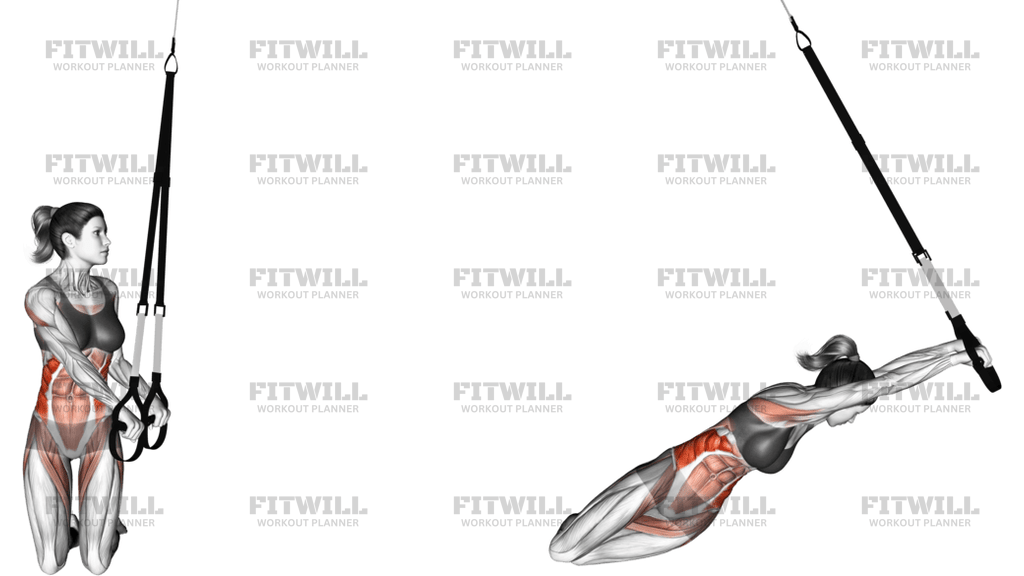
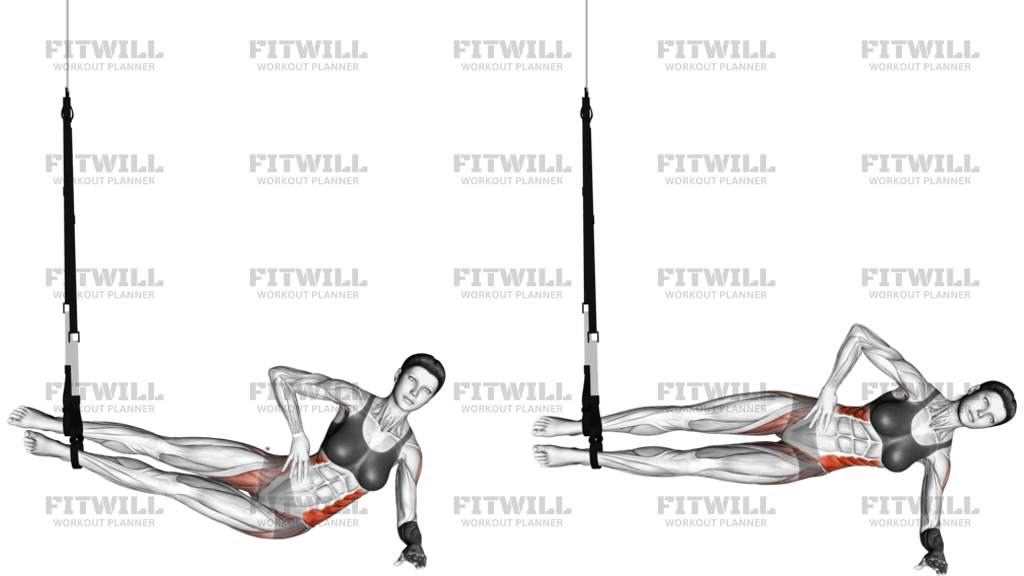
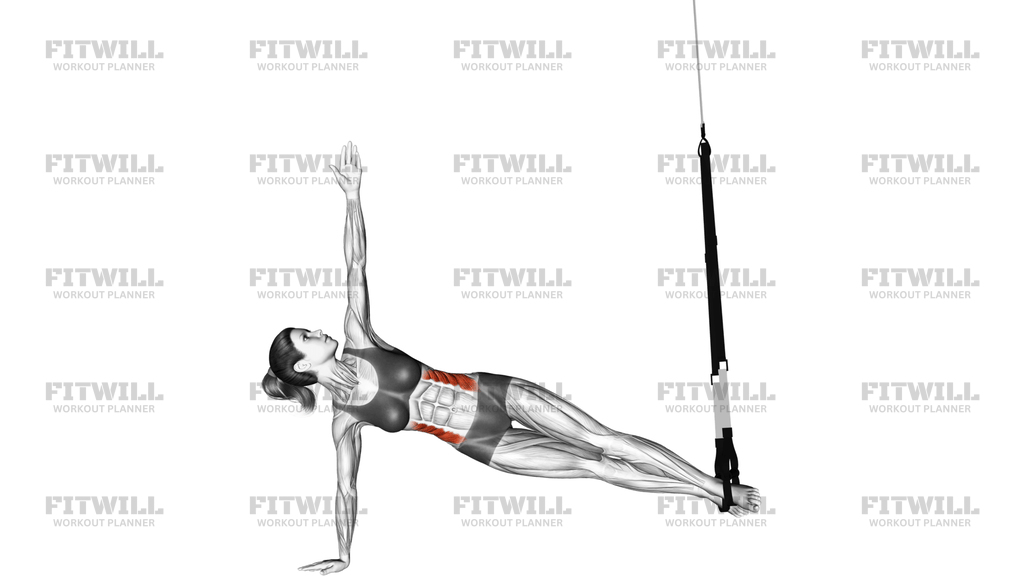
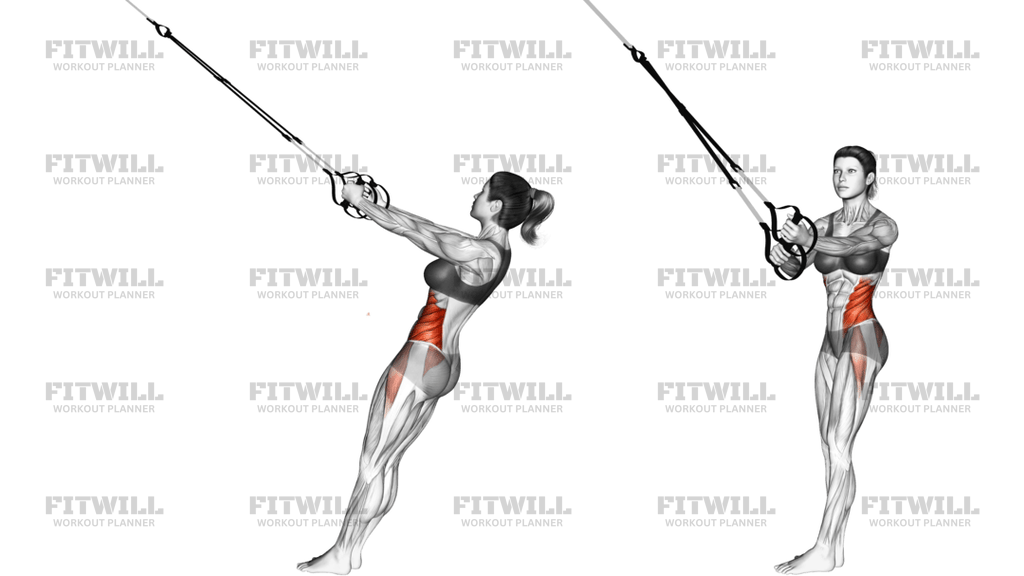
Suspension Side Bend
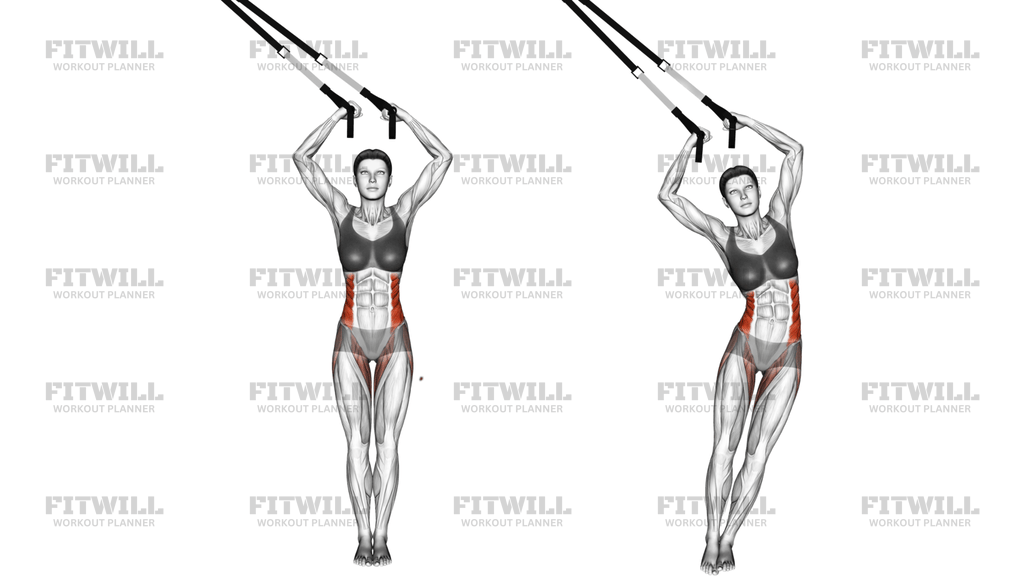
Suspension Side Bend is a standing suspension-core exercise built around controlled lateral flexion of the torso. With the straps overhead and both feet planted, you lower one side of the rib cage toward the hip, then return to a tall, stacked position. The movement is simple on paper, but the setup matters: if the arms drift, the pelvis rotates, or the feet shift, the work moves away from the obliques and into momentum.
This exercise primarily trains the obliques, with the rectus abdominis, transversus abdominis, and spinal erectors helping you stay organized as you bend and return. In practical terms, it is a waist-and-core drill that challenges side-body strength, trunk control, and anti-rotation stability at the same time. The suspension straps add just enough instability to make posture and line of pull matter on every rep.
Start by standing tall beneath the anchor with the handles held overhead, elbows softly bent, and the straps evenly tensioned. Keep the ribs stacked over the pelvis before you begin. As you bend to one side, the torso should arc as a single unit rather than collapsing through the low back or twisting through the shoulders. The return should feel like you are shortening the side waist to stand back up, not yanking yourself upright with the arms.
The best reps are smooth and deliberate. A small, honest range of motion is better than a big bend that breaks alignment or allows the hips to slide sideways. Because the body is long and the load is light to moderate, this movement is often used for core conditioning, warm-ups, accessory work, and trunk-control circuits. It is also useful when you want oblique work without loading the spine heavily.
Treat the straps as support, not a way to pull through the repetition. If the hands travel far from overhead, the shoulders shrug, or the feet rock from side to side, the side bend loses its purpose. Keep the motion in the waist, breathe steadily, and stop the set when you can no longer keep the torso tall on the way back to center.
[ Workout Log & Planner ]
Put your next workout in Fitwill
Keep your plan and training log ready when you are.


Instructions
- Stand under the suspension anchor facing forward and hold both handles overhead with your arms slightly bent.
- Plant your feet hip-width or narrower, keep your legs straight but not locked, and stack your ribs over your pelvis.
- Set your shoulders down away from your ears and create light tension in the straps before you begin.
- Brace your midsection, then bend your torso slowly to one side without turning your chest or letting your hips slide.
- Let the outside ribs travel toward the outside hip while the arms stay long and the handles remain overhead.
- Pause briefly at the end of the side bend when you still feel balanced and in control.
- Drive the working side of your waist to bring your torso back to a tall, centered position.
- Exhale as you come back up, then reset your posture before the next repetition.
- Repeat to the other side or for the planned reps if your program uses alternating sides.
Tips & Tricks
- Keep the handles directly overhead; if your hands drift forward, the movement turns into a pull instead of a side bend.
- Think about shortening the waist on the bent side rather than collapsing the shoulder or reaching the hip sideways.
- Keep both feet quiet. If one foot lifts or pivots, the set is becoming a balance drill instead of trunk work.
- A smaller range with clean ribs-and-pelvis alignment is better than forcing a deep lean and losing the side-body tension.
- Do not twist toward the anchor. The chest should stay facing forward while the torso bends laterally.
- Keep the neck long and the jaw relaxed so the upper traps do not take over the effort.
- Use a tempo that lets you own the return to center; the lowering phase should never drop quickly.
- Pick a light to moderate suspension setup. Too much body angle or strap tension makes it hard to isolate the obliques.
Frequently Asked Questions
What muscle does Suspension Side Bend target most?
The obliques are the primary target, especially the side waist that shortens as you bend and returns you to center.
How should my body be positioned at the top of the rep?
Stand tall with both handles overhead, ribs stacked over the pelvis, and only a small bend in the elbows.
Should I keep my feet moving during the side bend?
No. Keep both feet planted and quiet so the motion stays in the waist instead of turning into a step or sway.
What is the most common form mistake?
Twisting the torso or shrugging the shoulders to fake a bigger range is the most common problem.
Can I bend as far as possible for a better stretch?
Only if you can keep the hips level and the chest facing forward. A smaller, clean side bend is usually better than a deep collapse.
Do the arms do the work in this exercise?
No. The arms mainly hold the straps overhead while the obliques and trunk control the bend and return.
Is this exercise more about strength or control?
It is mostly about control and side-body strength. If you rush it, the straps and momentum will take over.
How can I make Suspension Side Bend harder?
Increase strap tension, slow the lowering phase, or add a pause at the bottom while still keeping the torso square.