Wide Leg Learning Forward
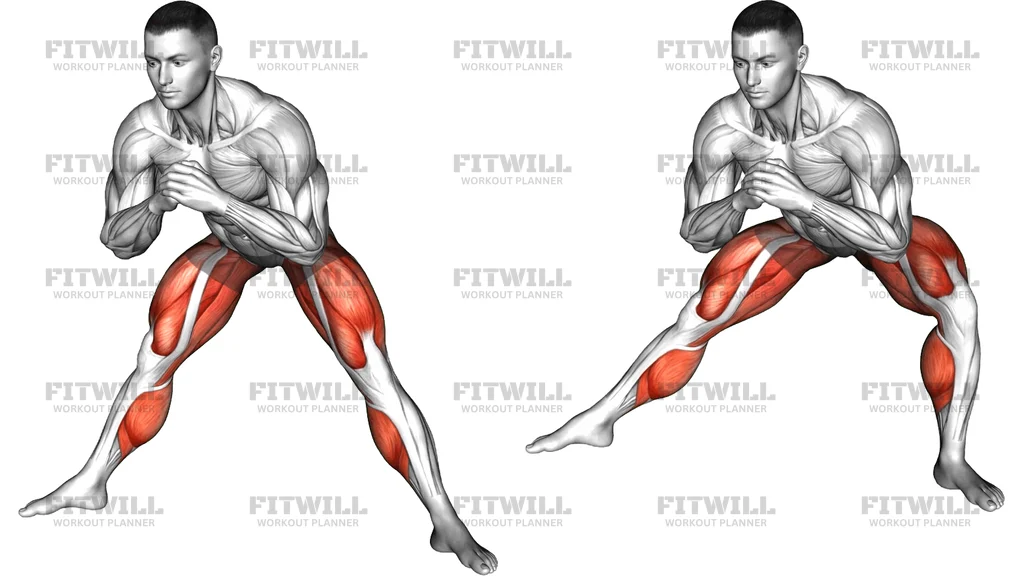
Wide Leg Learning Forward is a seated stretch performed from a straddle position, where you sit with your legs spread wide apart and hinge forward from the hips, reaching your arms out over the floor in front of you. It combines the deep hamstring stretch of a forward fold with a strong inner thigh and hip opening effect, making it one of the most efficient single stretches for the entire back line of the lower body.
This stretch is especially useful for anyone with tight hamstrings or adductors: desk workers who sit for long hours, runners and cyclists whose hip flexors and hamstrings habitually shorten, and anyone practicing martial arts, dance, or gymnastics who wants to improve straddle and split flexibility. It is also a staple in yoga practice, where it closely resembles the posture known as Upavistha Konasana.
The wide stance changes the stretch compared to a standard seated forward fold. Instead of loading only the hamstrings, the spread legs place significant lengthening tension on the inner thigh muscles and the hip adductors, while the forward hinge still targets the hamstrings and the muscles along the spine and lower back. Because the legs stay relaxed and open, many people find they can hinge deeper here than in a closed-leg fold.
Setup matters more than most people expect. Sitting with a tall spine and your weight balanced over your sitting bones determines whether the fold comes from the hips or from rounding the lower back. A common mistake is collapsing the chest toward the floor early, which rounds the spine and shifts tension away from the hamstrings. Think of leading with the sternum and keeping the back long for as long as possible.
To execute it well, sit with your legs spread to a wide but sustainable angle, toes pointing up toward the ceiling. Place your hands on the floor behind you to straighten and settle your posture first, then walk your hands forward as you hinge from the hips. Keep your knees soft but not bent, and let your arms reach out in front of you along the floor. Move slowly and stop at the point where you feel a clear, tolerable stretch, not pain.
A few practical points keep this stretch safe. Avoid bouncing or forcing the torso down, since the hamstrings and inner thighs respond poorly to ballistic loading when cold. If your hips are tight, reducing the leg angle is not cheating; it simply lets you target the same muscles at a range you can actually hold. Hold the end position for 20 to 60 seconds while breathing steadily, then walk your hands back and bring your legs together gradually rather than snapping out of the position.
[ Workout Log & Planner ]
Put your next workout in Fitwill
Keep your plan and training log ready when you are.


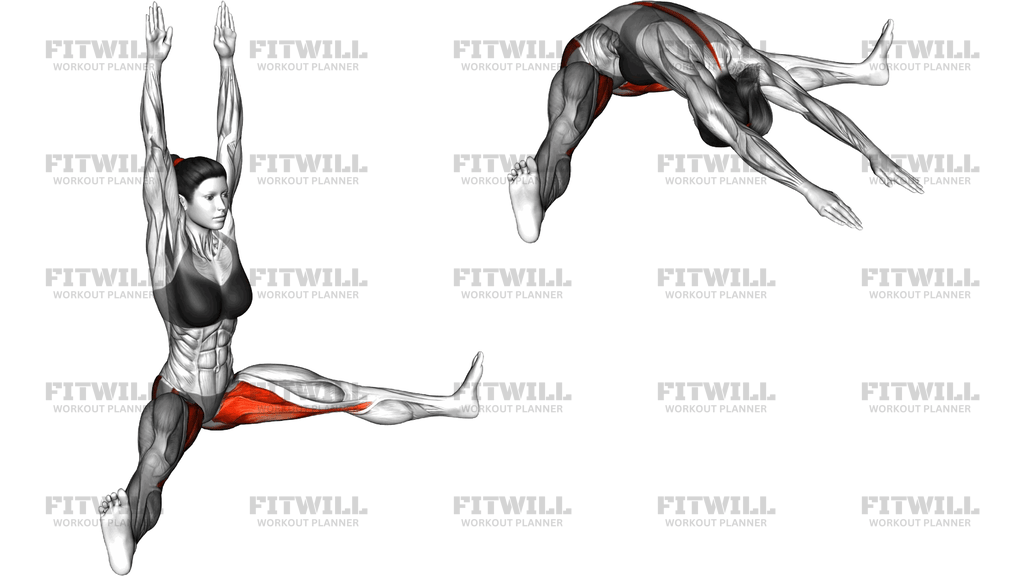
Instructions
- Sit on the floor with your legs spread into a wide V, wide enough to feel length along the inner thighs but not so wide that your pelvis tips backward.
- Point your kneecaps and toes up toward the ceiling and press the backs of your thighs and calves toward the floor.
- Place your palms on the floor behind your hips and use them to lift your chest and stack your spine tall over your sitting bones.
- Engage your core lightly to keep your back long, and inhale to prepare.
- As you exhale, hinge forward from the hips, leading with your chest rather than your head.
- Walk both hands forward along the floor in front of you, letting your arms extend as your torso lowers toward the space between your legs.
- Continue until you feel a firm stretch through the hamstrings, inner thighs, and along the back of the pelvis, then hold that position.
- Breathe slowly and deeply, allowing the torso to lower slightly further on each exhale if the stretch feels comfortable.
- To finish, press your hands into the floor, walk them back toward your hips, and lift your torso upright with a flat back.
- Bring your legs together gently, shaking out or bending your knees briefly before repeating or moving on.
Tips & Tricks
- If your pelvis tucks under and your lower back rounds at the start, sit on a folded towel or a low cushion to raise your hips and improve your hinge.
- Do not force your legs wider than you can hold with your kneecaps facing the ceiling; legs that roll inward turn the stretch away from the inner thighs.
- Avoid grabbing your feet and pulling yourself down, which often collapses the chest; instead let your hands travel forward at the pace your hips allow.
- Keep some quiet tension in the front of the thighs rather than letting the knees bend, because bent knees let the hamstrings slack off and shrink the stretch.
- Warm up first with a few minutes of walking or light leg swings; cold adductors and hamstrings resist this position noticeably more.
- If you feel sharp sensation behind one knee, back off and soften the knees slightly, since the tendons at the knee are a common overload point in this fold.
- Keep your neck relaxed and in line with your spine instead of craning to look forward, especially once the torso is low.
- Treat the hold time as progressive: start around 20 seconds and build toward 60 as your range improves over weeks, not within one session.
- Exit the stretch by sitting up first and then closing the legs, rather than rolling out of it sideways, which keeps the lower back protected.
Frequently Asked Questions
Which muscles does Wide Leg Learning Forward stretch?
The primary targets are the hamstrings and the inner thigh adductors, with additional lengthening through the calves, the muscles of the lower back, and the deep hip rotators as the torso folds between the legs.
Is Wide Leg Learning Forward suitable for beginners?
Yes, as long as the leg angle is kept moderate and the fold comes from the hips. Beginners should expect meaningful inner thigh sensation and should prioritize a long spine over depth.
How wide should my legs be in Wide Leg Learning Forward?
Choose an angle where you can still sit upright on your sitting bones with your kneecaps facing the ceiling. For most people that is roughly a 90 to 120 degree spread, and narrower is fine if your hips are tight.
Why does my lower back round so much in this stretch?
This usually happens when the hamstrings or adductors limit the hip hinge, so the spine compensates by curling. Elevate your hips on a cushion, reduce the leg width, and focus on leading with the chest to restore a proper fold.
Should my knees be bent or straight during Wide Leg Learning Forward?
Keep the legs essentially straight with the kneecaps pointing up, because bent knees release tension from the hamstrings. If you feel strain behind a knee, a very slight softening is safer than a hard lockout.
How long should I hold the Wide Leg Learning Forward position?
Hold for 20 to 60 seconds with steady breathing, and repeat two to three rounds if you are working on flexibility. Long, relaxed holds produce better results than brief or bouncy ones.
Can I do this stretch before a workout?
A short, gentler version is fine as part of a warm-up, but deep, long holds are better saved for after training or separate flexibility sessions, when the muscles are warm and less guarded.
What can I use instead if sitting on the floor is uncomfortable?
You can sit on a folded blanket or yoga block to lift the hips, or perform a standing wide-leg forward fold with hands on a chair or the floor, which stretches similar muscles with less load on the pelvis.
Is it normal to feel the stretch more in one inner thigh than the other?
Yes, side-to-side differences are common due to hip structure and daily habits. Check that both legs are spread evenly and both kneecaps face up, and simply work within the range of the tighter side.