Deep Lunge Circle
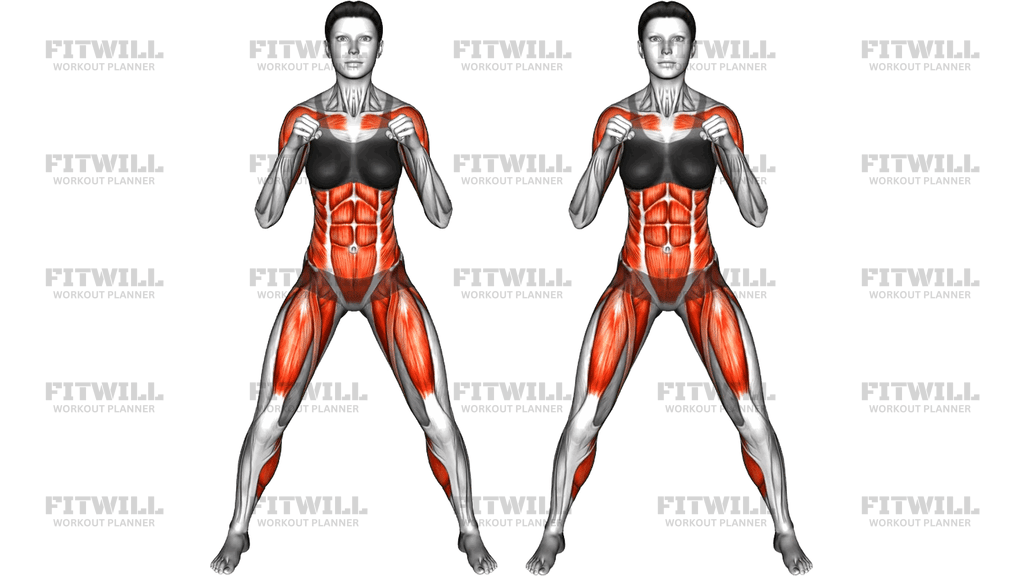
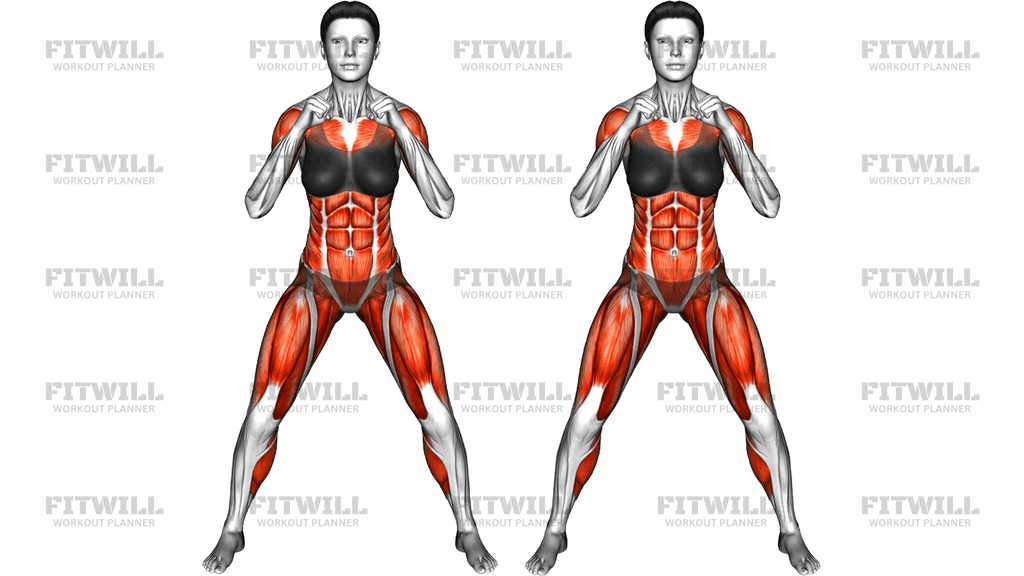
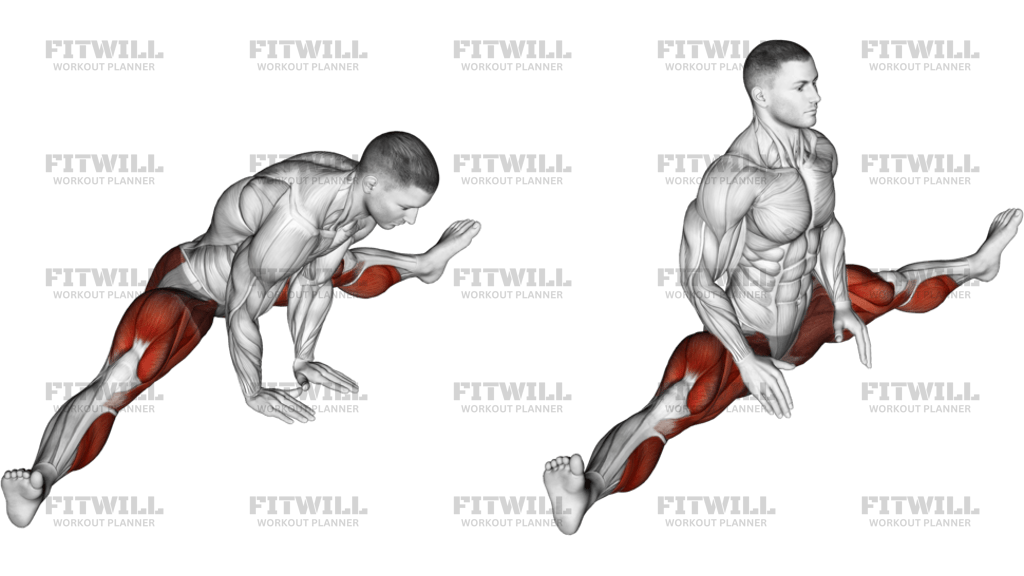
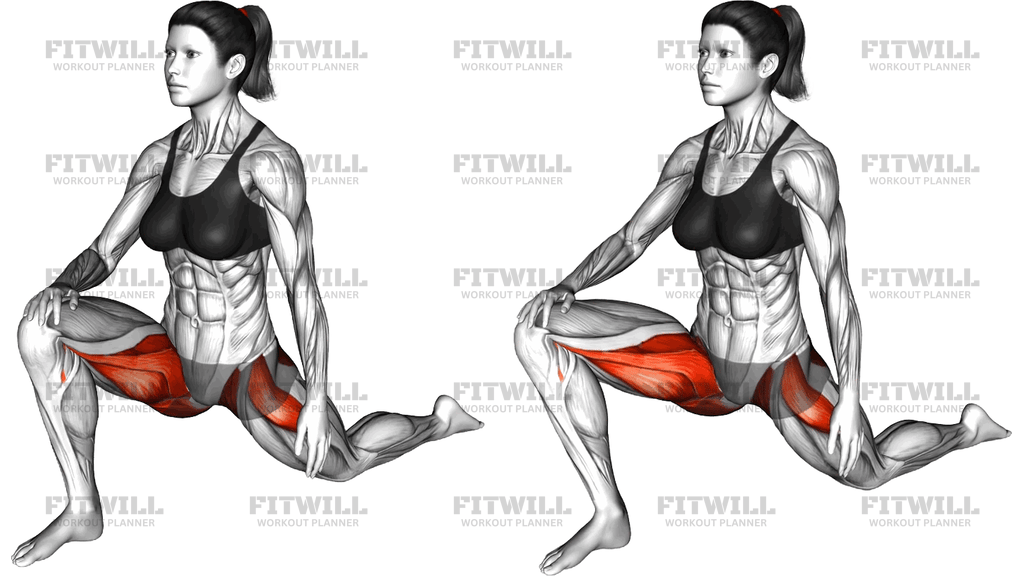
The Deep Lunge Circle is a bodyweight hip mobility drill that takes you into a very wide, low lunge position and has you sweep the hips in slow, controlled circles while you stay sunk down between your legs. One leg is bent deeply in front of you, the other is extended long behind and to the side, and your hands rest on the front knee or the floor for balance. From that settled position, the circling motion gently rotates the femur in the hip socket and lengthens the inner thigh and hip tissue through a range that ordinary forward lunges never touch.
This movement is especially useful for anyone whose hips feel tight from long hours of sitting, or whose adductors and hip flexors complain during squats, lunges, or running. Because the front knee is loaded in deep flexion while the rear hip is stretched long, both sides of the pelvis get worked at once — the front hip mobilizes through rotation while the extended leg loads the inner thigh and hamstring of the rear limb. The circling path also asks your core to steady your trunk, so you get a low-level stability demand without any equipment at all.
Setup matters more here than in most lunges. With such a wide stance, the temptation is to let the front knee cave inward or the lower back round as you sink. Keeping the front knee tracking over the toes, the chest tall, and the pelvis level is what separates a productive hip opener from a cranky knee drill. Hands on the front thigh or the floor give you just enough support to relax into the position instead of fighting for balance.
To execute it well, lower into the wide lunge first and let your body settle for a breath or two. Then begin tracing small circles with your hips, letting the torso lean slightly in the direction of travel and using the front knee as a pivot point. Keep the circles slow — one full revolution every few seconds — and gradually widen the arc as the hips release. Reverse direction after several rotations so both rotational patterns get attention.
You will see this drill used as a warm-up before lower-body strength work, as a standalone mobility session, or as a cooldown stretch after running, cycling, or field sports. It fits well into any routine that needs more hip rotation and adductor length without load.
From a safety standpoint, the deep knee flexion and wide stance demand respect. Never force depth; stay on the balls of the rear foot or lower the rear knee to the floor if the position feels pinchy at the front of the hip. If you feel sharp pain in the knee joint itself rather than a stretch through the groin or thigh, shorten the stance and rebuild the range gradually.
[ Workout Log & Planner ]
Put your next workout in Fitwill
Keep your plan and training log ready when you are.


Instructions
- Stand with your feet much wider than hip width, then step one leg out and rotate slightly so you can sink into a deep side-facing lunge with the front foot flat and the rear leg extended long behind it.
- Bend the front knee until it sits directly over the ankle or slightly past it, and lower your hips down between the legs; place both hands on the front thigh, or drop fingertips to the floor for extra support.
- Keep the rear leg straight with the heel pressing back and the toes turned slightly under, so the inner thigh of that leg stays loaded and lengthened.
- Brace the abdominals lightly and lengthen the spine so the chest stays lifted rather than collapsing over the front knee.
- Inhale, then begin sweeping the hips in a slow circle, letting the weight roll from the center of the stance toward the front heel, across the midline, and back — one smooth loop every three to five seconds.
- Let the torso lean a few degrees in the direction of the circle while the hands stay anchored to the front thigh or floor; the movement should come from the hips, not from twisting the lower back.
- Complete five to eight circles in one direction, feeling the stretch travel around the groin, front hip, and rear inner thigh as you rotate.
- Reverse the direction and repeat the same number of circles, keeping the pace deliberate.
- Exhale as you settle deeper into each pass and inhale as the hips rise slightly through the top of the arc.
- To reset, press through the front foot, bring the rear leg in with control, and switch sides so the opposite hip leads the lunge.
Tips & Tricks
- If the front knee collapses inward as you circle, actively drive it out over the pinky toe — that inward drift is the most common fault in this wide position and it shifts stress onto the knee joint.
- When the groin feels sharp rather than like a lengthening stretch, shorten the stance a few inches; depth in this drill should come from hip control, not from forcing the legs wider.
- Keep the rear heel pressing back toward the wall behind you — letting it drift forward turns the rear-leg stretch into a loose, unloaded position with little benefit.
- Start with small circles the size of a dinner plate and grow the arc only after a few revolutions; diving straight into big loops usually makes people twist the lower back instead of the hips.
- If balance is shaky, place fingertips on the floor rather than gripping the front knee hard — pulling on the knee changes the joint position and can irritate it.
- Round the rear toes under and keep that leg's kneecap facing down or inward; a fully externally rotated rear leg takes the inner thigh out of the stretch.
- Move slower than feels necessary — the circle is a mobility tool, and rushing it turns the drill into a momentum exercise where the hips never actually reach end range.
- Breathe out as the hips sink through the lowest part of each circle; holding the breath tenses the pelvic muscles and limits how much range you can access.
- Do this drill on a mat or non-slip surface, since the rear toes carry body weight and slide easily on smooth floors.
Frequently Asked Questions
Which muscles does the Deep Lunge Circle target?
It primarily mobilizes the hips, with the inner thigh adductors and hip flexors taking the main stretch. The glutes and deep hip rotators work on the front leg, and the core stabilizes the trunk throughout the circling motion.
Is the Deep Lunge Circle suitable for beginners?
Yes, as long as the stance is shortened and the rear knee is allowed to rest on the floor. Beginners should start with small circles and use fingertips on the floor for support before relying only on the front thigh.
How is the Deep Lunge Circle different from a regular side lunge?
A side lunge moves you in and out of the position dynamically, while the Deep Lunge Circle holds you low in the wide lunge and adds continuous hip circles. That sustained hold shifts the emphasis from leg strength toward hip mobility and adductor length.
Should my rear heel stay on the floor during the circles?
In the deep version shown, the rear leg is extended long with the toes tucked under and the heel reaching back, which keeps tension in the inner thigh. If that is uncomfortable, you can drop the rear knee to the floor and still circle the hips effectively.
How many circles should I do on each side?
Five to eight circles in each direction per side is a solid starting dose. Spend more time on the side that feels tighter rather than counting the same reps on both legs.
Why does my knee ache instead of my hip during this drill?
That usually means the front knee is caving inward or traveling too far past the toes. Drive the knee out over the little toe, shorten the stance slightly, and the discomfort should shift back into the hip and groin where the stretch belongs.
Can I use the Deep Lunge Circle as a warm-up before squats or lunges?
Absolutely — it is one of the better ways to open the hips before lower-body lifting. Do a set per side before training, and keep the circles controlled so you arrive at your working sets mobilized rather than fatigued.
What can I substitute if the deep position is too difficult?
Drop the rear knee to the mat and perform smaller hip circles from that supported half-kneeling lunge. As your hip and adductor flexibility improves, extend the rear leg back into the full deep lunge position.
Should I hold my breath while circling the hips?
No — match your breath to the movement by exhaling as the hips sink through the bottom of the circle and inhaling as they rise. Steady breathing keeps the pelvic and trunk muscles from bracing against the range you are trying to gain.