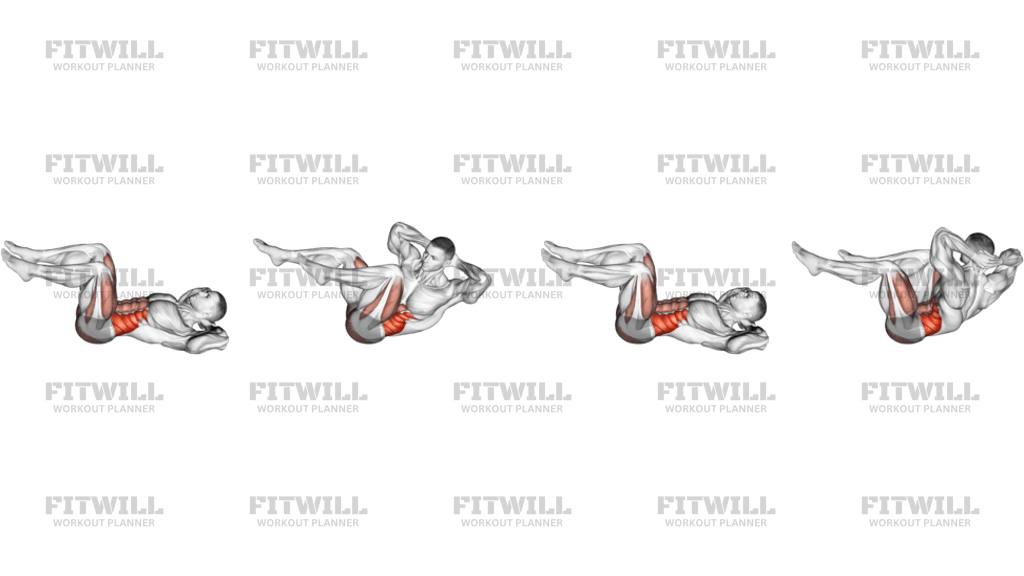
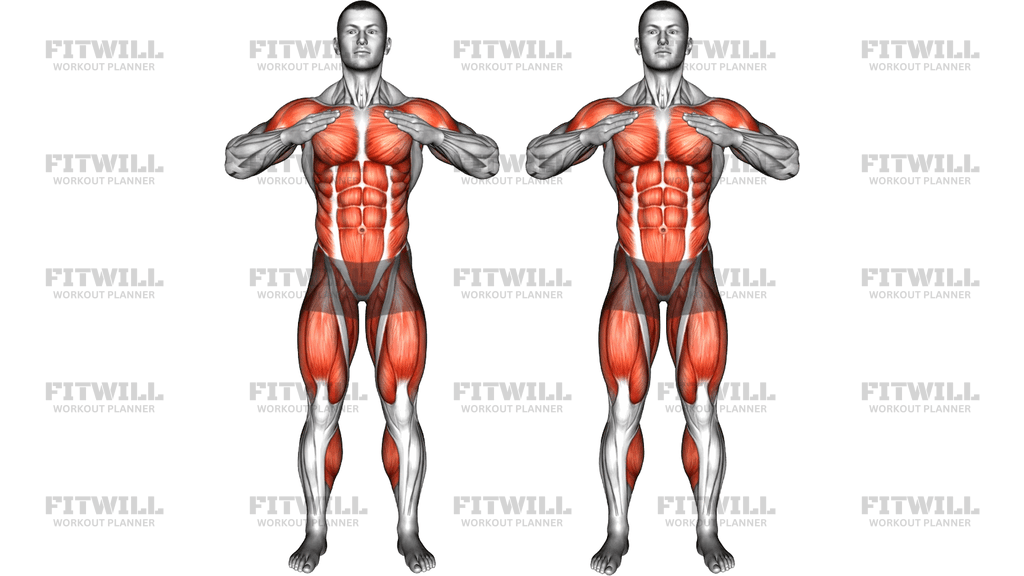
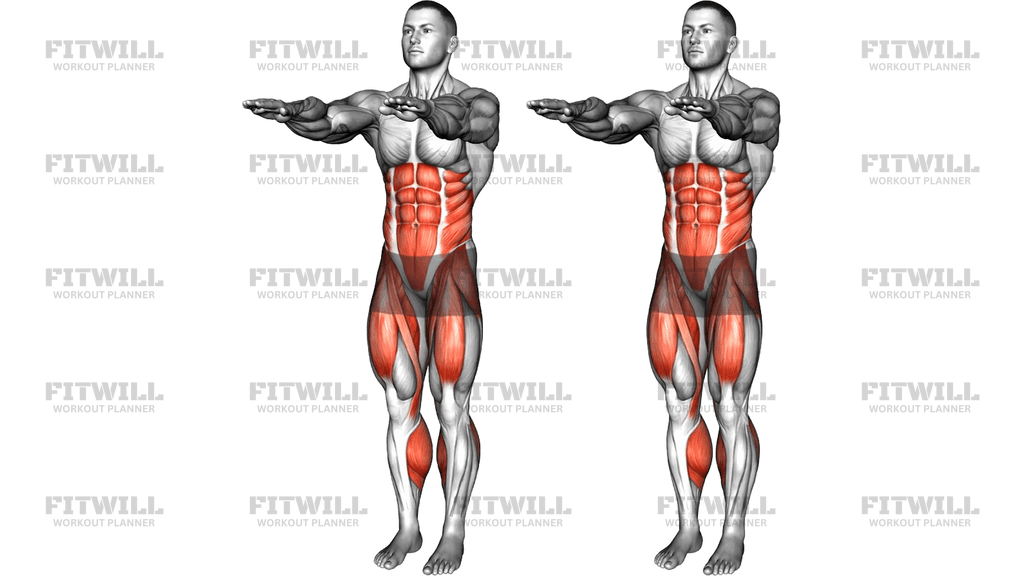
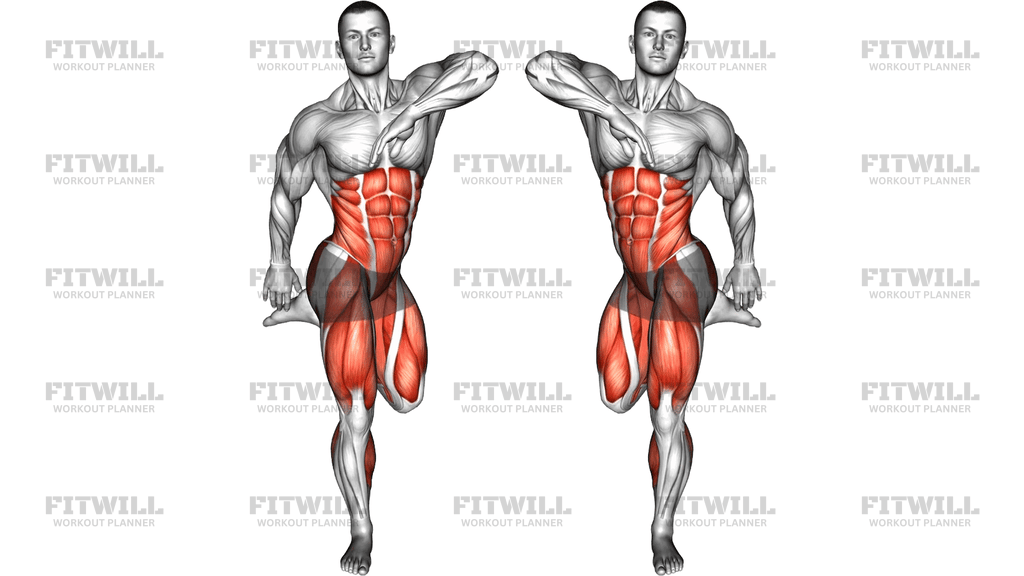
Weight Shift Side Punch
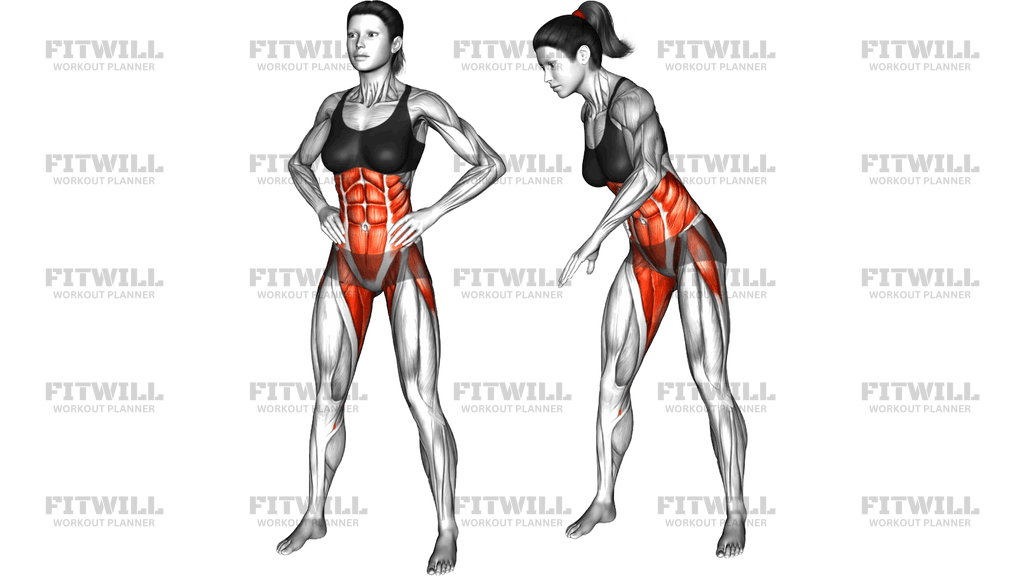
The Weight Shift Side Punch is a standing body weight drill that combines a lateral weight transfer with a punching action, blending core rotation, leg work, and upper body movement into one coordinated pattern. You start in a wide stance with your fists held up in a guard position near your chin, then shift your hips sideways over one leg while driving a punch across or out to the side, before reversing the motion to the other side. It looks simple, but when the shift and the punch are timed together, it becomes a demanding exercise for the obliques, the deep trunk stabilizers, and the legs that control every transfer of weight.
This movement is useful for anyone who wants rotational strength and coordination without equipment. Because the punch is driven from the ground up, through the hips and trunk, it teaches the same sequential transfer of force that boxing, martial arts, tennis, and throwing sports all rely on. It also works well as a low impact conditioning option: performed in continuous repetitions at a steady rhythm, it raises the heart rate while keeping the joints loaded gently.
The setup matters more than people expect. A wide stance gives the hips room to shift, a soft bend in both knees protects them as the weight moves side to side, and the guard position keeps the shoulders and elbows ready to move without flaring. If the stance is too narrow, the hips cannot travel far enough and the low back ends up doing the rotating instead of the obliques. If the knees lock out, every weight shift jams into the joint rather than flowing through it.
To execute the exercise well, think of the hips leading the punch. As you shift your weight fully onto one leg, the opposite hand drives out in a punch while the other fist stays anchored at your chin. The chest rotates slightly toward the punching side, the punching arm extends without locking the elbow, and the punching-side hip and knee stay loaded so you can immediately push back to center and repeat on the other side. Exhale sharply on each punch to help the trunk firm up, and inhale as you return through the middle.
Common uses include warm-ups for striking or rotation sports, core circuits, active recovery sessions, and at-home workouts where no equipment is available. Beginners can slow the tempo and shorten the punch, while more advanced trainees can add speed, hold the wide stance lower, or extend the set duration. The main safety points are keeping the knees tracking over the toes during each shift, avoiding a forward lean as you reach, and stopping the punch at full extension rather than snapping the elbow straight with force.
[ Workout Log & Planner ]
Put your next workout in Fitwill
Keep your plan and training log ready when you are.


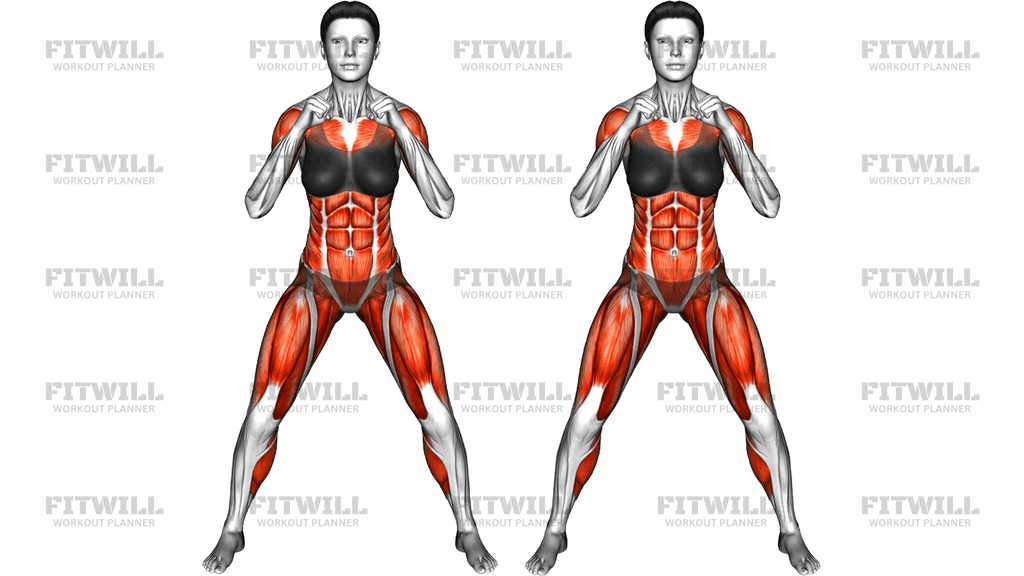
Instructions
- Stand with your feet roughly one and a half to two times shoulder-width apart, toes turned out slightly, and let both knees bend softly.
- Raise both fists to guard position at chin height, elbows tucked close to your ribs, and look straight ahead.
- Brace your midsection as if bracing for a light push, keeping your torso tall and your weight balanced between both feet.
- Shift your hips and body weight sideways onto your right leg until that knee is stacked over your foot and the left leg is nearly straight.
- As the weight settles onto the right leg, drive your left fist out in a horizontal punch at chest height, rotating your chest slightly with it while the right fist stays at your chin.
- Stop the punch just before the elbow locks, keeping the shoulder down and the arm at shoulder level rather than reaching upward.
- Pull the left fist back to guard and push through the right foot to shift your weight back through center onto the left leg.
- Repeat the punch with the right arm as the weight moves over the left leg, then continue alternating sides in a smooth rhythm.
- Exhale sharply on each punch and inhale as you transfer weight back through the middle.
- When the set is finished, bring your feet back toward center, lower your fists, and shake out the shoulders before resting.
Tips & Tricks
- The most common mistake is punching first and shifting after. Let the weight transfer start the motion so the obliques rotate the trunk and the arm simply finishes the punch.
- If your low back aches instead of your waist, you are probably arching and twisting from the spine alone. Tighten the brace and shorten the punch until the rotation comes from the ribs and hips.
- Watch the punching-side knee during each shift. It should stay stacked over the toes; if it collapses inward, narrow the stance slightly or reduce the depth of the shift.
- Do not let the guard hand drop while the other arm punches. Keeping the non-working fist at your chin maintains balance and keeps both shoulders working evenly.
- A reaching punch that drifts forward usually means the hips are not traveling far enough. Sit deeper onto the working leg and let the arm travel sideways at chest height instead of diagonally.
- Keep the elbows closer to the body than feels natural. Flared elbows turn the punch into a shoulder swing and reduce the trunk rotation the exercise is meant to train.
- Start slow enough that each punch finishes exactly when the weight finishes shifting. Once the timing feels automatic, you can speed up without losing the coordination.
- If your inner thighs or quads burn before your waist does, that is normal for a wide stance. Lower the set duration and build up rather than standing taller to escape the leg work.
Frequently Asked Questions
Which muscles does the Weight Shift Side Punch work the most?
The obliques on the sides of your waist drive the rotation on every punch, with the abs and deep trunk muscles bracing throughout. The glutes and quads control each weight shift, while the shoulders and triceps extend the punch.
Is the Weight Shift Side Punch suitable for beginners?
Yes. Start with a narrower stance, a slower tempo, and a shorter punch so you can feel the weight transfer before adding speed. Once the shift and punch feel synchronized, widen the stance and pick up the pace.
Should the Weight Shift Side Punch be done fast or slow?
Learn it slow first, letting each punch finish together with the weight transfer, because timing is the whole point of the movement. Once the pattern is automatic, a faster continuous rhythm turns it into effective conditioning.
Why is a wide stance important for the Weight Shift Side Punch?
A wide stance gives the hips room to travel sideways over one leg, which is what loads the obliques and inner thighs. With a narrow stance the hips barely move and the rotation gets dumped into the low back.
How far should I punch out to the side?
Punch at chest height and stop just before the elbow locks, keeping the arm roughly at shoulder level. Reaching too far or too high usually pulls the shoulder up and leans the torso forward.
Can I do the Weight Shift Side Punch as a warm-up?
Yes, it works very well as a warm-up for boxing, martial arts, or any rotational sport. Use lighter effort and a moderate pace to raise the heart rate and groove the hip-to-trunk timing before harder training.
What can I substitute if standing weight shifts bother my knees?
Try the same punching rhythm from a narrower stance with a shallower shift, or perform the drill seated on a sturdy bench while rotating the trunk side to side. Both keep the obliques working with less knee load.
How many repetitions of the Weight Shift Side Punch should I do?
For coordination and core work, 20 to 40 total punches in controlled sets is a solid starting point. For conditioning, work in timed intervals of 30 to 60 seconds at a steady rhythm.
Should my head and eyes move during the Weight Shift Side Punch?
Keep your gaze forward and steady rather than following the punching hand. A stable head helps the trunk rotate cleanly and prevents dizziness as you change direction side to side.