Baddha Konasana Flow Pose
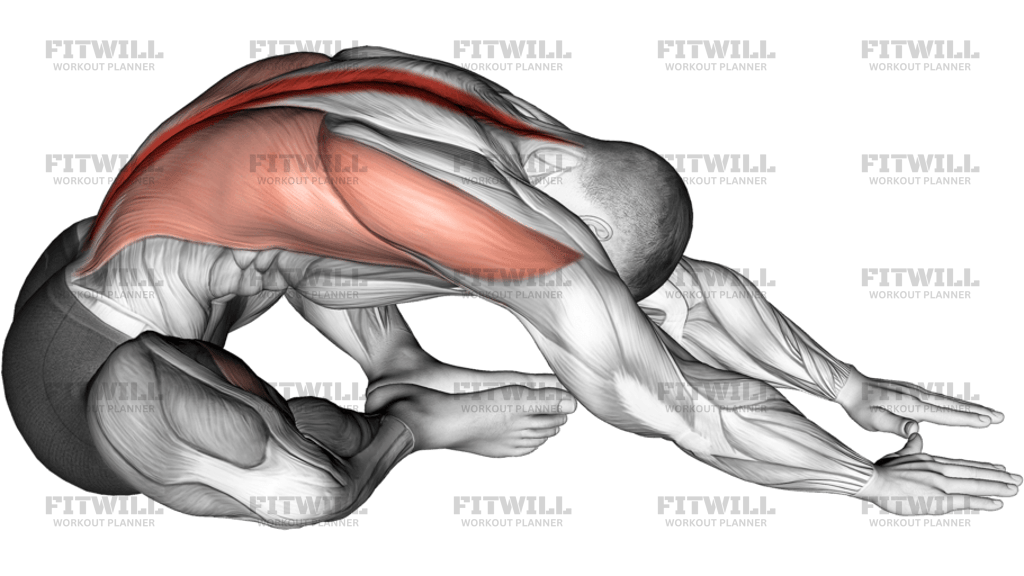
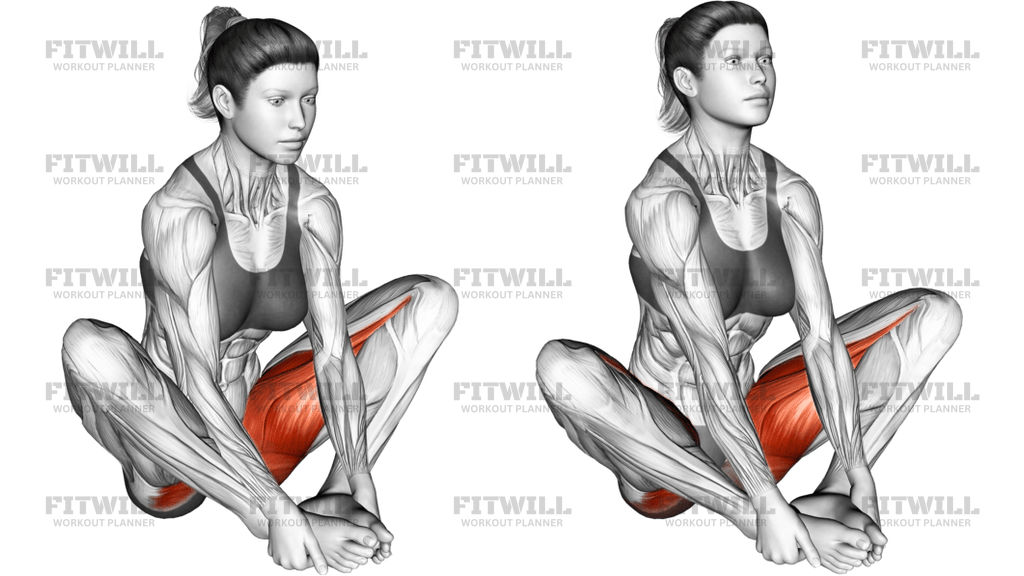
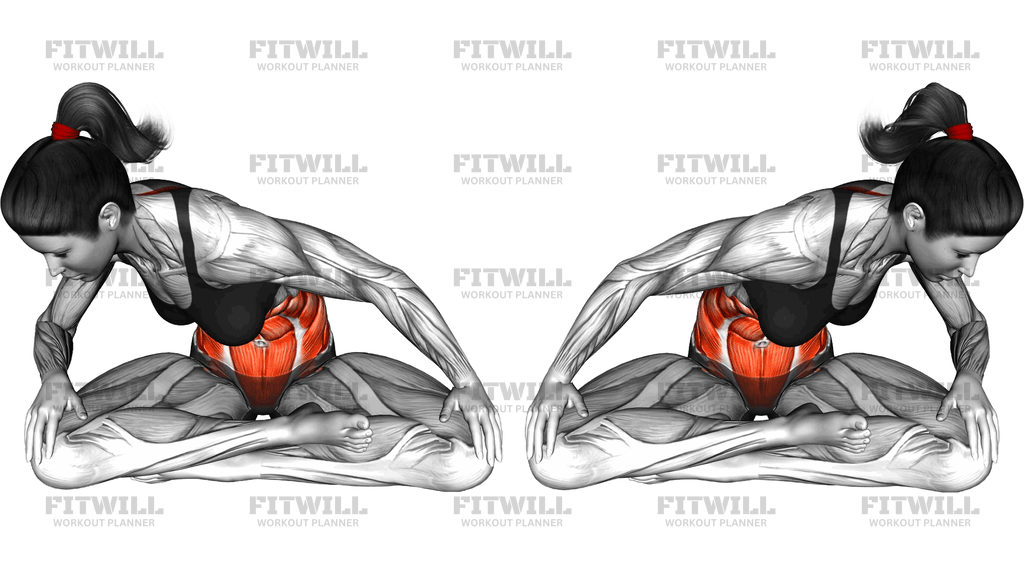
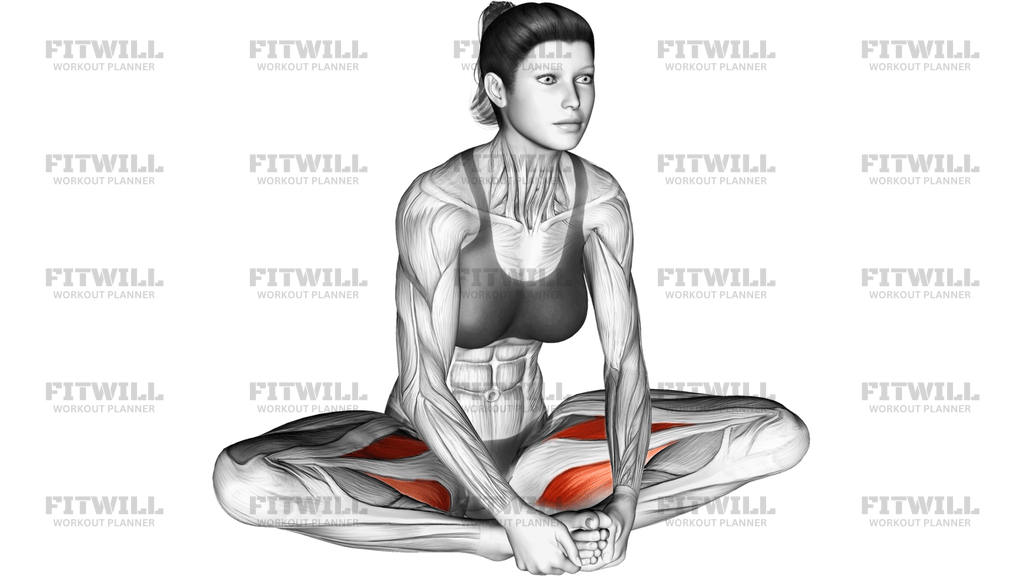
Baddha Konasana Flow Pose is a seated yoga sequence that moves rhythmically between an upright Bound Angle position and its forward-folded variation. You sit with the soles of your feet pressed together and your knees dropped out to the sides, hold your feet with your hands, and then flow between tall-sitting and folding your torso forward over your legs. The two positions together create one of the most direct stretches available for the inner thighs and groin, with the forward fold adding a lengthening effect through the lower back and the backs of the hips.
The primary target is the adductor group along the inner thigh, which is highlighted intensely in the folded position. As you hinge forward, the hips flex deeply and the outer hips and glutes assist, while the muscles along the spine simply have to release and lengthen. This makes the flow especially useful for runners, cyclists, and anyone who spends long hours sitting, since tight adductors and short hip flexors are two of the most common restrictions in those groups.
Setup matters more than most people expect. If you perch on your tailbone with a rounded lower back, the fold turns into a back stretch and the inner thighs never get their full demand. Sitting tall on your sit bones first, with a slight natural curve in the lumbar spine, lets the forward hinge travel through the hip creases instead. The distance of your feet from your pelvis is your main intensity dial: feet closer to the groin deepens the stretch, while feet farther out usually gives the knees more room to drop.
To perform it well, move with your breath rather than with force. Inhale to lengthen the spine, exhale to fold forward from the hips, and let gravity do the work once you reach your edge. Resist the urge to press down on your knees with your hands or elbows; that tends to stress the knee joints without adding anything to the adductor stretch. A few calm breaths in each position, repeated for several rounds, beats one aggressive hold every time.
You will see this flow used as a cool-down after lower body training, as part of a warm-up before squats or wide-stance work, and in hatha and yin-style sessions where hip opening is the focus. Because it requires no equipment beyond a mat and no load on the joints, it is easy to slot in almost anywhere, including as an evening wind-down.
Keep a few safety points in mind. Never bounce in the folded position, and back off if you feel sharp pulling in the groin or any pinching around the inner knee. If your knees sit far off the floor, place a folded blanket or block under each thigh for support rather than forcing them down. Move into and out of the fold slowly, and treat the stretch sensation as a steady pull, not a strain.
Fitwill
Log Workouts, Track Progress & Build Strength.
Achieve more with Fitwill: explore over 9600 exercises with images and videos, access built-in and custom workouts, perfect for both gym and home sessions, and see real results.
Start your journey. Download today!




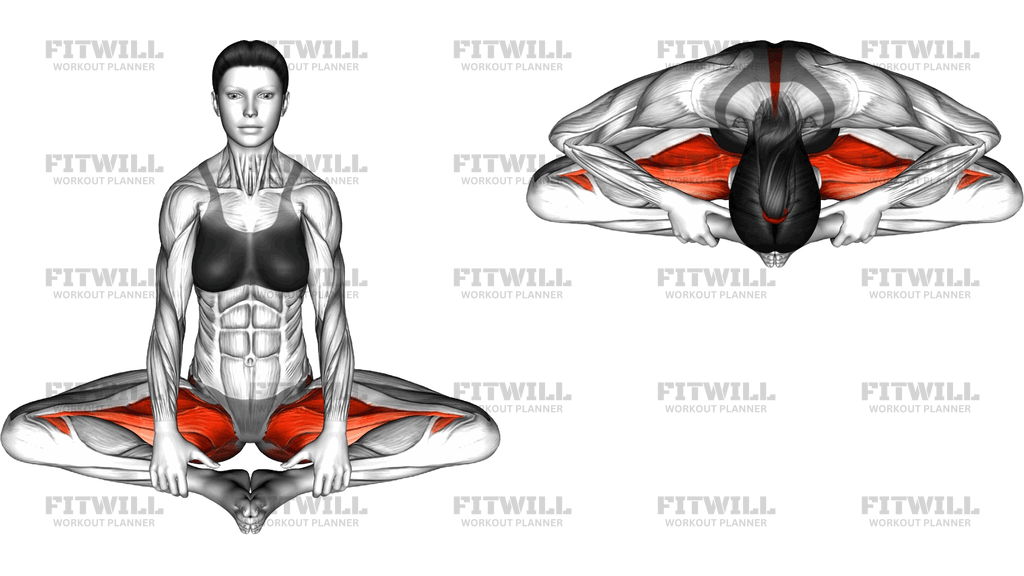
Instructions
- Sit on an exercise mat with your legs extended in front of you, then draw your heels in and bring the soles of your feet together, letting your knees fall open into a diamond shape.
- Clasp the outer edges of your feet with both hands, or hold your ankles if your hips are tight, and position your feet a comfortable distance from your groin so your knees are not forced down.
- Sit tall on your sit bones, lengthen the crown of your head toward the ceiling, and draw your shoulders down and back to set a long, neutral spine.
- Inhale deeply to create length through your torso, gently engaging your core to keep the spine supported.
- Exhale and hinge forward from the hip creases, leading with your chest and keeping your back long as your torso travels over your feet.
- Continue folding until you feel a deep, steady stretch across your inner thighs and the backs of your hips, then release your head and neck down.
- Hold the folded position for five to ten slow breaths, letting the knees drift slightly closer to the floor with each exhale.
- Inhale and slowly roll your spine back up to the tall seated Bound Angle position, stacking one vertebra at a time rather than swinging up.
- Flow between the upright and folded positions for five to eight repetitions, always exhaling as you fold and inhaling as you rise.
- To finish, release your feet, gently draw your knees together, and extend your legs forward to neutralize the hips.
Tips & Tricks
- Do not push your knees toward the floor with your hands or elbows. Press your feet firmly together instead and let the hinge from your hips open the knees naturally.
- If your lower back rounds the moment you start folding, sit on the front edge of a folded blanket or firm cushion. Elevating the hips makes it far easier to hinge from the hip creases instead of curling the spine.
- Adjust foot position before adding depth. Feet closer to the groin intensify the inner thigh stretch, while moving them a few inches farther out often relieves knee discomfort without losing much range.
- Do not lead the fold with your chin. Driving the head forward creates neck tension and a rounded upper back; keep the back of your neck long and let the chest travel forward and down.
- Avoid bouncing at your end range. Pulse only within a comfortable mid-range, and use slow exhales to settle deeper rather than momentum.
- If you feel a pinching sensation in the groin crease rather than a muscle stretch, narrow the angle slightly by lifting your knees a little before folding again. Deep pinching is a signal to back off, not push through.
- Slide a yoga block or folded towel under each thigh if your knees hover far above the floor. Supported knees let the adductors release instead of guarding against the stretch.
- Keep weight even in both sitting bones throughout the flow. Shifting to one hip is a common compensation that shortens the stretch on one side and twists the lower back.
- Warm up briefly with gentle leg swings or a short walk before flowing, especially in cold rooms, since cold adductors are more prone to strain.
Frequently Asked Questions
What does Baddha Konasana Flow Pose primarily stretch?
The main target is the adductor group along the inner thighs, with the forward fold adding stretch to the backs of the hips and the muscles along the lower spine.
Which muscles are working rather than stretching during the flow?
Your core and spinal muscles hold you tall in the upright phase, and the hip flexors work as you lift back up from the fold. Everything else should be releasing.
Is Baddha Konasana Flow Pose suitable for beginners?
Yes. Start with your feet farther from your groin, sit on a folded blanket, and fold only partway. The flow format lets you control exactly how deep each repetition goes.
My knees sit high off the floor in Bound Angle. Is that a problem?
Not at all, especially if your hips are naturally tight. Support each thigh with a block or cushion rather than pressing the knees down, and the range will improve gradually with consistent practice.
How is Baddha Konasana Flow Pose different from a static butterfly stretch?
The flow moves repeatedly between the tall seated position and the forward fold, which warms the adductors through range instead of holding one long static position, making it a better fit for warm-ups.
Can I use this flow before squatting or deadlifting?
Yes, as a dynamic warm-up it prepares the inner thighs and hips for wide-stance and deep hip positions. Keep the holds short and the movement rhythmic rather than settling into a long stretch.
How long should I hold each position in the flow?
For a warm-up, one or two breaths per position works well. For a cool-down or stretch session, hold the fold for five to ten slow breaths before rising.
What is the most common mistake in Baddha Konasana Flow Pose?
Rounding the lower back and curling over the chest instead of hinging from the hips. This shifts the stretch away from the inner thighs and can leave the back feeling strained.
Do I need any equipment for this exercise?
Only an exercise mat for comfort. A folded blanket, cushion, or yoga blocks are optional and useful if your hips or knees need support.
When should I stop or modify the flow?
Ease out of the position if you feel sharp pulling in the groin, pinching inside the knee, or any pain rather than a stretch sensation. Move your feet farther from your pelvis and reduce the fold depth before continuing.