Upavishta Konasana Yoga Pose
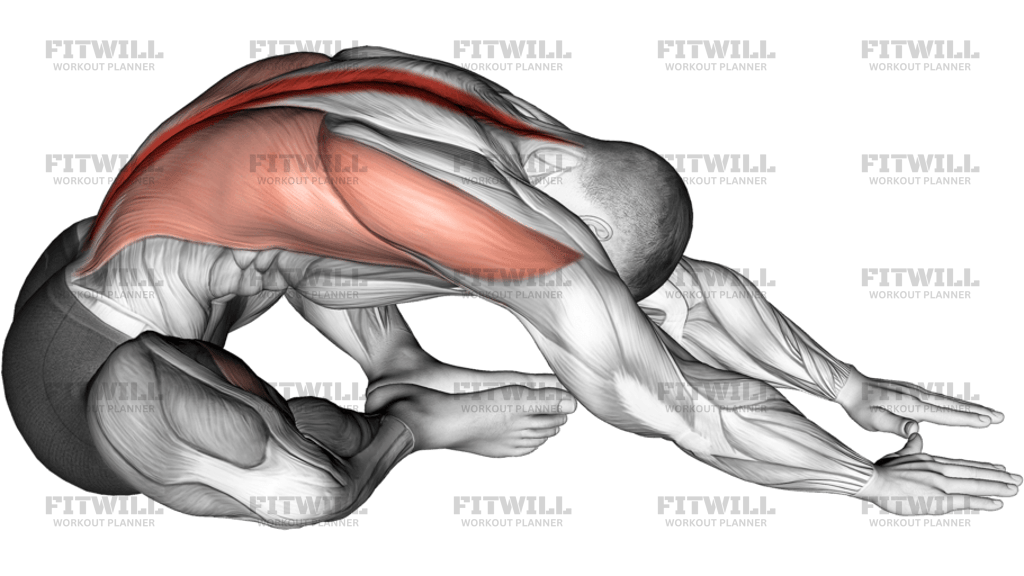
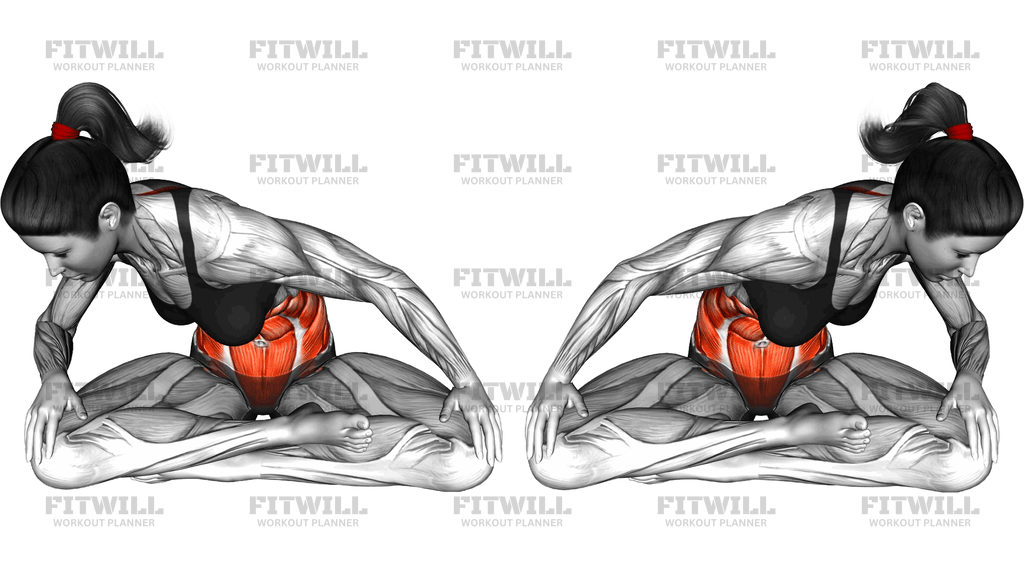
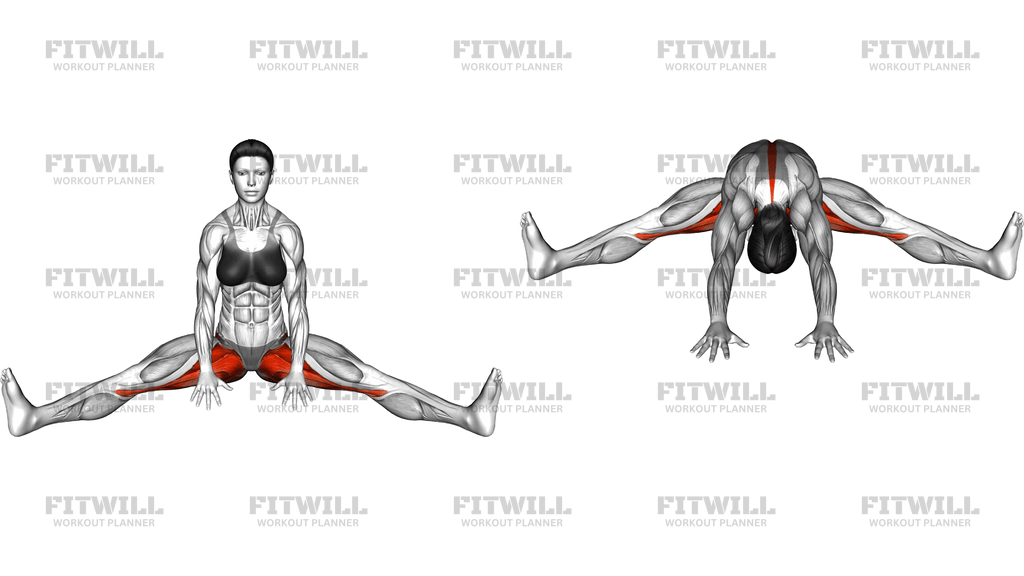
Upavishta Konasana, often called the Seated Wide-Angle Pose, is a classic yoga posture performed sitting on the floor with the legs spread into a wide V and the torso folded forward between them. It is one of the most direct ways to lengthen the adductors along the inner thigh while also giving the hamstrings a substantial stretch, since the knees stay straight throughout the hold. In the full version shown here, the hands walk forward onto the floor and the chest lowers toward the ground, which rounds the back into the stretch and engages the muscles along the entire spine.
This pose is useful for almost anyone who spends long hours sitting, because tight inner thighs and shortened hamstrings are among the most common limitations in hip mobility. It is a staple in yoga classes, dance and martial arts training, and general flexibility work, particularly for people chasing a wider straddle or a deeper middle split. Runners and lifters often use it after lower body sessions to restore range of motion in hips that have been working in a narrow, forward-facing pattern.
The setup matters more than most people expect. The width of the leg angle determines everything: too narrow and the pose becomes a plain hamstring stretch, too wide and the pelvis tilts backward, rounding the lower back before any real inner-thigh lengthening happens. Sitting tall on the sit bones with the kneecaps pointing toward the ceiling keeps the thighs in external rotation-friendly alignment and protects the knee joints from twisting under the fold.
To execute the pose well, hinge from the hips rather than curling down from the shoulders. Walk the hands forward between the legs, keep the spine long for as long as possible, and only let the back round in the final portion of the descent. The end position has the forearms or hands resting on the floor with the head relaxed down, but a respectable version with the hands on the mat and a flat back is a perfectly valid working position.
Because the stretch targets dense connective tissue in the groin, it responds best to patience. Hold the position for 30 seconds to several minutes, breathing slowly and letting gravity do the work instead of forcing the chest to the floor. Never bounce, and back off immediately if you feel sharp sensation deep in the inner thigh or hip socket.
[ Workout Log & Planner ]
Put your next workout in Fitwill
Keep your plan and training log ready when you are.


Instructions
- Sit on an exercise mat with your legs extended in front of you and your hands resting on the floor beside your hips.
- Open your legs out to the sides into a wide V, far enough that you feel a mild pull in the inner thighs but can still sit upright on your sit bones.
- Flex your feet so the toes and kneecaps point toward the ceiling, and press the backs of the thighs and calves into the mat.
- Place your palms flat on the floor in front of your pelvis with your fingers spread, and lengthen your spine by lifting through the crown of your head.
- Inhale deeply, then exhale as you hinge forward from the hips, walking your hands forward between your legs.
- Continue lowering until your forearms or hands rest on the floor, letting your head hang heavy toward the ground once your range runs out.
- Breathe slowly and steadily through the nose, softening the inner thighs a little more with each exhale while keeping the kneecaps facing up.
- To come out, press the palms into the floor, walk the hands back toward your body, and rise with a long spine rather than jerking up.
- Bring the legs together or draw the knees in, gently shake them out, and reset before repeating the fold if desired.
Tips & Tricks
- If your pelvis tips backward and your lower back rounds immediately, elevate your hips on a folded blanket or yoga block — this single adjustment usually makes the inner-thigh stretch feel far more direct.
- A common mistake is widening the legs as far as possible before folding; a slightly narrower angle with a flat back stretches the adductors better than a maximum split with a collapsed spine.
- Watch your kneecaps: if one or both rotate inward during the fold, the stretch is drifting into the knee joint — actively rotate the thighs outward and point the toes at the ceiling.
- Do not grip the floor and yank yourself deeper; instead, let the weight of the torso create the fold and re-walk the hands only after the hips have genuinely released.
- Bending the knees slightly is a safer shortcut than forcing straight legs into a painful pull — over time, work toward straightening them as the hamstrings lengthen.
- Keep the neck relaxed and the head hanging; holding the head up to watch the floor creates tension through the upper back that works against the fold.
- If you feel a catching or pinching sensation at the inner hip crease rather than a muscle stretch, reduce the leg angle — the hip socket may be impinging at that depth.
- Hold the end position for at least 30 seconds and preferably one to two minutes; the adductors respond to long, quiet holds much better than quick pulses.
Frequently Asked Questions
Which muscles does Upavishta Konasana stretch the most?
The primary targets are the adductors of the inner thigh, with the hamstrings working as a strong secondary stretch because the knees stay extended. The muscles along the spine are gently lengthened in the forward fold portion.
Can beginners practice Upavishta Konasana?
Yes, but beginners should use a narrower leg angle and may not fold forward at all in the first attempts. Sitting on a folded blanket or block and simply holding the wide-leg position with a tall spine is a legitimate starting version.
Why do my knees bend or my toes roll backward in this pose?
This usually means the inner thighs and hamstrings are too tight to hold the alignment, so the body borrows slack from the knee joints. Point the toes actively toward the ceiling and slightly reduce your leg width so the legs can stay honestly straight.
How wide should my legs be in Upavishta Konasana?
Roughly 90 to 120 degrees between the legs is a practical starting point — wide enough to feel the inner thighs, narrow enough that you can still sit tall on your sit bones. Depth of the fold matters more than the width of the angle.
Is it normal to feel the stretch in the lower back instead of the inner thighs?
If the lower back dominates, the pelvis is probably tilting backward and rounding instead of hinging at the hips. Sit on a small elevation, lengthen the spine first, and lead the descent with the chest rather than the chin.
What can I use if I cannot reach the floor with my hands?
Rest the hands on yoga blocks or a cushion placed in front of the pelvis, or simply hold onto the tops of the thighs. The stretch comes from the hip hinge, not from how far the arms travel.
How long should I hold Upavishta Konasana?
Hold for 30 to 60 seconds for a general flexibility session, or one to three minutes with slow breathing for deeper mobility work. Come out slowly and avoid collapsing out of the pose.
Is Upavishta Konasana safe for the groin?
It is generally safe when the stretch is built gradually, but the adductor attachment near the pelvis is vulnerable to strain from aggressive pushing or bouncing. Warm up first and never force the chest toward the floor against sharp resistance.
When is the best time to practice this pose?
It works well after lower body workouts, runs, or at the end of a yoga session when the muscles are warm. Doing it completely cold makes the adductors resist far more and raises the strain risk.