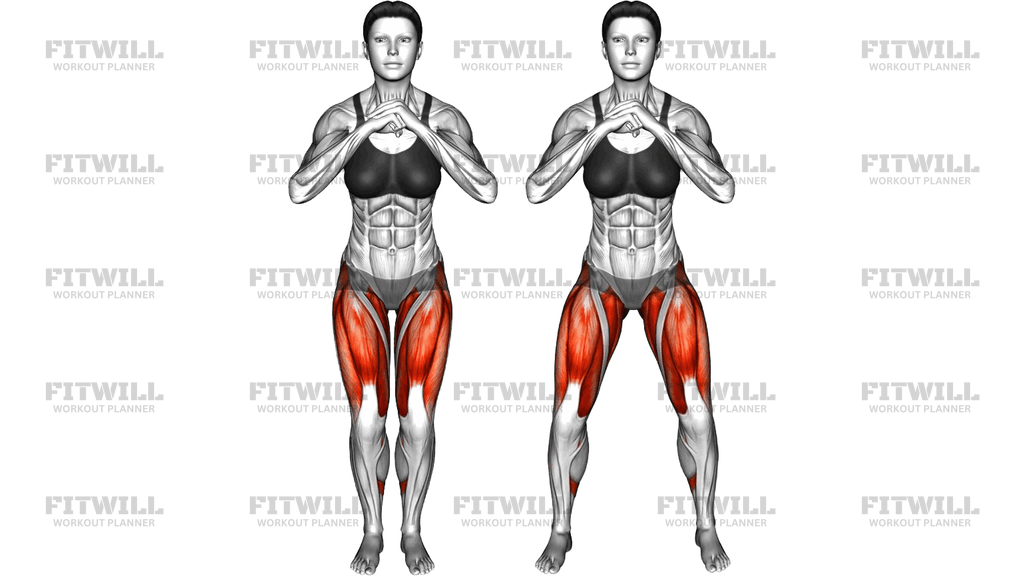
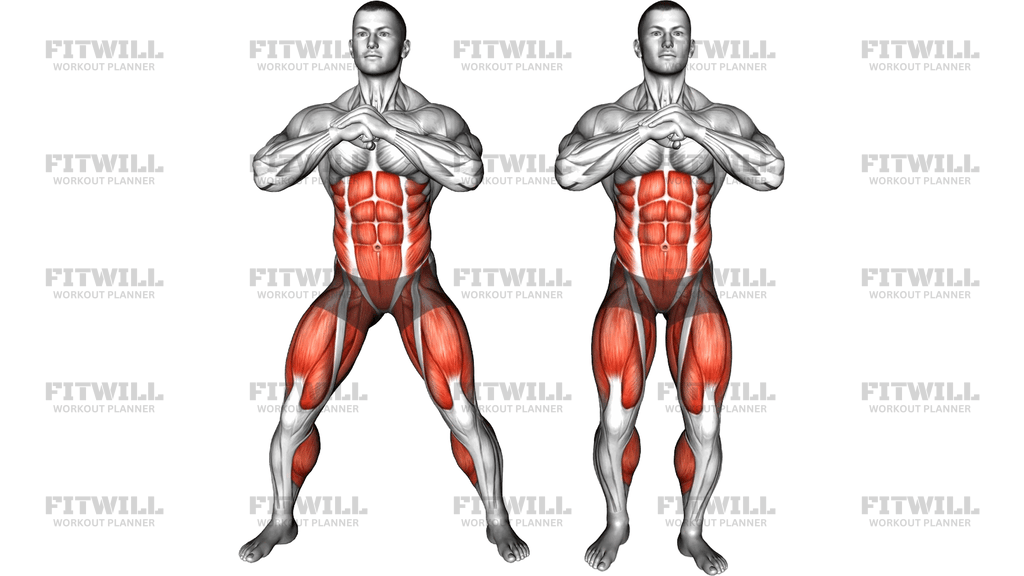
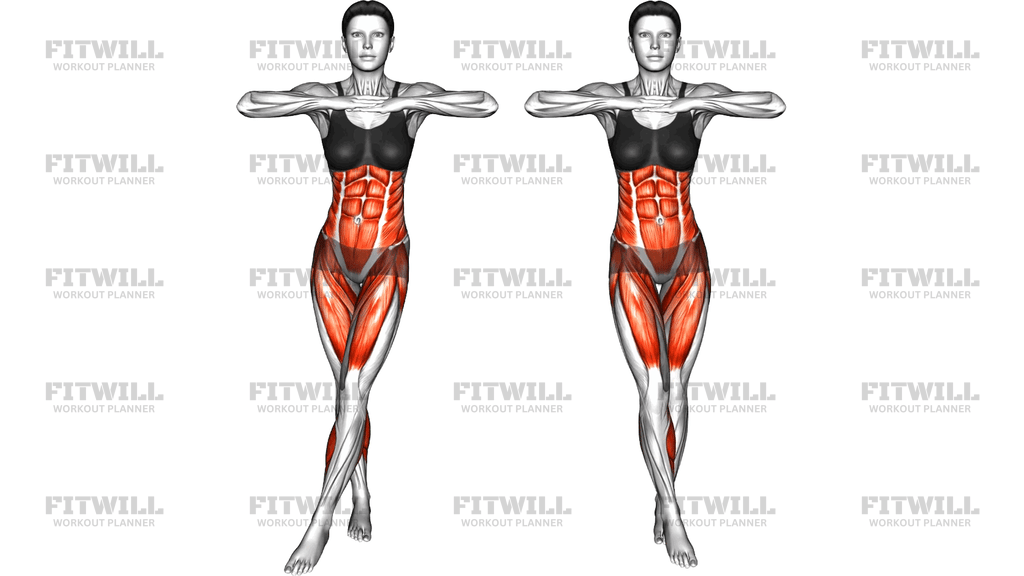
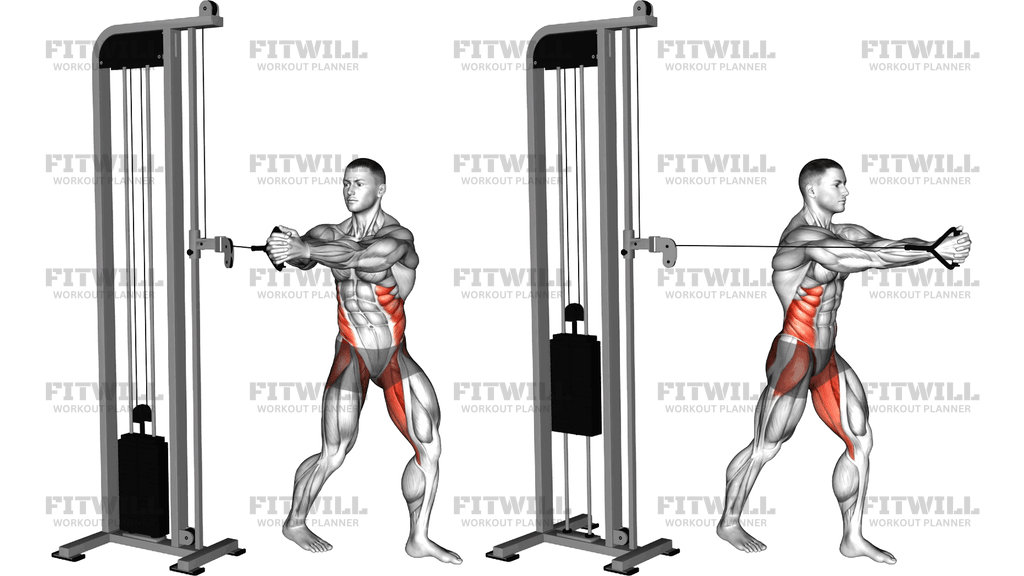
Side Lying Single Leg Adduction Hold
The Side Lying Single Leg Adduction Hold is an isometric inner-thigh exercise performed from a side-lying position on the floor. Unlike the more common lying leg raise, which trains the outer hip, this movement works the adductors of the bottom leg by having you lift and hold that straight leg against gravity. The top leg is bent and planted in front of the body so it clears the path of the bottom leg, which is what allows the inner thigh to do the lifting.
This exercise is useful for almost anyone, but it particularly suits people rehabbing or prehabbing groin strains, runners and field-sport athletes who repeatedly change direction, and anyone whose inner thighs never get direct work in a standard squat-and-hinge program. Because the hold is isometric, it builds the ability to sustain tension through the adductor group at a moderate muscle length, which is exactly the quality that protects the groin during sprinting, kicking, and lateral movement.
The setup is what makes or breaks this exercise. Lying on your side with the torso propped on the forearm keeps the spine long and the pelvis stacked, while the bent top knee acts as a stabilizing tripod in front of you. If you let the hips roll backward or the top leg drift out of position, the bottom leg stops working against a clean line of resistance and the movement turns into a hip-hike rather than an adduction. A few seconds spent aligning the shoulder, hip, knee, and ankle pays off in noticeably stronger contractions.
To perform it well, lift the straight bottom leg only as high as you can keep it, usually a few inches to a foot off the floor, and pause there for the prescribed hold. The lift itself is short and the effort is concentrated: squeeze the inner thigh as if drawing the leg toward the midline of the body, even though the leg is already moving up. Keep the foot relaxed and the knee facing forward rather than rotating inward.
Because no equipment is required beyond a comfortable floor surface, this movement fits easily into warm-ups, cool-downs, home sessions, and travel workouts. It is commonly paired with a side-lying abduction raise for the outer hip to balance the hip complex, or used in rehabilitation settings where load must be kept minimal but time under tension matters. Holding for five to thirty seconds per rep, or accumulating thirty to sixty seconds per side, works well for most purposes.
The main safety point is honesty about range: if the bottom leg cannot lift without the pelvis tilting or the lower back twisting, shorten the hold or reduce the height instead. Sharp pain along the inner thigh or groin, especially if you have a recent strain, is a signal to stop and regress to a shorter lever or gentler version rather than push through.
[ Workout Log & Planner ]
Put your next workout in Fitwill
Keep your plan and training log ready when you are.


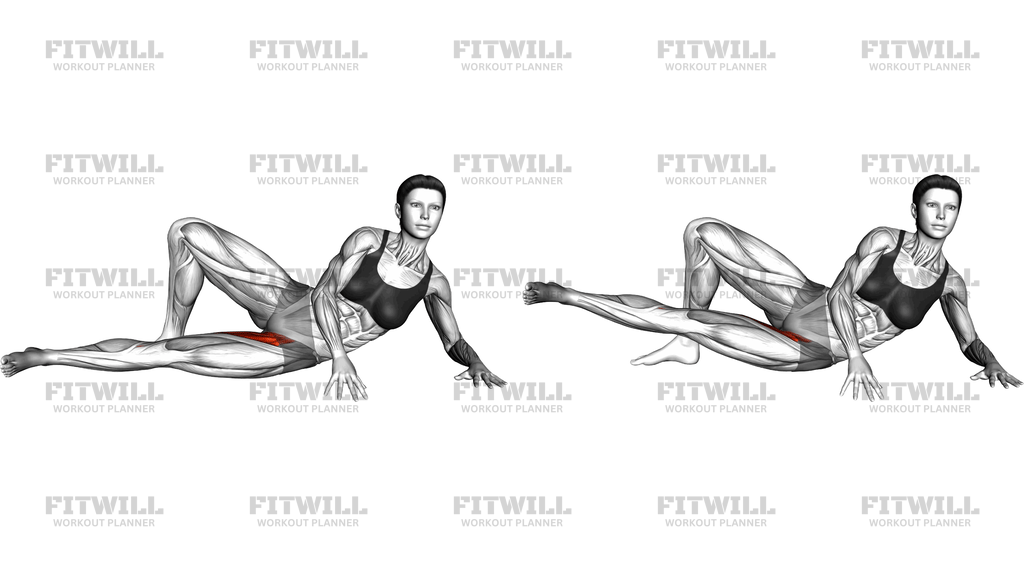
Instructions
- Lie on your right side on an exercise mat or the floor, with your shoulder directly over your bottom arm and your legs stacked in a straight line.
- Prop your upper body on your right forearm so your torso is lifted, and place your left hand on the floor in front of your chest for balance.
- Bend your top (left) knee and plant that foot flat on the floor just in front of your bottom leg, so the bottom leg has a clear path to lift.
- Brace your abdominals lightly and stack your pelvis so your top hip sits directly above your bottom hip, with no backward roll.
- Keep your bottom (right) leg fully straight with the foot relaxed, and squeeze the inner thigh to lift it off the floor toward the ceiling.
- Pause and hold the leg at its highest controllable point, usually several inches to a foot off the floor, for the prescribed time.
- Exhale as you lift, then breathe steadily and quietly through the hold instead of holding your breath.
- Lower the bottom leg down with slow control until it lightly touches the floor.
- Complete all reps or hold time on one side, then roll over and repeat on the left side with the same setup and hold duration.
Tips & Tricks
- The most common mistake is rolling the pelvis backward to gain height; fix it by imagining a cup of water balanced on your top hip that you must not spill.
- If the bottom leg will not lift, check that the top foot is planted far enough forward — if it sits behind or beside the bottom knee, it blocks the arc.
- Keep the lifted foot neutral. Turning the toes up toward the ceiling rotates the thigh and shifts work away from the adductors.
- Support your head weight on the bottom forearm rather than collapsing into the shoulder; a shrugged, compressed neck is a sign the prop arm is doing too much.
- Aim for tension, not height. This lift is naturally short — a firm five-second hold at three inches beats a sloppy lift to eighteen inches.
- If your groin cramps, a common reaction in tight adductors, shorten the hold to three to five seconds and do more repetitions instead.
- Place the top hand on the floor rather than the hip; reaching out front widens your base and stops the torso from twisting during the hold.
- Do the weaker or tighter side first and match its work time on the second side to keep both legs balanced.
- If the floor is hard on your bottom hip bone, use a folded towel or mat under the whole side of the body rather than changing your leg position.
Frequently Asked Questions
Which muscles does the Side Lying Single Leg Adduction Hold work?
The primary muscles are the adductors of the bottom leg — the inner-thigh group that draws the leg toward the midline. The core and obliques work statically to keep the torso propped and the pelvis stacked, and the top leg's hip stabilizers help hold the bent-knee position.
Why does only the bottom leg lift in this exercise?
Because the top leg is bent and planted in front of the body, it clears the path and leaves the bottom straight leg free to lift against gravity, which loads the inner thigh rather than the outer hip. This is the reverse of a standard side-lying leg raise.
Is the Side Lying Single Leg Adduction Hold suitable for beginners?
Yes, it is very beginner-friendly since it uses body weight only and the range of motion is short. Start with three to five holds of five seconds per side and build up as the inner thigh gains endurance.
How high should I lift my bottom leg during the hold?
Only as high as you can lift without your pelvis tilting backward — for most people that is a few inches to about a foot off the floor. Height matters far less than keeping the leg straight and the hips stacked.
Why does my inner thigh cramp during the hold?
The adductors are rarely trained isometrically at this length, so they fatigue and cramp quickly at first. Shorten each hold to three to five seconds, do more reps, and the cramping usually fades within a couple of weeks of practice.
How is this different from a side-lying leg raise?
A side-lying leg raise lifts the top leg and trains the outer hip and gluteus medius, while this exercise lifts the bottom leg with the top knee planted, training the adductors. Doing both in the same session balances the inner and outer hip.
Can I do the Side Lying Single Leg Adduction Hold with a groin strain?
Isometric holds like this are often tolerated well by irritated adductors, but you should only work within a pain-free range and stop short of any sharp groin pain. If symptoms persist or worsen, get clearance from a qualified health professional before continuing.
How long should I hold each repetition?
Five to thirty seconds per hold works well depending on your goal — shorter holds for strength and longer holds for endurance. A practical target is thirty to sixty seconds of total hold time per side.
What can I use instead if lying on my side is uncomfortable?
A standing cable or band adduction, where the low attachment is on the ankle of the leg nearest the machine and you pull the leg across the body, trains the same muscles. A sumo-stance hold or Copenhagen-style plank progression also loads the adductors if you can manage the position.
Should I add ankle weights to this exercise?
You can once a thirty-second hold feels easy with clean form, but keep the weight light — one to two pounds is plenty because the lever is long. Adding load too early usually shows up as pelvic rolling rather than better adductor work.